




Are wasps dangerous? For most people, a wasp sting is painful but not dangerous: pain, redness and swelling at the spot, and nothing more. But wasps, hornets and bees together cause more deaths in the United States than any other animal, and the South has the highest rate. The danger comes from three situations: an allergic reaction, a lot of stings at once, and stumbling into a nest. This guide explains how risky wasps really are, which local wasps are aggressive and which almost never sting, why they seem to sting "for no reason," and when a sting is an emergency. It draws on data from the CDC, the American College of Allergy, Asthma and Immunology, and extension entomologists at Clemson, NC State, Mississippi State and the University of Florida.
Wasps are dangerous mainly to people who are allergic, and in large numbers. Life-threatening sting allergies affect about 3% of adults and 0.4% to 0.8% of children, according to the American College of Allergy, Asthma and Immunology (ACAAI). Most sting deaths involve fewer than 10 stings and an allergic reaction.
The most dangerous wasps here are yellowjackets and bald-faced hornets, because they defend their nests in large numbers. Paper wasps, mud daubers, great black wasps and cicada killers rarely sting unless handled or their nest is disturbed.

How Dangerous Are Wasps? The Numbers
- Deaths: The CDC counted 1,109 deaths from hornet, wasp and bee stings from 2000 to 2017, an average of 62 a year, and about 80% were men. A 2025 study of CDC data found that from 2018 to 2023, hornets, wasps and bees were the leading cause of animal-related deaths in the US, with 497 deaths. That was more than dogs (420), venomous snakes (30) or spiders (26). The South had the highest number and rate of deaths. These counts combine wasps with bees, because death records don't separate them.
- Allergy: ACAAI estimates that potentially life-threatening reactions to insect venom occur in 3% of adults and 0.4% to 0.8% of children. An allergy can appear "even after many normal reactions to stings, and at any age."
- Number of stings: A review in the Western Journal of Medicine found that most sting deaths involve "very few stings (< 10) and anaphylactic shock." Large numbers of stings can poison the body directly, but with medical care, the authors write, most victims "should be able to survive attacks from hundreds of wasps."
Can a wasp kill you?
Yes, but rarely, and almost always through an allergic reaction rather than the venom itself. For someone who isn't allergic, a single sting is painful and nothing more. For someone with a venom allergy, one sting can trigger anaphylaxis within minutes. Mass stinging, dozens or hundreds of stings at once, is dangerous for anyone and needs a doctor even if you feel fine at first.
Are wasps poisonous or venomous?
Venomous. A poison harms you when you eat or touch it. A venom is injected, and wasps inject it with a stinger. That's why people search "are wasps poisonous" and get confusing answers: you can't be poisoned by touching a wasp, but its sting delivers venom.
Wasps can also sting more than once. Clemson Extension notes that yellowjackets have a smooth stinger and can sting several times. A honey bee's barbed stinger usually stays in the skin; a wasp's doesn't. If you can't find a stinger after a sting, that's normal. Several commenters under a YouTube sting video were confused on exactly this point.
Which Wasps Are Dangerous?
How dangerous a wasp encounter is depends mostly on the species and whether you're near its nest. Here are the wasps people run into most in South Carolina, North Carolina and Virginia:
| Wasp | How defensive | What to know |
|---|---|---|
| Yellowjackets | High near the nest, especially late summer and fall | Usually nest underground. The most common cause of multiple stings. Clemson notes SC colonies peak by August |
| Bald-faced hornets | High near the nest | Actually a yellowjacket, with a gray football-shaped paper nest, often in trees and shrubs. Clemson says they can squirt venom toward the eyes |
| European hornets | Moderate | Large, about 1 inch. Clemson says they're generally less defensive than yellowjackets. Active at night and drawn to porch lights |
| Yellow-legged hornets | Moderate | An invasive hornet found in SC since 2023 and in NC since 2026. Clemson says it poses no greater risk to people than other hornets. Report sightings |
| Red wasps (red paper wasps) | Mixed | Mississippi State says Carolina paper wasps "tend to be more aggressive than other paper wasps." The University of Florida says they're not aggressive and sting when threatened |
| Other paper wasps | Low to moderate | Umbrella-shaped open nests under eaves and rails. Clemson says they "do not readily attack people" but will sting if the nest is threatened |
| Mud daubers | Very low | Clemson says they're not aggressive and rarely sting unless threatened or touched |
| Great black wasps | Very low | Large and alarming-looking, but solitary. Missouri's Department of Conservation calls the sting painful but harmless |
| Cicada killers | Very low | Huge ground-nesting wasps in lawns in summer. NC State says they're solitary and rarely aggressive |
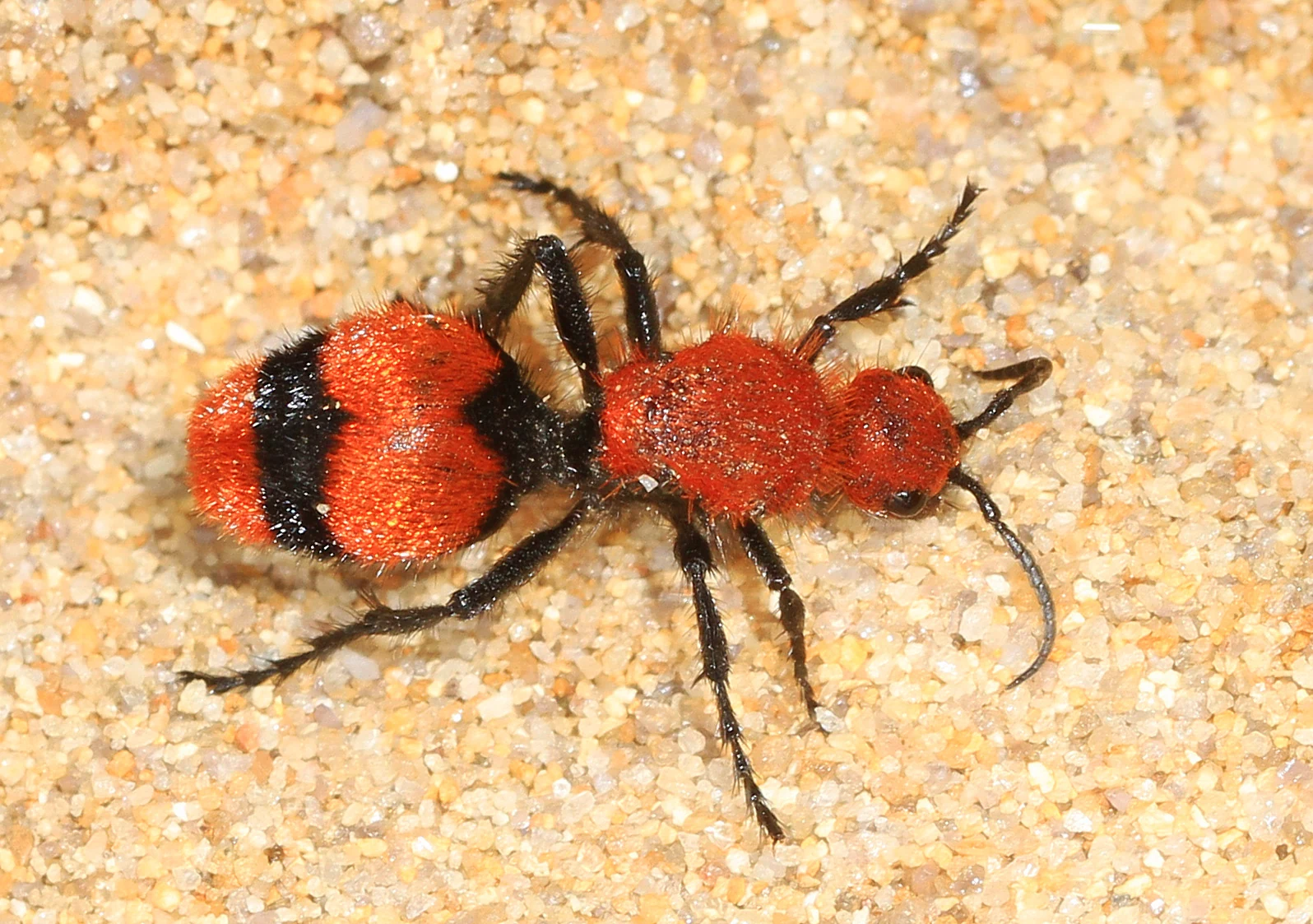
| Velvet ants ("cow killers") | Low, but don't pick one up | Fuzzy, red and black, and wingless, but actually a wasp. NC State says females can deliver a very painful sting if handled |

Yellowjacket colonies can get huge. Clemson describes a Charleston County colony found in August 1991 with an estimated 250,000 workers. For help telling these apart, see our yellowjacket vs. wasp vs. hornet ID guide.
Why Wasps Sting "for No Reason"
Social wasps sting mainly to defend their nest. A top reply on a Reddit r/WASPs thread (via Google search excerpts) puts it plainly: stinging "for no reason? No. They are aggressive about defending their nests." The problem is that you often don't know the nest is there. A commenter under a YouTube sting video wrote that they "got too close to the nest" even though they thought they were far enough away. The common triggers:
- A hidden ground nest. Yellowjackets nest underground, and the only sign is a small hole with wasps flying straight in and out. Mowing, string-trimming or stepping near the hole sets off the colony.
- Late summer and fall. Colonies are at their largest, and UC IPM notes that defensive behavior increases as the season goes on. This is also when yellowjackets crowd around drinks, fruit and trash cans.
- Swatting or crushing a wasp. Research on southern yellowjackets found that crushed wasps and their venom release an alarm signal that triggers other wasps to attack, and it lingers on the person who was attacked.
- Getting trapped against skin. A wasp caught in clothing, a sleeve or a shoe will sting. One Reddit user described a wasp that "flew into my shirt and stung me."

Will a wasp sting you if you stand still?
Usually not. UC IPM's advice: "If a wasp lands on you, don't swat it or run. Wait for it to leave, or gently brush it away." A single wasp investigating you is usually foraging, not defending a nest. If you've disturbed a nest and many wasps are coming at you, that's different: move away quickly, cover your face, and get indoors or into a car.
When a Wasp Sting Is an Emergency
A normal reaction is pain, redness and swelling at the sting site. ACAAI says to wash it with soap and water and apply ice. One commenter described a typical sting well: it "felt like getting a flu shot," then like a rug burn for about 10 minutes, then itchy.
A large local reaction looks scary: a sting on the forearm can make the whole arm swell. ACAAI says this is often treated the same as a normal reaction, though very painful or large swelling may need a doctor, and it can last two to three days.
Call 911 if, after a sting, someone has two or more of these, which the American Academy of Allergy, Asthma and Immunology (AAAAI) lists as signs of anaphylaxis:
- Hives or itching spreading beyond the sting
- Swelling of the throat or tongue
- Trouble breathing
- Dizziness, or a sudden drop in blood pressure
- Stomach cramps, nausea or diarrhea
If the person has an epinephrine auto-injector, use it right away. AAAAI recommends that people with severe sting allergies carry two, because about a third of the time a second dose is needed. Also get medical care for anyone with many stings at once, even without allergy symptoms.
The good news: allergy shots work. ACAAI says venom immunotherapy from an allergist provides up to 98% protection. Anyone who has had a reaction beyond the sting site should see an allergist.
Is Wasp Spray Dangerous to People?
Wasp sprays usually contain pyrethrins or pyrethroids, which affect the nervous system. Used as labeled, outdoors, they're reasonably safe, but they aren't harmless. Iowa State University and eXtension warn against the viral advice to keep wasp spray for self-defense instead of pepper spray, noting that poison control records document many people who accidentally sprayed themselves or bystanders. Spray from upwind, keep it away from your face, children and pets, and never use it indoors in place of a product labeled for indoor use.
Spraying a nest also carries a sting risk. UC IPM warns that wasps attack if they sense a poison being applied, and that even freeze-type sprays aren't guaranteed. See how to safely deal with a wasp nest.
Should You Kill Wasps or Leave Them Alone?
Wasps do real good. They hunt caterpillars and other garden pests. One YouTube commenter watched wasps carry webworms out of the tents in their pecan trees, and another has had "three small paper wasp nests on my balcony for years" without a sting. A paper wasp nest under a far eave, away from doors and paths, is often fine to leave.
Remove or treat nests that are:
- Near doors, windows, decks, play areas or the grill
- In the ground where you mow or walk
- Inside walls, attics or soffits. Virginia Tech warns not to plug a yellowjacket entrance in a wall, because the wasps may chew a new way out into the house
- Anywhere near someone with a sting allergy
For the case for and against wasps, see 3 reasons why wasps are bad. If wasps are everywhere this year, see why you have so many wasps in your yard.
How to Avoid Wasp Stings
- Walk the yard before mowing in late summer and fall, looking for wasps flying in and out of one spot in the ground.
- Cover drinks and food outdoors, and check cans before you sip. Keep trash cans closed.
- Wear shoes in the grass and sandy areas.
- Check eaves, rails and grill covers in spring. UC IPM notes that early in the season, knocking down a newly started paper wasp nest will make the founding female move elsewhere.
- Don't swat. Stay still or move slowly away.
- Leave big, high, underground and in-wall nests to a professional, especially if anyone in the home is allergic.
Our wasp and hornet control service removes yellowjacket ground nests, hornet nests and wall colonies across South Carolina, North Carolina and Virginia.
Key Takeaways
- For most people, a wasp sting is painful but not dangerous. The danger is allergy, many stings at once, and disturbed nests.
- Hornets, wasps and bees were the leading cause of animal-related deaths in the US from 2018 to 2023, and most sting deaths involve fewer than 10 stings and an allergic reaction.
- Wasps are venomous, not poisonous, and they can sting more than once.
- Yellowjackets and bald-faced hornets are the most dangerous here. Mud daubers, great black wasps and cicada killers rarely sting.
- "No reason" stings usually mean a hidden nest, often underground, and they peak in late summer and fall.
- Call 911 for breathing trouble, throat swelling or dizziness after a sting. Allergy shots give up to 98% protection.
Frequently Asked Questions
For most people a wasp sting is painful but not dangerous. Wasps are dangerous to people with a venom allergy, which ACAAI estimates affects about 3% of adults and 0.4% to 0.8% of children, and to anyone stung many times at once. Yellowjackets and bald-faced hornets defending a nest cause most serious incidents.
Rarely. Most sting deaths happen when someone with a venom allergy goes into anaphylaxis, usually after fewer than 10 stings. For someone who isn't allergic, a single sting isn't dangerous. Hornets, wasps and bees together caused 497 deaths in the US from 2018 to 2023, the most of any animal group.
No, wasps are venomous. Poison harms you when eaten or touched; venom is injected. A wasp injects venom with its stinger, and unlike a honey bee it can sting more than once because the stinger isn't barbed and doesn't stay in your skin.
In the Carolinas and Virginia, yellowjackets and bald-faced hornets, because they defend their nests in large numbers and can sting repeatedly. Yellowjackets nest underground, so people disturb them while mowing. European hornets are less defensive, and paper wasps, mud daubers, great black wasps and cicada killers rarely sting.
Red wasps are paper wasps and can give a painful sting, and they can sting more than once. Mississippi State Extension says Carolina paper wasps tend to be more aggressive than other paper wasps, while the University of Florida says they are not aggressive and sting when threatened. Keep away from their nests.
The ground wasps most likely to sting are yellowjackets, which nest underground in colonies that can hold thousands of workers and peak in late summer. Cicada killers also dig in lawns but are solitary and rarely aggressive. Treat any yellowjacket ground nest where people mow or walk.
They almost always have a reason, usually a nest you didn't see. Ground nests, nests in shrubs and late-summer colonies cause most surprise stings. Swatting also backfires: crushed yellowjackets release an alarm signal that triggers other wasps to attack.
Usually not. UC IPM advises that if a wasp lands on you, don't swat it or run; wait for it to leave or gently brush it away. If many wasps are coming from a nest, move away quickly and get indoors.
Call 911 for trouble breathing, swelling of the throat or tongue, dizziness, spreading hives or vomiting after a sting, and use epinephrine if it's prescribed. Get medical care for many stings at once even without allergy symptoms. A large swollen area around the sting is usually not an emergency but may need a doctor.
Wasp sprays usually contain pyrethrins or pyrethroids and should be used outdoors, from upwind and as labeled. Iowa State University warns against using wasp spray for self-defense; poison control records show many people accidentally spray themselves or bystanders.
Sources: Centers for Disease Control and Prevention, "QuickStats: Number of Deaths from Hornet, Wasp, and Bee Stings," MMWR 68(29) (2019); "Animal-Related Fatalities in the United States (2018-2023)," Environmental Health Insights (2025), from CDC WONDER data; American College of Allergy, Asthma and Immunology, "Insect Sting Allergies"; American Academy of Allergy, Asthma and Immunology, "Stinging Insect Allergy"; R. S. Vetter, P. K. Visscher & S. Camazine, "Mass envenomations by honey bees and wasps", Western Journal of Medicine 170 (1999); Clemson Cooperative Extension HGIC fact sheets on yellowjackets, paper wasps, baldfaced hornets, European hornets, mud daubers and the yellow-legged hornet; NC State Extension, "Non-Honey Bee Stinging Insects in North Carolina" and "Velvet Ant"; Mississippi State University Extension, "Carolina Paper Wasp"; University of Florida IFAS, "Paper Wasp, Red Wasp" (Paulus, 2018); Missouri Department of Conservation, "Great Black Wasp"; UC Statewide IPM Program, "Pest Notes: Yellowjackets and Other Social Wasps" (Pub. 7450); Virginia Tech, "Yellowjackets in Virginia" (ENTO-49); P. J. Landolt & R. R. Heath, alarm pheromone research on the southern yellowjacket; Iowa State University and eXtension, "Don't use wasp spray as a substitute for pepper spray" (via Texas A&M School IPM, 2013); Reddit r/WASPs and r/AlwaysWhy (via Google search excerpts); YouTube comments under wasp sting and wasp videos.
Photo credits: Insects Unlocked, University of Texas at Austin, CC0; Desislav Iliev, CC BY 4.0; Judy Gallagher, CC BY 2.0; Famartin, CC BY-SA 4.0; via Wikimedia Commons.