




Ask most South Carolinians to name the dangerous spiders in their state and you'll hear the same two: the black widow and the brown recluse. Only one of those really lives here in numbers. The other is the most over-diagnosed spider in the state, and the spider that actually belongs in its place, the brown widow, rarely gets mentioned. Here is how to tell them apart, what the bites actually do, and which one you're likely to meet.
Black widows live throughout South Carolina. Brown recluses essentially don't. A review of every museum and state-agency record found only 44 brown recluse specimens in South Carolina since 1953, from 6 locations, all inside buildings. In 2004 alone, South Carolina doctors diagnosed 738 "brown recluse bites."
Clemson Extension lists three widow spiders in the state: the southern black widow, the northern black widow and the brown widow. To tell a recluse from a black widow: the widow is shiny black with a red hourglass underneath and hangs in a messy web. The recluse is tan and dull, with 6 eyes instead of 8, and hides in a small retreat. Most spiders people call "brown recluses" here are wolf spiders or southern house spiders.

Brown Recluse vs. Black Widow: Side by Side
| Black widow | Brown recluse | |
|---|---|---|
| Color | Shiny black (females) | Tan to brown, dull, no pattern on the abdomen or legs |
| Marking | Red hourglass on the underside. Some only have red spots | Sometimes a dark violin shape on the head region, but the University of California warns it is not distinct enough to rely on |
| Eyes | 8, like most spiders | 6, in three pairs arranged in a semicircle. The most reliable sign, seen with a hand lens |
| Web | Messy, strong, tangled web between objects, low to the ground | No catching web to speak of. A small, loose retreat in a crack, box or corner |
| Where found | Woodpiles, garages, sheds, meter boxes, under decks and outdoor furniture | Inside buildings in its native range: boxes, closets, attics |
| Venom | Affects nerves: muscle pain and cramping | Affects tissue: usually a minor mark, rarely an ulcer |
| In South Carolina? | Yes, throughout the state | Essentially no. 44 verified specimens since 1953 |
"How many eyes does a black widow have?" is one of the most common questions people ask about these two spiders. The answer is eight, like most spiders. The brown recluse is the unusual one, with six. CDC's workplace safety guidance uses the same tell: six equal-sized eyes, when most spiders have eight.
Are There Brown Recluses in South Carolina?
This is the question people in the state search for most, and the answer is: almost none.
- The records. In 2007, researchers from MUSC, UC Riverside and Clemson reviewed every brown recluse specimen they could find from state agencies, arachnologists and museums. Dating back to 1953, they found 44 verified specimens from just 6 locations. Every one came from inside a man-made structure, the pattern you see when spiders arrive in shipped goods, and the researchers judged those populations localized and unlikely to spread.
- The coast. A 2018 study that collected suspected recluses from coastal South Carolina found none. Most of the submissions were wolf spiders.
- The diagnoses. In the same 2007 study, South Carolina physicians reported diagnosing 478 brown recluse bites in 1990 and 738 in 2004. That is far more "bites" in a single year than recluses ever found in the state.
The brown recluse's real home is the south-central United States. Its range reaches into north Georgia, and the far western tip of South Carolina next to Georgia is the only part of the state close to it. That matches what a South Carolina Reddit thread told a worried poster: the farther you are from the western tip, the less likely you are to see one.
It works the same way in California. The University of California notes brown recluses are occasionally brought into the state in furniture, firewood and vehicles, but have no breeding populations there. A recluse that rides into South Carolina in a moving box is a stray, not the start of a local population.
What That "Brown Recluse" Probably Is
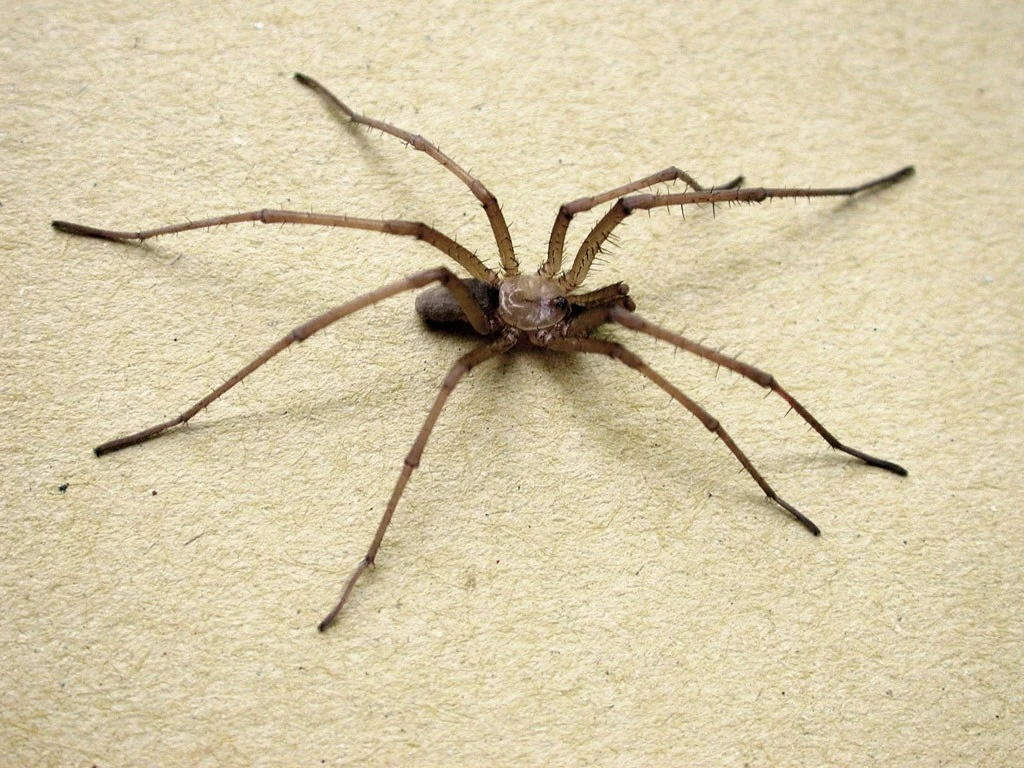
When people in the Southeast catch the spider that worried them and send it to entomologists, it is almost never a recluse. In Georgia, where recluses do live in the northern part of the state, University of Georgia entomologists found that only 19 of 1,061 spiders sent in as suspected recluses (1.8%) actually were. In a random sample of the rest, the most common were:
- Southern house spiders (34%). The males are tan with long legs and wander indoors. Clemson Extension notes the male is often mistaken for a brown recluse. The difference: they are larger, have much longer legs and palps, and have 8 eyes.
- Wolf spiders (25%). Brown and fast, they run along floors and don't build webs. Clemson calls them harmless to people and homes.
The Reddit threads Google surfaces for "brown recluse South Carolina" (we read Google's excerpts, since Reddit blocks automated reading) tell the same story. In nearly every "is this a recluse?" post from the Carolinas, the replies identify a wolf spider, and the most common local advice is that the spiders to actually watch for are the widows.
The Three Widows That Do Live Here
Clemson Extension: "In South Carolina, there are three widow spiders: the Southern black widow, the Northern black widow, and the brown widow."
| Widow | How to recognize it | Where you'll find it |
|---|---|---|
| Southern black widow | Shiny black, full red hourglass underneath. Smooth, round, cream-colored egg sac | Throughout the state: woodpiles, garages, sheds, meter boxes, under decks |
| Northern black widow | Shiny black, hourglass broken into two red marks, often with red spots on the back | Also in South Carolina, in similar sheltered spots |
| Brown widow | Gray to tan with white and black markings, orange-to-yellow hourglass, and a spiky egg sac that looks like a sandspur | Eaves, porch railings, unused flowerpots, outdoor chairs, firewood, mailboxes, grill rims, abandoned cars |

The brown widow is the spider worth knowing about on the coast. Clemson reports it was first noticed in Charleston and Beaufort in the late 1990s, with reports increasing across the state after the summer of 2002. Clemson describes its venom as just as toxic as the black widow's, but notes that brown widows are less likely to bite and don't defend their webs as aggressively. South Carolina homeowners on Reddit describe garages and cars with brown widow egg sacs "everywhere." The spiky sacs are the giveaway.
If you're searching for "brown widow vs. brown recluse," the brown widow has a round, glossy abdomen with an orange hourglass underneath and hangs in a messy web outdoors. A recluse is flat, dull, uniformly tan and hides in a retreat indoors. They don't really look alike once you see the abdomen.
What the Bites Actually Do
Black widow (and brown widow) bites
According to the American College of Medical Toxicology, a black widow bite often causes only pain at the bite site. Sometimes the venom causes a more serious reaction, with severe muscle spasms and pain in the back, abdomen and limbs, sweating, a fast heart rate and high blood pressure. Symptoms generally start within one to two hours. Treatment is supportive care and pain medication, with antivenom reserved for severe cases. The ACMT is clear that black widow bites are generally not life-threatening, and death following a bite is extremely rare.
Brown recluse bites
The same physicians' group notes that most people bitten by a brown recluse never develop a wound. In a minority, the bite turns red and swells, and over hours to days it can become an ulcer. Severe tissue damage is rare, and symptoms beyond the skin are extremely rare.
That wound is probably not a spider bite
The ACMT puts it directly: unless you live where brown recluses are known to live, it is extremely unlikely a skin lesion is from a brown recluse, and even where they do live, bacterial infections are much more common. One emergency department study followed 182 patients who came in saying a spider had bitten them. Doctors diagnosed an actual spider bite in only 7 of them (3.8%). 156 (85.7%) had infections. Doctors have long suspected that many of these are community-acquired MRSA, a skin infection that needs very different treatment.
If You Think You Were Bitten
- Stay calm, and if you can do it safely, photograph or capture the spider.
- Wash the bite with soap and water, apply a cool, damp cloth or ice wrapped in cloth, and raise the area if you can, as CDC advises.
- Call Poison Control at 1-800-222-1222 for any bite with symptoms. They will tell you whether you need care.
- Go to the emergency room for spreading muscle cramps, chest or belly pain, trouble breathing, or a wound that is spreading, oozing or comes with a fever. A spreading red wound is more often an infection than a spider bite, and it still needs a doctor.
Keeping Widows Away From Your Home
- Wear gloves when you move firewood, lumber, flowerpots and stored items, and when you reach into meter boxes or under decks. The ACMT gives the same advice for dark, dry hiding spots.
- Stack firewood off the ground and away from the house.
- Check outdoor furniture, grills and mailboxes, the brown widow's favorite spots, and knock down webs and spiky egg sacs with a broom or vacuum.
- Shake out shoes, gloves and clothes left in the garage or shed. See do spiders hide in clothes and shoes.
- Clear clutter in garages and sheds, and swap cardboard boxes for sealed plastic bins.
- Seal gaps under garage doors and around the foundation, and keep outdoor lights from drawing insects to doorways.
For more on our local species, see are black widows common in Charleston? and why there are more spiders in September.
When to Call for Help
- You are finding black or brown widows around play sets, patio furniture or the garage, where children and pets spend time
- Brown widow egg sacs keep turning up around eaves and railings
- You want a spider identified before you worry about it
Our spider control service starts by identifying what you actually have, then removes webs and egg sacs and treats the eaves, foundation, garage and other sheltered spots widows use.
Key Takeaways
- Black widows live throughout South Carolina. So do northern black widows and brown widows, according to Clemson.
- Brown recluses essentially don't. Only 44 verified specimens since 1953, all inside buildings, versus 738 diagnosed "bites" in 2004 alone.
- Count the eyes. Recluses have 6. Black widows and the usual look-alikes have 8.
- The usual "recluse" is a wolf spider or a male southern house spider.
- The brown widow is the coastal spider to know. Orange hourglass, spiky egg sac, often on porches and outdoor furniture.
- Most "spider bite" wounds are infections. In one ER study, 85.7% were.
Sources: I. L. Frithsen, R. S. Vetter and I. C. Stocks, "Reports of Envenomation by Brown Recluse Spiders Exceed Verified Specimens of Loxosceles Spiders in South Carolina", Journal of the American Board of Family Medicine 20 (2007); Wolff, Journal of the South Carolina Academy of Science 16 (2018); R. S. Vetter, N. C. Hinkle and L. M. Ames, "Distribution of the Brown Recluse Spider in Georgia with Comparison to Poison Center Reports of Envenomations", Journal of Medical Entomology 46 (2009); L. S. Reid, R. Mancke, J. D. Culin and E. P. Benson, "Brown Widow Spiders", Clemson Cooperative Extension; Clemson Cooperative Extension, southern house spider and wolf spider fact sheets; R. S. Vetter, "Pest Notes: Spiders" (Publication 7442), University of California IPM; CDC/NIOSH, "Venomous Spiders"; American College of Medical Toxicology, "Spiders (Black Widow and Brown Recluse)" FAQ; J. R. Suchard, "'Spider Bite' Lesions are Usually Diagnosed as Skin and Soft-Tissue Infections", Journal of Emergency Medicine (2011); owner accounts from Reddit (via Google search excerpts).
Frequently Asked Questions
Very few. A 2007 review found only 44 verified brown recluse specimens in South Carolina since 1953, from 6 locations, all inside buildings, and the researchers judged them localized and unlikely to spread. A 2018 study of suspected recluses from coastal South Carolina found none. The far western tip of the state, next to Georgia, is the only area near the spider's natural range.
The black widow, along with its relatives the northern black widow and brown widow. Clemson Extension lists all three in the state. Their bites can cause muscle pain and cramping, but the American College of Medical Toxicology says deaths are extremely rare.
A black widow is shiny black with a red hourglass on the underside and hangs in a messy web. A brown recluse is dull tan to brown, has no pattern on its abdomen or legs, and has 6 eyes in three pairs instead of the usual 8. The violin mark on a recluse is not reliable on its own.
Eight, like most spiders. The brown recluse is the unusual one, with six eyes arranged in three pairs. That difference is one of the best ways to rule out a recluse.
They affect the body differently. Black widow venom affects nerves and can cause muscle cramps, sweating and high blood pressure within an hour or two. Most brown recluse bites never form a wound, and a minority become an ulcer. Both are rarely life-threatening. Call Poison Control at 1-800-222-1222 for any bite with symptoms.
They can share the same kinds of dark, undisturbed spots where recluses are native, but in South Carolina you are very unlikely to find a brown recluse at all. The widows are the spiders to watch for in woodpiles, garages, sheds and under decks.
A widow spider that is gray to tan with an orange-to-yellow hourglass underneath and a spiky egg sac that looks like a sandspur. Clemson reports it was first noticed in Charleston and Beaufort in the late 1990s. Its venom is as toxic as a black widow's, but it is less likely to bite.
Deaths are extremely rare. The American College of Medical Toxicology notes that most brown recluse bites never form a wound, and symptoms beyond the skin are extremely rare. Many wounds blamed on recluses turn out to be infections.
See a doctor if it is spreading, oozing or comes with fever. In one emergency room study, 85.7% of patients who thought they had a spider bite actually had a skin infection, and only 3.8% had a spider bite. Infections need prompt, different treatment.
Usually the male southern house spider or a wolf spider. Clemson Extension notes the male southern house spider is often mistaken for a brown recluse. It is larger, has longer legs and has 8 eyes. In Georgia, those two made up most of the spiders people sent in as suspected recluses.
Photo credits: supertiger, CC BY 4.0, via Wikimedia Commons; Mike, CC BY-SA 3.0, via Wikimedia Commons; Karlamalie, public domain, via Wikimedia Commons.