Exterminator in James Island, SC
James Island is defined by its marsh, ringed by the Stono River, Charleston Harbor, Wappoo Cut, and James Island Creek, it has more tidal marsh edge per square mile than almost anywhere in the Charleston area. Those same moss-draped oaks, tidal marshes, and creeks are the coastal Lowcountry conditions that push termite, roach, and mosquito pressure well past what inland homeowners see. From the old oaks of Riverland Terrace to the marsh-front estates of Stiles Point to the busy Folly Road corridor, Vinx treats by what this sea island actually demands. 100% satisfaction guarantee.
Get Started in 60 Seconds
Choose what’s easiest for you
Request a Quote
We usually respond in 2 minutes
Call (855) 800-8469
Get a Live Person (no AI agents here!)
Sign Up Online
Get pricing and schedule now





Welcome to Vinx Pest Control
A Company That Actually Backs What It Says
At Vinx, we combine professional-grade treatments with a level of service most pest control companies don’t offer. Local technicians, fast response times, and a guarantee that actually means something.
“I’m not passionate about killing bugs. I’m passionate about customer service. At Vinx, you get experts who show up, do the job right, and stand behind every visit. No runaround, no fine print.”

Founder & Owner, Vinx Pest Control
PROTECTION PLANS
James Island Exterminator Pricing
100% money-back guarantee on every plan.
Standard Residential Protection
- 4 Seasonal Treatments Per Year
- 50+ Covered Pests
- Interior, Exterior & Yard Treatment
- Unlimited Free Re-Services
- 100% Money-Back Guarantee
- Fire Ant Yard Guarantee
- Flea & Tick Coverage
- Mosquito Treatments

Upgraded Yard Protection
- 6 Home & Yard Treatments Per Year
- 50+ Covered Pests
- Interior, Exterior & Yard Treatment
- Unlimited Free Re-Services
- 100% Money-Back Guarantee
- Fire Ant Yard Elimination Guarantee
- Flea & Tick Elimination Guarantee
- Mosquito Treatments

Most Comprehensive Protection
- 9 Treatments Per Year
- 50+ Covered Pests
- Interior, Exterior & Yard Treatment
- Unlimited Free Re-Services
- 100% Money-Back Guarantee
- Fire Ant Yard Elimination Guarantee
- Interior Flea & Tick Coverage
- 8 Mosquito Treatments (Mar–Nov)
- Free Bed Bug Treatments if Needed*
*Starting rates vary by home size and area. All plans billed monthly.
Request Your Free Pest Control Quote
Fill out the form below and a Vinx team member will reach out within 2 minutes during business hours.
Prefer to talk? Call (855) 800-8469 for a live person, no AI agents.
Our Process
How Vinx Exterminators Work a James Island Property: Step by Step

Inspection & Reporting
An extermination visit on James Island starts with two questions most companies skip: which of the three jurisdictions your parcel sits in, and where tidal flooding reaches on your lot. Identification follows, and you get a firm price before any work begins.
Exterior Foundation Treatment
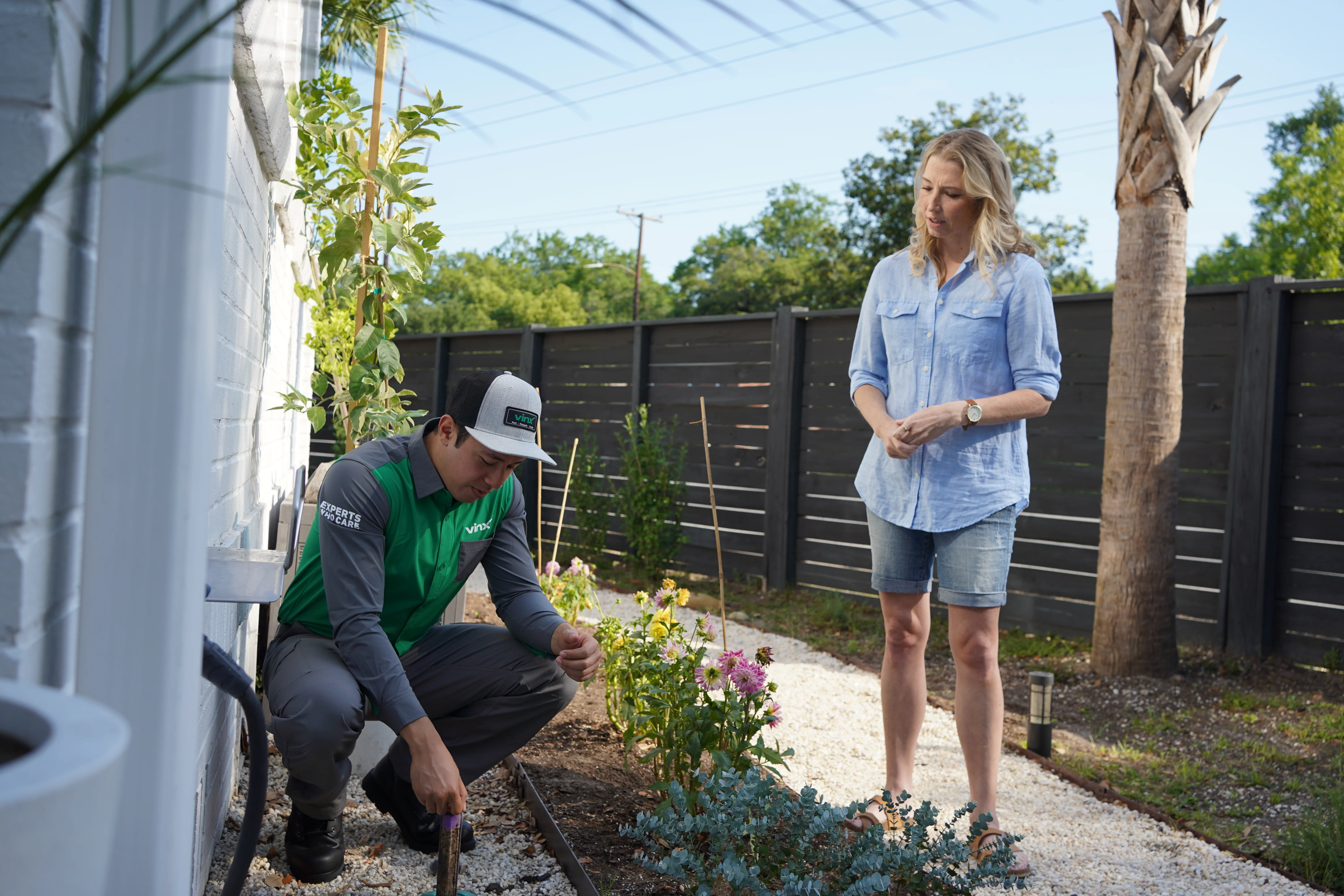
The exterior gets a micro-encapsulated barrier three feet up and three feet out, intercepting insects at the slab gaps and thresholds they actually use to get in. On a lot that floods on a spring tide, damp soil sits against the foundation several times a month, so this perimeter line is treated as termite defense first.
Yard Treatment
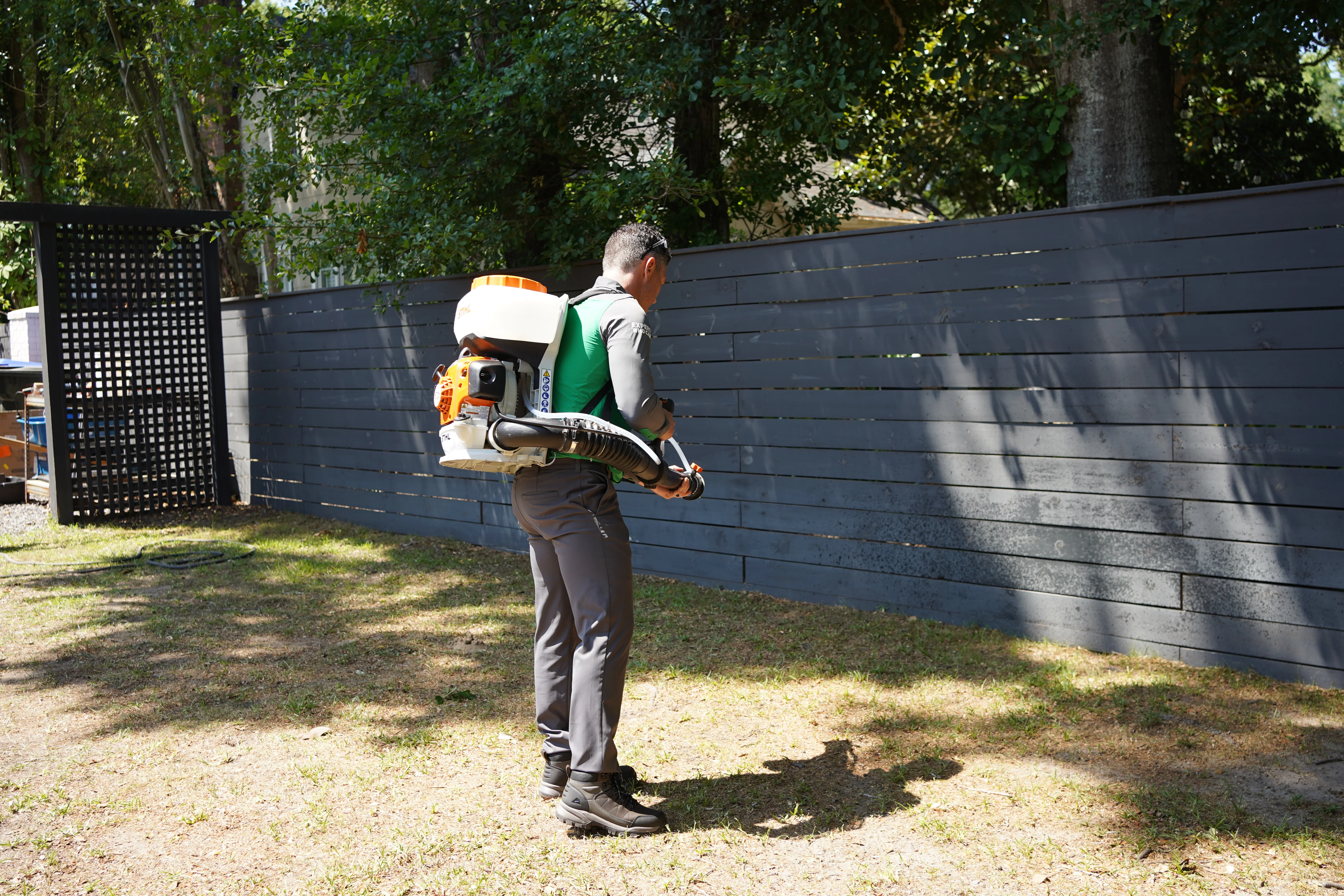
We treat the yard up to 30 feet out, mapping where flooding reaches and which low points hold water past five days — because that is where larval mosquito treatment actually pays off, rather than treating the whole yard evenly.
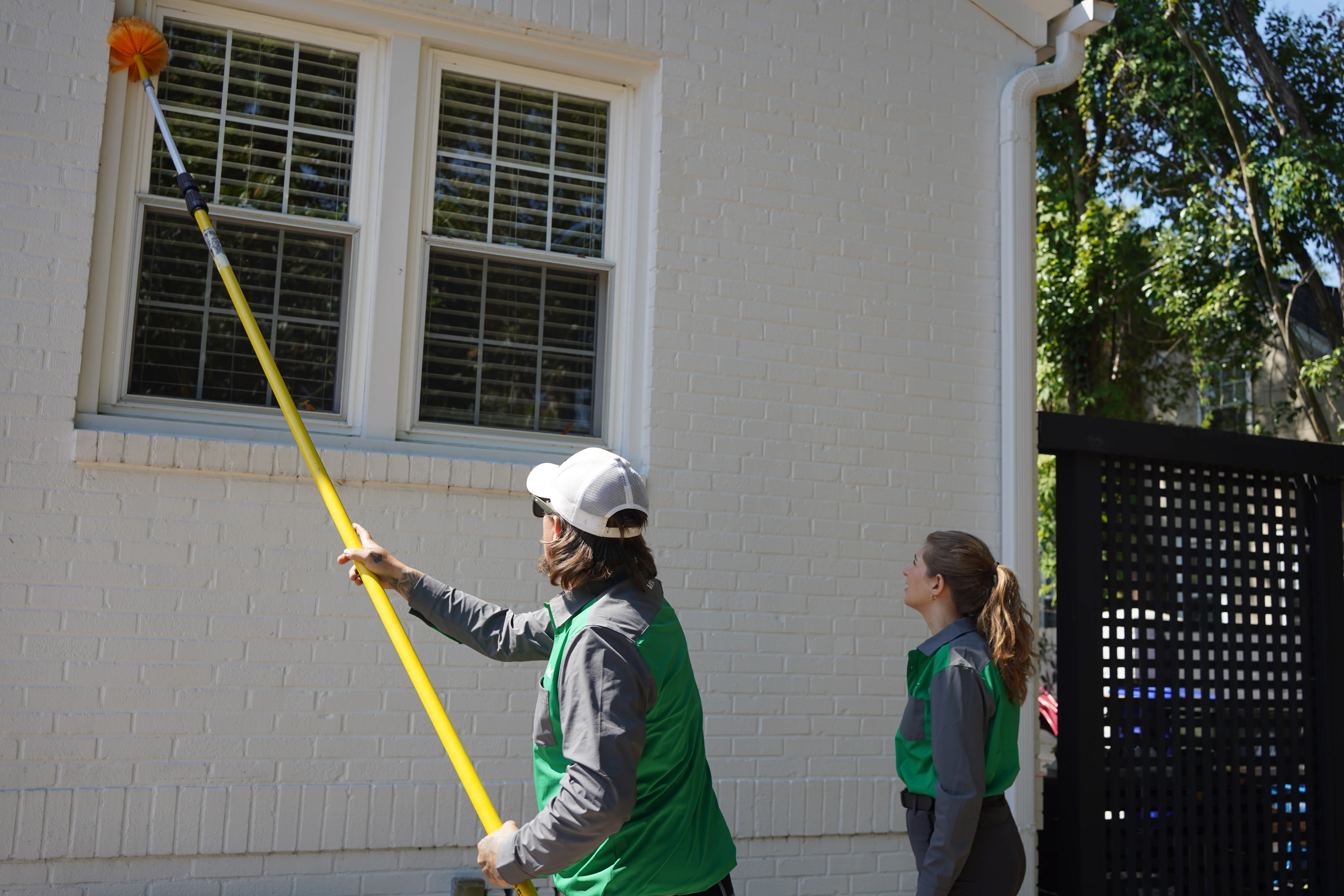
Sweep & Treat Eaves
Rooflines are swept clear of webs and early wasp nests on every visit, then spot-treated with a residual product. On marsh-front lots, where Clemson's guidance calls for a buffer free of fertilizer and pesticide, the eaves pass is one of the places we can still work without touching protected ground.
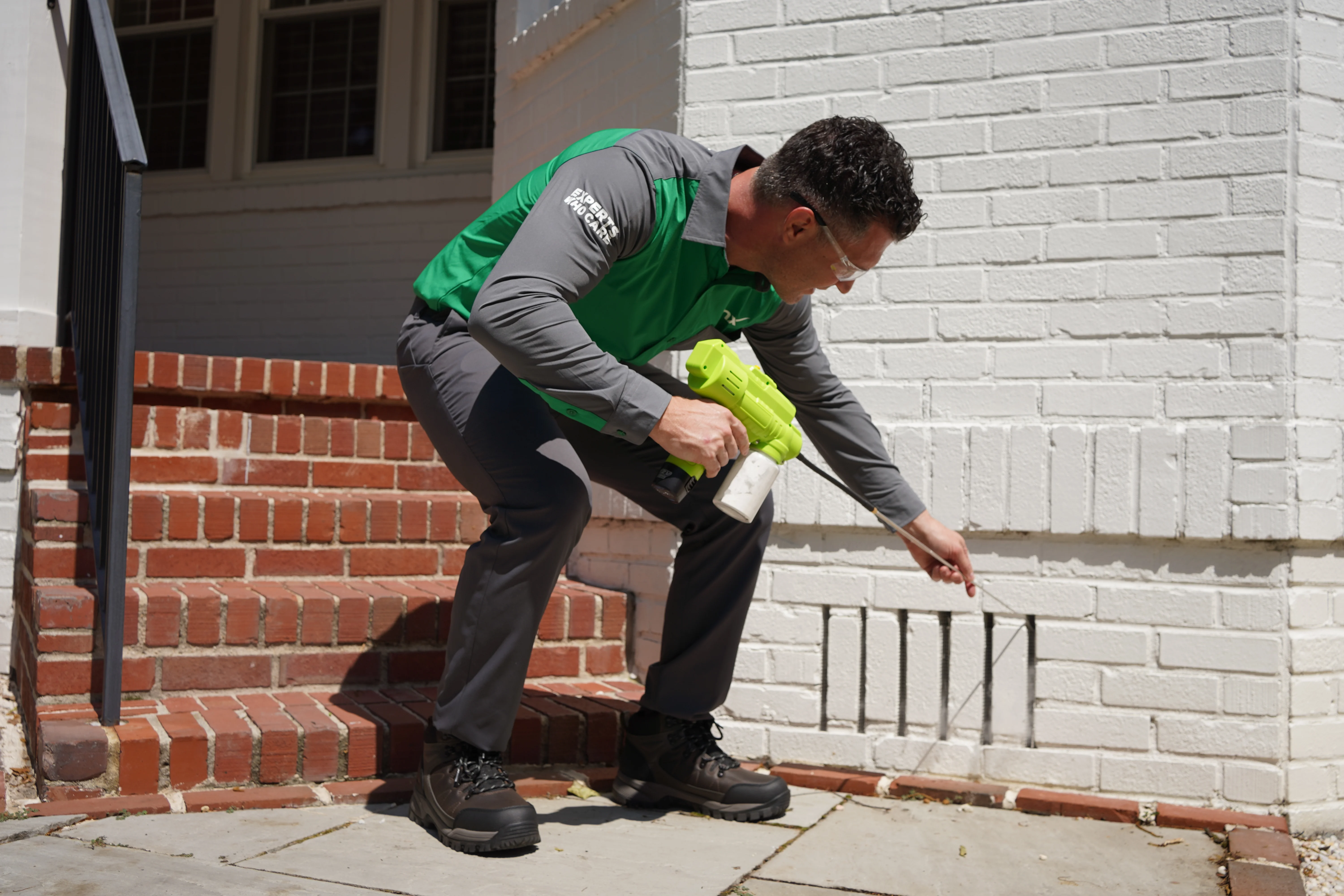
Power Dust Injection
Cracks, weep holes and expansion joints get a dust product driven in with a compressor tip, reaching wall voids a surface spray never touches. This matters especially on mid-century housing over a ventilated crawl space, where a lot that floods regularly keeps the substructure damp on a cycle rather than only after storms.
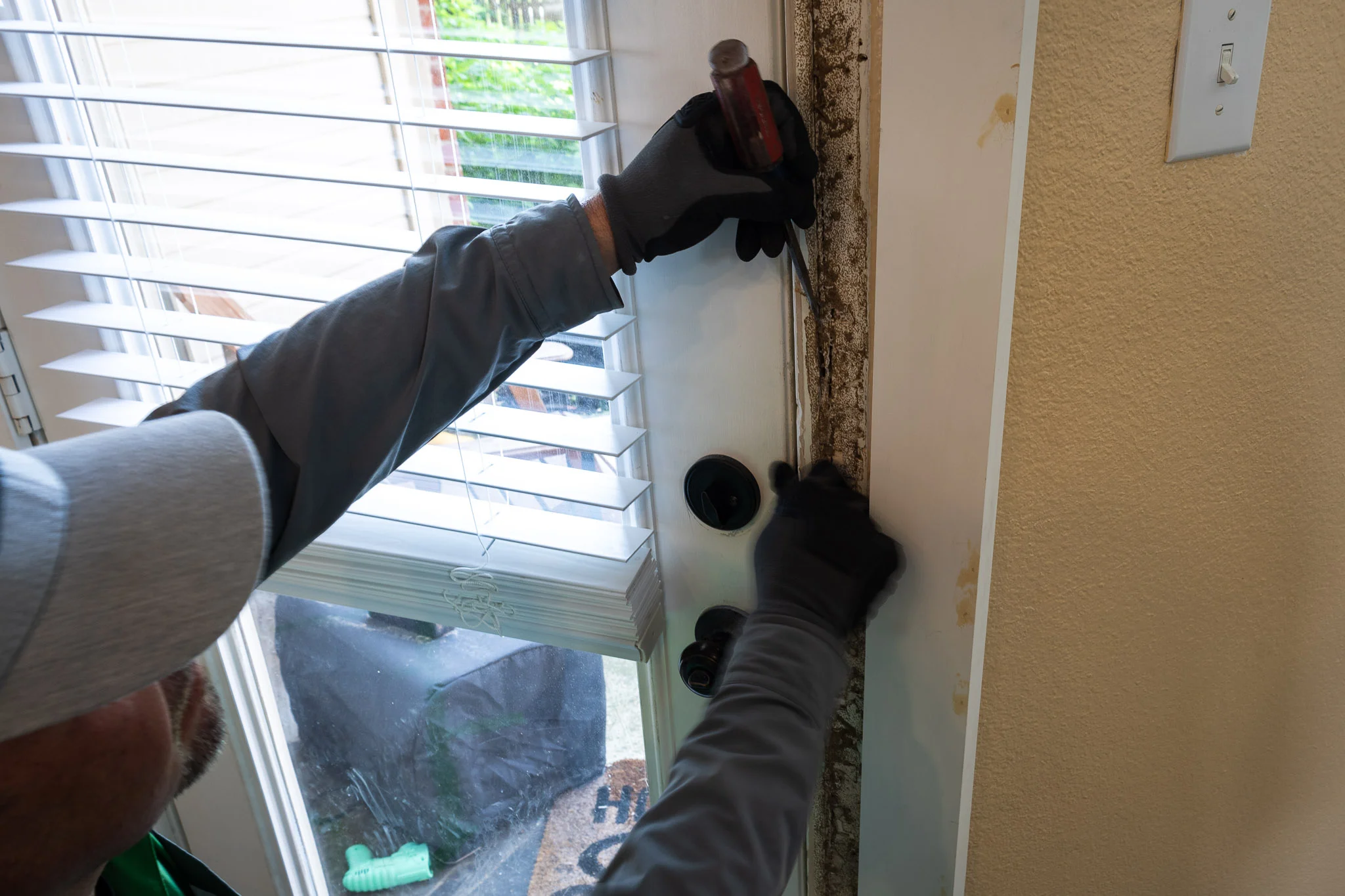
Interior Treatment (If Needed)
Where roaches, millipedes or rodents are already established indoors, we treat the harborage directly rather than misting a room and hoping. Interior work and free returns after a flood event are covered on every plan, on a tidal rhythm rather than a fixed date that ignores the tide.
Conducive Condition Report
At the end of every visit, your technician documents any conditions increasing pest pressure, moisture entry points, foundation gaps, vegetation contact, clogged gutters, standing water near the foundation. James Island's coastal environment creates specific conducive conditions that most companies never flag. We do, every single time.
Customer Reviews
Trusted by James Island Families: 4.8 Stars on Google
The technician was super professional and definitely let us know the plan and performance was outstanding. He did everything as proposed, and was very detailed in his work. Definitely not the technicians fault, only comment I would have his materials used to spray the inside of the home did leave residue on the dark wood floors…
Alex service is outstanding, and he always goes above & beyond! He treated both the inside and perimeter, was nice, professional, and efficient. Excellent job on everything. I highly recommended Vinx Pest Control.
We just moved and continued over service with vinx at our new home. Devin was professional and explained in detail everything he was doing. We felt like we were in great hands!
The technician Devon was great! He was very thorough and very professional. All the people at Vince are always so on top of our treatments and super easy to work with. I highly recommend them.
Anthony of Vinx Pest Control has done a great job and it is measured in what one does not see anymore. No roaches, ants, or pests in existence any longer. Get on a monthly plan and aspects happen and no issues.👍
Chris showed up on time, that is one of the most important things. Very polite did his work when he was finished he asked if there was anything else and did I have any questions. He didn't try and up sale that's the first time I'm a LONG time since that happened. That's a good thing, a few minutes ago I saw one of those filthy Cockroach 🪳 on his back dead as a wedge. Good experience all around.
One Island, Three Governments
Why Pest Control in James Island Is a Year-Round Commitment
Last updated: September 5, 2026
James Island is one island with three different governments on it, and that is not a technicality — it decides who sprays for mosquitoes near your house and which set of rules applies to your property. The Town of James Island’s own history records the town founded in 1992 and, after years of legal battles simply to exist, finally succeeding in 2012 with its fourth and final incorporation. Today parts of the island are the Town of James Island, other parts were annexed into the City of Charleston over decades, and the remainder is unincorporated Charleston County, with boundaries interleaved parcel by parcel rather than drawn tidily. Public mosquito control is delivered by whichever entity covers your parcel, and coverage of private property is generally limited and by request rather than automatic — so it is worth finding out which government you actually belong to, and then not waiting on it.
6 Reasons James Island Calls an Exterminator

Palmetto Bugs
American cockroaches — palmetto bugs — favor the humid, ventilated crawl spaces common on the island's mid-century housing stock. A lot that floods on spring tides keeps that substructure damp on a recurring cycle, which is exactly the moisture roaches need to establish year-round harborage.
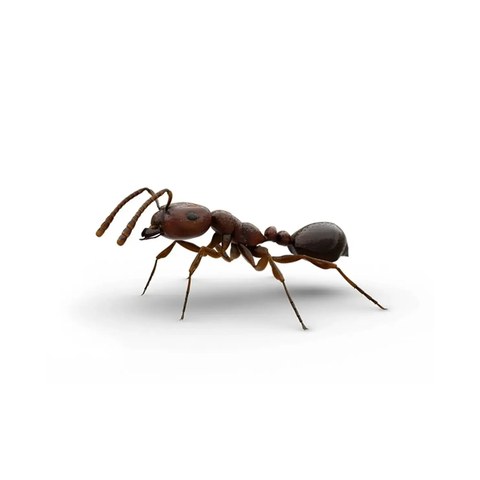
Fire & Argentine Ants
Fire ants find open, disturbed ground across the island's mixed housing eras, and treating a single mound rarely holds since the colony simply relocates. We pair direct mound treatment with a yard-wide bait program rather than chasing individual mounds.

Termites
Charleston County is on Clemson's list of sixteen counties with documented Formosan colonies, and on James Island the risk is compounded by tidal flooding — a lot that floods regularly keeps soil damp against the foundation several times a month, precisely the condition subterranean termites exploit.

Mosquitoes
Marsh mosquitoes lay eggs on damp upper-marsh ground, and the whole brood hatches together when an exceptional tide or heavy rain floods that elevation, with larvae finishing in four to five days. We map where tidal water reaches on your lot and treat the larval stage directly rather than fogging adults after the fact.

Rodents
Sea-island crawl spaces that never fully dry between tidal flood events give rodents a reliable path indoors, especially on older mid-century construction. Exclusion — sealing entry points — comes first, then trapping and secured bait.

Spiders
Cellar spiders and other humidity-dependent species turn up as a symptom of a crawl space that a spring tide keeps re-wetting rather than as an independent problem. Correcting ventilation and grading addresses the root cause more effectively than direct spider treatment alone.
James Island is a sea island, with tidal creek and salt marsh around most of its edge, and that geography drives the seasonal pattern more than temperature does. Marsh mosquitoes lay on damp substrate at the upper reaches of the marsh, and a brood hatches together when an exceptional high tide or heavy rain floods that elevation; larvae can complete development in four to five days, which is why the island can go from tolerable to unbearable within a week of a spring tide. NOAA’s Charleston tide station shows why this is getting harder rather than easier: a relative sea level trend of about 1.38 inches per decade, and nineteen minor high-tide flood days in 2023 against a mid-century baseline of nought to three a year.
Nearly all of the island is in Charleston County, which Clemson’s county tracking lists among the sixteen South Carolina counties with documented Formosan colonies, and Clemson dates the species’ introduction in Charleston to the mid-1950s. A lot that floods on a spring tide has damp soil against the foundation several times a month, which is precisely the condition subterranean termites want, and Clemson’s finding that ninety-four percent of infested buildings were entered from ground-based colonies is why our inspection is soil-first here — more pointed on this island than almost anywhere else we serve.
It is worth putting numbers on the jurisdiction problem, because it is bigger than it sounds. Charleston County’s historical survey notes that because parts of James Island fall under the City of Charleston and parts are unincorporated county, the island’s survey records had to be filed with both the City and the County. The City, for its part, reports that more than 18,000 James Islanders are already inside its limits and that neighborhoods continue to annex. So the boundary is not only split, it is still moving — which is why the right question on a service call here is which authority covers this address now, not which one covers the island.
Pest Pressure by Neighborhood
Where James Island Exterminator Calls Come From
Town Jurisdiction: Confirm What's Actually Covered
Parcels inside the Town of James Island get town-level services, with mosquito work coordinated at that level and generally focused on public land. Private property is rarely included automatically, so it is worth confirming what the town actually treats before assuming coverage.
City-Annexed Parcels: A Much Larger Service Area
Sections annexed into the City of Charleston fall under city services on a schedule that covers a far larger area than the island alone. Do not assume island-specific attention here, and report drainage issues separately from pest concerns.
Riverland Terrace & Fort Johnson: Marsh-Edge Pressure
These marsh-adjacent areas see the most direct tidal mosquito pressure on the island, with broods hatching together after an exceptional tide floods the upper marsh. Larval treatment on the private lot matters most here since public marsh mosquito work rarely extends to private property.
Folly Road: Commercial Density, Steady Rodent Calls
The commercial density along the Folly Road corridor produces the island's steadiest rodent and cockroach calls, tracking with restaurant and retail concentration. Commercial work here runs on a documented schedule with service records for health inspections.
Complete Coverage
What Our James Island Exterminators Treat
Every common Lowcountry pest covered under one recurring service plan
Palmetto Bugs
Year-round pressure. Drain lines, crawlspace vents, plumbing penetrations.
All Plans
Fire & Argentine Ants
Sandy coastal soil & new construction displacement. Requires Plus or Platinum.
Plus & PlatinumSpiders
Black widow, wolf spider. Cobweb removal included every visit.
All Plans
Wasps & Hornets
Nest removal from soffits and eaves. Persistent in warm coastal climate.
All Plans
Fleas & Ticks
Exterior flea/tick treatment. Interior flea covered in Platinum.
Plus & PlatinumMosquitoes
Monthly treatment Mar–Oct. Tidal proximity demands this level.
Platinum OnlyRodents
Roof rats, fence lines, power lines, roofline gaps. Exterior bait stations.
All PlansTermites
Formosan termite core range. Sentricon TotalDefense from $35/mo+.
Add-On
Bed Bugs
Covered after 12 months of Platinum service.
Platinum 12moKid & Pet Safe
Our Treatments Are Safe for Your Whole Family: Including the Furry Members
Every product we use is EPA-registered and applied strictly at labeled rates by licensed South Carolina technicians. We take the guesswork out of safety so you can feel confident letting kids and pets back into treated areas quickly.

EPA-Registered Products Only
All products we apply are EPA-registered and used strictly per label requirements. Our licensed technicians are trained to apply the right product in the right place at the right rate, every time.
Dry Time Before Re-Entry
Exterior spray treatments dry in 30–60 minutes. Once dry, treated surfaces are safe for children and pets to contact. Your technician will confirm the all-clear before leaving your property.
Interior Treatment On Request
We treat only what’s needed, where it’s needed. Gel baits and crack-and-crevice applications keep products away from areas pets and children frequent most.
Botanical Options Available
Have specific sensitivities? Ask your technician about our plant-derived treatment options. We offer botanical alternatives for households that prefer a more natural approach.
Have a concern about products used near your pets or children? Call (855) 800-8469 and we’ll walk you through exactly what we use and why it’s safe.
Explore More
More Pest Control Services in James Island
Termite Control James Island
Sentricon bait system
Mosquito Control James Island
Monthly barrier treatments
Ant Control James Island
Household ants & others
Spider Control James Island
All spider species covered
Cockroach Control James Island
Palmetto bugs & German roaches
Rodent Control James Island
All rodents covered
Bed Bug Treatment James Island
Heat & liquid treatments

Tick & Flea Control James Island
Yard & pet protection

Pest Control James Island
Year-round protection plans
Frequently Asked Questions
Exterminator James Island SC: Frequently Asked Questions
Recurring plans start at $49 a month, with one-off treatment priced by pest and property. Marsh-front lots price differently because the work is concentrated at the structure rather than spread across the yard. Inspection is free and the price is firm first. Call 855-800-8469.
It depends on your address, which is the confusing part. Parts of the island are the Town of James Island, parts were annexed into the City of Charleston, and parts are unincorporated Charleston County. Public programs concentrate on public land and private-property treatment is generally limited and by request, so it is worth knowing which government you belong to — and not relying on it.
the Town of James Island’s own history records the town founded in 1992 and finally established in 2012 on its fourth incorporation, after years of legal challenges undid the earlier attempts. The practical legacy is the interleaved jurisdiction map the island still has.
Because marsh species lay eggs on damp ground at the upper edge of the marsh, and the whole brood hatches together when an exceptional tide or heavy rain floods that elevation. Larvae finish in four to five days, so a spring tide is effectively a week’s notice.
The record says so. NOAA’s Charleston tide station shows a relative sea level trend of about 1.38 inches per decade at the Charleston station, and nineteen minor high-tide flood days in 2023 against a mid-century baseline of nought to three a year. More flooding of the upper marsh means more broods.
No, and that is deliberate. Clemson’s coastal water-quality guidance advises a ten-to-thirty-foot buffer clear of fertilizer and pesticide where property meets marsh. We work the structure and hard edges and target larval water instead, which is where treatment is actually efficient.
Yes. Charleston County is on Clemson’s county tracking among the sixteen with documented Formosan colonies, and Clemson dates the introduction here to the mid-1950s. On a lot that floods regularly the soil against your foundation is damp several times a month, which is the condition subterranean termites are looking for.
We cover the whole island including Riverland Terrace, Fort Johnson and the Folly Road corridor, plus Johns Island and the peninsula. Most calls get a next-day appointment. Call 855-800-8469.
Service Coverage
Pest Control Across James Island & the Lowcountry
Serving every neighborhood in and around James Island