Termite Control in James Island, SC
Formosan, Eastern Subterranean & Drywood Termite Experts: Sentricon TotalDefense Bait System
James Island is a sea island with salt marsh on most sides, and that geography sets the terms. Tidal creeks keep groundwater high, the ground drains slowly, and Charleston is among the oldest known Formosan termite infestations in the continental United States — the species arrived through the Port of Charleston in the mid-1950s, the period Clemson HGIC gives for its introduction here — it is established across Charleston County today, James Island included. What marks this island out is not just the risk but the constraint on treating it, because marsh-front property carries rules that inland property does not.
Get Started in 60 Seconds
Choose what’s easiest for you
Request a Quote
We usually respond in 2 minutes
Call (855) 800-8469
Get a Live Person (no AI agents here!)
Sign Up Online
Get pricing and schedule now




Welcome to Vinx Pest Control
A Company That Actually Backs What It Says
At Vinx, we combine professional-grade treatments with a level of service most pest control companies don't offer. Local technicians, fast response times, and a guarantee that actually means something.
Get a Free Quote"I'm not passionate about killing bugs. I'm passionate about customer service. At Vinx, you get experts who show up, do the job right, and stand behind every visit. No runaround, no fine print."
WELCOME TO VINX PEST CONTROL
Protection Plans for James Island Homeowners
Standard Residential Protection
- 4 Seasonal Treatments Per Year
- 50+ Covered Pests
- Interior, Exterior & Yard Treatment
- Unlimited Free Re-Services
- 100% Money-Back Guarantee

Upgraded Yard Protection
- 6 Home & Yard Treatments Per Year
- 50+ Covered Pests
- Yard Ant Elimination Guarantee
- Flea & Tick Elimination Guarantee
- 100% Money-Back Guarantee

Most Comprehensive Protection
- 9 Treatments Per Year
- 50+ Covered Pests
- 8 Mosquito Treatments (Mar–Nov)
- Flea, Tick & Ant Coverage
- Free Bed Bug Treatments if Needed*
*Starting rates vary by home size and area. All plans billed monthly.
Request Your Free Termite Inspection
Fill out the form below and a Vinx team member will reach out within 2 minutes during business hours.
Prefer to talk? Call (855) 800-8469 for a live person, no AI agents.
Our Approach
How Vinx Protects Your James Island Home from Termites

Thorough Termite Inspection
Your technician inspects the full structure, crawl space, piers, attic, frames and every wood-to-soil contact, and maps two lines on a James Island lot: where tidal flooding reaches, and where the marsh buffer begins. Mud tubes, frass, hollow wood and swarm evidence are documented against both, because that is what decides the treatment plan.
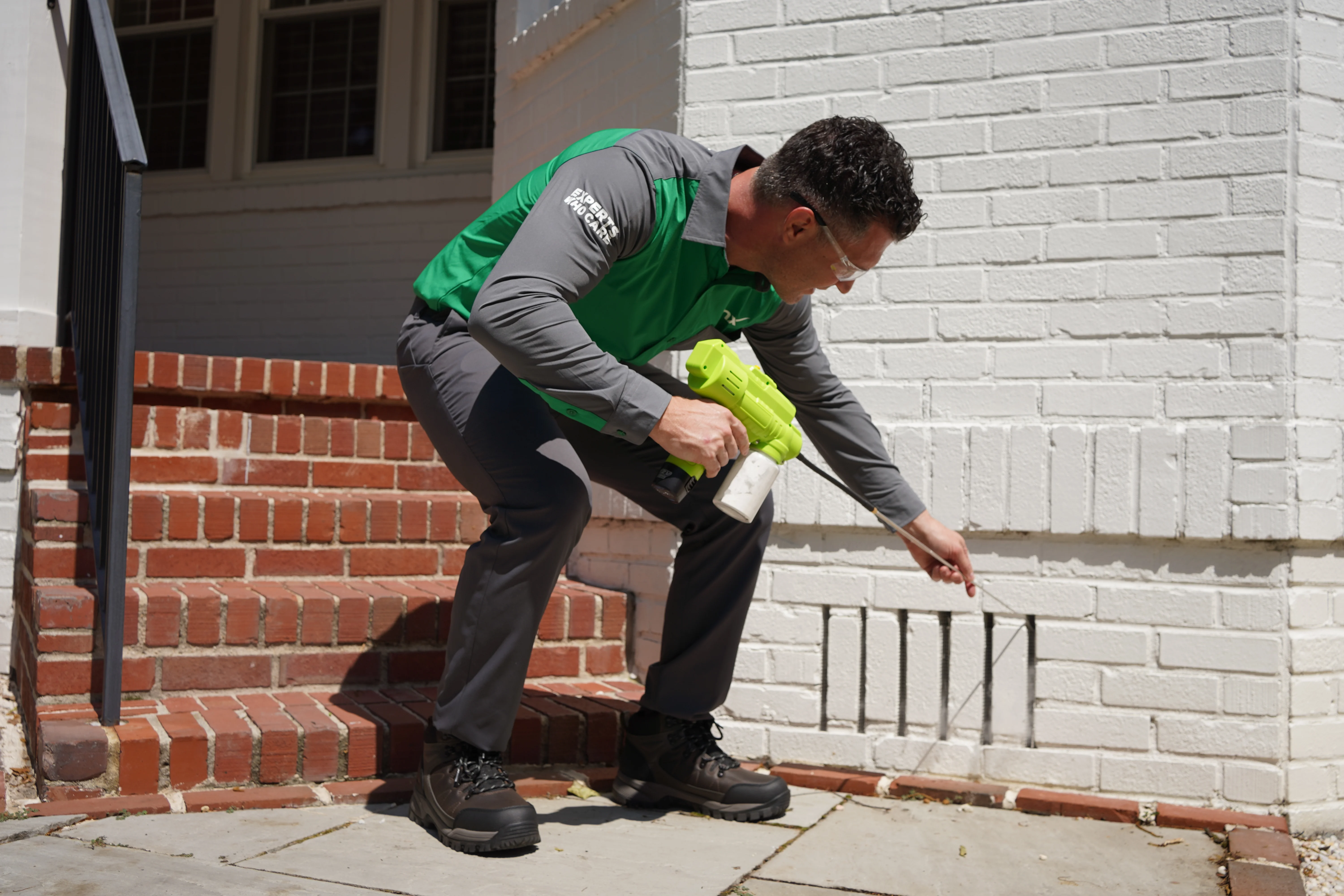
Foundation & Perimeter Treatment
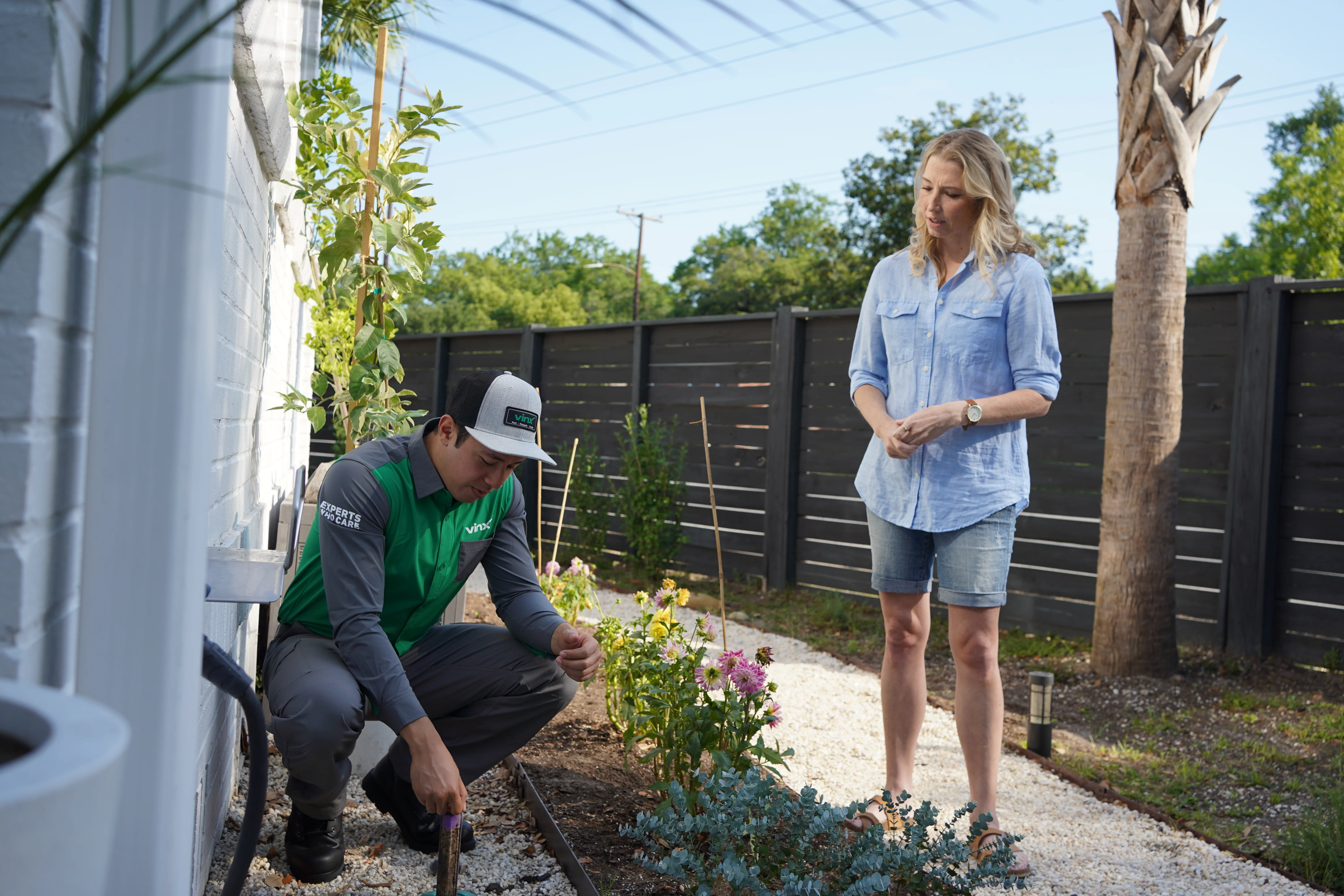
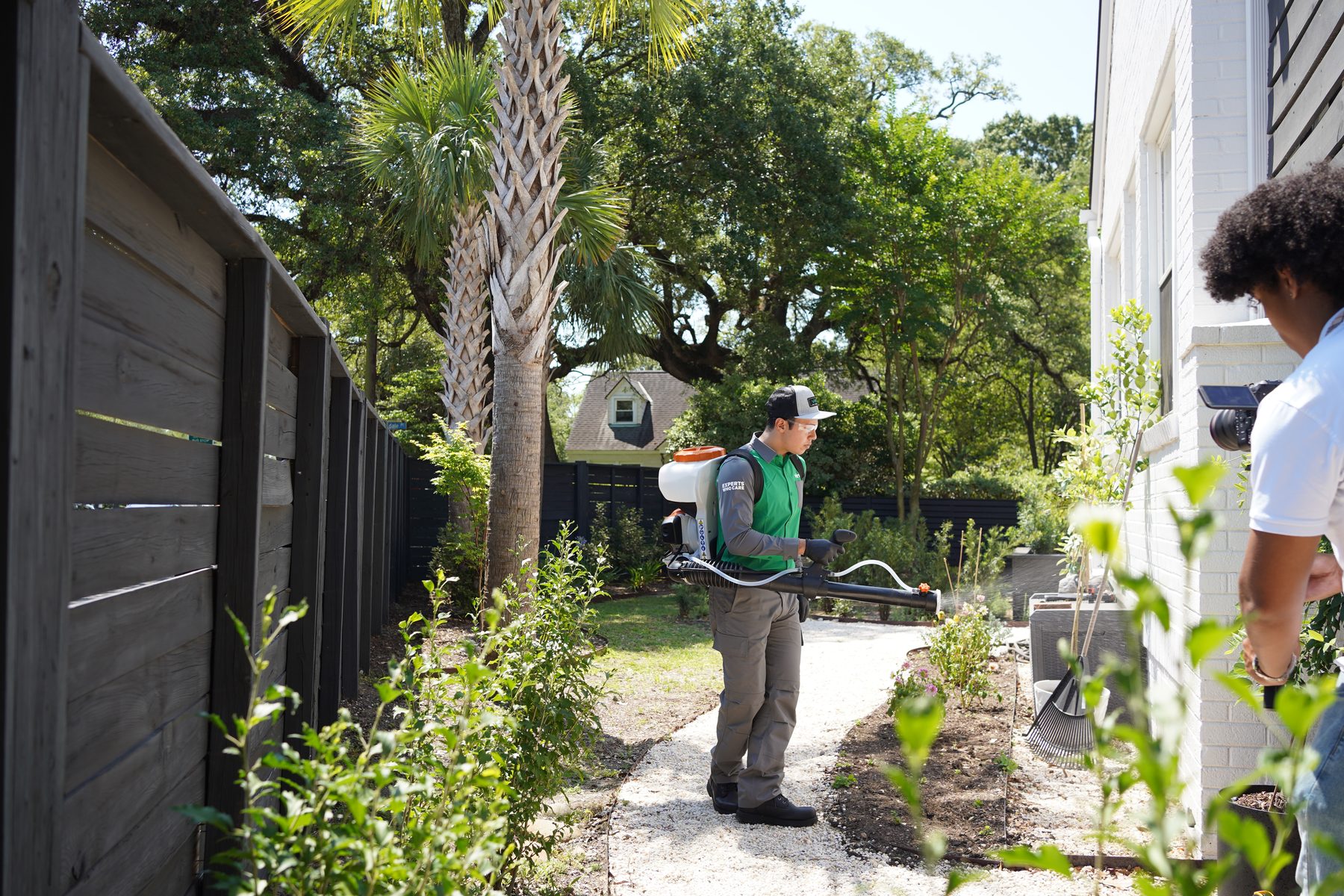
A liquid termiticide barrier is applied around the foundation perimeter, beneath slab edges and around utility penetrations, on both interior and exterior faces, and stops at the marsh buffer line. On a marsh-front lot at Stiles Point or Fort Johnson, bait stations carry the protection where liquid cannot go.
Direct Colony Treatment
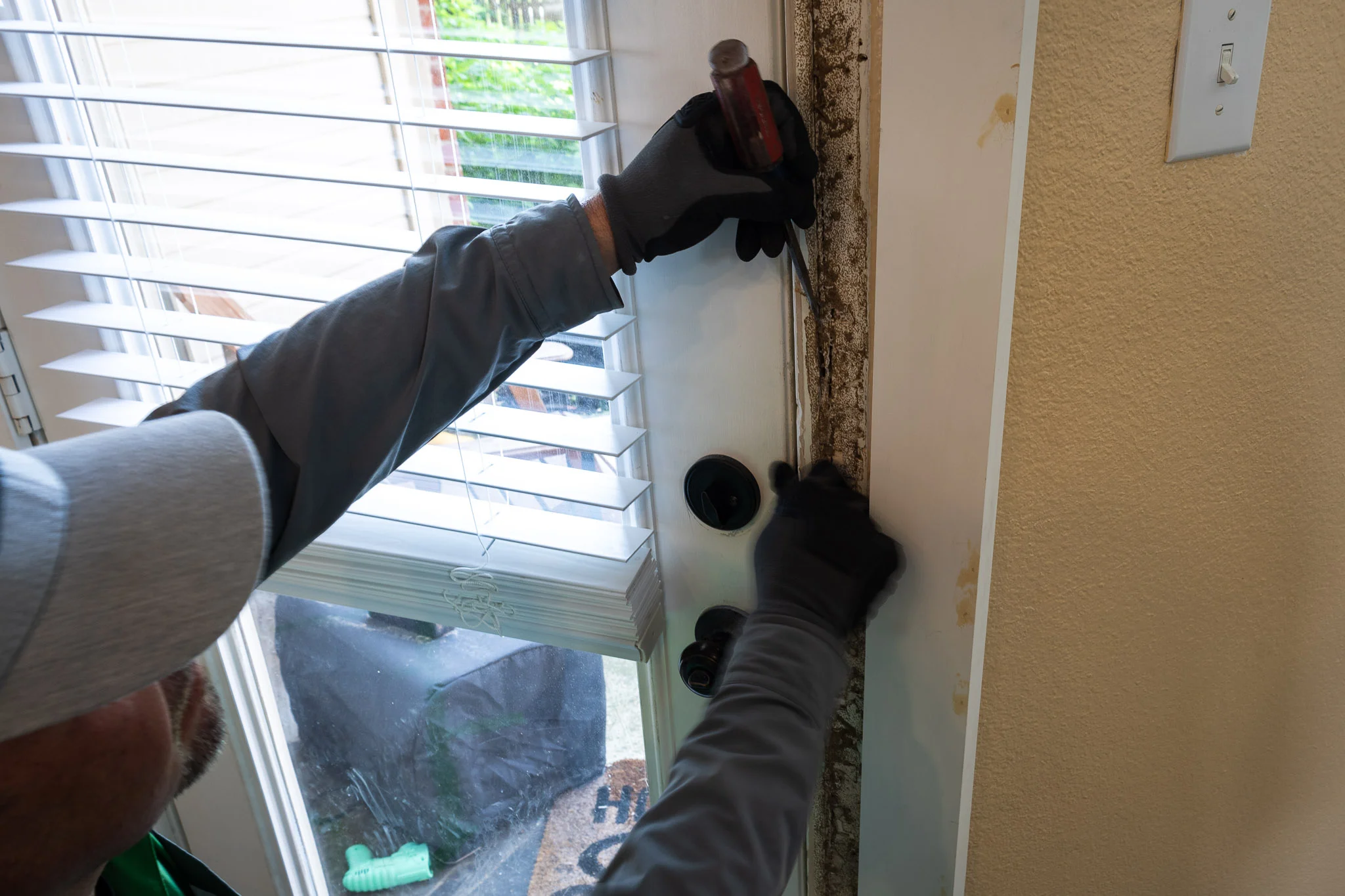
Active galleries and mud tubes are treated directly with termiticide foam or dust. Under the elevated older homes of Riverland Terrace and the Fort Johnson corridor the vented crawl space over damp ground is where activity usually starts, and it is treated at the pier and sill.
Annual Inspection & Re-Treatment Guarantee
Annual inspections keep protection current and catch new activity early, and if termites return between visits we re-treat at no charge. Your technician also advises on crawl-space moisture and drainage, since NOAA’s Charleston gauge recorded 19 minor flood days in 2023 and the ground here drains slowly.
What Our Customers Say
What James Island Homeowners Say About Vinx Termite Control
Jonathan was polite, professional and expedient. He stopped and showed me one of the “traps and explained what would have been seen if there had been termites. I am so happy with the service that I am encouraging my daughter to sign up with Vincent as well
I am a Very satisfied customer of Vinx pest control. I have received top customer care and service since 2020. The technicians are always polite, friendly and accommodating. The technicians have been servicing my home so long that they are mindful not to show up too early as they are familiar with my work from home schedule. I appreciate the flexibility and consideration. I am a happy customer. 😊
Courteous and prompt service. Pleasant and professional team members. Affordable services.
The tech who came by was a very nice guy. He answered all my questions and I could tell that he was good at his job. He gave me confidence that I made the right choice going with Vinx for our termite bond.
Just changed from prior pest control service to Vinx after concerns with prior company’s cost for pest and termite services. While researching found 2 of my friends used Vinx and both were highly satisfied with value and service. Just had 2 different services performed and was impressed by both teams I worked with - all were professional, knowledgeable, polite and efficient. Glad I selected them.
Referred by a friend. Ryan and Jack have always been great! Upgraded to Vinx Plus for the extra coverage :-) we will be going with them when our termite bond is up also! They price matched for a great deal!
Dylan was fantastic very thorough and great to work with.
Johnathan from Vinx did a fantastic job at our home. Very professional
Devin was extremely informative and provided outstanding customer service. Employee of the month candidate!!!
Ready to Protect Your James Island Home?
Free termite inspection for James Island homes, same-day availability in most cases. We work inside Clemson’s marsh-buffer guidance, not around it, and tell you plainly what we find.
The Local Threat
Why Termite Control in James Island Isn’t One-Size-Fits-All
James Island is one of the few places in the country where a genuinely more aggressive termite has been established for decades, and treating it is constrained as well as complicated. The Formosan subterranean termite arrived through the Port of Charleston in the mid-1950s, the period Clemson HGIC gives for its introduction, and Charleston County is on Clemson’s sixteen-county list. On a sea island ringed by marsh, Clemson also asks homeowners to keep a 10 to 30 foot buffer with no fertilizer and no pesticide along the marsh edge, so protection here has to be designed around water on every side.
What genuinely separates James Island from the mainland towns is that treating it is constrained as well as complicated. Clemson advises homeowners on marsh-adjacent property to keep a 10 to 30 foot buffer where no fertilizer and no pesticide is applied, to have the septic system inspected every one to two years and pumped every three to five. On an island where salt marsh reaches most of the perimeter, that is not a footnote — it decides where a soil treatment can physically go, and it is why a competent James Island termite plan starts with a site map and the marsh line rather than with a product.
A mature Formosan colony can run to several million workers. On a sea island the aggravating factor is water: high groundwater, slow drainage, and a tidal-flood frequency that has gone from nought-to-three days a year in the mid-twentieth century to 19 in 2023. The native Eastern subterranean termite is the baseline everywhere, and drywood termites, which need no soil contact at all, do well in this humidity. Vinx treats for all three.
This island was a timber source before it was a suburb. Charleston County’s survey records a James Island Shipyard operating from 1742 to 1772, and notes that colonial shipbuilders generally camped near their source of wood and moved on when the work was done. Three centuries of cutting, building and rebuilding on the same ground leaves buried stumps, old fill and long-established colonies in the soil — and since 1957, when Formosan termites entered the country at Charleston, that inherited wood has had a second species working it. It is the strongest argument there is for treating protection here as continuous rather than reactive.
James Island Termite Species
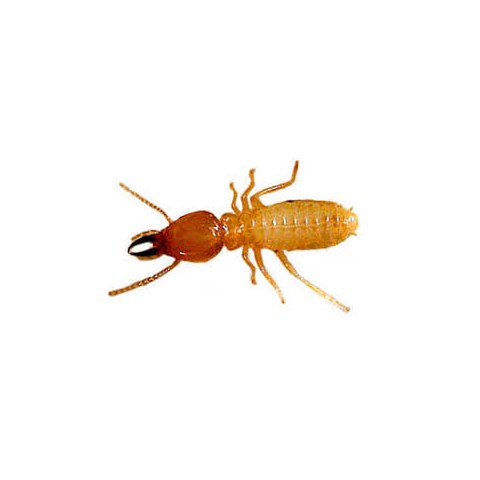
Formosan Subterranean Termite
The Formosan subterranean termite (Coptotermes formosanus) was first documented on the U.S. mainland in the Charleston area in the mid-1950s, and it remains well-established throughout Charleston County today. Colonies can number in the millions of workers, several times larger than a native subterranean colony, giving them a far larger foraging range and a documented ability to infest live trees as well as structures.
Individual Formosan workers aren’t resistant to termiticides and colonies aren’t invincible, but their sheer size means an undetected infestation can progress faster and cause more extensive damage than a native colony of the same age, which is why bait systems here are installed with a colony of that scale in mind.
Eastern Subterranean Termite
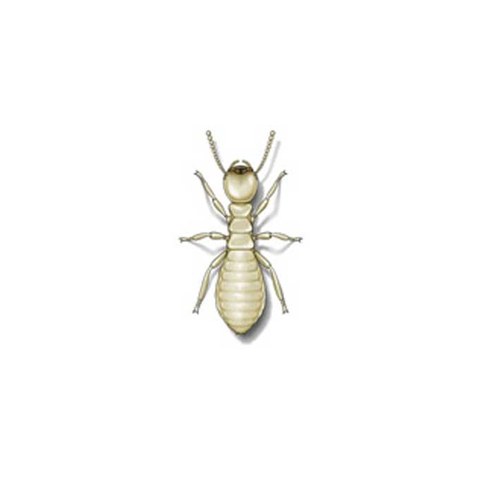
The native Eastern subterranean termite remains the most widespread termite threat throughout James Island and the broader Lowcountry. Colonies live underground and build pencil-width mud tubes to travel from soil to wood while avoiding light and dry air.
Mature colonies number in the hundreds of thousands and cause serious structural damage over years, often invisible at the surface until extensive. Nothing detects activity more reliably than quarterly inspections and bait station monitoring, before it becomes a major repair.
Drywood Termite
Unlike subterranean and Formosan termites, drywood termites need no soil contact at all, they nest directly inside dry structural wood, attic framing, and furniture. Clemson research notes drywood termites are most common specifically along South Carolina’s humid coastal areas, making James Island more exposed to this species than most inland cities.
Because colonies are hidden entirely within wood, infestations are often only discovered during renovation work or a professional inspection, and treatment sometimes requires localized wood treatment or structural fumigation rather than a soil-based approach.
Know Your Risk
Termite Risk Across James Island
Riverland Terrace: Formosan Termite Risk
Riverland Terrace’s older homes sit under a mature oak canopy on some of the island’s lowest ground. Clemson documents Formosan activity in living trees around Charleston, so a colony can be established in the canopy fifty feet from a house that inspects clean.
- Century-old homes built before modern pest-proofing
- Settled foundations with wood-to-soil contact
- Established Formosan super-colonies documented by Clemson University
- Annual species-specific inspection strongly recommended
Fort Johnson & McLeod Plantation Historic Corridor: Formosan Termite Risk
Around Fort Johnson and McLeod Plantation the structures are genuinely old and the marsh is genuinely close. Clemson advises marsh-adjacent owners keep a 10 to 30 foot buffer with no fertilizer and no pesticide, which means treatment here is planned around the buffer rather than straight through it.
- Mature live oak and canopy Formosan colonies exploit
- Damp, low-lying ground keeps soil moisture elevated
- Formosan termites documented infesting live trees, not just structures
- Full property inspection, trees included, matters here
Harborview Road Corridor: Eastern Subterranean Termite Risk
The Harborview Road corridor is mid-century residential on ground that sits only a little above the creeks behind it. Native subterranean termites need persistent soil moisture, and slow drainage supplies it for most of the year.
- Decades-old housing stock with settled foundations
- Aging crawl-space timbers and wood-to-soil contact
- Native subterranean colonies in the surrounding soil
- Bait station monitoring catches activity before it’s extensive
Stiles Point: Eastern Subterranean Termite Risk
Stiles Point sits between tidal creeks, so the water table is close on more than one side of a property. Crawl spaces in that setting stay humid long after the weather turns, which is the condition that keeps a native colony working through the winter.
- Marsh-adjacent waterfront ground keeps soil moisture elevated
- Waterfront timbers and wood-to-soil contact
- Native subterranean pressure is the baseline here
- Annual inspection plus perimeter bait recommended
Folly Road Corridor: Drywood Termite Risk
The Folly Road corridor mixes commercial frontage with older residential stock. Drywood termites need no soil contact and arrive in infested wood and furniture, so they move between buildings on this corridor by delivery van rather than through the ground.
- Humid coastal air favors drywood colonization
- Drywood termites nest directly in structural lumber
- Infestations often found only during renovation or inspection
- Localized wood treatment may be needed alongside bait systems
Warning Signs
Signs of Termites in Your James Island Home
Mud Tubes on Crawl-Space Piers
Pencil-width soil tunnels on the piers of an elevated island house, the route subterranean termites use from damp ground to sill.
Hollow-Sounding Joists
Tap framing with a screwdriver handle. A papery sound means the interior is gone while the surface is intact.
Sticking Doors and Windows
Damage and the moisture it brings warp frames, and on a high-water-table island the moisture is a given.
Bubbling Paint Near the Floor
Paint that blisters in odd patterns near baseboards or window frames can signal moisture from activity below the surface.
Frass on Window Sills
Drywood termites push sand-like pellets out of kick-out holes; small piles collect on sills and baseboards.
Wings After a Warm Evening
Formosan swarmers fly on May-to-July evenings toward lights; wings on a sill or porch are a classic sign.
Soft Spots Underfoot
A spongy floor, especially in the older crawl-space homes near Fort Johnson, can mean damaged subfloor or joists below.
Standing Water Under the House After a Tide
Not a termite sign in itself, but water under the house after a King Tide is the condition that invites them; check the piers when it drains.
Homeowner Tips
6 Ways to Reduce Termite Risk Right Now
Kid & Pet Safe
Our Treatments Are Safe for Your Whole Family: Including the Furry Members
Every product we use is EPA-registered and applied strictly at labeled rates by licensed technicians. We take the guesswork out of safety so you can feel confident letting kids and pets back into treated areas quickly.

EPA-Registered Products Only
All products we apply are EPA-registered and used strictly per label requirements. Our licensed technicians are trained to apply the right product in the right place at the right rate, every time.
Dry Time Before Re-Entry
Exterior spray treatments dry in 30–60 minutes. Once dry, treated surfaces are safe for children and pets to contact. Your technician will confirm the all-clear before leaving your property.
Interior Treatment On Request
We treat only what’s needed, where it’s needed. Gel baits in cabinets and crack-and-crevice applications keep products away from areas pets and children frequent most.
Botanical Options Available
Have specific sensitivities? Ask your technician about our plant-derived treatment options. We offer botanical alternatives for households that prefer a more natural approach.
Have a concern about products used near your pets or children? Call (855) 800-8469 and we’ll walk you through exactly what we use and why it’s safe.
Explore More
More Pest Control Services in James Island

Pest Control James Island
General pest protection

Mosquito Control James Island
Monthly barrier treatments

Ant Control James Island
Household ants & others

Spider Control James Island
All spider species covered
Cockroach Control James Island
Palmetto bug & roach removal

Rodent Control James Island
All rodents covered

Bed Bug Treatment James Island
Heat & liquid treatments

Tick & Flea Control James Island
Yard & pet protection
Exterminator James Island
Same-day local exterminators
Frequently Asked Questions
Termite Control FAQ for James Island Homeowners
Vinx termite protection starts at $75/month as part of the Protection Plus plan, which includes Sentricon bait station installation, ongoing monitoring and the free re-treatment guarantee. Installation pricing tracks the linear footage of the foundation. Call (855) 800-8469 for an exact quote for your James Island property.
Yes. Because Sentricon stations are enclosed units in the ground, the active ingredient is not reachable by children or pets. No liquid enters your soil or foundation, every product carries EPA registration, and your family can stay home during and after installation.
Initial Sentricon installation generally runs 2 to 4 hours by foundation footprint and station count, no tenting and no need to vacate. On a marsh-front lot the layout takes a little longer because stations are placed to respect the buffer. Monitoring calls take 30 to 60 minutes.
Sentricon works continuously; it is not a one-time treatment. Stations get checked on schedule through the year, and activity is treated straight away at no added cost. On James Island that schedule matters more than most places, because tidal water refills the crawl spaces.
Yes. Live termites in a structure we protect means a free Vinx re-treatment, no deductible and no fine print. The guarantee accompanies Protection Plus and Premium and stays in force so long as annual monitoring continues.
Most James Island appointments are same-day or next-day. Call (855) 800-8469 to book, and if we cannot service your home the next business day your initial service is free. We cover the whole island, including Riverland Terrace, Stiles Point, Harborview, the Folly Road corridor and the Fort Johnson and McLeod Plantation area.
Keep it — that one insect settles the question faster than anything else. Clemson gives two clear markers. Size and color: a native subterranean swarmer is about three-eighths of an inch and black, while a Formosan swarmer is about half an inch and golden brown. Both carry four wings of equal length, longer than the body, so wing shape will not separate them. Timing: natives swarm in early spring, usually in the afternoon; Formosans from mid-May into July, usually in the evening. And behavior: Formosan swarmers are strongly drawn to lights, which is why on James Island they gather at porch fixtures, screens and windows after dark rather than drifting over the lawn at midday. Drop a few into a jar or a sealed bag and hand them to the technician. One caution about what you may be told elsewhere: Clemson states plainly that Formosan termites are not ‘super termites’. Side by side you could not tell a Formosan worker from a native one, and they eat wood at about the same rate. The colony is bigger; the insect is not hungrier.
Yes. Charleston County is on Clemson’s list of sixteen counties with documented Formosan colonies, and the species is established across the island, from Riverland Terrace’s oak-shaded homes to the historic corridor near Fort Johnson and McLeod Plantation. This island was a timber source before it was a suburb, with a shipyard operating from 1742 to 1772, and the ground has been carrying wood and water ever since.
February through April is when native Eastern subterranean termites swarm, usually on a warm day after rain. Formosan termites swarm mid-May into July per Clemson, in the evening and strongly drawn to lighting, with larger golden-brown swarmers. On a marsh-front porch in June, wings under the light are the sign to call about.
No. Standard South Carolina policies exclude termite damage as a maintenance issue rather than a sudden loss, so repairs come entirely out of pocket. Flood insurance does not cover it either, which matters on an island where the two problems arrive together.
The CL-100 serves as South Carolina's official Wood Infestation Report in real estate transactions. It records visible evidence of wood-destroying insects and fungi in accessible areas on the day of inspection, and most SC lenders require one before closing. On James Island the elevated older homes have accessible crawl spaces, so these reports tend to find more here than in slab towns.
A licensed pest control company's service agreement providing ongoing protection and re-treatment. On James Island, where Formosan and native termites are active year-round and the marsh buffer limits what can be sprayed, a bond built on bait stations is the standard protection. The Vinx Plus plan is what stands as your termite protection agreement.
It changes where we spend the time. James Island is cut through with tidal creeks and marsh edge, and the water table sits close to the surface across much of it, which keeps soil damp year round rather than seasonally. Subterranean termites live in that soil and have to keep contact with it or another moisture source, so consistently wet ground removes the natural limit that drier sites impose. On a creekside lot the inspection concentrates on the lowest structural wood — joists, sills, the bottoms of piers and posts, any place where a deck or a dock walkway meets the ground — and on the grade, because on flat marsh-edge lots water often has nowhere to go but toward the foundation. Where a property is elevated, the underside gets walked rather than glanced at, since elevated framing is exactly where activity goes unnoticed longest.
Service Coverage
Termite Control Across James Island & the Tri-County Area
Serving every neighborhood in and around James Island
Serving the Greater Charleston Area