Exterminator in West Ashley, SC
West Ashley is where Charleston began, colonists landed at Albemarle Point in 1670, a decade before the peninsula. Its moss-draped oaks, tidal marshes, and creeks along the Ashley and Stono Rivers are the same coastal Lowcountry conditions that push termite, roach, and mosquito pressure well past what inland homeowners see. Vinx treats by what the coastal climate and your part of town actually demand. 100% satisfaction guarantee.
Get Started in 60 Seconds
Choose what’s easiest for you
Request a Quote
We usually respond in 2 minutes
Call (855) 800-8469
Get a Live Person (no AI agents here!)
Sign Up Online
Get pricing and schedule now



Welcome to Vinx Pest Control
A Company That Actually Backs What It Says
At Vinx, we combine professional-grade treatments with a level of service most pest control companies don’t offer. Local technicians, fast response times, and a guarantee that actually means something.
“I’m not passionate about killing bugs. I’m passionate about customer service. At Vinx, you get experts who show up, do the job right, and stand behind every visit. No runaround, no fine print.”

Founder & Owner, Vinx Pest Control
PROTECTION PLANS
West Ashley Exterminator Pricing
100% money-back guarantee on every plan.
Standard Residential Protection
- 4 Seasonal Treatments Per Year
- 50+ Covered Pests
- Interior, Exterior & Yard Treatment
- Unlimited Free Re-Services
- 100% Money-Back Guarantee
- Fire Ant Yard Guarantee
- Flea & Tick Coverage
- Mosquito Treatments

Upgraded Yard Protection
- 6 Home & Yard Treatments Per Year
- 50+ Covered Pests
- Interior, Exterior & Yard Treatment
- Unlimited Free Re-Services
- 100% Money-Back Guarantee
- Fire Ant Yard Elimination Guarantee
- Flea & Tick Elimination Guarantee
- Mosquito Treatments

Most Comprehensive Protection
- 9 Treatments Per Year
- 50+ Covered Pests
- Interior, Exterior & Yard Treatment
- Unlimited Free Re-Services
- 100% Money-Back Guarantee
- Fire Ant Yard Elimination Guarantee
- Interior Flea & Tick Coverage
- 8 Mosquito Treatments (Mar–Nov)
- Free Bed Bug Treatments if Needed*
*Starting rates vary by home size and area. All plans billed monthly.
Request Your Free Pest Control Quote
Fill out the form below and a Vinx team member will reach out within 2 minutes during business hours.
Prefer to talk? Call (855) 800-8469 for a live person, no AI agents.
Our Process
How Vinx Exterminators Work a West Ashley Property: Step by Step

Inspection & Reporting
An extermination visit in West Ashley starts with drainage, not the house. A technician establishes where water sits on your lot and how long, because in the Church Creek basin that predicts nearly everything else. Identification follows, and you get a firm price before any work begins.
Exterior Foundation Treatment
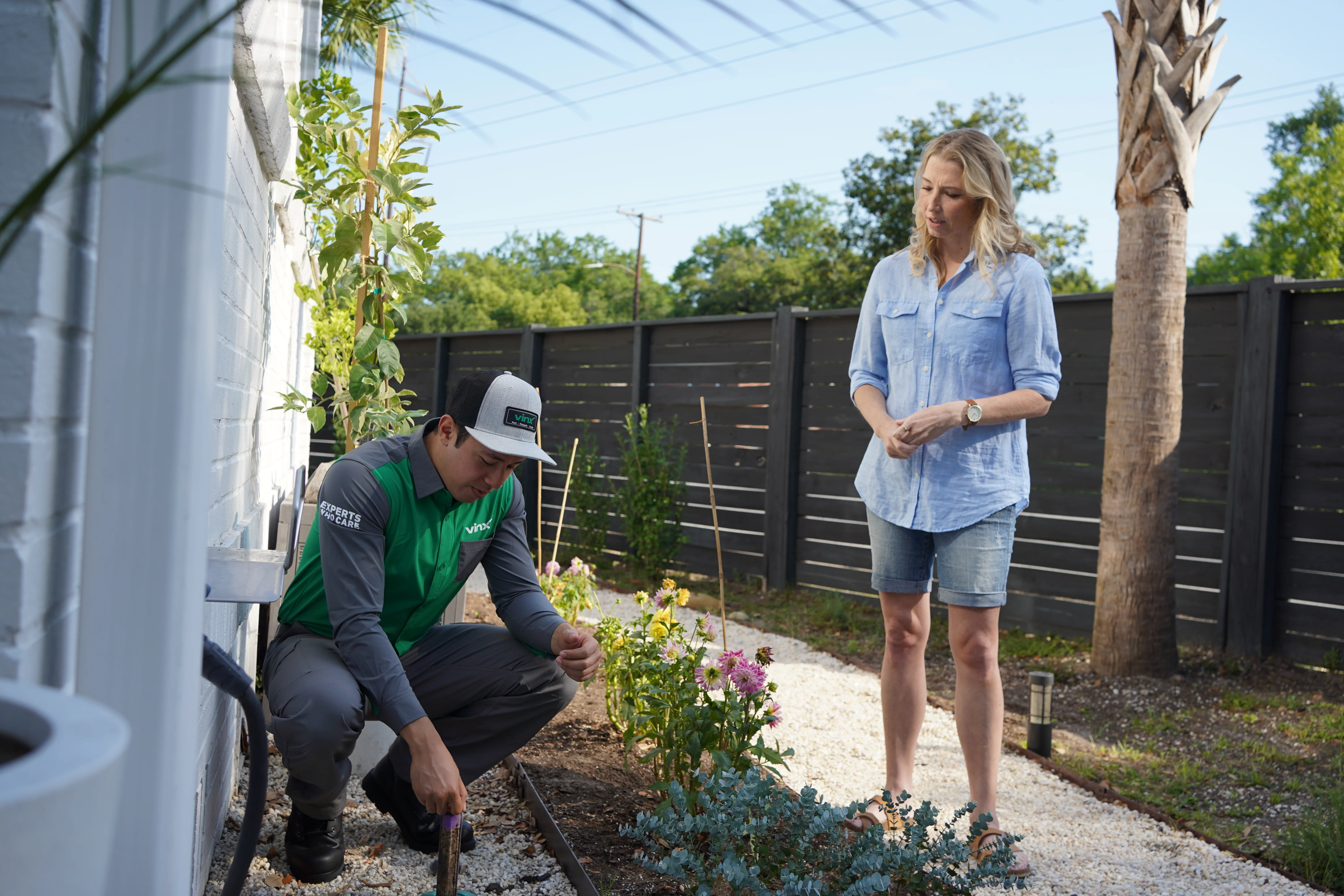
The exterior gets a micro-encapsulated barrier three feet up and three feet out, intercepting insects at the slab gaps and thresholds they actually use to get in. West Ashley is in Charleston County, on Clemson's Formosan list, and ground that stays saturated against a foundation is exactly the condition subterranean termites exploit most reliably.
Yard Treatment
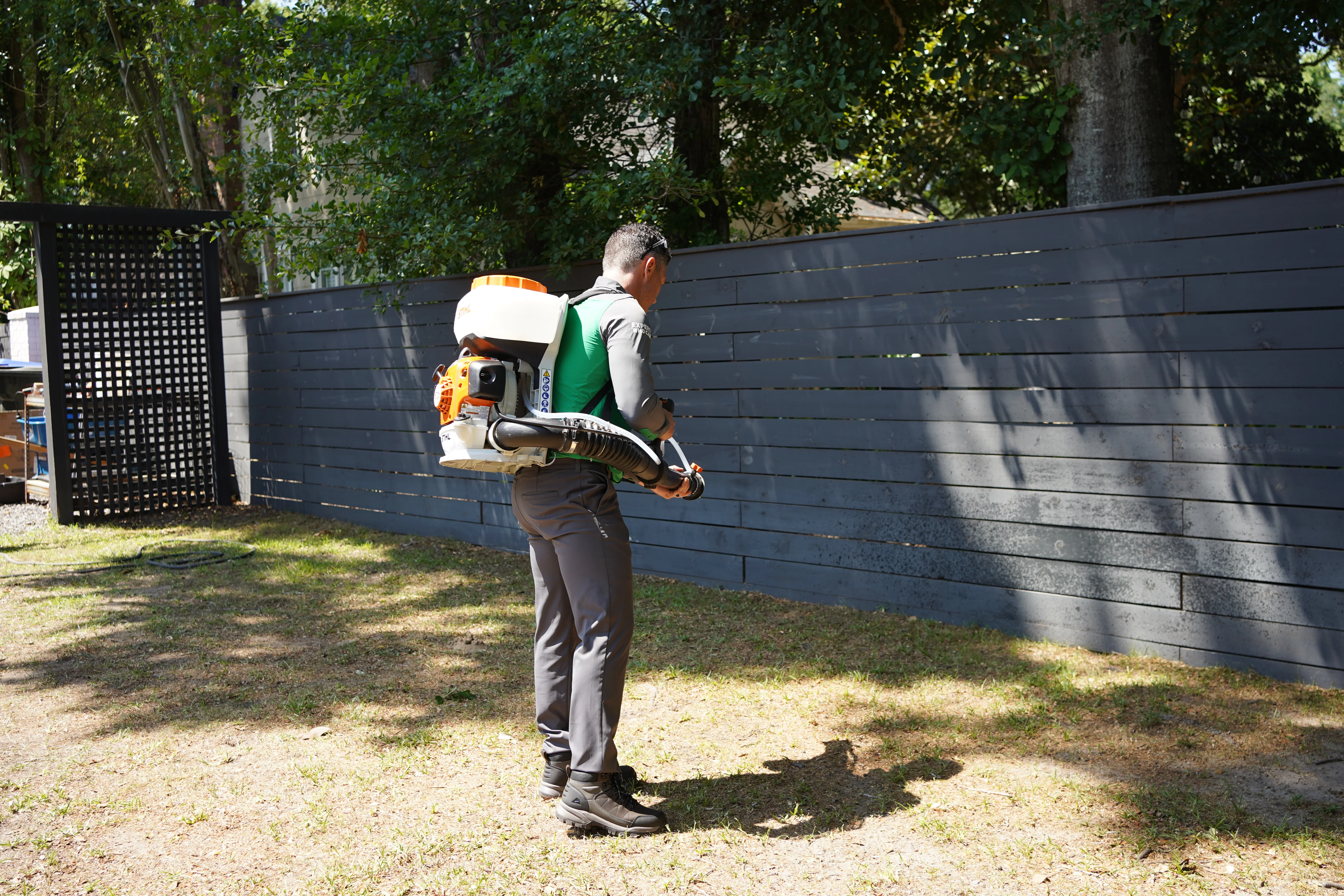
We treat the yard up to 30 feet out, targeting larval mosquito habitat in detention pond margins, rear-lot swales and low corners that hold water longer than the drainage was designed to allow, rather than fogging adults on a repeating bill.
Sweep & Treat Eaves
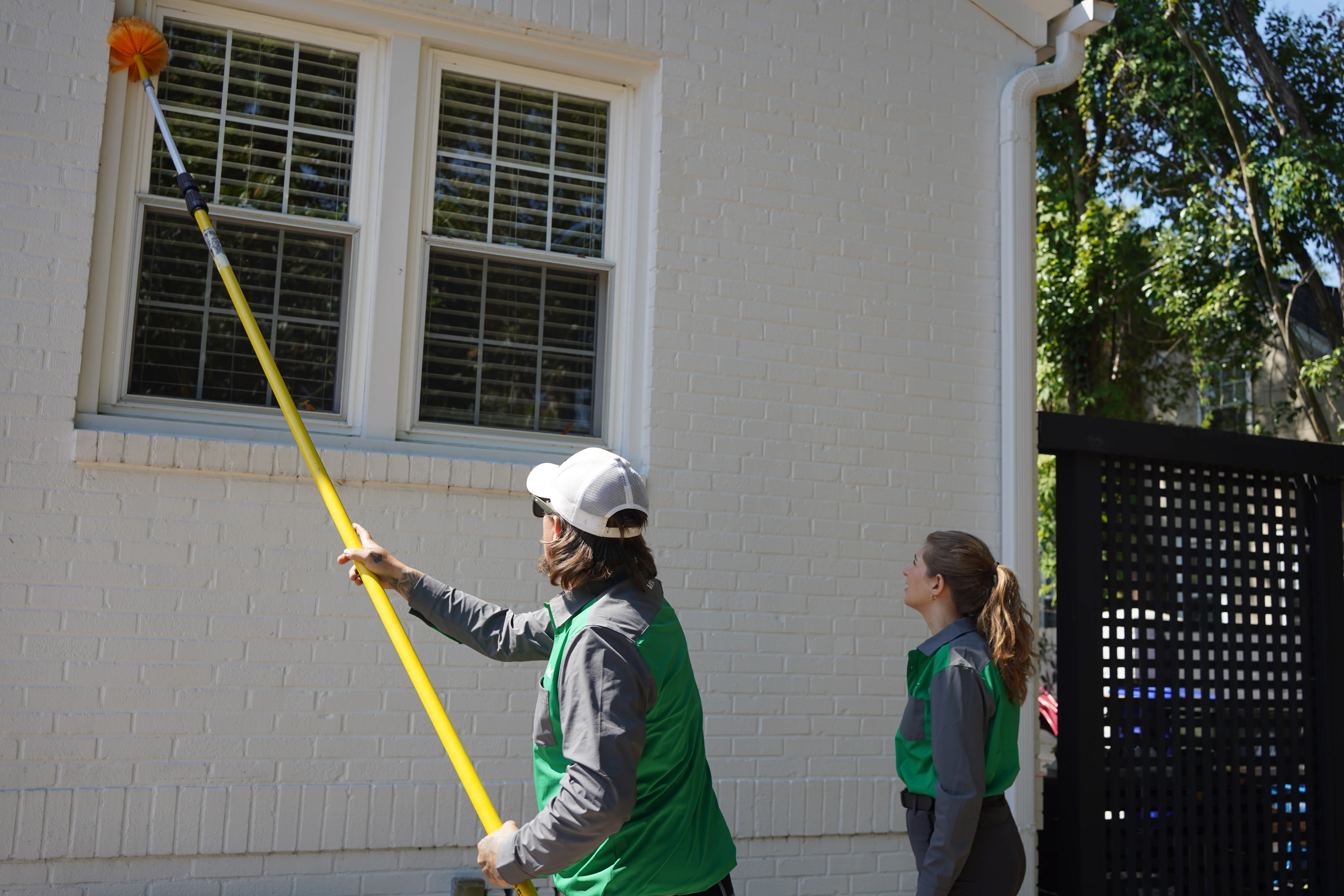
Rooflines are swept clear of webs and early wasp nests on every visit, then spot-treated with a residual product. Under West Ashley's mature canopy, especially around Avondale, this pass also clears gutters that heavy shade keeps filling faster than open lots.
Power Dust Injection
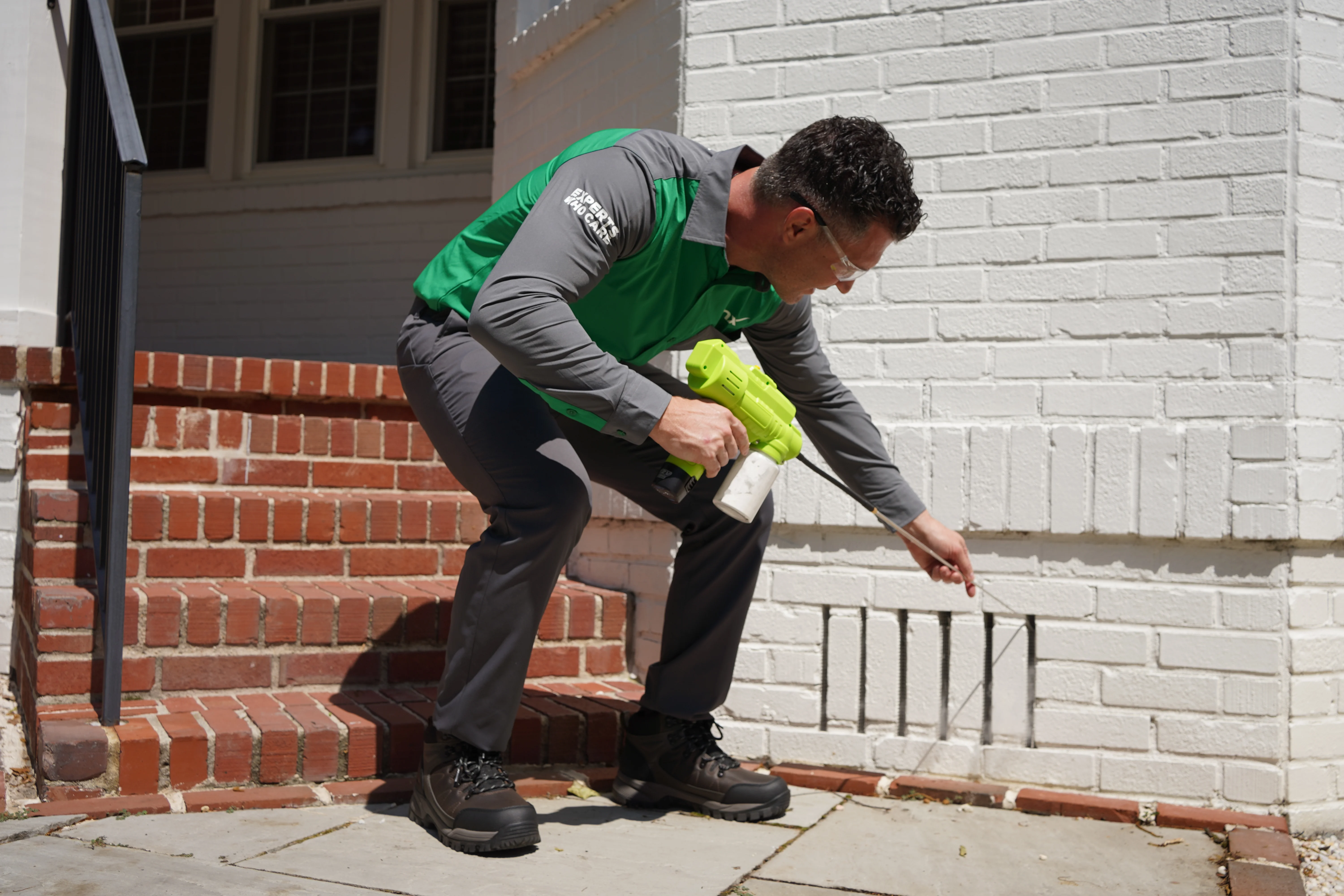
Cracks, weep holes and expansion joints get a dust product driven in with a compressor tip, reaching wall voids a surface spray never touches. This treatment holds up especially well on West Ashley's post-war crawl-space stock, where a high water table keeps the substructure from drying quickly.
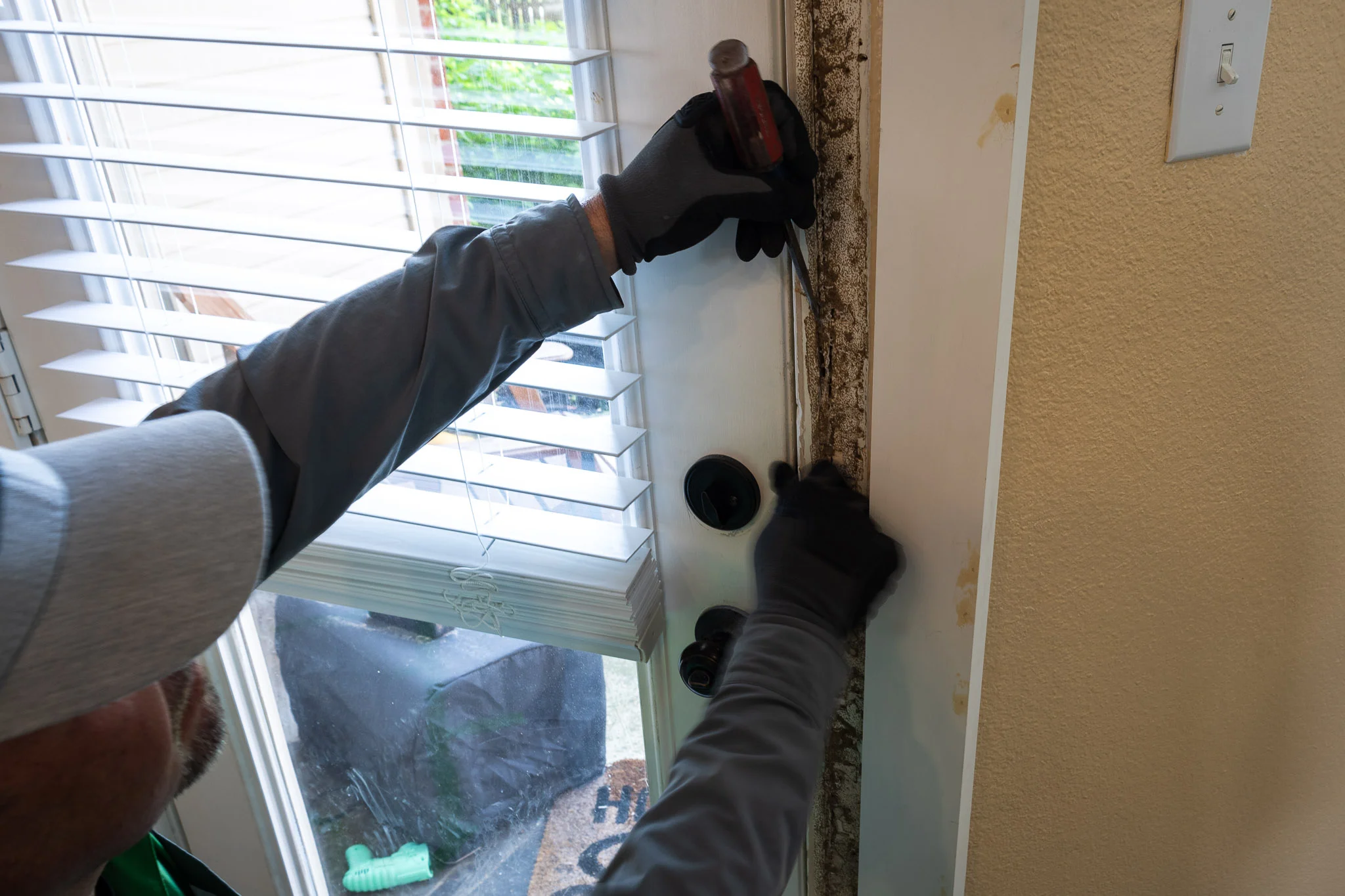
Interior Treatment (If Needed)
Where roaches, millipedes or rodents are already established indoors, we treat the harborage directly rather than misting a room and hoping. Interior work and free returns after a heavy rain event are covered on every plan, matched to the basin's actual drainage rather than a fixed date.
Conducive Condition Report
At the end of every visit, your technician documents any conditions increasing pest pressure, moisture entry points, foundation gaps, vegetation contact, clogged gutters, standing water near the foundation. West Ashley's coastal environment creates specific conducive conditions that most companies never flag. We do, every single time.
Customer Reviews
Trusted by West Ashley Families: 4.8 Stars on Google
Vinx is always friendly, informative and professional. They thoroughly take care of any pest preventative issues in a timely manner and should you see any pesky bugs that didn't get the message? Just call them and they'll be happy to come back out. Highly recommend.
I think you gentleman are doing a damn good job as far as i can see. My people's are absolutely infatuated with how you guys take care of your customers. However my favorite person to come and and service us was the very first gentleman that removed that wasp nest. The fam and I would love to have back !
Jack was on time and did a great job explaining everything about the process. We had a pretty severe case of bees and Vinx was able to get a technician out the same day we called. We are happy to be working with vinx for our pest control management.
Just changed from prior pest control service to Vinx after concerns with prior company’s cost for pest and termite services. While researching found 2 of my friends used Vinx and both were highly satisfied with value and service. Just had 2 different services performed and was impressed by both teams I worked with - all were professional, knowledgeable, polite and efficient. Glad I selected them.
Did a wonderful job. I really appreciate how they worked with me in my tight schedule to provide me the service in a prompt manner. It was very polite and provided excellent customer service. Really appreciate how they explained everything throughout the whole process. Would definitely recommend.
My experience as usual was great, short and sweet. The tech was courteous and professional straight to the point and wasted no time getting the job completed. I always love seeing his smiling face. He takes pride in his job and is a perfect credit to the company.
The Basin That Didn't Drain to Standard
Why Pest Control in West Ashley Is a Year-Round Commitment
Last updated: September 5, 2026
the City of Charleston records that the Church Creek drainage basin covers more than ten thousand acres on the western side of the Ashley River, and that through the 1990s new houses in the Still Shadow section of Shadowmoss flooded repeatedly in ordinary rain events. The city determined that the accepted engineering standards applied to stormwater design were not effective in this basin, approved a nine-month building moratorium, and commissioned a detailed study; a development moratorium has been in place in the watershed since October 2000. In 2001 the city built an interconnected pond routing model of the basin, calibrated against known flood events, and used it to set new design standards requiring comprehensive site planning and decentralized, low-impact stormwater design rather than the conventional approach that failed here.
6 Reasons West Ashley Calls an Exterminator

Palmetto Bugs
American cockroaches — palmetto bugs — favor West Ashley's post-war crawl spaces, where a high water table and the Church Creek basin's slow drainage keep the substructure from drying quickly. Ventilation and vapor-barrier correction address the root moisture problem alongside direct treatment.
Fire & Argentine Ants
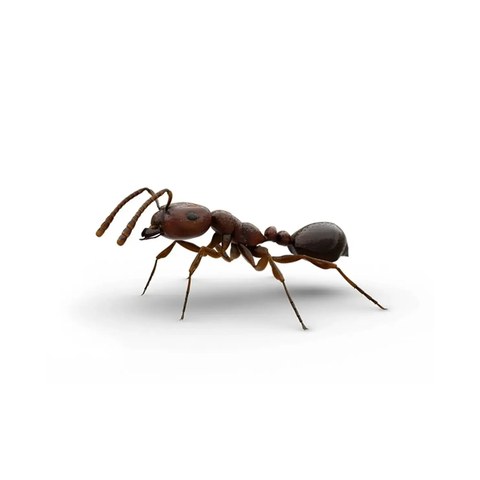
Fire ants establish on the disturbed, irrigated turf of West Ashley's newer subdivisions, particularly around Shadowmoss where the basin study originated. A yard-wide bait program manages the colony as a system rather than chasing individual mounds.

Termites
West Ashley is in Charleston County, on Clemson's list of sixteen counties with documented Formosan colonies, and ground that stays saturated against a foundation — common throughout the Church Creek basin — is precisely the condition subterranean termites exploit most reliably.

Mosquitoes
The Church Creek basin holds water longer than standard drainage design allows, so mosquito control here concentrates on detention pond margins, rear-lot swales and low corners rather than fogging adults on a repeating schedule. Clemson HGIC notes five days of standing water is all it takes.

Rodents
Post-war crawl-space construction across West Ashley gives rodents easy access where ventilation is poor and moisture lingers. Exclusion — sealing entry points — comes first, then trapping and secured bait rather than bait alone.

Spiders
Spiders in West Ashley follow prey activity under Avondale's heavy mature canopy and near standing water in the basin's low corners. We treat the insect population and clear webbing at the eaves on every visit rather than escalating chemical treatment indoors.
That is an unusually candid public record, and it matters to a homeowner directly: water in this basin sits longer than the drainage was designed to allow. Clemson HGIC notes that standing water lasting five days or more will produce mosquitoes, and that some species need no more than a tablespoon — a basin that holds water after routine rain produces mosquitoes on a schedule, and the detention ponds built to manage the problem are themselves standing water that needs watching. The structural consequences are slower and more expensive than the mosquitoes: ground that stays saturated against a foundation is the single condition subterranean termites most reliably exploit, and West Ashley’s housing is largely post-war mainland stock, much of it over ventilated crawl spaces never designed to dry out slowly.
West Ashley is in Charleston County, which Clemson’s county tracking lists among the sixteen South Carolina counties with documented Formosan subterranean termite colonies, and Clemson HGIC dates the species’ introduction in Charleston to the mid-1950s. Clemson’s finding that ninety-four percent of infested buildings were entered from ground-based colonies is exactly why, in a basin like this, an inspection that skips the crawl space and the soil line is not an inspection. West Ashley is also not uniform: Avondale carries older, smaller-lot housing under heavy mature canopy; the Savannah Highway and Sam Rittenberg corridors mix mid-century ranch with commercial frontage; and the newer subdivisions further out are the ones that triggered the basin study in the first place.
One planning distinction should shape any pest program here, and the City draws it explicitly. Plan West Ashley treats the area as two places divided by Interstate 526: Inner West Ashley, where the urban form varies dramatically and larger buildings line the commercial corridors, and Outer West Ashley, which is predominantly detached houses on larger lots interspersed with wetlands and conservation land. Those are genuinely different pest environments — shared walls, dumpsters and aging drain runs on one side of the interstate, wooded lot lines and septic-era outbuildings on the other. A plan built for one will underperform on the other.
Pest Pressure by Neighborhood
Where West Ashley Exterminator Calls Come From
Avondale: Older Stock Under Heavy Canopy
Smaller lots and older wood-frame houses under a heavy mature canopy keep moisture against the structure longer here than anywhere else in West Ashley. Work concentrates on the crawl space and sill line, limb clearance off the roof, then gutters.
Commercial Corridors: Rodents From Adjoining Premises
Mid-century ranch construction mixed with commercial frontage along these corridors brings rodent pressure from adjoining businesses. Exclusion on the structure plus a treated boundary on the commercial side is the fix.
Shadowmoss: Ground Zero for the Basin Study
This is the stock at the center of the Church Creek basin study, with detention ponds and engineered swales throughout. Drainage mapping and larval mosquito treatment come first, with termite work concentrated at the slab edge.
River & Marsh Frontage: Buffer Rules on Top of Basin Drainage
Properties backing onto marsh or the Ashley River carry tidal influence on top of the basin's own slow drainage, plus buffer limits on what can be applied. We work the structure and hard edges here, leaving the marsh buffer alone.
Complete Coverage
What Our West Ashley Exterminators Treat
Every common Lowcountry pest covered under one recurring service plan
Palmetto Bugs
Year-round pressure. Drain lines, crawlspace vents, plumbing penetrations.
All Plans
Fire & Argentine Ants
Sandy coastal soil & new construction displacement. Requires Plus or Platinum.
Plus & PlatinumSpiders
Black widow, wolf spider. Cobweb removal included every visit.
All Plans
Wasps & Hornets
Nest removal from soffits and eaves. Persistent in warm coastal climate.
All Plans
Fleas & Ticks
Exterior flea/tick treatment. Interior flea covered in Platinum.
Plus & PlatinumMosquitoes
Monthly treatment Mar–Oct. Tidal proximity demands this level.
Platinum OnlyRodents
Roof rats, fence lines, power lines, roofline gaps. Exterior bait stations.
All PlansTermites
Formosan termite core range. Sentricon TotalDefense from $35/mo+.
Add-On
Bed Bugs
Covered after 12 months of Platinum service.
Platinum 12moKid & Pet Safe
Our Treatments Are Safe for Your Whole Family: Including the Furry Members
Every product we use is EPA-registered and applied strictly at labeled rates by licensed South Carolina technicians. We take the guesswork out of safety so you can feel confident letting kids and pets back into treated areas quickly.

EPA-Registered Products Only
All products we apply are EPA-registered and used strictly per label requirements. Our licensed technicians are trained to apply the right product in the right place at the right rate, every time.
Dry Time Before Re-Entry
Exterior spray treatments dry in 30–60 minutes. Once dry, treated surfaces are safe for children and pets to contact. Your technician will confirm the all-clear before leaving your property.
Interior Treatment On Request
We treat only what’s needed, where it’s needed. Gel baits and crack-and-crevice applications keep products away from areas pets and children frequent most.
Botanical Options Available
Have specific sensitivities? Ask your technician about our plant-derived treatment options. We offer botanical alternatives for households that prefer a more natural approach.
Have a concern about products used near your pets or children? Call (855) 800-8469 and we’ll walk you through exactly what we use and why it’s safe.
Explore More
More Pest Control Services in West Ashley
Termite Control West Ashley
Sentricon bait system
Mosquito Control West Ashley
Monthly barrier treatments
Ant Control West Ashley
Household ants & others
Spider Control West Ashley
All spider species covered
Cockroach Control West Ashley
Palmetto bugs & German roaches
Rodent Control West Ashley
All rodents covered
Bed Bug Treatment West Ashley
Heat & liquid treatments

Tick & Flea Control West Ashley
Yard & pet protection

Pest Control West Ashley
Year-round protection plans
Frequently Asked Questions
Exterminator West Ashley SC: Frequently Asked Questions
Recurring plans start at $49 a month and one-off treatment is priced by pest and property. In this part of town the variable is usually drainage and crawl-space condition rather than square footage. Inspection is free and the price is firm before work begins. Call 855-800-8469.
Quite possibly the basin. the City of Charleston records that the Church Creek drainage basin covers more than ten thousand acres and that the city concluded accepted stormwater engineering standards were not effective here, with a development moratorium in place since October 2000. Water sits longer than the design intended, and Clemson HGIC notes five days is enough to breed mosquitoes.
Partly, and it is also the mitigation — those ponds exist to hold stormwater on purpose. The productive part is usually the vegetated margin rather than open water, so treatment belongs at the edges, coordinated with whoever manages the pond. Removing it is not the answer.
Indirectly but reliably. Ground that stays saturated against a foundation is the condition subterranean termites exploit most consistently. West Ashley is in Charleston County, which Clemson’s county tracking lists among the sixteen with documented Formosan colonies, and Clemson dates the introduction here to the mid-1950s.
Drainage and the crawl space, every time. Gutters, downspout discharge, grading, ventilation and a vapor barrier address the cause. Product applied over a moisture problem is a subscription rather than a solution.
Quarterly, weighted to the wet months, with a return after any heavy rain event. Roughly half the annual rainfall lands between June and September, and in this basin that is when standing water persists longest.
Yes, residential and commercial both, including the Avondale and Savannah Highway premises. Commercial work runs on a documented schedule with service records for health inspections.
We cover all of it — Avondale, Shadowmoss, Byrnes Downs, Carolina Bay and the Highway 61 corridor — plus Johns Island and the peninsula. Most calls get a next-day appointment. Call 855-800-8469.
Service Coverage
Pest Control Across West Ashley & the Lowcountry
Serving every neighborhood in and around West Ashley