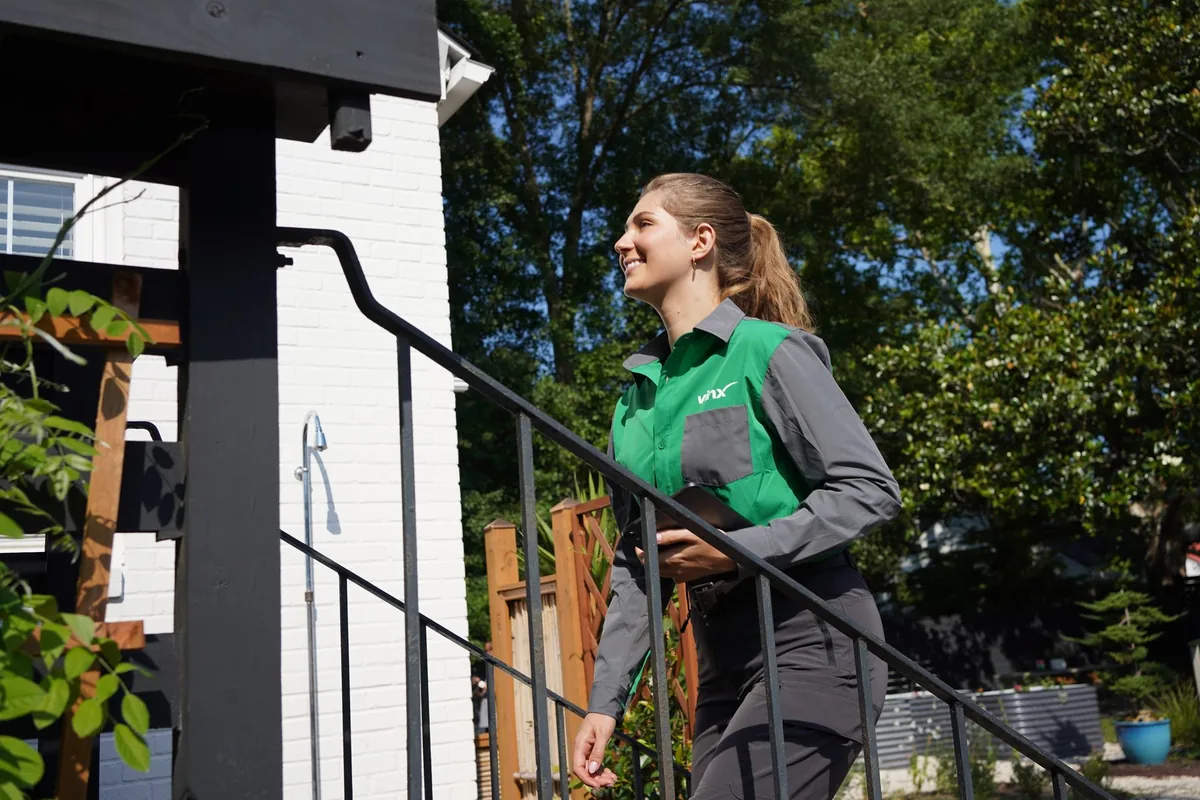
Exterminator in Charleston, SC
Licensed exterminators for the peninsula and every Lowcountry community around it — next-day appointments, soil-first inspections, and a guarantee behind the work.
Get Started in 60 Seconds
Choose what’s easiest for you
Request a Quote
We usually respond in 2 minutes
Call 843-920-8469
Get a Live Person (no AI agents here!)
Sign Up Online
Get pricing and schedule now





Welcome to Vinx Pest Control
A Company That Actually Backs What It Says
At Vinx, we combine professional-grade treatments with a level of service most pest control companies don't offer. Local technicians, fast response times, and a guarantee that actually means something.
Get a Free Quote"I'm not passionate about killing bugs. I'm passionate about customer service. At Vinx, you get experts who show up, do the job right, and stand behind every visit. No runaround, no fine print."
PROTECTION PLANS
Charleston Exterminator Pricing
100% money-back guarantee on every plan.

Standard Residential Protection
- 4 Seasonal Treatments Per Year
- 50+ Covered Pests
- Interior, Exterior & Yard Treatment
- Unlimited Free Re-Services
- 100% Money-Back Guarantee
- Fire Ant Yard Guarantee
- Flea & Tick Coverage
- Mosquito Treatments

Upgraded Yard Protection
- 6 Home & Yard Treatments Per Year
- 50+ Covered Pests
- Interior, Exterior & Yard Treatment
- Unlimited Free Re-Services
- 100% Money-Back Guarantee
- Fire Ant Yard Elimination Guarantee
- Flea & Tick Elimination Guarantee
- Mosquito Treatments

Most Comprehensive Protection
- 9 Treatments Per Year
- 50+ Covered Pests
- Interior, Exterior & Yard Treatment
- Unlimited Free Re-Services
- 100% Money-Back Guarantee
- Fire Ant Yard Elimination Guarantee
- Interior Flea & Tick Coverage
- 8 Mosquito Treatments (Mar–Nov)
- Free Bed Bug Treatments if Needed*
*Starting rates vary by home size and area. All plans billed monthly.
Request Your Free Pest Control Quote
Fill out the form below and a Vinx team member will reach out within 2 minutes during business hours.
Prefer to talk? Call 855-800-8469 for a live person, no AI agents.
Our Process
How Vinx Exterminators Work a Charleston Property: Step by Step

Inspection & Reporting
Every Charleston extermination job starts below the floor, because Clemson research found ninety-four percent of infested buildings in a Charleston study were entered from ground-based colonies rather than aerial ones. On pre-war stock that means the crawl space; on anything built after the mid-1990s it means the slab edge and expansion joints. Nothing is applied until a technician has identified the pest to species and traced it to its harborage — you hear what we found, with a firm price, before any work begins.
Exterior Foundation Treatment
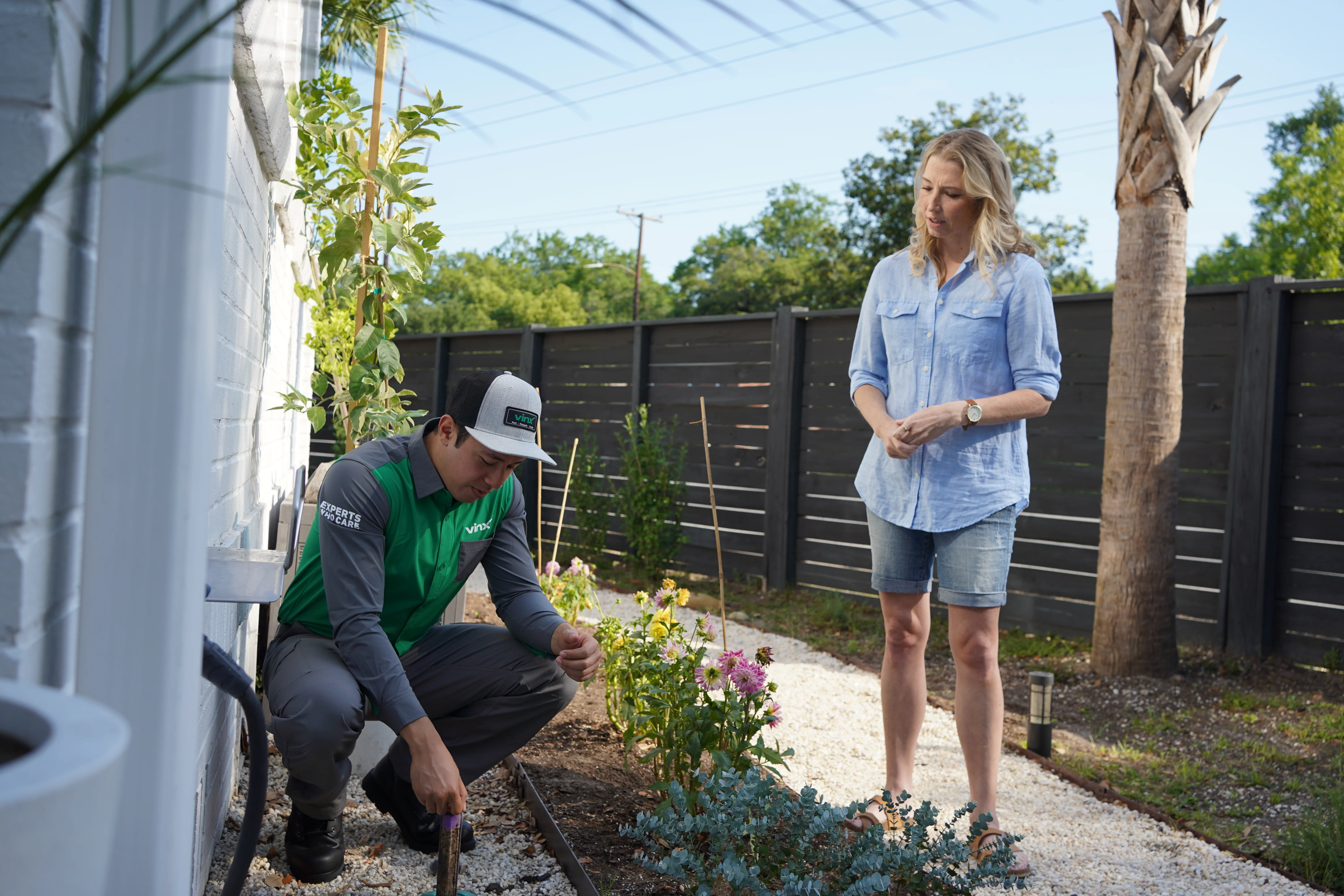
With the problem identified, the exterior gets a defensive line so the next wave never makes it inside. We apply a micro-encapsulated barrier around the foundation, three feet up and three feet out, intercepting insects at the slab gaps, weep holes and thresholds they actually use. In a market where roughly half the year’s rain falls June through September, the perimeter is where most infestations begin — so it gets the strongest line of defense.
Yard Treatment
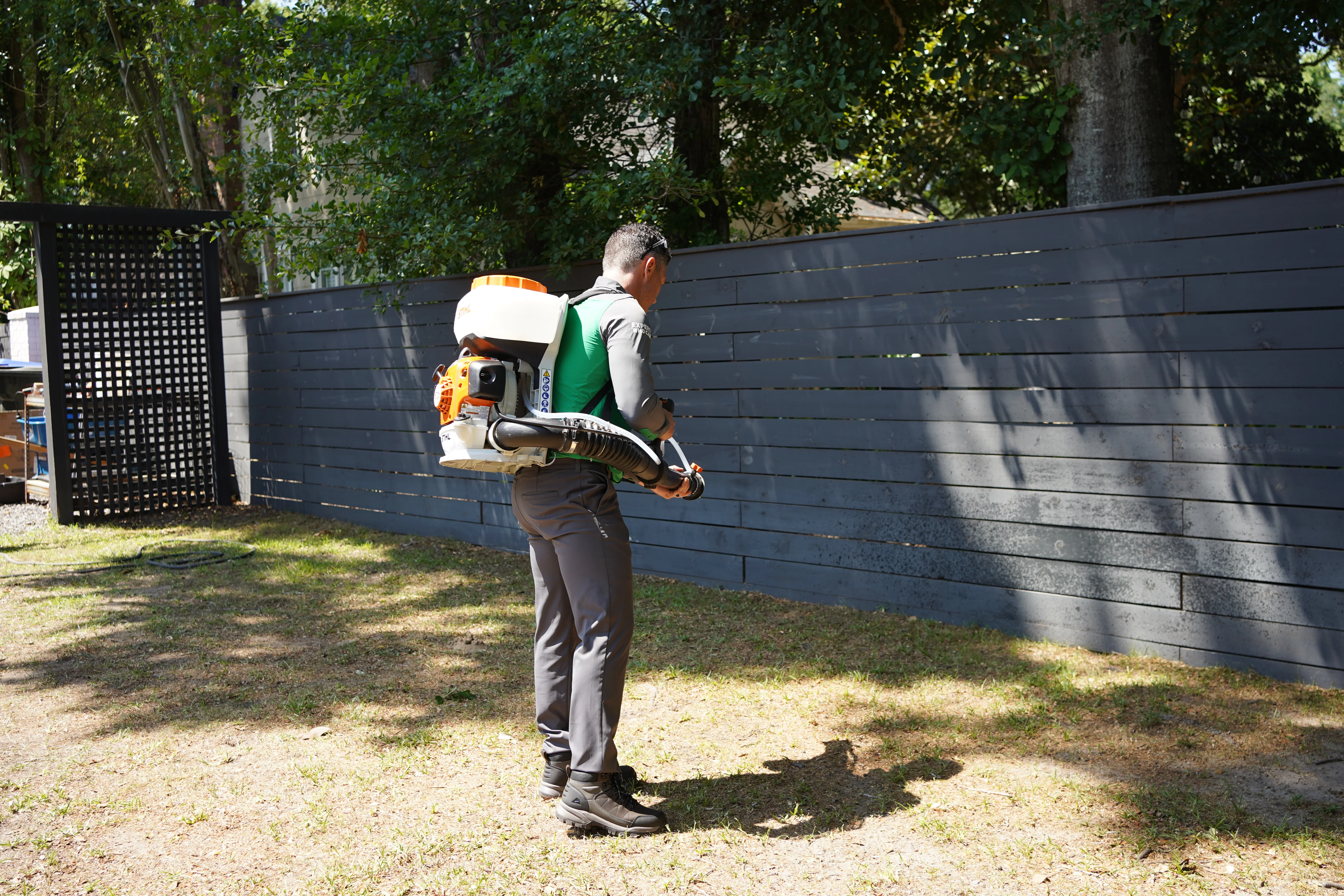
The yard gets treated up to 30 feet out, because most of what ends up indoors staged in the lawn first — with one Lowcountry caveat. On marsh, creek or reservoir frontage we hold the buffer Clemson advises and work the structure and hard edges instead, targeting larval water rather than spraying to the waterline. Anyone offering to treat right up to the marsh is telling you something.
Sweep & Treat Eaves
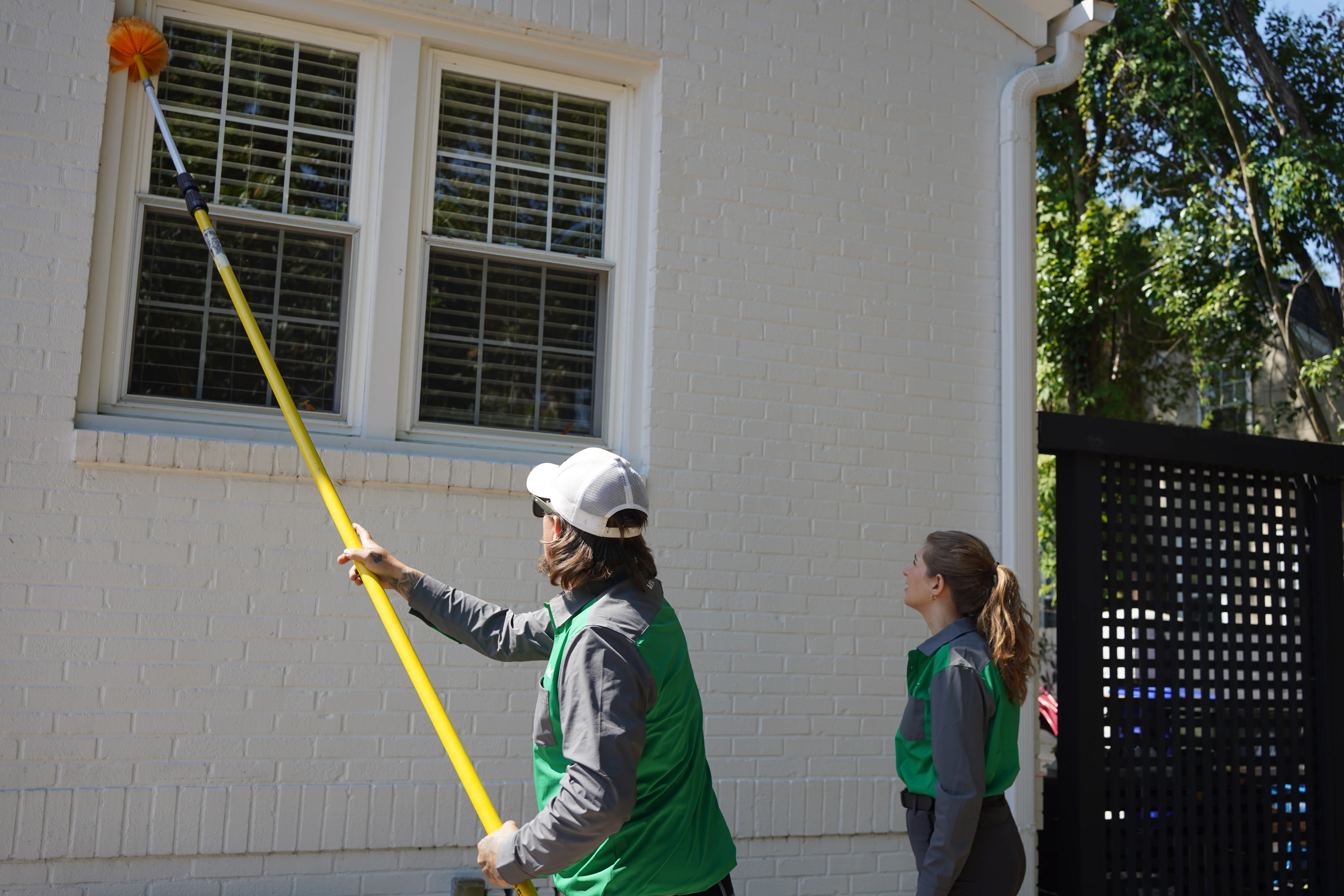
Rooflines are swept clear of webs and early wasp nests on every visit, then spot-treated with a residual product so returning insects contact the treatment instead of rebuilding. Under mature live oak canopy the eaves pass matters double: limbs on the roofline are how roof rats travel, and the canopy itself holds moisture against the house all summer.
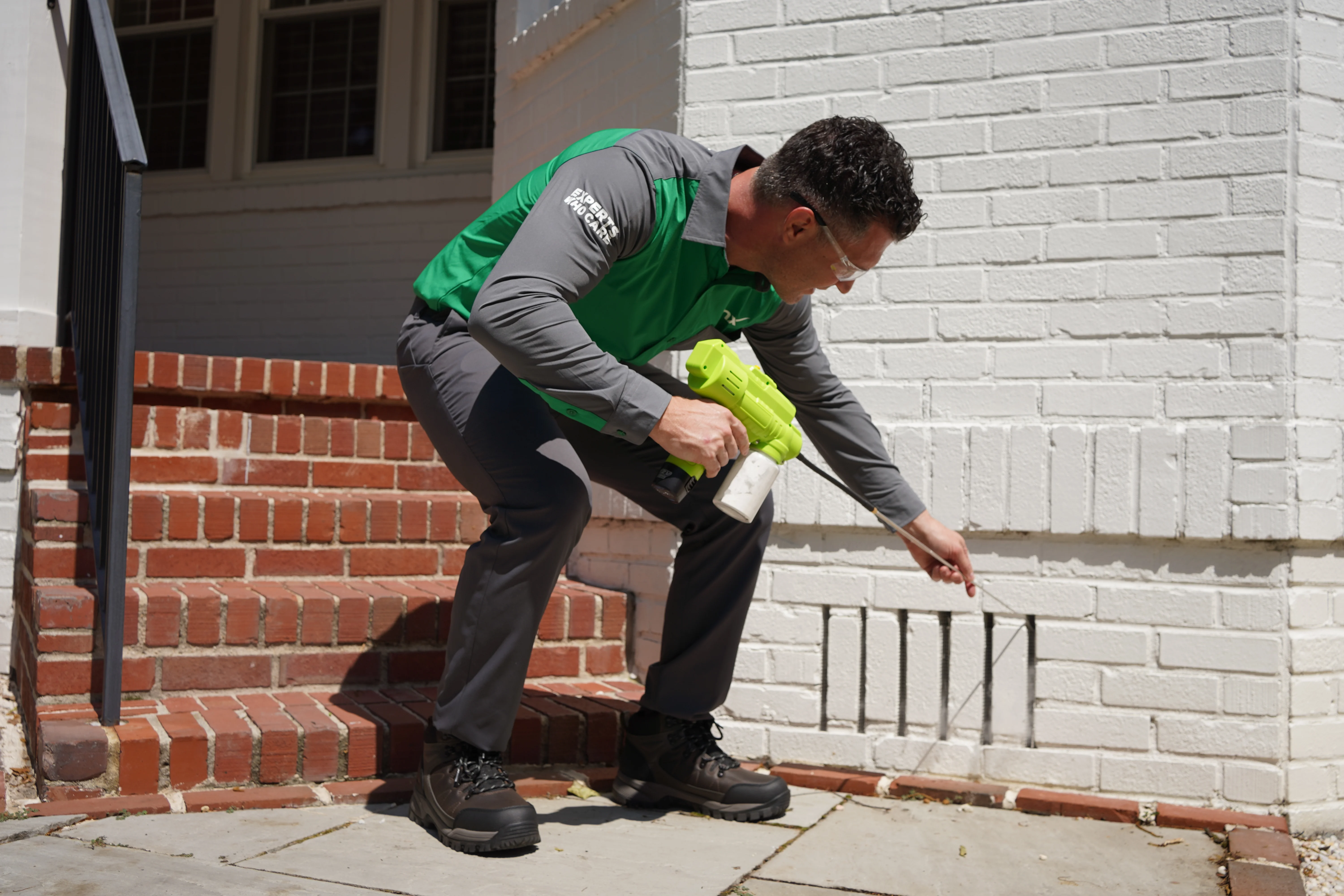
Power Dust Injection
Cracks, weep holes, pipe penetrations and expansion joints get a dust product driven deep with a compressor tip. This is the treatment that reaches wall voids, and in Charleston’s older housing — heart pine framing, party walls, cellars that predate any vapor barrier — settling has opened more routes than any surface spray can cover. The dust sits protected from rain and heat, so it keeps working between visits.
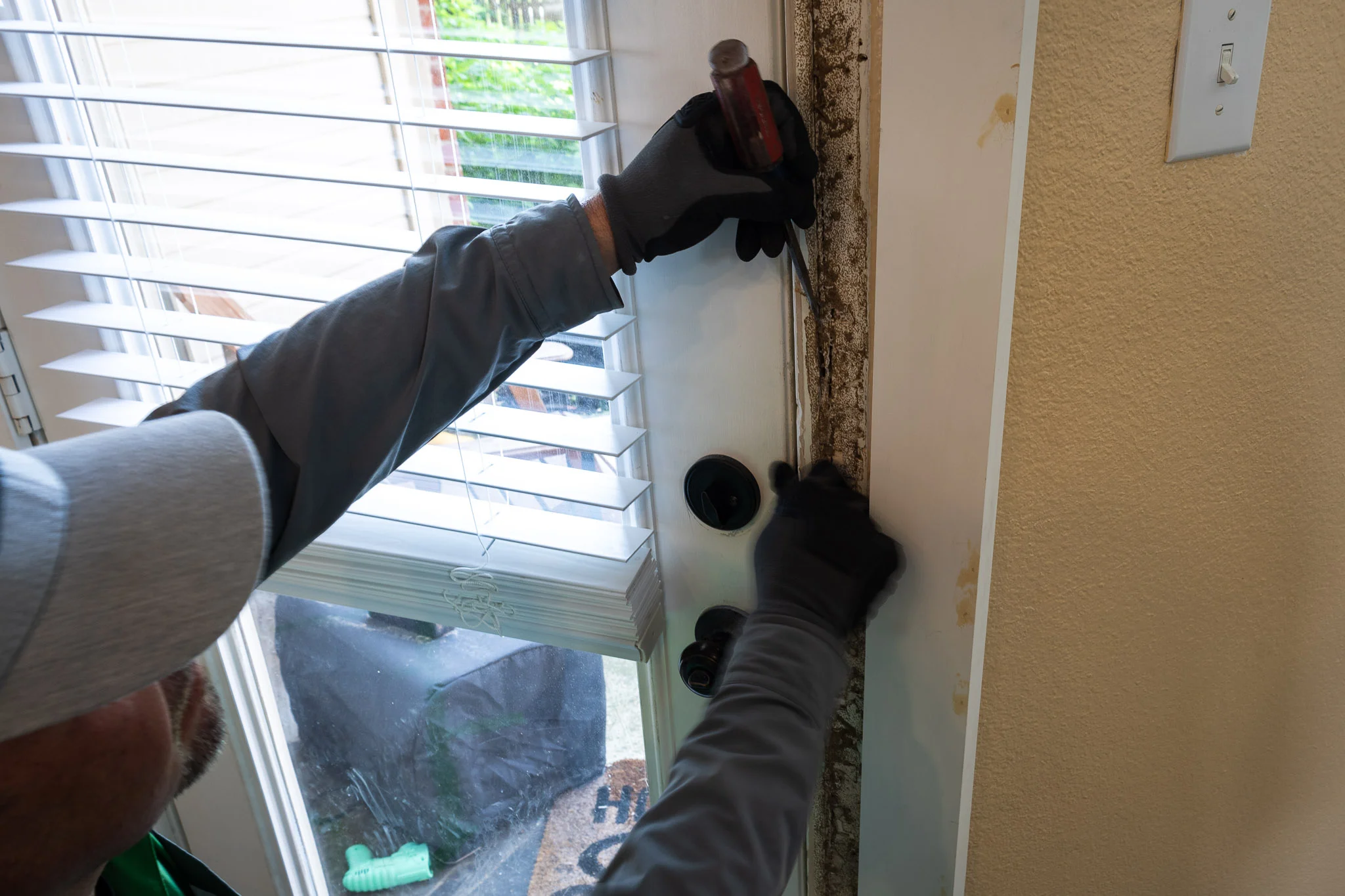
Interior Treatment (If Needed)
Where an infestation is already established indoors, we treat the harborage directly — gel bait and a growth regulator for roaches, exclusion first and then trapping for rodents — rather than misting a room and hoping. On protected historic properties, where exterior alterations fall under review, careful interior and crack-and-crevice work is often the whole job. Interior work and re-services between visits are covered at no extra charge on every plan.
Customer Reviews
Real Reviews from Charleston Homeowners
I was less than thrilled when I was first informed that my husband decided to switch pest control companies, but after almost 2 years of using Vinx we have had a great experience. I do need to give a shout out to Leon, one of the techs that services our home. Leon is Professional, friendly, efficient, well spoken and overall gives fantastic customer service!
I’ve been using VINX for several years and have always been satisfied. Today I met Waylon. He wore foot coverings and I greatly appreciated that! He was personable and kind. An over all nice guy. He educated me regarding insects and what products and treatment protocols are best to rid them. I appreciated his time and stellar customer service!
Our pest control technician Anthony was great on yesterday, he listened and responded proactively to the call and our needs. He did an awesome job and we haven’t seen any bugs or ants and we haven’t had any more problems, we will be sure to contact him back if any issues arise as he was very professional and got the job done in a reasonable timeframe. Thanks
Long term customer. Just wanted to say thank you for the great pricing and service.
We just did our initial setup today in Summerville, South Carolina, and Bryon Martinson from the North Charleston location did a superb job on our installation! This company was recommended by a neighbor and we feel we are in good hands with someone we can trust at Vinx to do quality workmanship!
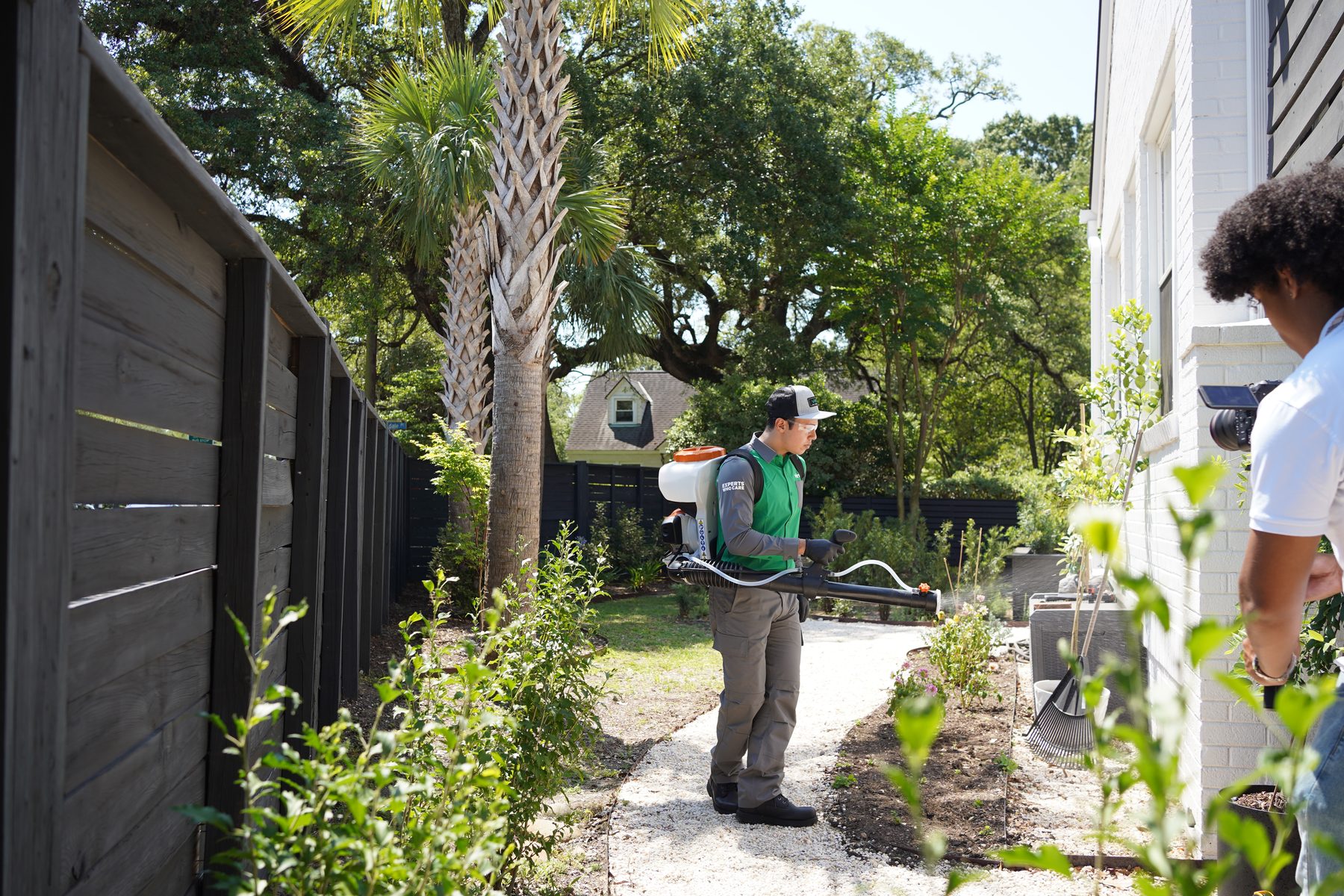
The Best Pest Control in Charleston Starts With a Free Inspection
Cockroaches in January. Ant mounds in March. Termite swarmers in April. Mosquitoes through November. The only approach that works in the Lowcountry is consistent quarterly service backed by a guarantee that removes the risk from your side entirely.
Local Knowledge
Charleston Is Not One Pest-Control Market
Last updated: September 4, 2026
A 1914 crawl-space house under mature canopy in Park Circle, a 2019 slab build on Daniel Island, a rural island property on septic, and a downtown block inside the country’s oldest historic district need four different plans. Build era, water, jurisdiction and canopy change from town to town here, and between them they explain nearly every difference in what a job costs and what it involves.
One thing is true everywhere: Charleston is among the oldest Formosan subterranean termite footholds in the country. Clemson HGIC dates the introduction to the mid-1950s, and Clemson’s county tracking lists Charleston, Berkeley and Dorchester counties all among the sixteen South Carolina counties with documented colonies. Formosan swarms run mid-May into July, in the evening, toward lights — a different signature from the native eastern subterranean termite’s daytime spring swarm, which is how a pile of shed wings on a sill tells you which species you have.
And one thing is not true, despite how often it is sold: the brown recluse. A published review of South Carolina’s verified records (Frithsen, Vetter & Stocks, 2007) found forty-four confirmed specimens since 1953, from six of the state’s forty-six counties, every one collected from inside a structure — against 738 recluse bites diagnosed by South Carolina physicians in 2004 alone. The species is not established here. The widow group is the one that warrants attention.
6 Reasons Charleston Calls an Exterminator
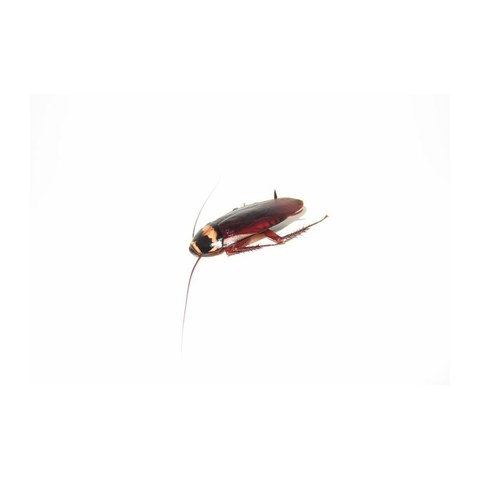
Cockroaches
The palmetto bugs — American and smokybrown cockroaches — work Charleston’s drains, mulch beds and crawl spaces, and downtown’s older buildings keep them supplied with harborage year-round. German cockroaches are the other call, concentrated in peninsula rentals and restaurant kitchens. The fix is gel bait and a growth regulator placed in the harborage itself, plus dust in the wall voids — not a surface spray the population walks around.
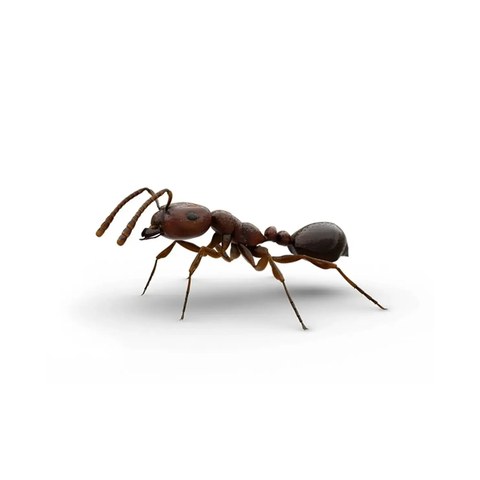
Fire & Argentine Ants
Fire ant mounds stand up in open Lowcountry yards after every rain, and treating one mound rarely ends it — colonies re-form nearby, so we pair direct mound treatment with a yard-wide bait program. Argentine ants run multi-queen colonies that have to be baited across the whole property, and carpenter ants in older wood-frame housing get traced to the nest rather than sprayed at the trail.
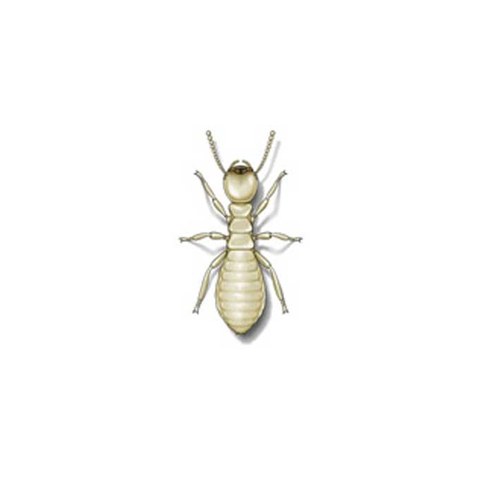
Termites
Termites define exterminator work here. Charleston is one of the oldest Formosan footholds in the US — introduced in the mid-1950s per Clemson — and ninety-four percent of infested buildings in a Charleston study were entered from ground colonies, so our inspections are soil-first. Identifying Formosan against native eastern subterranean comes before any quote, and if you are selling, we inspect and issue the CL-100.
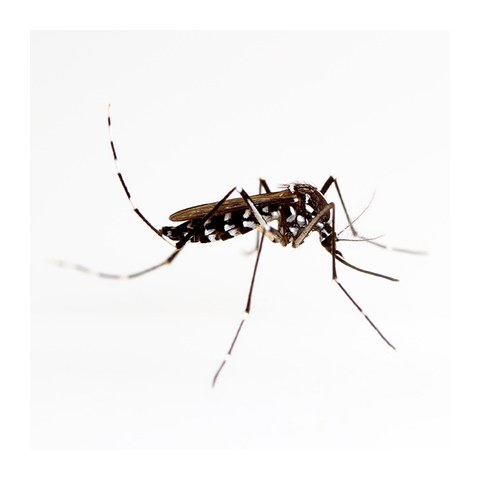
Mosquitoes
Public mosquito control here is organized county by county, some towns add their own layer, and unincorporated areas have none at all — and no public program treats a private yard. On marsh and creek lots we respect the buffer Clemson advises and target larval water instead, because container-breeding mosquitoes around the house are what actually bite you at dusk.
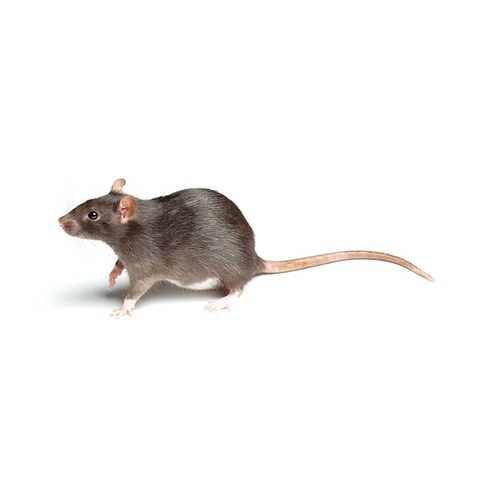
Rodents
Roof rats use live oak limbs to reach rooflines and attic vents, and downtown’s alleys, cellars and party-wall buildings keep Norway rats in business. Extermination that lasts starts with exclusion — closing the entry routes — then trapping and secured bait, because bait alone in an open building just feeds the next arrivals.
Spiders
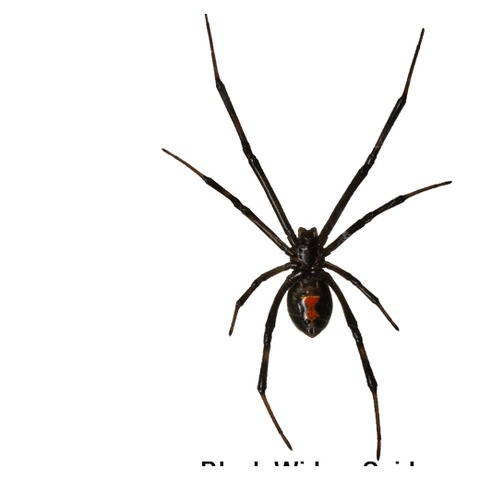
Widow spiders — southern black, northern black and brown — are the group worth taking seriously in Charleston garages, sheds and woodpiles. The brown recluse people expect is not established in South Carolina per the published record. A spider call is usually a prey problem: we treat the insect population and the harborage together, and clear webbing at the eaves on every visit.
What Varies Here
Four Things That Change From Town to Town in the Lowcountry
Between them, these four explain nearly every difference in what a Charleston extermination job costs and what it involves.
Build Era and Substructure
Pre-war Charleston is wood frame over ventilated crawl space; the 1950s to 70s is a mix; anything after the mid-1990s sits on a slab with a documented pre-construction soil treatment. That single fact moves the inspection from under the floor to the slab edge, and changes what we are even looking for.
Water, and Which Kind
Tidal creek and salt marsh on the islands, an engineered basin in West Ashley, former rice-field drainage in Hanahan, and reservoir source water in Hanahan and Goose Creek. Each one dictates something different about where product can and cannot go.
Jurisdiction
Public mosquito provision is organized county by county, and some communities have a town layer on top while others have none at all. James Island has three governments; Ladson spans three counties; unincorporated areas have no town program to fall back on.
Canopy
Mature live oak changes moisture, puts limbs on rooflines, and is itself a Formosan reservoir — a USDA Forest Service co-authored survey found thirty-seven percent of seventy-one surveyed forest patches around Charleston infested, with oaks and maples the most damaged genera.
Charleston Pest Calendar
A Season That Never Fully Closes
Charleston’s coldest month still averages around 50°F — here is what that means for exterminator calls across the year.
December to February
Cold enough to slow insects outdoors, nowhere near cold enough to clear them. Rodents work heated buildings, German roaches concentrate near kitchens and water heaters, and termite colonies keep foraging in the soil.
March to May
Native subterranean termites swarm in daylight in spring; shed wings on a sill are the classic first sign. Fire ant mounds stand up after rain and wasps start nests in eaves and soffits.
June to September
Roughly half the year’s rain lands in these months and everything peaks together — palmetto bugs, mosquitoes, fire ants. Formosan swarms run mid-May into July, in the evening, toward lights.
October to November
Yellowjacket colonies hit their seasonal peak and scavenge aggressively, spiders move into garages and sheds, and the first cool nights push mice through quarter-inch gaps toward heated space.
Community by Community
What Makes Pest Work Different in Each Charleston Community
The Peninsula: America’s First Historic District
Charleston created the country’s first zoned historic district in October 1931, and on a protected property treatment cannot damage historic fabric — so the work leans on interior and crack-and-crevice methods, moisture correction and monitoring. Heart pine, party walls and pre-vapor-barrier cellars make downtown the most technically demanding part of this market.
North Charleston: Three Housing Markets in One City
From the 1914 Olmsted-planned Park Circle core to late-model subdivisions, build era decides everything here — crawl-space inspections on the old stock, slab-edge work on the new. Mature canopy around Park Circle adds roof-rat and moisture pressure the newer tracts don’t see.
West Ashley: The Church Creek Basin
Much of West Ashley sits in the Church Creek basin, where the city itself found conventional stormwater standards ineffective. Water that lingers means mosquitoes, roaches and moisture pests — drainage and standing water get mapped on every inspection here.
The Islands: Jurisdiction & Working Rural Land
James Island has three governments interleaved across one island, which decides whose mosquito program covers you. Johns Island is working rural land — septic systems, private wells, barns and marsh buffers set the limits on where product can go.
Daniel Island: The Youngest Housing Stock
Farmed and hunted until the 1990s, Daniel Island is all post-1990s slab construction with documented pre-construction soil treatment. Inspections run the slab edge and expansion joints, and displaced ground-nesting ants from continuing construction are the steady call.
The Northern Arc: Trees, Reservoirs & County Lines
Summerville’s 1848 tree ordinance still requires a permit to remove any tree of 8-inch diameter, dead ones included. Hanahan and Goose Creek sit on reservoir source water that limits what can be applied, and Ladson spans three county lines, so public provision depends on your parcel.
Complete Coverage
What Our Charleston Exterminators Treat
Every common Charleston pest covered under one quarterly service plan

Ants
Ants, Argentine ants, carpenter ants, and odorous house ants. Perimeter bait, mound treatment, crack and crevice application.
All Plans
Cockroaches & Palmetto Bugs
American, Asian, and German cockroaches. Gel bait in harborage areas, exterior perimeter spray, drain treatment.
All Plans
Spiders
Web removal from eaves, exterior perimeter targeting harborage. Black widow identification and targeted treatment.
All Plans
Wasps & Hornets
Nest removal from eaves, soffits, structural voids. Preventative treatment of common nesting sites on each quarterly visit.
All Plans
Fleas & Ticks
Yard treatment targeting grassy and shaded areas. Interior treatment of active infestation areas.
Plus & Platinum
Bed Bugs
Inspection, heat treatment assessment, and targeted chemical treatment. Charleston’s tourism industry creates consistent exposure risk.
Platinum (12mo)
Rodents
Exterior bait station monitoring included in Plus and Platinum. Active infestation and full exclusion quoted separately after inspection.
Plus & Platinum
Mosquitoes
Monthly barrier spray and larvicide. Year-round service adjusted seasonally. Up to 90% population reduction per visit.
Platinum Only
Occasional Invaders
Silverfish, earwigs, centipedes, stink bugs, ladybugs, pillbugs. Crack and crevice treatment, perimeter spray, entry point ID.
All PlansChoosing a Company
What to Ask Any Pest Company in Charleston
Charleston has a lot of pest control companies and the quality varies. Four questions separate them quickly.
Which Termite Species Was Identified?
Ask which termite species was actually identified, not which one is on the brochure. Formosan against native eastern subterranean is a different job at a different price, and the swarm signature — evening flights toward lights in May-July versus daytime spring swarms — is how the species tells on itself.
Did the Inspection Reach the Substructure?
Ask whether the inspection included the crawl space or slab edge, because an inspection that skipped the substructure is not one. Ninety-four percent of infested Charleston buildings in the Clemson study were entered at ground level.
What Does the Buffer Mean for Your Lot?
Ask what the marsh or reservoir buffer means for your specific property. Clemson advises marsh-adjacent homeowners keep a ten-to-thirty-foot buffer clear of fertilizer and pesticide — anyone offering to spray to the waterline is telling you something.
What Does the CL-100 Not Cover?
S.C. Code Regs. 27-1085 limits the CL-100 to below the level of the first main living-area floor, says it is not a warranty against future infestation, and places no obligation on anyone to correct what it finds. Read what it excludes before relying on a clear report.
Kid & Pet Safe
Our Treatments Are Safe for Your Whole Family: Including the Furry Members
Every product we use is EPA-registered and applied strictly at labeled rates by licensed technicians. We take the guesswork out of safety so you can feel confident letting kids and pets back into treated areas quickly.

EPA-Registered Products Only
All products we apply are EPA-registered and used strictly per label requirements. Our licensed technicians are trained to apply the right product in the right place at the right rate, every time.
Dry Time Before Re-Entry
Exterior spray treatments dry in 30–60 minutes. Once dry, treated surfaces are safe for children and pets to contact. Your technician will confirm the all-clear before leaving your property.
Interior Treatment On Request
We treat only what’s needed, where it’s needed. Gel baits in cabinets and crack-and-crevice applications keep products away from areas pets and children frequent most.
Botanical Options Available
Have specific sensitivities? Ask your technician about our plant-derived treatment options. We offer botanical alternatives for households that prefer a more natural approach.
Have a concern about products used near your pets or children? Call 855-800-8469 and we’ll walk you through exactly what we use and why it’s safe.
Explore More
More Pest Control Services in Charleston
Ant Control Charleston
Household ants & others
Bed Bug Control Charleston
Heat & liquid treatments
Cockroach Control Charleston
Palmetto bug & roach removal
Mosquito Control Charleston
Monthly barrier treatments
Rodent Control Charleston
All rodents covered
Spider Control Charleston
All spider species covered
Termite Control Charleston
Bait systems & liquid treatment
Wasp Control Charleston
Nest removal & prevention

Tick & Flea Control Charleston
Yard & pet protection

Pest Control Charleston
Year-round protection plans
Frequently Asked Questions
Exterminator Charleston SC: Frequently Asked Questions
Recurring plans start at $49 a month and cover more than fifty pests. One-off treatment is priced by pest and property, and termite, mosquito and flea-and-tick work is quoted separately. The inspection is free and the price is firm before anything starts. Call 855-800-8469.
Yes, and it is one of the few places where the alarming version is accurate. Clemson HGIC dates the introduction in Charleston to the mid-1950s, and Clemson’s county tracking lists Charleston, Berkeley and Dorchester counties all among the sixteen with documented colonies. Clemson still notes a listed county does not mean uniform presence, so an inspection settles it.
Almost certainly not. Frithsen, Vetter & Stocks (J Am Board Fam Med 2007;20:483–488) found forty-four verified specimens in the whole state since 1953, from six of forty-six counties, all taken from inside structures — while South Carolina physicians diagnosed 738 recluse bites in 2004 alone. The authors conclude the species is not established here. Widows are the group worth taking seriously.
Whichever you live in — the community tabs above cover all of them. They are genuinely different pages rather than the same text with the name swapped, because the housing, the water and the jurisdiction actually differ.
Quarterly suits most properties, weighted toward June through September when roughly half the annual rainfall arrives and ant, roach and mosquito pressure peak together.
No. Clemson advises marsh-adjacent homeowners keep a ten-to-thirty-foot buffer clear of fertilizer and pesticide. We work the structure and hard edges and target larval water instead, which is where treatment is efficient anyway.
Yes, throughout the area. Commercial work runs on a documented schedule with service records, which is what a health inspection expects to see.
We cover the peninsula and every community above, plus Mount Pleasant and Moncks Corner. Most calls get a next-day appointment and an active infestation gets moved up. Call 855-800-8469.
Service Coverage
Pest Control Across Charleston & the Lowcountry
Serving every neighborhood in the Charleston metro area