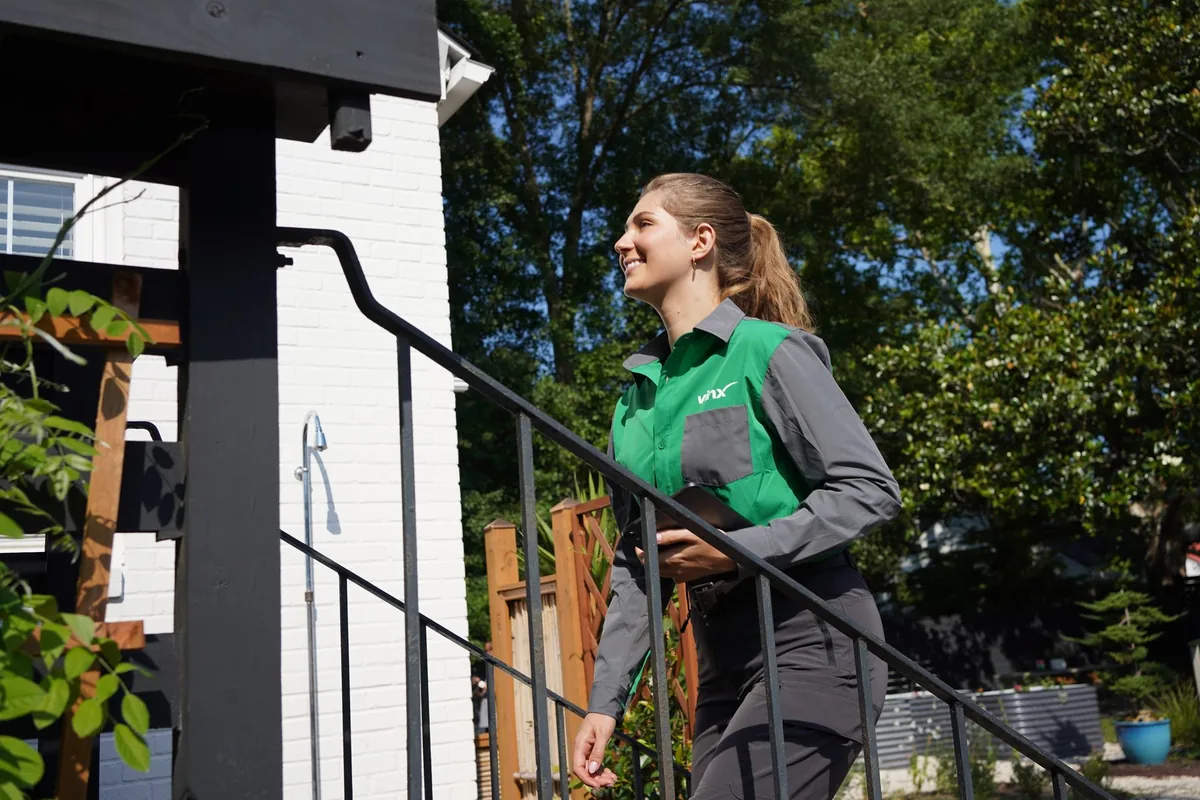
Exterminator in Sullivan’s Island, SC
An exterminator on Sullivan’s Island is working an island that keeps growing. It accretes at roughly 17 feet a year, and houses that once fronted the beach now sit hundreds of feet inland behind an extra street and three rows of homes, with maritime forest where sea oats used to be. That new edge, and a housing stock 27.3% of which predates 1940, decide most of what we find. Recurring residential service with a free re-treatment guarantee.
Get Started in 60 Seconds
Choose what’s easiest for you
Request a Quote
We usually respond in 2 minutes
Call 855-800-8469
Get a Live Person (no AI agents here!)
Sign Up Online
Get pricing and schedule now





Welcome to Vinx Pest Control
A Company That Actually Backs What It Says
At Vinx, we combine professional-grade treatments with a level of service most pest control companies don't offer. Local technicians, fast response times, and a guarantee that actually means something.
Get a Free Quote"I'm not passionate about killing bugs. I'm passionate about customer service. At Vinx, you get experts who show up, do the job right, and stand behind every visit. No runaround, no fine print."
PROTECTION PLANS
Sullivan’s Island Exterminator Pricing
100% money-back guarantee on every plan.

Standard Residential Protection
- 4 Seasonal Treatments Per Year
- 50+ Covered Pests
- Interior, Exterior & Yard Treatment
- Unlimited Free Re-Services
- 100% Money-Back Guarantee
- Fire Ant Yard Guarantee
- Flea & Tick Coverage
- Mosquito Treatments

Upgraded Yard Protection
- 6 Home & Yard Treatments Per Year
- 50+ Covered Pests
- Interior, Exterior & Yard Treatment
- Unlimited Free Re-Services
- 100% Money-Back Guarantee
- Fire Ant Yard Elimination Guarantee
- Flea & Tick Elimination Guarantee
- Mosquito Treatments

Most Comprehensive Protection
- 9 Treatments Per Year
- 50+ Covered Pests
- Interior, Exterior & Yard Treatment
- Unlimited Free Re-Services
- 100% Money-Back Guarantee
- Fire Ant Yard Elimination Guarantee
- Interior Flea & Tick Coverage
- 8 Mosquito Treatments (Mar–Nov)
- Free Bed Bug Treatments if Needed*
*Starting rates vary by home size and area. All plans billed monthly.
Request Your Free Pest Control Quote
Fill out the form below and a Vinx team member will reach out within 2 minutes during business hours.
Prefer to talk? Call 855-800-8469 for a live person, no AI agents.
Our Process
How Vinx Exterminators Work a Sullivan’s Island Property: Step by Step

Inspection & Reporting
Extermination work on Sullivan’s Island begins with identification, and here that question carries real stakes: a subterranean termite reached from the soil and a drywood termite that arrived inside salvaged timber need opposite treatments, and a Charleston study found 94% of infested buildings were infested from ground-based colonies. Nothing is applied until a technician has identified the pest, followed it back to its harborage and noted the conditions supporting it. You get the findings in plain terms, with a firm price, before any work starts.
Exterior Foundation Treatment
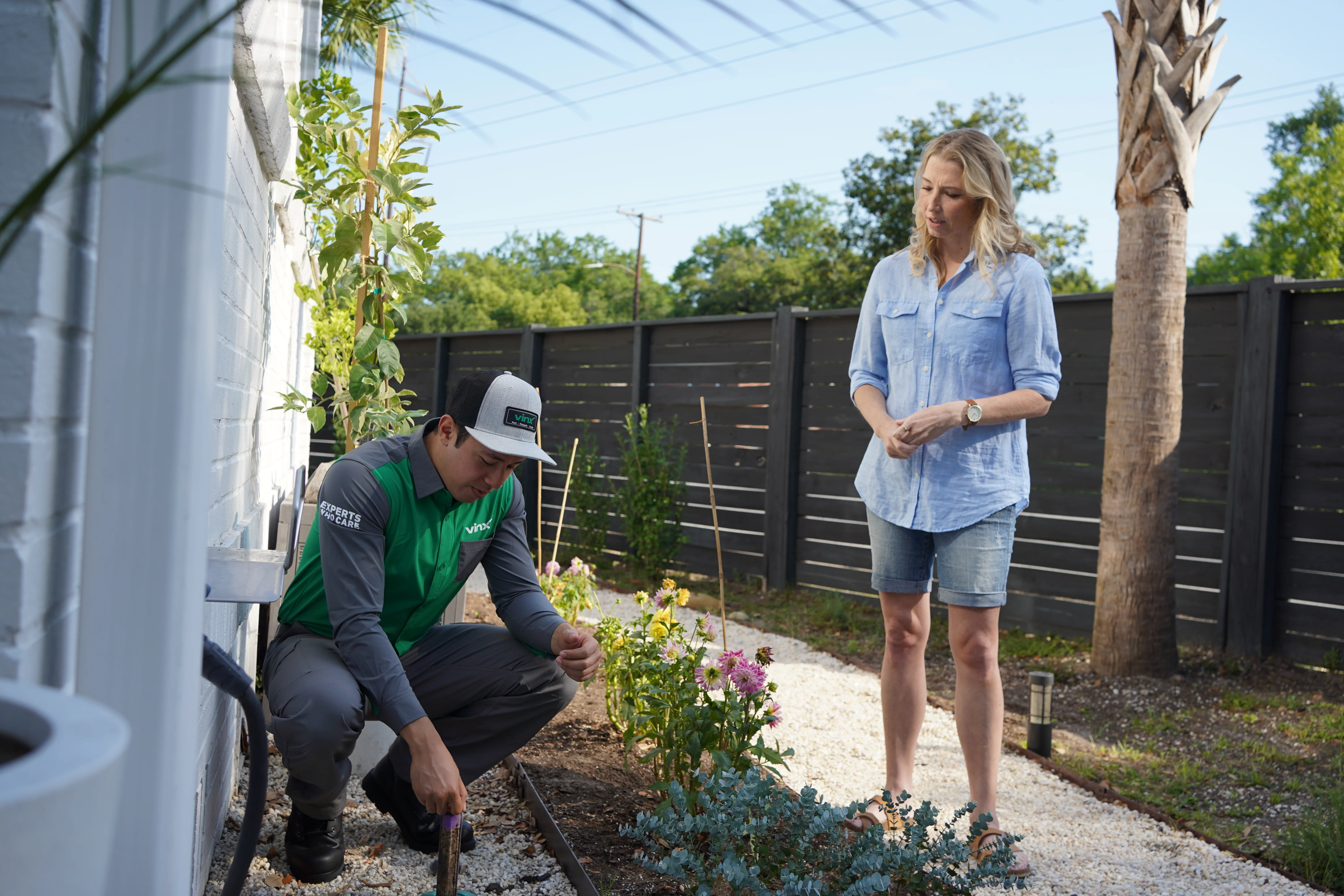
Once the problem is named, the exterior gets its defensive line. A micro-encapsulated barrier goes around the foundation, three feet up and three feet out, intercepting insects at the slab gaps, weep holes and thresholds they actually use to enter. On island housing the piers and crawl space get the closest attention — much of the older stock sits elevated — and on lots backing the accreted land the perimeter is doing permanent work, because the reinfestation pressure from the seaward side never stops.
Yard Treatment
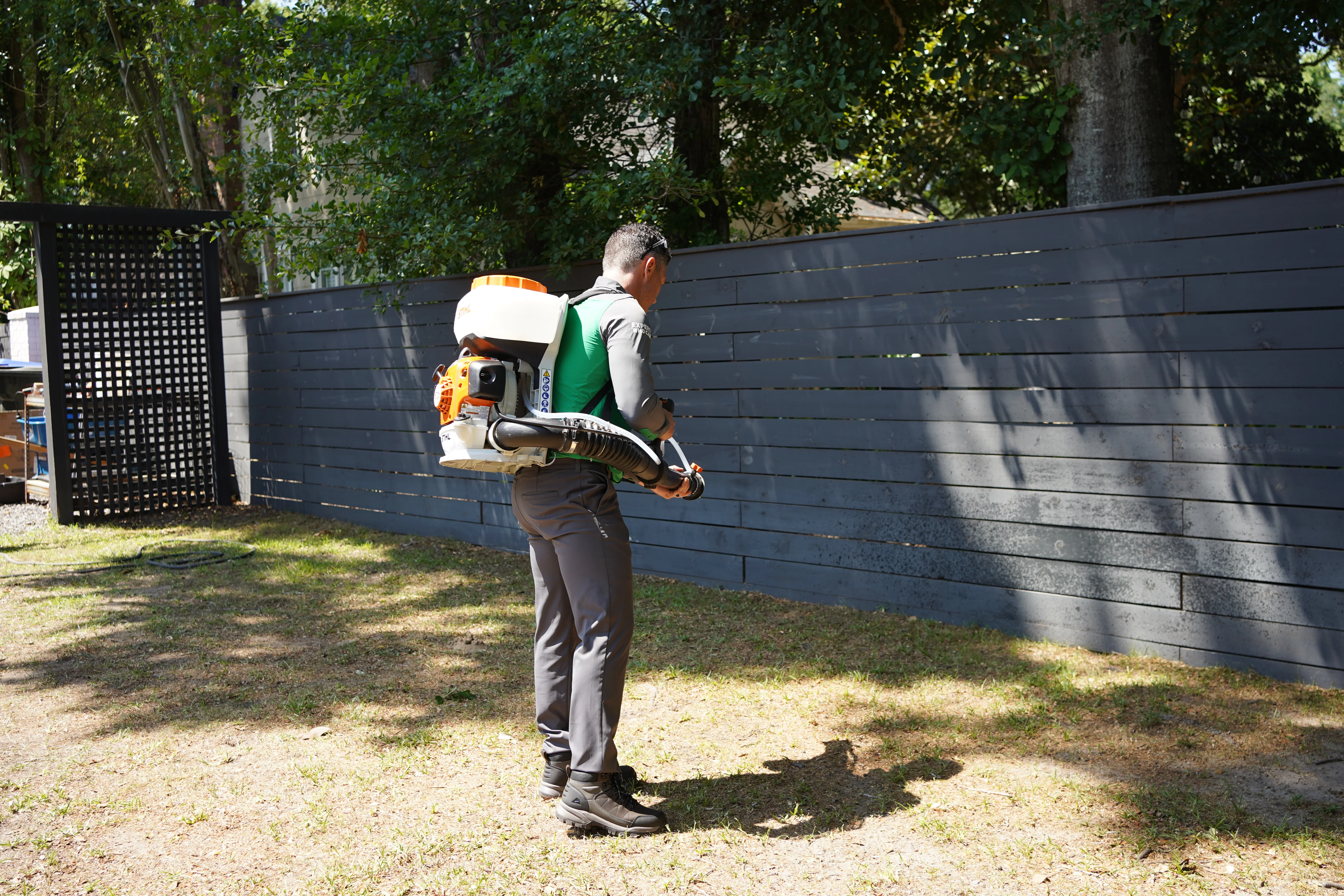
The yard is treated up to 30 feet out, since most of what ends up indoors staged in the lawn first. On Sullivan’s Island that means the treatable edge of your own lot, not the dune line — the thickly wooded accreted ground beyond it is held in its natural state by a 1991 conservation deed, and only the Town has authority to trim it. On marsh-front lots we hold Clemson’s ten to thirty foot no-pesticide buffer at the water side.
Sweep & Treat Eaves
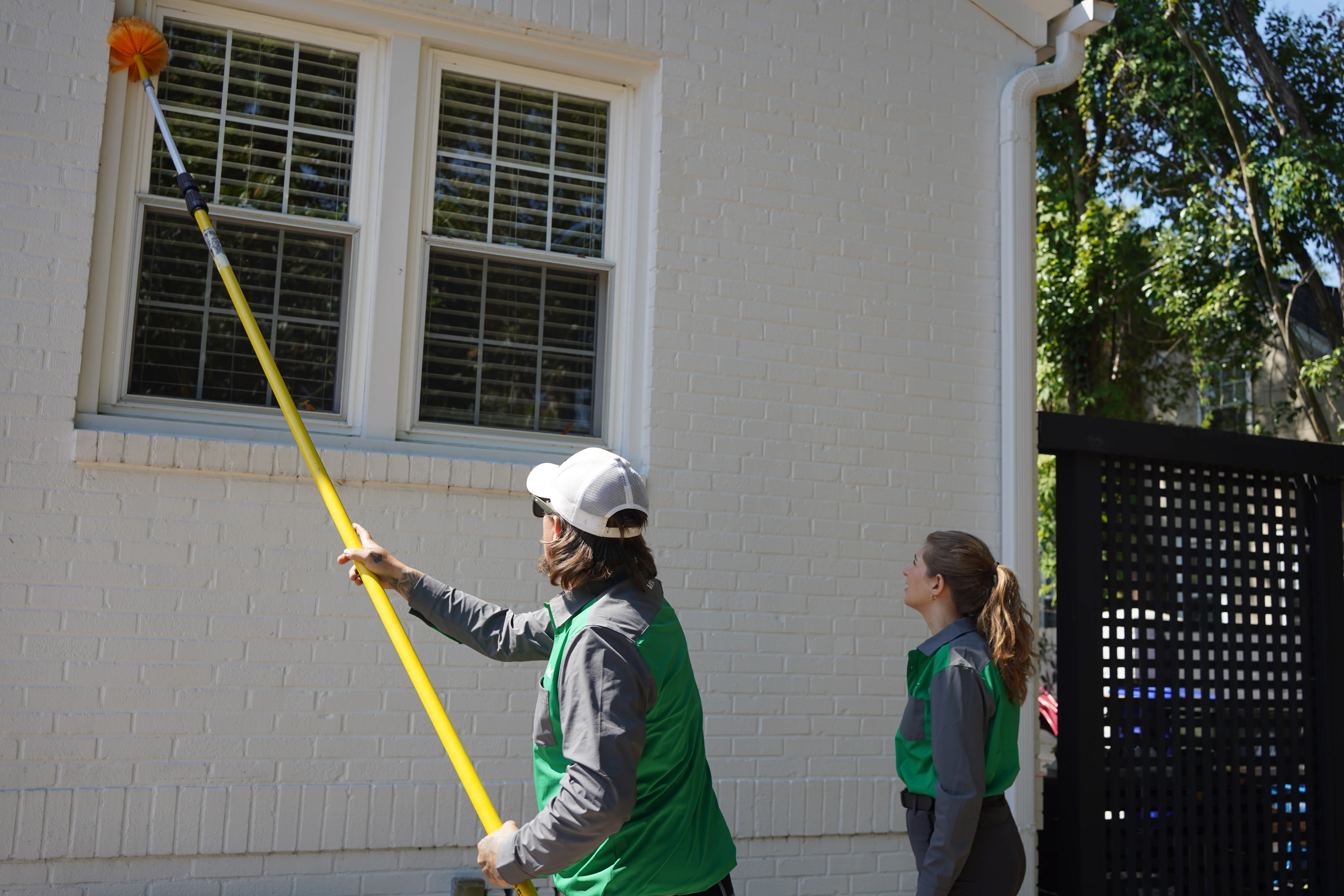
Rooflines are swept clear of webbing and early wasp nests on every visit, then spot-treated with a residual product so returning insects contact the treatment instead of rebuilding. The eaves pass doubles as an inspection of the routes overhead, which matters on the island’s elevated cottages and pre-war housing — just over a quarter of the homes here were built in 1939 or earlier.
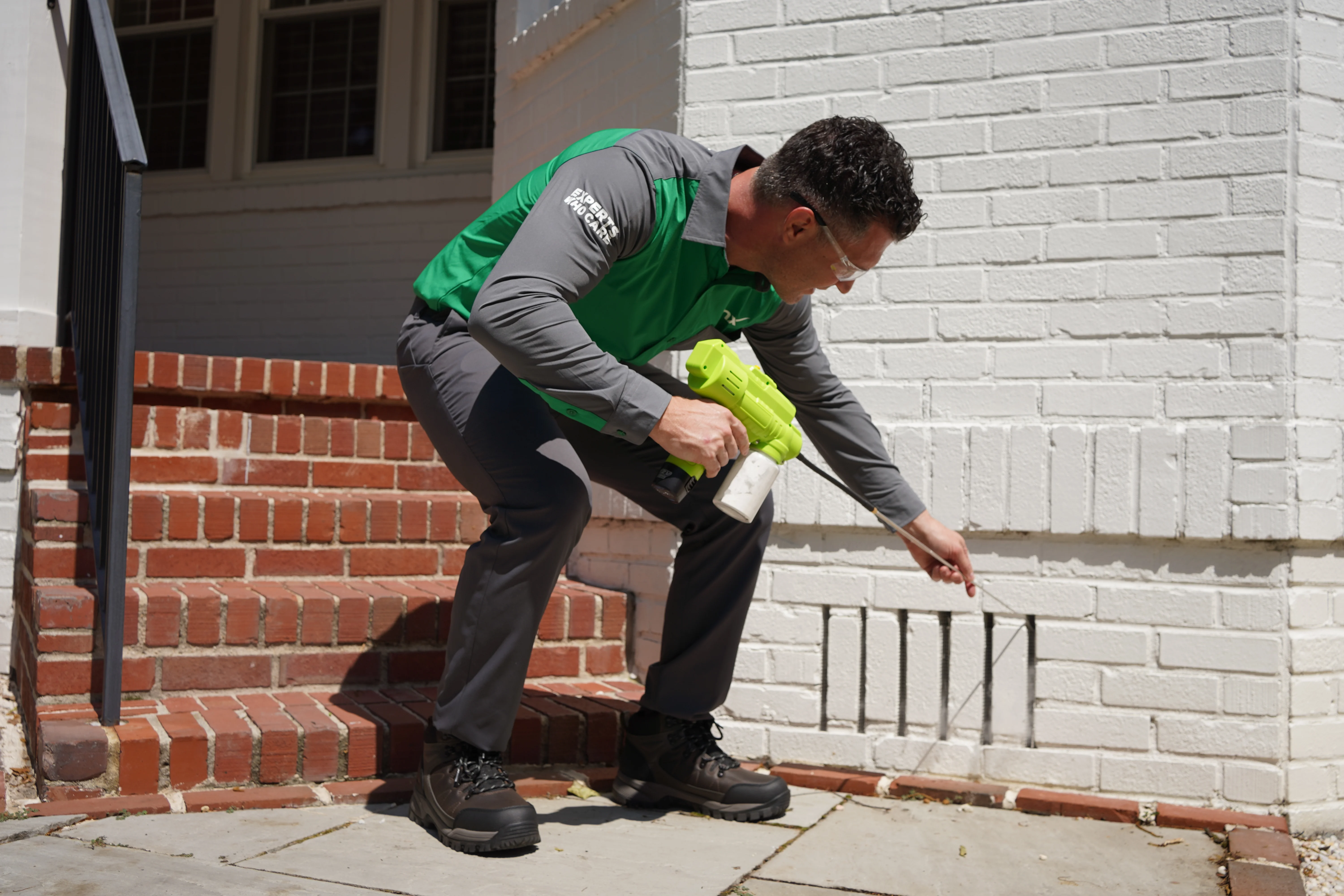
Power Dust Injection
Cracks, weep holes, pipe penetrations and expansion joints get a dust product driven deep with a compressor tip. That is the treatment that reaches wall voids, and on stock this old, decades of settling have opened more routes than any surface spray can cover. Protected from rain and salt air, the dust keeps working long between visits. Inside the historic district, the approach is planned so nothing invasive is done to historic material, and it goes in writing before work starts.
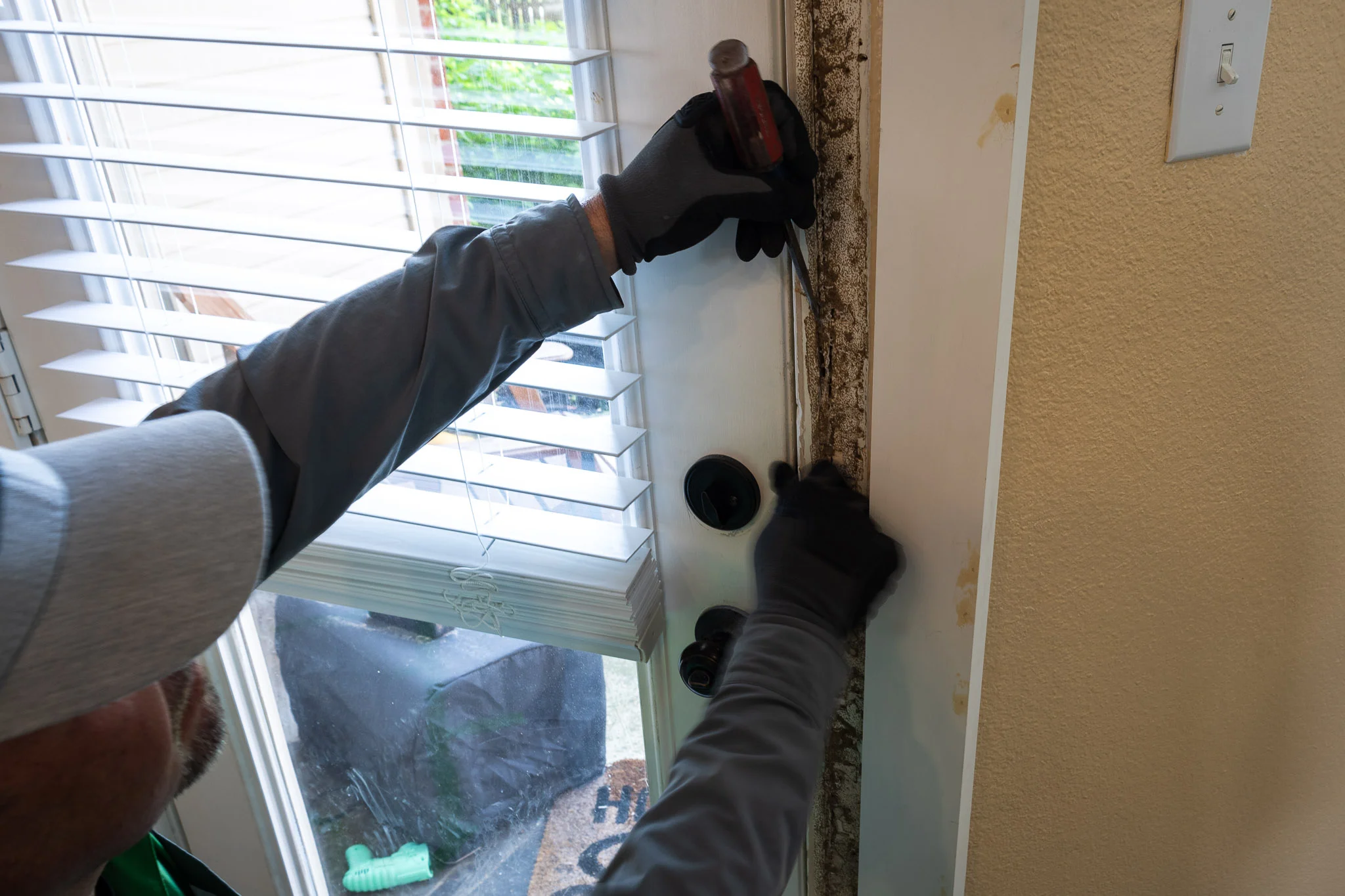
Interior Treatment (If Needed)
Where an infestation is already established indoors, the harborage is treated directly — gel bait and a growth regulator for roaches, exclusion first and then trapping for rodents — rather than misting a room and hoping. Mosquito service runs through the season, timed to tide and rainfall rather than a fixed date, because salt marsh broods hatch when a high tide floods the upper marsh. Interior work and re-services between visits are covered at no extra charge on every plan.
Customer Reviews
Real Reviews from Sullivan’s Island Homeowners
Austin does a great job of explaining and performing his services.
Anthony was great! Gave quality work and feedback.
It’s that time of year for pests in the Low Country and along with all the bugs comes termite swarms. Austin made time at the end of his busy 90 degree day to get us taken care of. He explained the swarming and type of termite, along with spiders, fire ant hills and general extermination. We really appreciate his professional hard work!!! Thank you Austin and Vinx for getting us scheduled asap!
Great job as always. Keep up the good work.
Austin was really nice and appreciated his thoroughness. Thank you
Local Knowledge
The Accreted Land Is Now the Harborage — and Only the Town Can Trim It
Last updated: September 4, 2026
Sullivan’s Island is a harder place to treat than its size suggests, because the island keeps getting bigger. The Supreme Court of South Carolina put it on the record: land is accreting on the ocean side at roughly seventeen feet a year, leaving houses that were once oceanfront “perhaps 500 feet or more” from the shoreline. When the Town took the accreted land under a conservation deed in 1991, the vegetation there was no taller than three feet. The same court record describes it today as thickly wooded — a maritime forest pressed against a residential street — and that strip is where much of what you call about actually lives.
6 Reasons Sullivan’s Island Calls an Exterminator
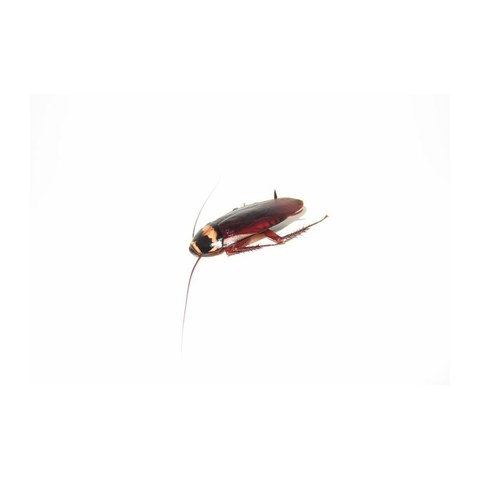
Cockroaches
American cockroaches — palmetto bugs — are the island’s most recognizable call, and not a verdict on housekeeping: they thrive in coastal humidity and enter through drain lines, crawl space vents and gaps around plumbing, with a tidal water table sitting near the surface. On elevated cottages the open crawl space is the usual route in. Extermination means treating the harborage itself — gel bait, a growth regulator and dust in the voids — not a surface spray the population simply walks around.
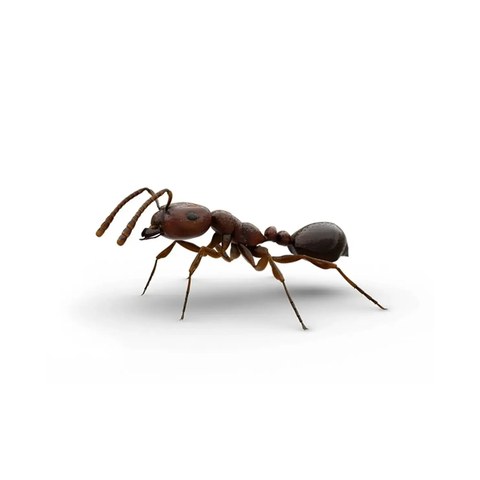
Fire & Argentine Ants
Ant mounds establish March through November and stay viable below ground through winter — a single mound can hold 200,000 workers. On Sullivan’s Island the dense lots along the Middle Street corridor, with minimal vegetation buffer, drive trails indoors, and the sandy soils near Breach Inlet produce spring swarms. Fire ants get direct mound treatment plus yard-wide baiting; Argentine ants require a completely different program, which is why identification comes before anything is applied.
Termites
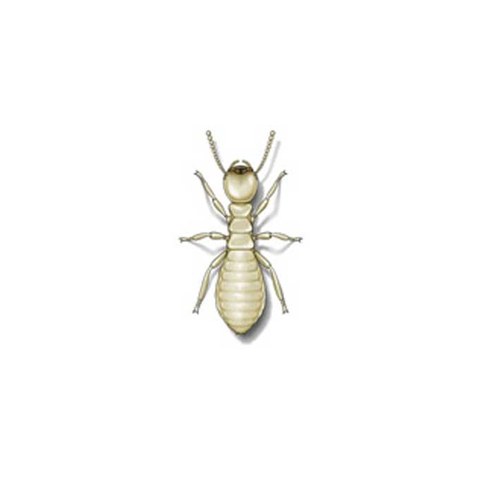
Two termites work this island, and they need opposite inspections. Formosan subterranean termites are established across Charleston County, with colonies reaching several million, and a Charleston study found 94% of infested buildings were reached from ground-based colonies — so inspection weight belongs at grade, at the piers and crawl space, not the attic. The powderpost drywood termite has never been recorded outside a building in South Carolina; it arrives in salvaged lumber and antique furniture, a genuine risk in a house being restored.
Mosquitoes
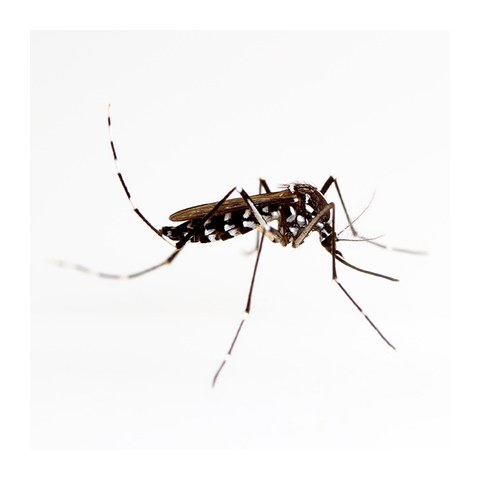
Marsh-front owners describe mosquito pressure as switching on rather than building, and that is how salt marsh species work: eggs sit dry on the high marsh and hatch as a single brood when a high tide or heavy rain floods that ground. NOAA recorded nineteen minor flooding days at the Charleston gauge in 2023, against zero to three a year before 1988. We time barrier treatment to tides and rainfall, treat the container breeders you control, and hold Clemson’s ten to thirty foot no-pesticide buffer at the marsh edge.
Rodents
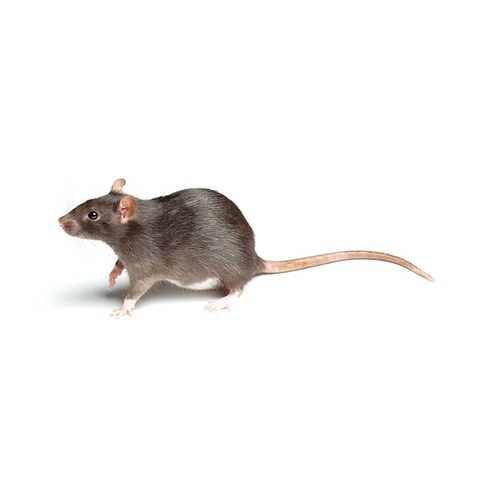
Rodents face no population-reducing winter here, and the thickly wooded accreted land — described in the court record as habitat for coyotes and other varmints — presses directly against the front row of houses. Rodents do not respect a property line, so extermination that lasts starts with exclusion: sealing deteriorating soffits, crawl space entries and gaps down to the size of a dime, then trapping and secured bait. Bait alone under an open elevated house just feeds the next arrivals.
Spiders
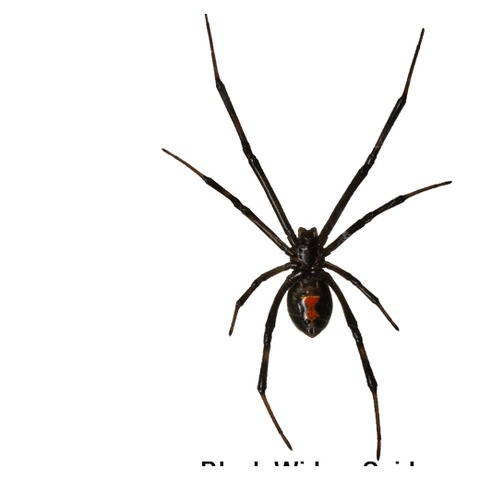
Black widows stay active year-round in garages, crawl spaces and wood piles, and the dune grass and beach-path palmetto litter on the seaward side are prime spider harborage. Brown recluse is far less common and frequently misidentified. A spider call is usually a prey problem — the spiders are there because the insects are — so we treat the insect population and the harborage together and clear webbing at the eaves on every visit.
Who is allowed to cut it back decides what is even possible. The 1991 deed requires the accreted land to remain in its natural state — homeowners have litigated that restriction twice and lost — while reserving to Town Council the unrestricted authority to trim vegetation for mosquito control, listed first among the public policies that justify trimming. So you cannot clear the growth in front of your house, and no contractor can do it for you; requests go to the Town. What a pest control company can legitimately do is everything on your side of the line, knowing the seaward pressure is permanent.
The housing carries the other half of the story. Just over a quarter of Sullivan’s Island homes — 27.3 percent, 297 of them — were built in 1939 or earlier, and that pre-war stock is exactly what the powderpost drywood termite wants: per Clemson, it has never been recorded outside a building in South Carolina and travels in infested wood. Meanwhile NOAA’s Charleston gauge recorded nineteen minor tidal flooding days in 2023, against zero to three a year before 1988, and each flood can trigger a fresh salt marsh mosquito brood. Vinx works the island on next-day appointments, with recurring service built for pressure you cannot landscape away.
The houses in front of that boundary come from two bursts of building, and the Town’s plan explains both. Roughly a quarter of the island’s housing predates 1939, and the plan credits that early spike to the military presence built up around Fort Moultrie. The largest single block, 29.3%, went up between 1980 and 1999 — directly, in the plan’s words, because Hurricane Hugo decimated the island in 1989. Since then almost nothing: an average of 7.8 new homes a year from 2008 to 2016. So the island is genuinely bimodal, and not by accident. A pre-war cottage raised two to four feet off the sand and a post-Hugo rebuild sitting six to ten feet up fail in different places, and knowing which one you own is most of the first visit.
Pest Pressure by Neighborhood
Where Sullivan’s Island Exterminator Calls Come From
Middle Street: Ants & Roaches
Dense residential lots with minimal vegetation buffer drive ant trails indoors, and older slab foundations crack under seasonal tide fluctuation, opening roach entry points. Restaurant row adds foot traffic and dumpster proximity to the pressure. Exterminator work on this stretch pairs harborage treatment with a sealed, maintained perimeter, because the pressure here is constant rather than seasonal.
Beach-Side Stations: Spiders & the Accreted Edge
Dune grass and beach-path palmetto litter are prime spider harborage, and salt-air humidity keeps crawl spaces moist enough for silverfish and earwigs. The front row also faces the thickly wooded accreted land that only the Town may trim, so elevated cottages with open crawl spaces get quarterly sub-slab treatment and a perimeter that assumes permanent seaward pressure.
Breach Inlet: Seasonal Surge Zone
Tidal fluctuation deposits organic matter that draws roaches and beetles, and properties near the inlet see spring ant swarms out of the sandy soils. Reduced traffic in winter does not mean reduced pest activity, so these lots run a low-winter protocol — the schedule keeps going even when the house has nobody in it.
Historic District: Pre-War Timber & Drywood Risk
The district covers 31.2 acres with 36 contributing buildings and a period of significance running 1870 to 1950 — exactly the stock the drywood termite wants, since in South Carolina it lives only inside buildings and travels in old and salvaged wood. Treatment on that fabric is planned so nothing invasive touches historic material, and the approach goes in writing first.
Marsh Side: Tidal Mosquito Broods
Salt marsh eggs sit dry on the high marsh and hatch as one synchronized brood when a high tide or heavy rain floods that ground, and a brood moves inland — averaging under five miles, which puts the whole four-and-a-half-mile island in range. Clemson advises a ten to thirty foot no-pesticide buffer at the marsh edge, and we work to it.
Complete Coverage
What Our Sullivan’s Island Exterminators Treat
Every common Charleston pest covered under one quarterly service plan

Ants
Ants, Argentine ants, carpenter ants, and odorous house ants. Perimeter bait, mound treatment, crack and crevice application.
All Plans
Cockroaches & Palmetto Bugs
American, Asian, and German cockroaches. Gel bait in harborage areas, exterior perimeter spray, drain treatment.
All Plans
Spiders
Web removal from eaves, exterior perimeter targeting harborage. Black widow identification and targeted treatment.
All Plans
Wasps & Hornets
Nest removal from eaves, soffits, structural voids. Preventative treatment of common nesting sites on each quarterly visit.
All Plans
Fleas & Ticks
Yard treatment targeting grassy and shaded areas. Interior treatment of active infestation areas.
Plus & Platinum
Bed Bugs
Inspection, heat treatment assessment, and targeted chemical treatment. Charleston’s tourism industry creates consistent exposure risk.
Platinum (12mo)
Rodents
Exterior bait station monitoring included in Plus and Platinum. Active infestation and full exclusion quoted separately after inspection.
Plus & Platinum
Mosquitoes
Monthly barrier spray and larvicide. Year-round service adjusted seasonally. Up to 90% population reduction per visit.
Platinum Only
Occasional Invaders
Silverfish, earwigs, centipedes, stink bugs, ladybugs, pillbugs. Crack and crevice treatment, perimeter spray, entry point ID.
All PlansKid & Pet Safe
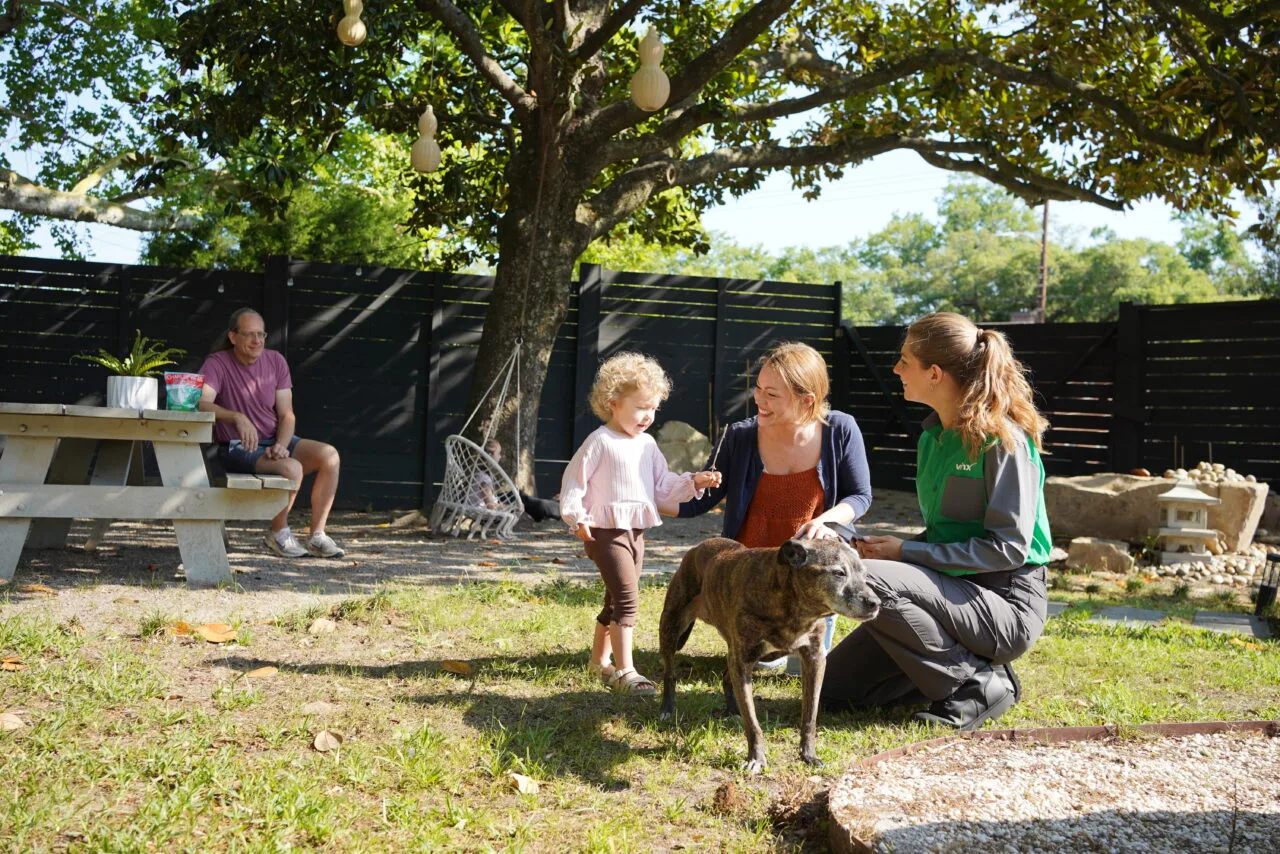
Our Treatments Are Safe for Your Whole Family: Including the Furry Members
Every product we use is EPA-registered and applied strictly at labeled rates by licensed technicians. We take the guesswork out of safety so you can feel confident letting kids and pets back into treated areas quickly.
EPA-Registered Products Only
All products we apply are EPA-registered and used strictly per label requirements. Our licensed technicians are trained to apply the right product in the right place at the right rate, every time.
Dry Time Before Re-Entry
Exterior spray treatments dry in 30–60 minutes. Once dry, treated surfaces are safe for children and pets to contact. Your technician will confirm the all-clear before leaving your property.
Interior Treatment On Request
We treat only what’s needed, where it’s needed. Gel baits in cabinets and crack-and-crevice applications keep products away from areas pets and children frequent most.
Botanical Options Available
Have specific sensitivities? Ask your technician about our plant-derived treatment options. We offer botanical alternatives for households that prefer a more natural approach.
Have a concern about products used near your pets or children? Call 855-800-8469 and we’ll walk you through exactly what we use and why it’s safe.
Explore More
More Pest Control Services on Sullivan’s Island
Ant Control Sullivan’s Island
Household ants & others
Bed Bug Control Sullivan’s Island
Heat & liquid treatments
Cockroach Control Sullivan’s Island
Palmetto bug & roach removal
Mosquito Control Sullivan’s Island
Monthly barrier treatments
Rodent Control Sullivan’s Island
All rodents covered
Spider Control Sullivan’s Island
All spider species covered

Termite Control Sullivan’s Island
Bait systems & liquid treatment
Wasp Control Mount Pleasant
Nest removal & prevention

Tick & Flea Control Sullivan’s Island
Yard & pet protection

Pest Control Sullivan’s Island
Year-round protection plans
Frequently Asked Questions
Exterminator Sullivan’s Island SC: Frequently Asked Questions
Most calls get a next-day appointment, and an active infestation gets moved forward. Call 855-800-8469 for a free inspection and a firm price.
No, and neither can any other contractor. The accreted land is held under a 1991 conservation deed requiring it stay in its natural state; only the Town has authority to trim it, and the deed names mosquito control and drainage as grounds for doing so. Requests go to the Town.
Yes. Clemson lists Formosan subterranean termites as established across Charleston County, with colonies reaching several million workers. The useful detail is where they get in: a Charleston study found 94% of infested buildings were reached from ground-based colonies, so inspection concentrates at grade rather than in the roof.
It is the main one for drywood termites. The powderpost drywood termite occurs in Charleston County and, per Clemson, has never been recorded in a natural habitat in South Carolina — it lives only inside buildings and travels in infested wood. Have salvaged material and antique furniture inspected before it goes into the house.
Because the source is tidal. Salt marsh eggs sit dry on the high marsh and hatch as a brood whenever a high tide or heavy rain floods that ground, and NOAA recorded nineteen minor flooding days at the Charleston gauge in 2023 against zero to three a year before 1988. A single application cannot cover a season of repeated brood triggers.
No. Clemson advises marsh-adjacent property keep a ten to thirty foot buffer with no pesticide or fertilizer applied, and we work to that. It is a real limit on treatment near the water, and worth knowing before anyone promises otherwise.
It can. The Sullivan’s Island Historic District covers 31.2 acres with 36 contributing buildings and a period of significance running 1870 to 1950. Treatment on that fabric is planned so nothing invasive is done to historic material, and we will put the approach in writing before starting.
Yes. We work the length of Sullivan’s Island and across the connector to Isle of Palms and Mount Pleasant, so a property manager running houses on both islands deals with one company.
Residential plans start at $49 a month with one-off treatment priced by pest and property. Island work sometimes takes longer because of access and the age of the housing, and we say so before quoting. Free inspection on 855-800-8469.
Quarterly for general pest control, with mosquito service run through the season rather than as one visit. The reason is tidal: NOAA recorded nineteen minor flooding days at the Charleston gauge in 2023 against zero to three a year before 1988, and each of those events can trigger a fresh marsh brood.
One treatment cannot hold on a barrier island. The pressure arrives from the marsh on a tidal rhythm and from the accreted land on the seaward side, neither of which you can remove — the growth there is held in its natural state by a 1991 deed. Recurring service is the realiztic option.
The tell is fine, gritty pellets — hard, six-sided frass — collecting below infested wood, often in small piles on a sill or floor, with tiny exit holes above. Because this species lives only inside buildings in South Carolina, finding it usually means it came in with something. Have salvaged material checked before it goes in.
Service Coverage
Pest Control Across Sullivan's Island & Mount Pleasant
Serving every neighborhood on Sullivan's Island and across the Mount Pleasant area