Exterminator in Goose Creek, SC
Goose Creek is Berkeley County’s largest city and home to most of Joint Base Charleston’s Naval Weapons Station: 17,000-plus acres supporting tens of thousands of military families. It’s also genuinely historic, from the colonial “Goose Creek Men” to the St. James Church and Otranto Plantation Indigo Vats on the National Register. Bordered by the Cooper and Back Rivers and home to Crowfield Plantation, one of the metro’s largest golf communities, Goose Creek’s mix of historic corridors, military housing, and established suburbs creates real variation in pest pressure. Vinx builds a plan around your specific property. 100% satisfaction guarantee.
Get Started in 60 Seconds
Choose what’s easiest for you
Request a Quote
We usually respond in 2 minutes
Call (855) 800-8469
Get a Live Person (no AI agents here!)
Sign Up Online
Get pricing and schedule now





Welcome to Vinx Pest Control
A Company That Actually Backs What It Says
At Vinx, we combine professional-grade treatments with a level of service most pest control companies don’t offer. Local technicians, fast response times, and a guarantee that actually means something.
“I’m not passionate about killing bugs. I’m passionate about customer service. At Vinx, you get experts who show up, do the job right, and stand behind every visit. No runaround, no fine print.”

Founder & Owner, Vinx Pest Control
PROTECTION PLANS
Goose Creek Exterminator Pricing
100% money-back guarantee on every plan.

Standard Residential Protection
- 4 Seasonal Treatments Per Year
- 50+ Covered Pests
- Interior, Exterior & Yard Treatment
- Unlimited Free Re-Services
- 100% Money-Back Guarantee
- Fire Ant Yard Guarantee
- Flea & Tick Coverage
- Mosquito Treatments

Upgraded Yard Protection
- 6 Home & Yard Treatments Per Year
- 50+ Covered Pests
- Interior, Exterior & Yard Treatment
- Unlimited Free Re-Services
- 100% Money-Back Guarantee
- Fire Ant Yard Elimination Guarantee
- Flea & Tick Elimination Guarantee
- Mosquito Treatments

Most Comprehensive Protection
- 9 Treatments Per Year
- 50+ Covered Pests
- Interior, Exterior & Yard Treatment
- Unlimited Free Re-Services
- 100% Money-Back Guarantee
- Fire Ant Yard Elimination Guarantee
- Interior Flea & Tick Coverage
- 8 Mosquito Treatments (Mar–Nov)
- Free Bed Bug Treatments if Needed*
*Starting rates vary by home size and area. All plans billed monthly.
Request Your Free Pest Control Quote
Fill out the form below and a Vinx team member will reach out within 2 minutes during business hours.
Prefer to talk? Call (855) 800-8469 for a live person, no AI agents.
Our Process
How Vinx Exterminators Work a Goose Creek Property: Step by Step

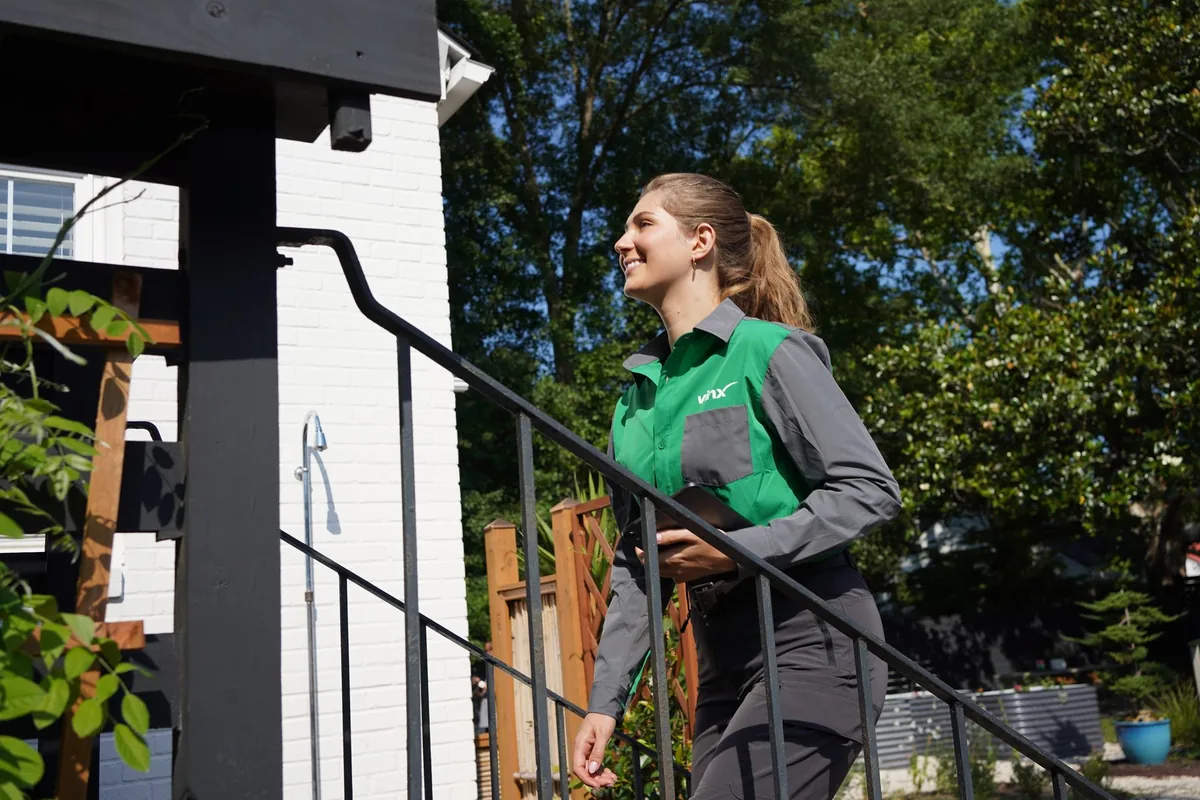
Inspection & Reporting
An extermination visit in Goose Creek starts with identification rather than the scariest possible answer. A technician tells you what a spider actually is, including when it is a harmless look-alike that needs no chemical treatment, and checks the soil line for termite activity before anything else is decided. You get a firm price before any work begins.
Exterior Foundation Treatment
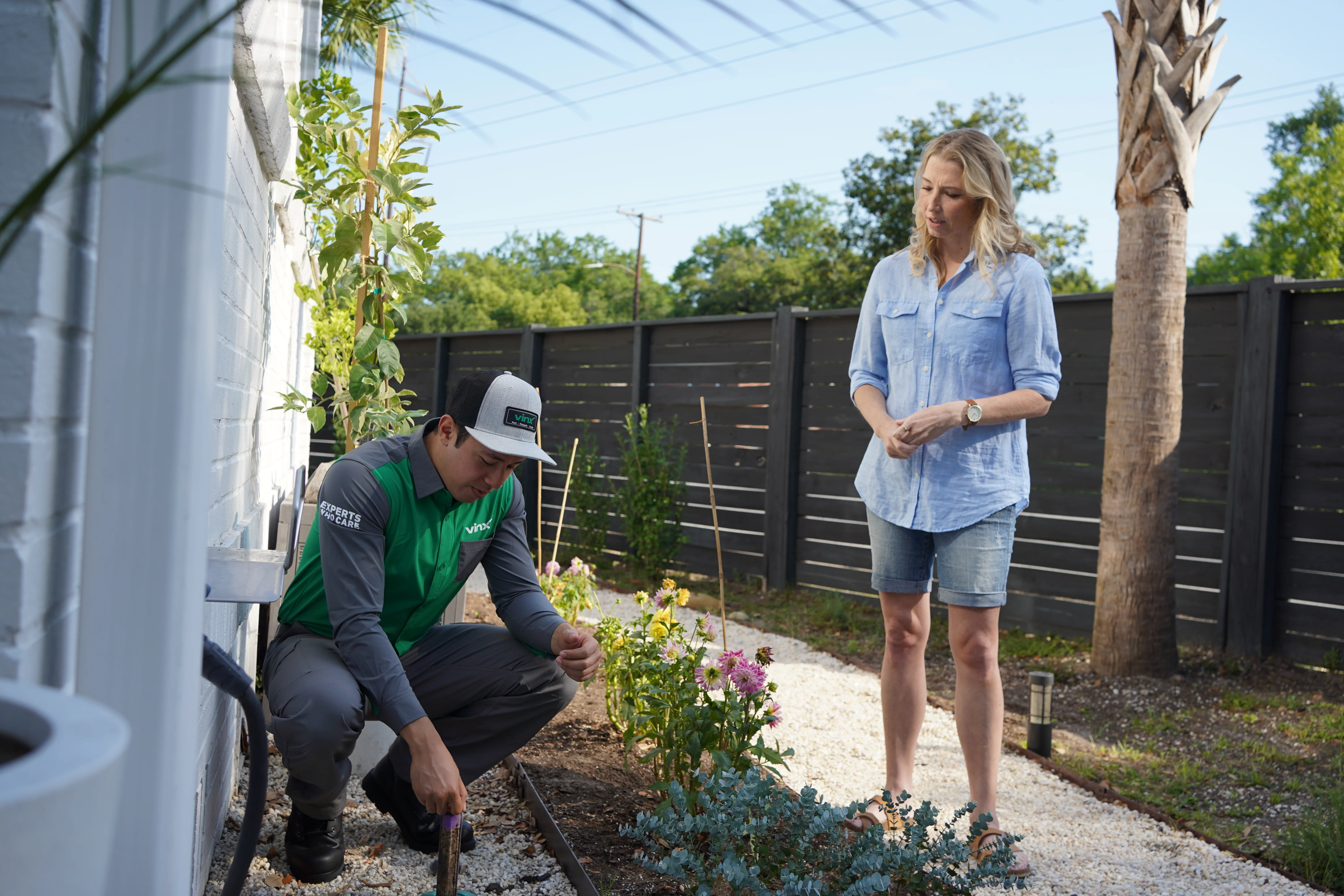
The exterior gets a micro-encapsulated barrier three feet up and three feet out, intercepting insects at the slab gaps and thresholds they actually use to enter. Berkeley County is on Clemson's Formosan termite list, so this perimeter line is treated as termite defense first and everything else second.
Yard Treatment
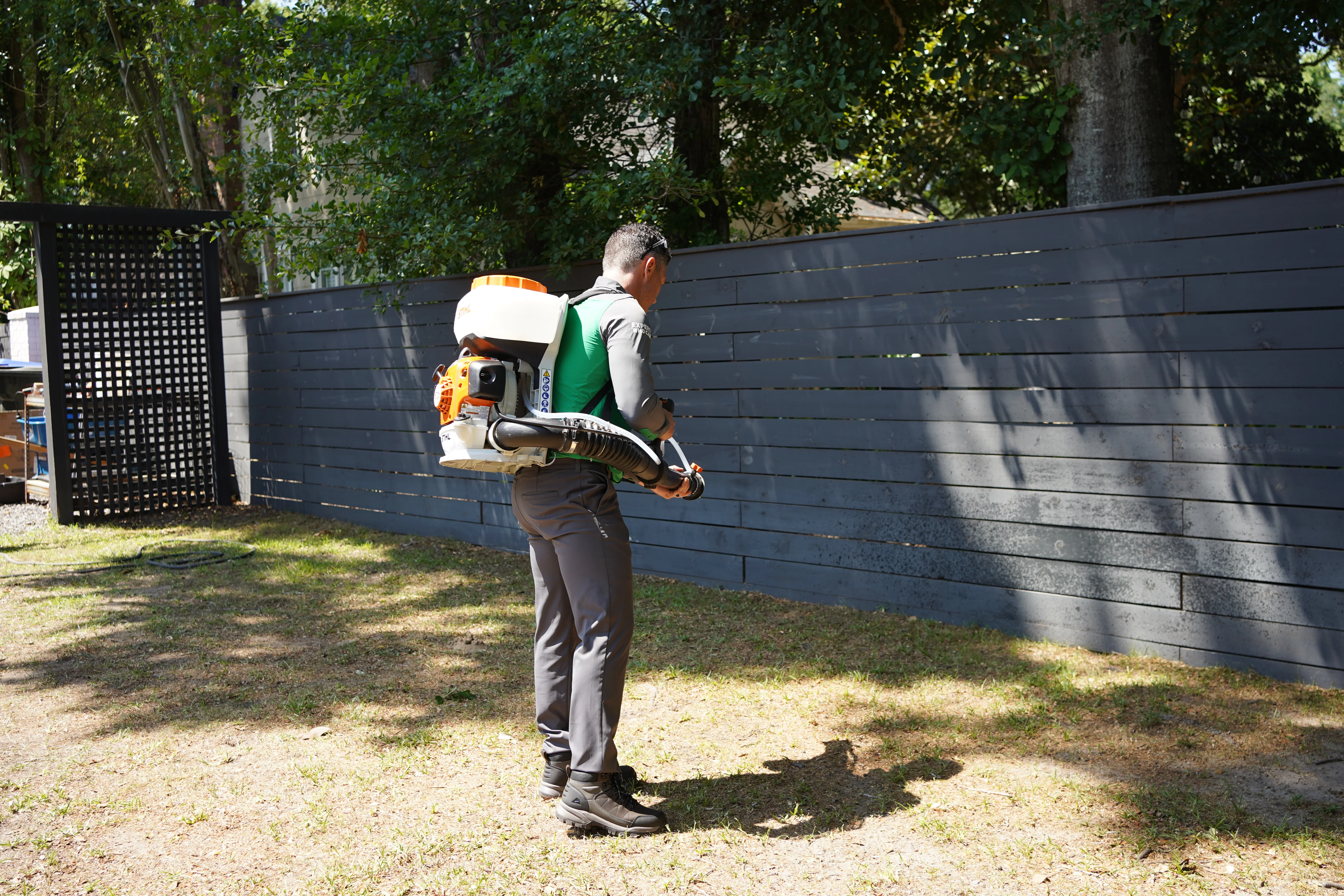
We treat the yard up to 30 feet out, targeting the woodland-edge conditions that feed rodents and ticks into Goose Creek yards continuously. A treated boundary where woodland meets lawn outperforms a heavier dose closer to the house.
Sweep & Treat Eaves
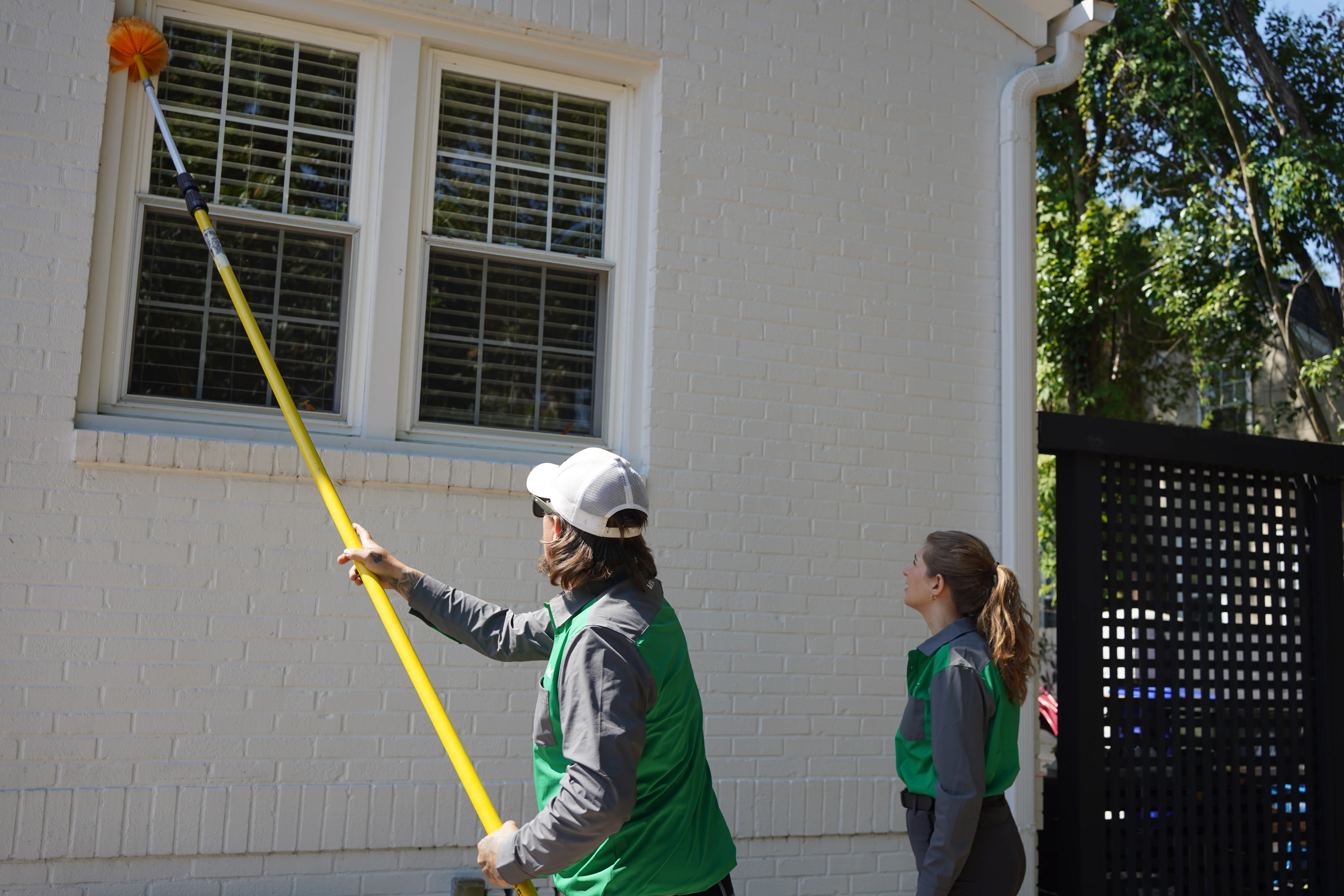
Rooflines are swept clear of webs and early wasp nests on every visit, then spot-treated with a residual product. This pass also checks the undisturbed, sheltered, low places — garage corners, shed framing, deck undersides — where widow spiders actually build.
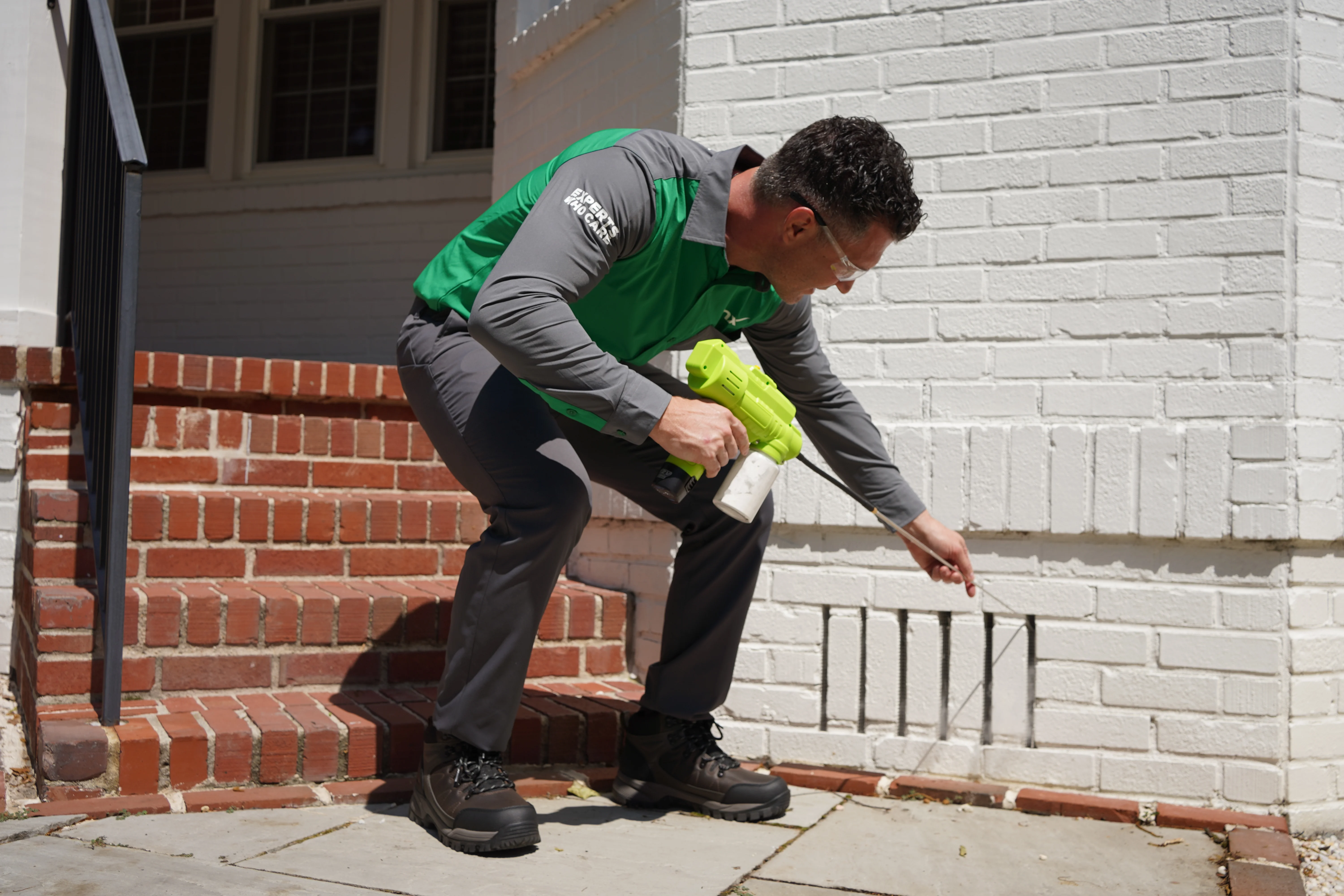
Power Dust Injection
Cracks, weep holes and expansion joints get a dust product driven in with a compressor tip, reaching wall voids a surface spray never touches. This is the treatment that keeps working longest between visits, which matters on properties near the reservoir and creek edge where moisture stays elevated.
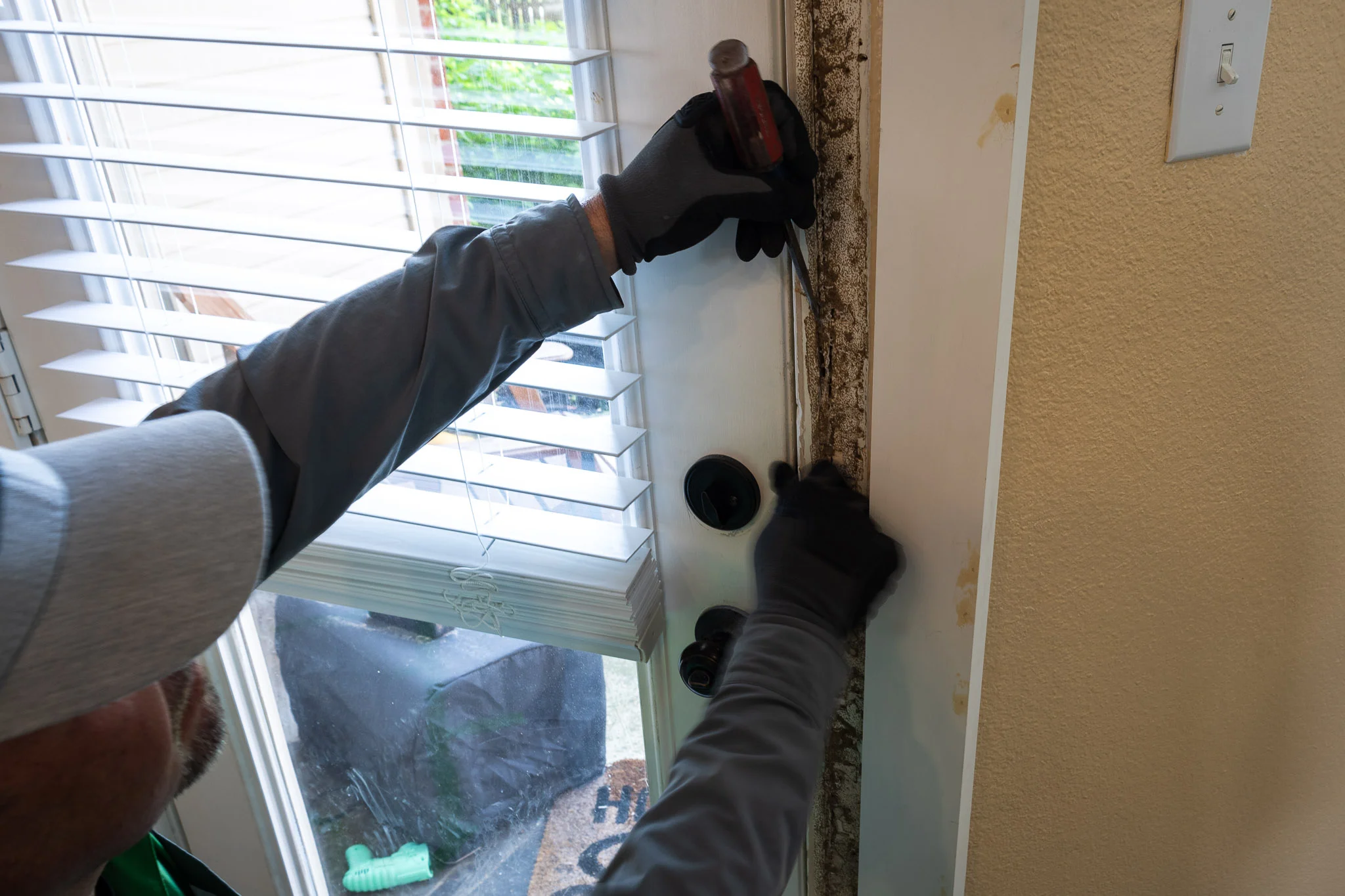
Interior Treatment (If Needed)
Where a widow spider harborage or termite activity is already established, we treat it directly rather than spraying a room and hoping. Interior work and unlimited free re-services between visits are covered on every plan, with identification driving the plan rather than assumption.
Conducive Condition Report
At the end of every visit, your technician documents any conditions increasing pest pressure, moisture entry points, foundation gaps, vegetation contact, clogged gutters, standing water near the foundation. Goose Creek's coastal environment creates specific conducive conditions that most companies never flag. We do, every single time.
Customer Reviews
Trusted by Goose Creek Families: 4.8 Stars on Google
Vinx has been great to work with. Leon specifically has been responsive and has answered all of my questions. He's courteous and communicative. Great company to work with!
Leon Givens is a great technician he always goes above and beyond to ensure that our home is taken care of and addresses any concerns we may have. Great Job!
The service manager was very educated on the technique and helped explain the process and expectations to me. They took down a wasp nest I hadn't even noticed yet. Was very pleasant and accommodating. The process was very smooth and I was able to have all my concerns addressed and treated.
Jeremiah came over in a prompt manner. Asked him not to ring the doorbell and send a text. He did. That's super appreciated due to the pets. He was very informative and helpful. Answered my questions and made sure there were no concerns before leaving the property. Very happy with the service today
Anthony and Vinx are wonderful! Highly recommend!
Waylon, the serviceman was extremely knowledgeable and more than willing to answer questions and provide very helpful information as to how to prevent future insect issues. His professional demnor, well researched responses, and overall quality of service set him apart from the run of the mill service provider. Vinx is fortunate to have such an individual on their team. Thanks for going above and beyond today Waylon.
Identify First, Treat Second
Why Pest Control in Goose Creek Is a Year-Round Commitment
Last updated: September 5, 2026
More Goose Creek calls start with a misidentified spider than with anything else, and the species people name is almost always the brown recluse. There is a specific, peer-reviewed South Carolina study on this: Frithsen, Vetter & Stocks (J Am Board Fam Med 2007;20:483–488) examined the state’s verified records and found forty-four confirmed brown recluse specimens since 1953, drawn from six of South Carolina’s forty-six counties, every one collected from a man-made structure rather than natural habitat. Against that, South Carolina physicians diagnosed 738 recluse bites in 2004 alone. The authors’ conclusion is that the species is not established in the state and that loxoscelism is heavily overdiagnosed.
6 Reasons Goose Creek Calls an Exterminator

Palmetto Bugs
American cockroaches — palmetto bugs — work the utility areas and older structures around Goose Creek, favoring the damp, sheltered spots near the reservoir and woodland edge. Because runoff near the reservoir is a water-quality question, treatment concentrates on the structure and hard edges rather than a broadcast perimeter.
Fire & Argentine Ants
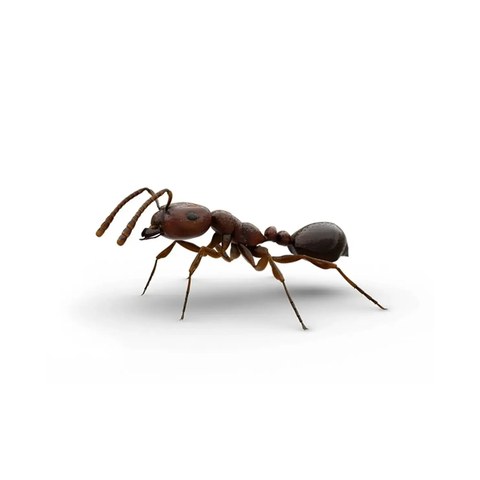
Imported fire ants find plenty of open, sunny, disturbed turf in Goose Creek's newer subdivisions, and a single mound treatment rarely holds — the colony scatters rather than dies. We pair direct mound treatment with a yard-wide bait program so the population is managed as a system rather than chased one mound at a time.

Termites
Goose Creek sits entirely within Berkeley County, on Clemson's list of sixteen counties with documented Formosan colonies, and Clemson dates the Charleston introduction to the mid-1950s. Ninety-four percent of infested buildings in a Charleston study were entered from ground-based colonies, so identification and a soil-first inspection come before any product decision.

Mosquitoes
Goose Creek's reservoir water, tidal creek and adjoining woodland and wetland keep the seasonal mosquito pattern going strong. Clemson HGIC notes standing water lasting five days or more will breed mosquitoes, some species in a tablespoon, so we target gutters, tarps, boat covers and plant saucers rather than the water you can actually see.

Rodents
Woodland edge is a continuous supply of rodents into Goose Creek yards, and a treated boundary where woodland meets lawn outperforms a heavier dose at the back door. Exclusion — sealing entry points — comes first, then trapping and secured bait rather than bait alone in an open structure.

Spiders
The spider that actually deserves attention here is the widow group, which builds in undisturbed, sheltered, low places like garage corners, shed framing and stacked pots — not the brown recluse most people assume. We treat that predictable harborage directly and handle everything else as web removal and a perimeter barrier.
The genuinely medically significant spider here is the widow group. Clemson HGIC records more than one widow species in South Carolina, including the brown widow alongside the southern black widow, and widows are not wanderers — they build in undisturbed, sheltered, low places: garages, sheds, crawl-space corners, under deck framing, stacked flowerpots and wood piles. That habit makes them manageable, because you can predict where they will be. Everything else on the usual list — wolf spiders, orb weavers, jumping spiders, cellar spiders — is a nuisance rather than a hazard, and the honest treatment is web removal, exclusion and a perimeter barrier, not an escalating chemical program.
Where Goose Creek does carry a genuinely elevated risk is termites. The city sits entirely within Berkeley County, and Clemson’s county tracking lists Berkeley among the sixteen South Carolina counties with documented Formosan subterranean termite colonies, with Clemson HGIC dating the species’ introduction in Charleston to the mid-1950s — making this one of the oldest footholds in the country. Ninety-four percent of infested buildings in a Charleston study were entered from ground-based colonies rather than aerial ones, so our inspection works the soil line first, and Formosan swarms run mid-May into July in the evening, heading for lights, a useful way to tell what you are looking at from a pile of shed wings on a sill.
One detail of how Charleston manages its own street trees says a great deal about the termite risk in this county. A US Forest Service study of the city’s municipal forest records that about 70 street trees are removed each year and that 85 percent of that removed wood is sent to landfill specifically to control the spread of Formosan termites — a species that first appeared in the United States at Charleston in 1957, that feeds on more than 50 species of plants as well as lumber, mulch, asphalt, plastic and thin sheets of metal, and that can cause severe structural damage to a house in under two years. When a municipality will not even compost its own timber, keeping a woodpile or fresh mulch against a Goose Creek foundation deserves a second thought.
Pest Pressure by Neighborhood
Where Goose Creek Exterminator Calls Come From
Widow Territory: Garages, Sheds & Deck Undersides
Garage corners, shed framing and the underside of deck boards are undisturbed, sheltered and low — exactly what widow spiders look for. These spots get direct treatment plus web removal, with a re-check after four weeks, rather than a blanket spray across the whole structure.
Woodland Edge: Rodents, Ticks & Mosquitoes
Properties near the reservoir water, tidal creek and adjoining woodland sit against a continuous supply of rodents and ticks, and standing water in gutters and low corners breeds mosquitoes within days of a storm. A treated boundary on the woodland side is what actually holds the line here.
Newer Ground: Fire Ants on Disturbed Soil
Open sun, irrigated turf and freshly disturbed soil in Goose Creek's newer subdivisions are exactly what imported fire ants want. Mounds turn up along sidewalks and yard margins, and a yard-wide bait program works better here than chasing individual mounds.
Berkeley County: Formosan Range on Every Street
Every part of Goose Creek sits within Berkeley County's documented Formosan range, so a soil-line inspection is warranted regardless of which neighborhood you're in. Evening swarms mid-May into July, heading for lights, are the tell versus a native termite's daytime spring swarm.
Complete Coverage
What Our Goose Creek Exterminators Treat
Every common Lowcountry pest covered under one recurring service plan
Palmetto Bugs
Year-round pressure. Drain lines, crawlspace vents, plumbing penetrations.
All Plans
Fire & Argentine Ants
Sandy coastal soil & new construction displacement. Requires Plus or Platinum.
Plus & PlatinumSpiders
Black widow, wolf spider. Cobweb removal included every visit.
All Plans
Wasps & Hornets
Nest removal from soffits and eaves. Persistent in warm coastal climate.
All Plans
Fleas & Ticks
Exterior flea/tick treatment. Interior flea covered in Platinum.
Plus & PlatinumMosquitoes
Monthly treatment Mar–Oct. The long humid season demands this level.
Platinum OnlyRodents
Roof rats, fence lines, power lines, roofline gaps. Exterior bait stations.
All PlansTermites
Formosan termite core range. Sentricon TotalDefense from $35/mo+.
Add-On
Bed Bugs
Covered after 12 months of Platinum service.
Platinum 12moKid & Pet Safe
Our Treatments Are Safe for Your Whole Family: Including the Furry Members
Every product we use is EPA-registered and applied strictly at labeled rates by licensed South Carolina technicians. We take the guesswork out of safety so you can feel confident letting kids and pets back into treated areas quickly.

EPA-Registered Products Only
All products we apply are EPA-registered and used strictly per label requirements. Our licensed technicians are trained to apply the right product in the right place at the right rate, every time.
Dry Time Before Re-Entry
Exterior spray treatments dry in 30–60 minutes. Once dry, treated surfaces are safe for children and pets to contact. Your technician will confirm the all-clear before leaving your property.
Interior Treatment On Request
We treat only what’s needed, where it’s needed. Gel baits and crack-and-crevice applications keep products away from areas pets and children frequent most.
Botanical Options Available
Have specific sensitivities? Ask your technician about our plant-derived treatment options. We offer botanical alternatives for households that prefer a more natural approach.
Have a concern about products used near your pets or children? Call (855) 800-8469 and we’ll walk you through exactly what we use and why it’s safe.
Explore More
More Pest Control Services in Goose Creek
Termite Control Goose Creek
Sentricon bait system
Mosquito Control Goose Creek
Monthly barrier treatments
Ant Control Goose Creek
Household ants & others
Spider Control Goose Creek
All spider species covered
Cockroach Control Goose Creek
Palmetto bugs & German roaches
Rodent Control Goose Creek
All rodents covered
Bed Bug Treatment Goose Creek
Heat & liquid treatments

Tick & Flea Control Goose Creek
Yard & pet protection

Pest Control Goose Creek
Year-round protection plans
Frequently Asked Questions
Exterminator Goose Creek SC: Frequently Asked Questions
Recurring plans start at $49 a month, and a one-off treatment is priced by pest and property. Inspection is free and the price is firm before anything is treated — including the case where we tell you the spider you found does not need treating. Call 855-800-8469.
Very probably not in your house. Frithsen, Vetter & Stocks (J Am Board Fam Med 2007;20:483–488) found forty-four verified specimens in the whole state since 1953, from six of forty-six counties, every one taken from inside a structure rather than from natural habitat — while SC physicians diagnosed 738 recluse bites in 2004 alone. The authors conclude the species is not established here and that bites are heavily overdiagnosed.
That is a medical question rather than a pest-control one, and worth asking a doctor rather than an exterminator. What we can tell you is what is actually living on your property, which is usually widows in the sheltered low places and a mix of harmless hunting and web-building spiders everywhere else.
The widow group. Clemson HGIC records more than one widow species in South Carolina, brown widow included. They build in undisturbed, sheltered, low spots — garage corners, shed framing, under deck boards, stacked pots — so they are predictable and treatable.
Yes, and more than the spiders are. Goose Creek is entirely within Berkeley County, which Clemson’s county tracking lists among the sixteen counties with documented Formosan colonies, and Clemson dates the Charleston introduction to the mid-1950s. Clemson notes a listed county does not mean uniform presence, so it is a real risk to inspect for.
Timing helps. Clemson HGIC puts Formosan swarms mid-May into July in the evening, drawn to lights, while the native eastern subterranean termite swarms in daylight earlier in spring. Termite swarmers have four equal wings and a straight waist; ants have a pinched waist and a longer front pair.
Quarterly works for most Goose Creek properties. Roughly half the year’s rain falls between June and September, so we weight visits toward the months when ant, roach and mosquito pressure all rise together.
We cover the whole city plus Hanahan, Ladson, Moncks Corner and Summerville. Most calls get a next-day appointment and an active infestation gets moved up. Call 855-800-8469.
Service Coverage
Pest Control Across Goose Creek & the Lowcountry
Serving every neighborhood in and around Goose Creek