
Flea & Tick Control in Goose Creek, SC
Lone Star Tick, American Dog Tick & Cat Flea Experts: Long, Warm Active Season
Goose Creek’s tick pressure isn’t driven by salt marsh, the freshwater wetlands along the Cooper and Back Rivers and the wooded buffer land around Joint Base Charleston favor a different mix. Lone star ticks, the most commonly collected tick in South Carolina, thrive in the undeveloped land bordering the Naval Weapons Station, American dog ticks in the mature tree canopy of established neighborhoods like Devon Forest, and cat fleas ride in on a pet. Vinx treats the yard, the home, and the species involved.
Get Started in 60 Seconds
Choose what’s easiest for you
Request a Quote
We usually respond in 2 minutes
Call (855) 800-8469
Get a Live Person (no AI agents here!)
Sign Up Online
Get pricing and schedule now





Welcome to Vinx Pest Control
A Company That Actually Backs What It Says
At Vinx, we combine professional-grade treatments with a level of service most pest control companies don't offer. Local technicians, fast response times, and a guarantee that actually means something.
Get a Free Quote"I'm not passionate about killing bugs. I'm passionate about customer service. At Vinx, you get experts who show up, do the job right, and stand behind every visit. No runaround, no fine print."
WELCOME TO VINX PEST CONTROL
Flea & Tick Control Plans for Goose Creek Homeowners

Standard Residential Protection
- 4 Seasonal Treatments Per Year
- 50+ Covered Pests
- Interior, Exterior & Yard Treatment
- Unlimited Free Re-Services
- 100% Money-Back Guarantee

Upgraded Yard Protection
- 6 Home & Yard Treatments Per Year
- 50+ Covered Pests
- Yard Ant Elimination Guarantee
- Flea & Tick Elimination Guarantee
- 100% Money-Back Guarantee

Most Comprehensive Protection
- 9 Treatments Per Year
- 50+ Covered Pests
- 8 Mosquito Treatments (Mar–Nov)
- Flea, Tick & Ant Coverage
- Free Bed Bug Treatments if Needed*
*Starting rates vary by home size and area. All plans billed monthly.
Request Your Free Pest Control Quote
Fill out the form below and a Vinx team member will reach out within 2 minutes during business hours.
Prefer to talk? Call (855) 800-8469 for a live person, no AI agents.
Our Approach
How Vinx Treats Fleas & Ticks in Your Goose Creek Home: Step by Step

Full Property Inspection
Your technician checks the wooded buffer edge if your lot backs the Naval Weapons Station, the shaded beds of Crowfield and Devon Forest, pet resting areas, carpet and bedding to identify whether ticks, fleas or both are present and which species is driving it. The line between mowed lawn and the base’s forest gets particular attention.

Species-Specific Treatment
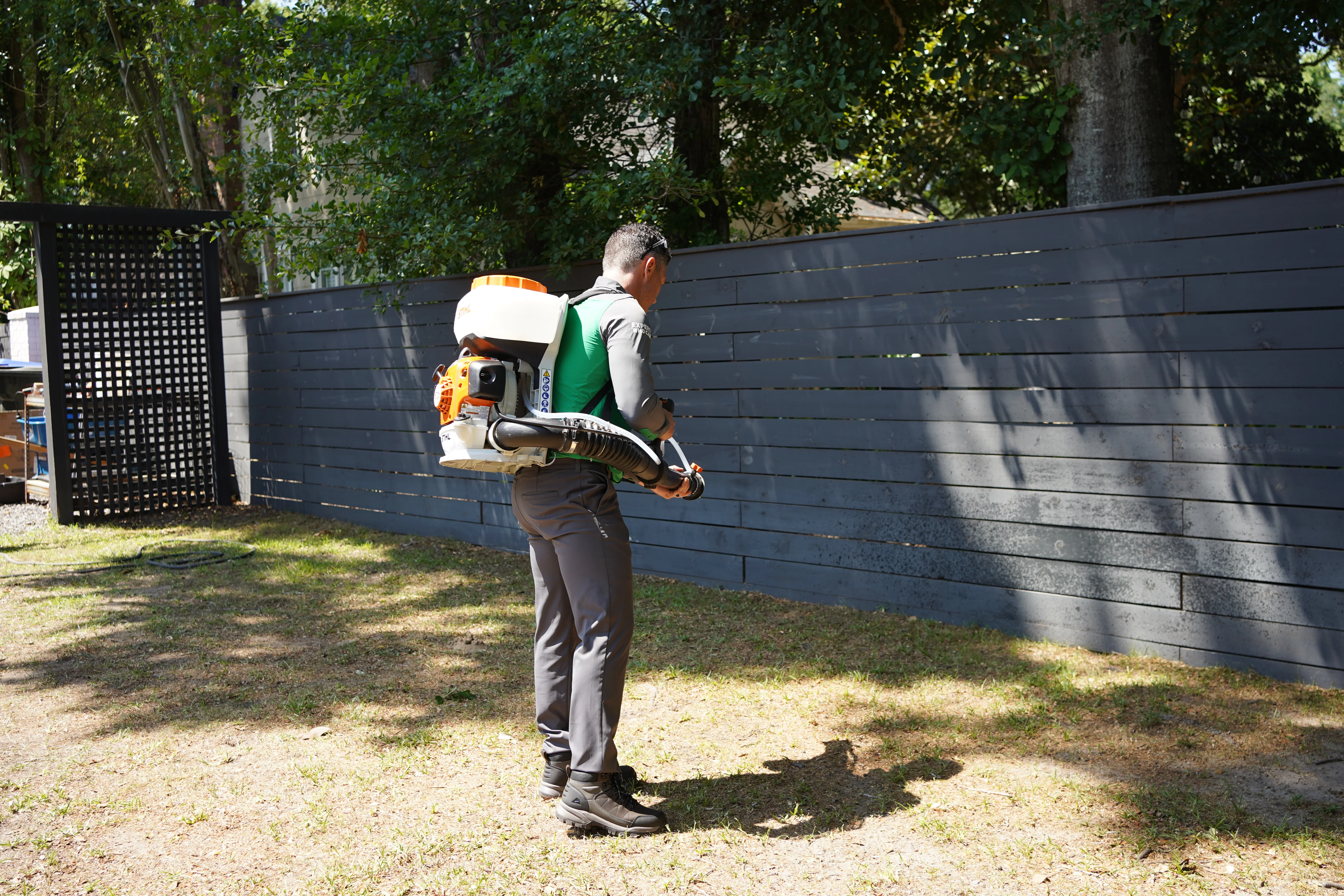
Exterior flea and tick treatment is applied to all ground cover, mulch beds, vegetated areas, under-deck spaces and wooded edge margins on every Plus and Platinum visit through Goose Creek’s long, warm season.
Interior Flea Treatment: Platinum Plan
Interior flea treatment with growth regulator on the Platinum plan reaches the 95% of the flea population in carpet fibers, pet bedding and upholstery that veterinary prevention cannot, and stops larvae becoming biting adults. In rental housing near the base that turns over on PCS moves, it is what stops an inherited problem.
Free Return If Activity Persists
If fleas or ticks return between scheduled visits, we come back at no charge. Call (855) 800-8469 any time in the season; no service fees, no arguing about coverage.
Goose Creek’s Nine-Month Flea & Tick Season: Covered
Nine months of flea and tick pressure in one of South Carolina's most wildlife-dense coastal markets. If they return between visits, we come back at no charge. No service fees, no waiting, no fine print.
What Customers Say
Real Reviews from Goose Creek Homeowners
Long Season. 3 Species.
Why Flea & Tick Control in Goose Creek Isn’t One-Size-Fits-All
Fleas and ticks are not the same pest with two names; they behave completely differently, and Goose Creek’s mix of 14,000 acres of forest on the Naval Weapons Station, mature canopy in Devon Forest and the historic corridor, and pet-dense neighborhoods like Crowfield and Sedgefield gives each of three species its own habitat. A managed deer herd on that much forest, pressed against residential streets, is the engine behind the lone star population here.
Ticks wait in vegetation for a host to brush past. Clemson reports the lone star as the most collected tick species in South Carolina — it favors wooded, brushy areas, bites aggressively, and is linked to alpha-gal allergy along with ehrlichiosis and Southern tick-associated rash illness. The tick most people worry about is not the one they are likely to meet here: Clemson records the black-legged tick that carries Lyme disease as present statewide only in low volume. American dog ticks prefer grassy, sunnier open areas and mature tree canopy, and both they and the brown dog tick transmit Rocky Mountain spotted fever. The brown dog tick is worth naming separately because it is the one species here that can complete its entire life cycle indoors, which is why a kennel or a dog bed can keep producing ticks long after the yard has been treated. Fleas, by contrast, almost always arrive via a pet and reproduce indoors within days, the cat flea is behind nearly every infestation, on dogs and cats alike.
The wooded, undeveloped buffer land surrounding the Naval Weapons Station sustains lone star ticks, and it is worth knowing the scale of it: the base's own recreation service lists 14,000 acres of forest land, six miles of saltwater river front, numerous freshwater ponds and 22 miles of recreational trails, with hunting open by permit to DoD and non-DoD personnel alike. A managed deer herd on that much forest, pressed directly against residential Goose Creek, is the engine behind the lone star population here — and those 22 miles of trail are where people and dogs meet it. Meanwhile the mature tree canopy of Devon Forest and the St. James corridor favors American dog ticks. Pet-dense, shaded neighborhoods like Crowfield Plantation and Sedgefield see cat fleas as the most consistent concern.
The regional picture explains why hosts keep arriving. The Berkeley-Charleston-Dorchester green infrastructure plan, prepared for the state by the Green Infrastructure Center, measures the three-county region at about 1,776,000 acres and finds that 69 percent of its land area still qualifies as habitat core, with roughly 36 percent of the total area under some form of protection. The plan’s central purpose is maintaining the corridors that connect those cores. Corridors are how deer and other tick hosts move, and a town sitting among that much connected habitat is never going to be host-free — which makes the treated boundary line, and the check after a walk, the parts that actually work.
Goose Creek Flea & Tick Species
Lone Star Tick
The most commonly collected tick species in South Carolina overall, identifiable by the single white dot on adult females. Lone star ticks actively quest for hosts, extending their front legs toward passing movement, and are most common in the wooded, brushy areas and undeveloped buffer land surrounding the Naval Weapons Station. Bites have been linked to alpha-gal syndrome, a delayed allergic reaction to red meat. Larval “seed tick” clusters are a common summer encounter on wooded or overgrown lots.
American Dog Tick
Larger than the lone star tick, with mottled white markings on a brown body, the American dog tick prefers grassy, sunnier open areas rather than dense woods or marsh edges, a good match for the mature tree canopy and open lawns of Devon Forest and the St. James and Otranto historic corridor. It’s a known vector for Rocky Mountain spotted fever, making prompt tick removal important regardless of species.
Cat Flea
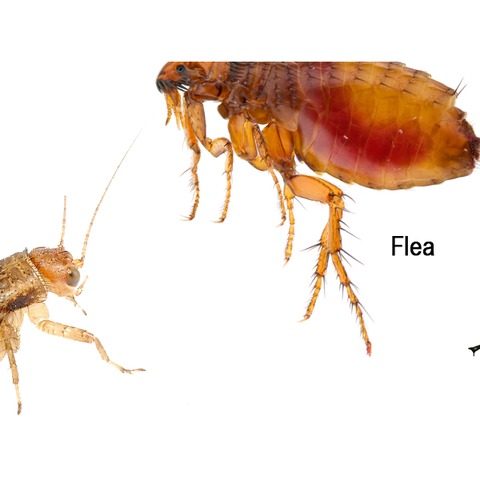
Despite the name, the cat flea is responsible for the vast majority of flea infestations affecting both cats and dogs throughout Goose Creek. It typically enters a home on a pet, then lays eggs in carpet, bedding, and upholstery, where a small population can become a full infestation within about two weeks. Only about 5% of the total population are the biting adults on the pet, the rest are eggs, larvae, and pupae in yard vegetation and carpet. Clemson puts the arithmetic behind that: a female lays four to eight eggs after every blood meal and more than 400 across her life, and those eggs are laid on the pet and fall off wherever it walks, so the animal is the factory and the carpet is the nursery. Treating the yard, interior IGR (Platinum), and veterinary prevention together deliver complete control.
What to Look For
Signs of a Flea or Tick Problem at Your Goose Creek Property
Pets Scratching Constantly
Scratching, biting or licking around the head, neck and base of the tail is the first sign of fleas on a Goose Creek pet.
Flea Dirt on Pets
Tiny dark specks in the coat that turn red when wet, flea droppings, confirming an active infestation on the animal.
Jumping Insects on Socks
Adult fleas visible on white socks after walking through carpet or the shaded beds of Crowfield and Devon Forest.
Tick Found on Pet or Person
A tick attached or crawling after time on the base trails, the golf course rough or a wooded lot edge; remove it promptly.
Deer Trails at the Forest Edge
Worn paths from the Naval Weapons Station buffer into a back yard mark the deer movement that carries lone star ticks onto Goose Creek lots.
Red Bites in Clusters
Small itchy bites clustered on ankles and lower legs, flea bites where skin meets infested carpet or ground cover.
By Neighborhood
Flea & Tick Pressure Across Goose Creek
Lone Star Ticks. Wooded, undeveloped buffer land surrounding the base gives the lone star tick a genuine foothold close to residential areas. Aggressive questing behavior and summer “seed tick” clusters make yard-edge treatment and tick checks after outdoor time especially important here.
Cat Fleas. A high concentration of pet-owning households throughout this large community makes recurring flea activity common, especially in mature landscaping. Yard treatment plus veterinary prevention is the reliable combination here, with interior treatment when fleas make it inside.
American Dog Ticks. Mature tree canopy throughout this established neighborhood supports steady American dog tick activity in yards and along walking paths. Yard-perimeter barrier treatment plus checking pets after outdoor activity keeps encounters down.
Cat Fleas. Established, shaded landscaping and a high concentration of pet-owning households make this neighborhood especially prone to recurring flea activity, typically introduced via a family dog or cat. Yard treatment plus veterinary prevention is the reliable combination here.
American Dog Ticks. Mature tree canopy near some of Goose Creek’s oldest structures supports the same steady American dog tick pressure found in other established, tree-covered areas. Yard-perimeter barrier treatment plus checking pets after outdoor activity keeps encounters down.
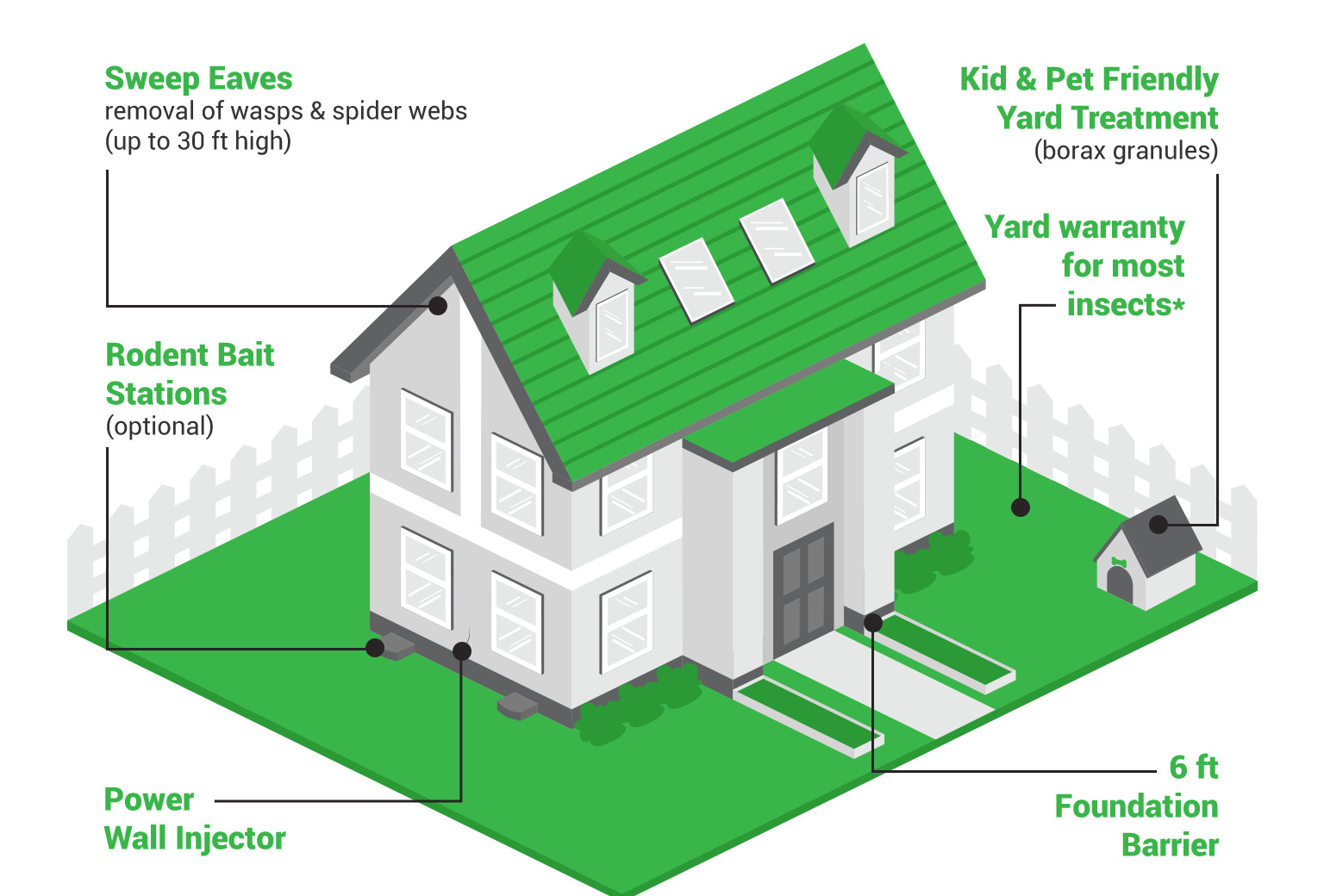
Vinx HomeGuard Plan
What Happens at Every Visit
Our technicians don't just spray and leave. Every quarterly service covers your full exterior and interior, done right, backed by a written guarantee.
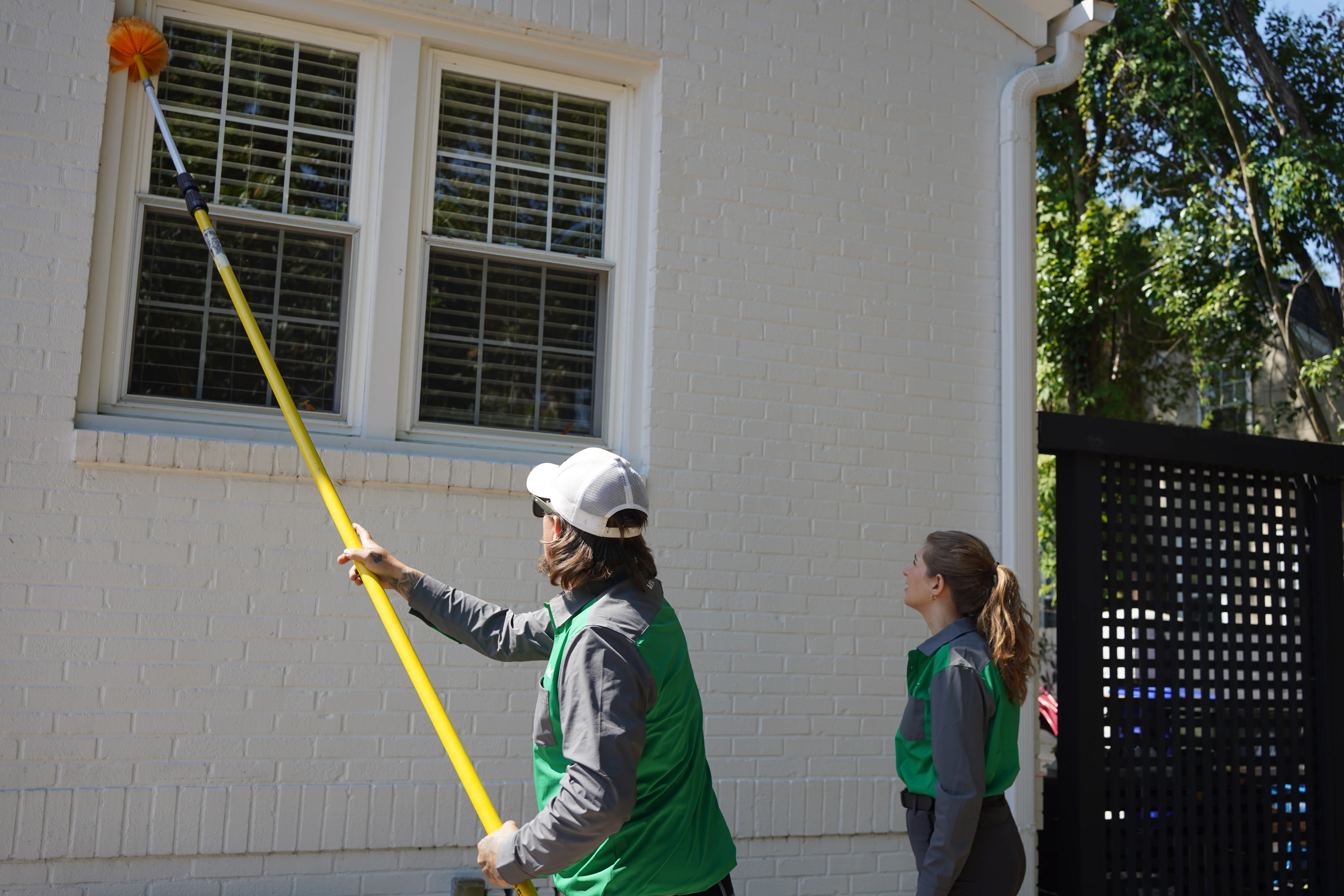
- Yard & Eave Treatment: Flea & tick yard treatment plus cobweb removal up to 30 ft
- Power Wall Injector: Treats wall voids where pests hide
- 6 ft Foundation Barrier: Full perimeter treatment every visit
- Yard Warranty: Free retreatment for most insects
- Kid & Pet Safe Yard Treatment: Borax granules, safe after dry
Homeowner Tips
6 Ways to Reduce Flea & Tick Pressure Around Your Goose Creek Property
Kid & Pet Safe
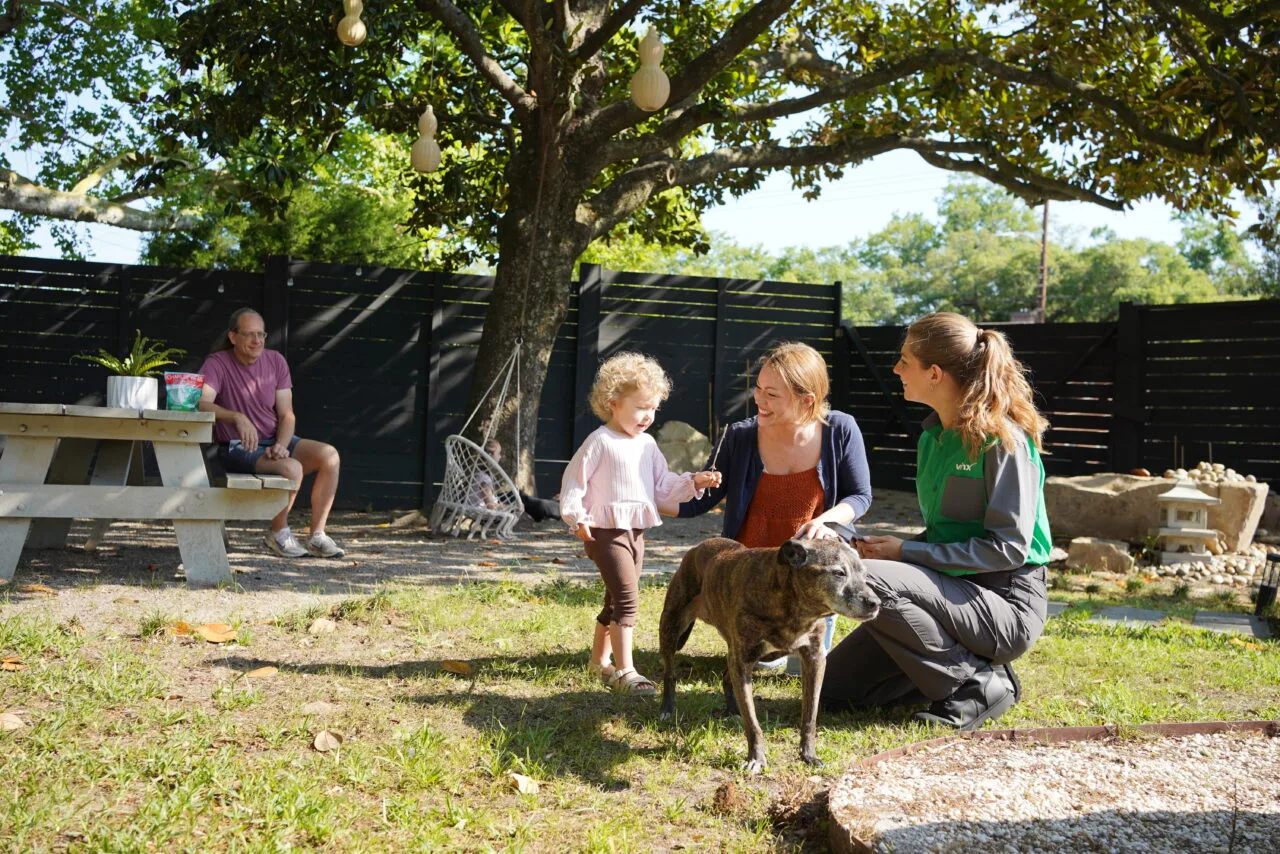
Our Treatments Are Safe for Your Whole Family: Including the Furry Members
Every product we use is EPA-registered and applied strictly at labeled rates by licensed technicians. We take the guesswork out of safety so you can feel confident letting kids and pets back into treated areas quickly.
EPA-Registered Products Only
All products we apply are EPA-registered and used strictly per label requirements. Our licensed technicians are trained to apply the right product in the right place at the right rate, every time.
Dry Time Before Re-Entry
Exterior spray treatments dry in 30–60 minutes. Once dry, treated surfaces are safe for children and pets to contact. Your technician will confirm the all-clear before leaving your property.
Interior Treatment On Request
We treat only what’s needed, where it’s needed. Gel baits in cabinets and crack-and-crevice applications keep products away from areas pets and children frequent most.
Botanical Options Available
Have specific sensitivities? Ask your technician about our plant-derived treatment options. We offer botanical alternatives for households that prefer a more natural approach.
Have a concern about products used near your pets or children? Call (855) 800-8469 and we’ll walk you through exactly what we use and why it’s safe.
Explore More
More Pest Control Services in Goose Creek

Pest Control Goose Creek
General pest protection
Termite Control Goose Creek
Sentricon bait system

Mosquito Control Goose Creek
Monthly barrier treatments
Ant Control Goose Creek
Household ants & others

Spider Control Goose Creek
All spider species covered
Cockroach Control Goose Creek
Palmetto bug & roach removal

Rodent Control Goose Creek
All rodents covered

Bed Bug Treatment Goose Creek
Heat & liquid treatments
Exterminator Goose Creek
Same-day local exterminators
FAQ
Flea & Tick Control in Goose Creek, Your Questions Answered
Not exactly. Goose Creek’s documented wetlands along the Cooper and Back Rivers are freshwater rather than salt marsh, and combined with the wooded buffer land around Joint Base Charleston, that favors the lone star tick and American dog tick rather than the salt-marsh species found right on the coast.
Lone star ticks are the most commonly collected tick species statewide, aggressive biters found in wooded, brushy areas like the undeveloped buffer land surrounding the Naval Weapons Station, and linked to alpha-gal syndrome. American dog ticks are larger, prefer grassier, sunnier open areas and mature tree canopy, and are a known vector for Rocky Mountain spotted fever.
Yes. Alpha-gal syndrome is a delayed allergy to red meat triggered by lone star tick bites, and the lone star is the most collected tick in South Carolina. The undeveloped buffer land around the Naval Weapons Station is exactly its habitat, and South Carolina added alpha-gal to its reportable conditions list in 2026, so cases are now counted. Call (855) 800-8469 for a free inspection.
Almost certainly from the last tenant's pet, and the timing is not a coincidence. Clemson explains the mechanism: a flea larva spins a silken cocoon that protects the developing flea from insecticide, and it can wait inside for anything from under a week to more than four months. What brings them out is physical disturbance or the arrival of a warm-blooded animal — which is precisely what moving day is. A house that sat quiet between tenants can seem to erupt the week a family and their dog walk in. In a town where households turn over on orders rather than on the housing market, this is the single most common flea story we see. Two practical consequences: a single treatment cannot reach a cocooned flea, so Clemson's own guidance is to repeat the vacuum-and-treat cycle about three weeks later once the next batch has emerged; and flea bombs are the wrong tool, because they spread product across a room rather than into the floor edges, cracks and pet areas where the larvae actually are.
Exterior flea and tick yard treatment is included in the Plus plan at $75 per month and the Platinum plan at $109 per month for homes up to 3,000 sq ft, and interior flea treatment with growth regulator comes with Platinum. Both plans also cover full pest control and fire ant treatment. Call (855) 800-8469 for a quote specific to your Goose Creek lot.
Because the product on the pet only reaches the adults biting it, and Clemson’s arithmetic explains the rest: a female flea lays four to eight eggs after every blood meal and more than 400 in her lifetime, and those eggs fall off wherever the pet walks. About 95% of the population is eggs, larvae and pupae in carpet, bedding and shaded yard soil. Yard treatment and interior growth regulator reach that 95%; the vet product never will.
Vinx serves all of Goose Creek: Crowfield Plantation, Devon Forest, Sedgefield, the St. James and Otranto historic corridor and the neighborhoods around the Naval Weapons Station, plus nearby Hanahan, Summerville and North Charleston. Call (855) 800-8469 to confirm scheduling for your address.
Work the boundary rather than the whole yard. Clemson puts a number on it: keeping about nine feet between mown lawn and the wooded edge measurably reduces tick contact, and clearing woody debris off that edge helps as much as the width does. Their three levers are low grass height, control of weeds and brushy patches, and removing that debris. On a lot backing onto 14,000 acres of managed forest you are never going to remove the source, so the aim is to make the last nine feet unattractive and to treat the margin rather than the middle. One species we specifically watch for on ground like this is the Asian longhorned tick — Clemson recorded South Carolina's first finds in 2020 on shelter dogs in Pickens and Lancaster counties and again on York County cattle in 2022, and its females reproduce without males, so a single tick can seed an infestation. Anything you pull off is worth keeping: the state runs a free Tick Identification Program through the University of South Carolina, the state medical entomology lab and Clemson Livestock Poultry Health. Seal it in a bag with a cotton ball dampened in 70% rubbing alcohol and post it to the Laboratory of Vector-borne and Zoonotic Diseases, 915 Greene St. #327, Columbia, SC 29208, with the date, the location and what it came off. South Carolina also added alpha-gal syndrome to its 2026 list of reportable conditions, so cases are now counted rather than going unrecorded.
Service Coverage
Flea & Tick Control Across Goose Creek & the Tri-County Area
Serving every neighborhood in and around Goose Creek
Serving the Greater Charleston Area