Ant Control in Wake Forest, NC
Carpenter, Fire, Argentine, Odorous House & Pavement Ant Experts
Wake Forest homeowners don’t deal with one kind of ant, they deal with at least five, from carpenter ants in the century-old homes near the Historic District to fire ants in the freshly graded lots of Holding Village and Traditions. Vinx identifies the species before treating the colony at source, rather than guessing with a generic spray. Free re-treatment guarantee.
Get Started in 60 Seconds
Choose what’s easiest for you
Request a Quote
We usually respond in 2 minutes
Call 984-600-8469
Get a live person (no AI agents here!)
Sign Up Online
Get pricing and schedule now





Welcome to Vinx Pest Control
A Company That Actually Backs What It Says
At Vinx, we combine professional-grade treatments with a level of service most pest control companies don't offer. Local technicians, fast response times, and a guarantee that actually means something.
Get a Free Quote"I'm not passionate about killing bugs. I'm passionate about customer service. At Vinx, you get experts who show up, do the job right, and stand behind every visit. No runaround, no fine print."
WELCOME TO VINX PEST CONTROL
Ant Control Plans for Wake Forest Homeowners

Standard Residential Protection
- 4 Seasonal Treatments Per Year
- 50+ Covered Pests
- Interior, Exterior & Yard Treatment
- Unlimited Free Re-Services
- 100% Money-Back Guarantee

Upgraded Yard Protection
- 6 Home & Yard Treatments Per Year
- 50+ Covered Pests
- Yard Ant Elimination Guarantee
- Flea & Tick Elimination Guarantee
- 100% Money-Back Guarantee

Most Comprehensive Protection
- 9 Treatments Per Year
- 50+ Covered Pests
- 8 Mosquito Treatments (Mar–Nov)
- Flea, Tick & Ant Coverage
- Free Bed Bug Treatments if Needed*
*Starting rates vary by home size and area. All plans billed monthly.
Get Your Free Wake Forest Ant Inspection
Fill out the form below and a Vinx team member will reach out within 2 minutes during business hours.
Prefer to talk? Call 984-600-8469 for a live person, no AI agents.
Our Process
How Vinx Eliminates Ants in Your Wake Forest Home: Step by Step

Ant Inspection & Colony Identification
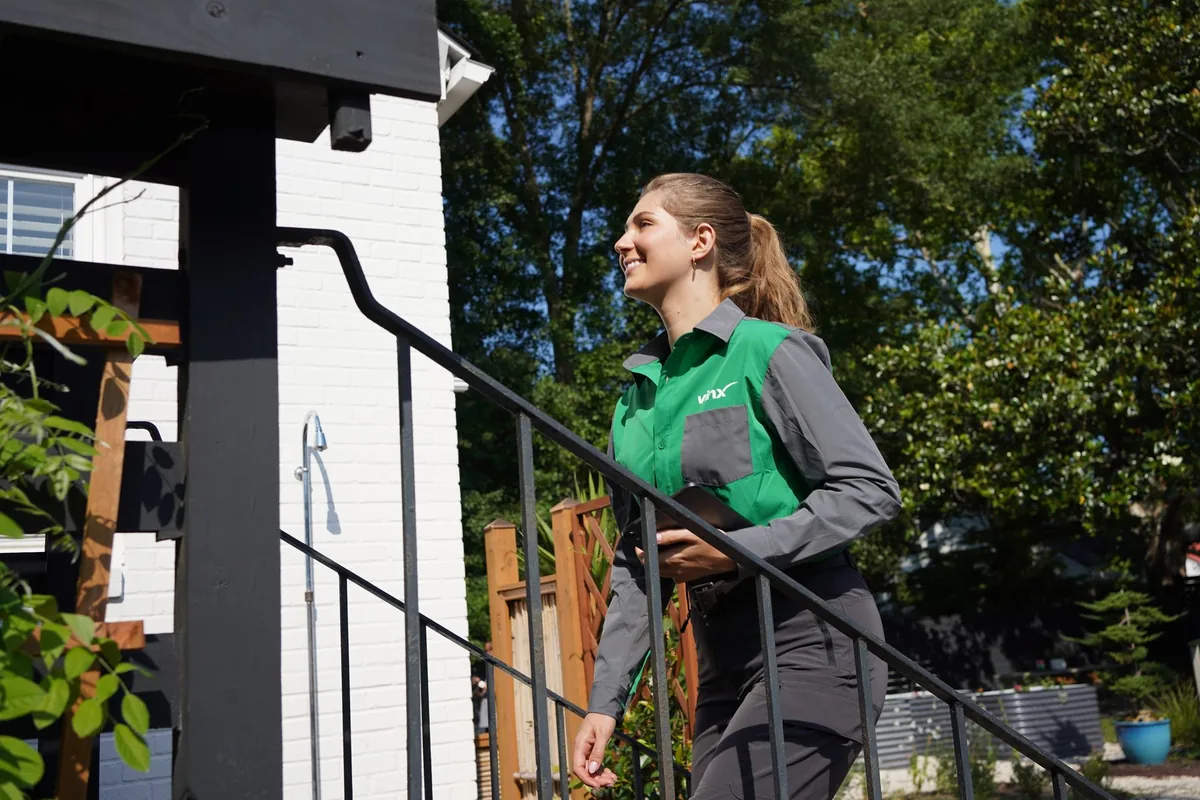
Your technician walks the entire property, foundation, kitchen, bathrooms, mulch beds and yard, to identify which of Wake Forest's five common species is present. Near the original college campus the older framing and stone foundations read carpenter ant, while the open lawns of Holding Village and Traditions read fire ant.
Exterior Perimeter Treatment
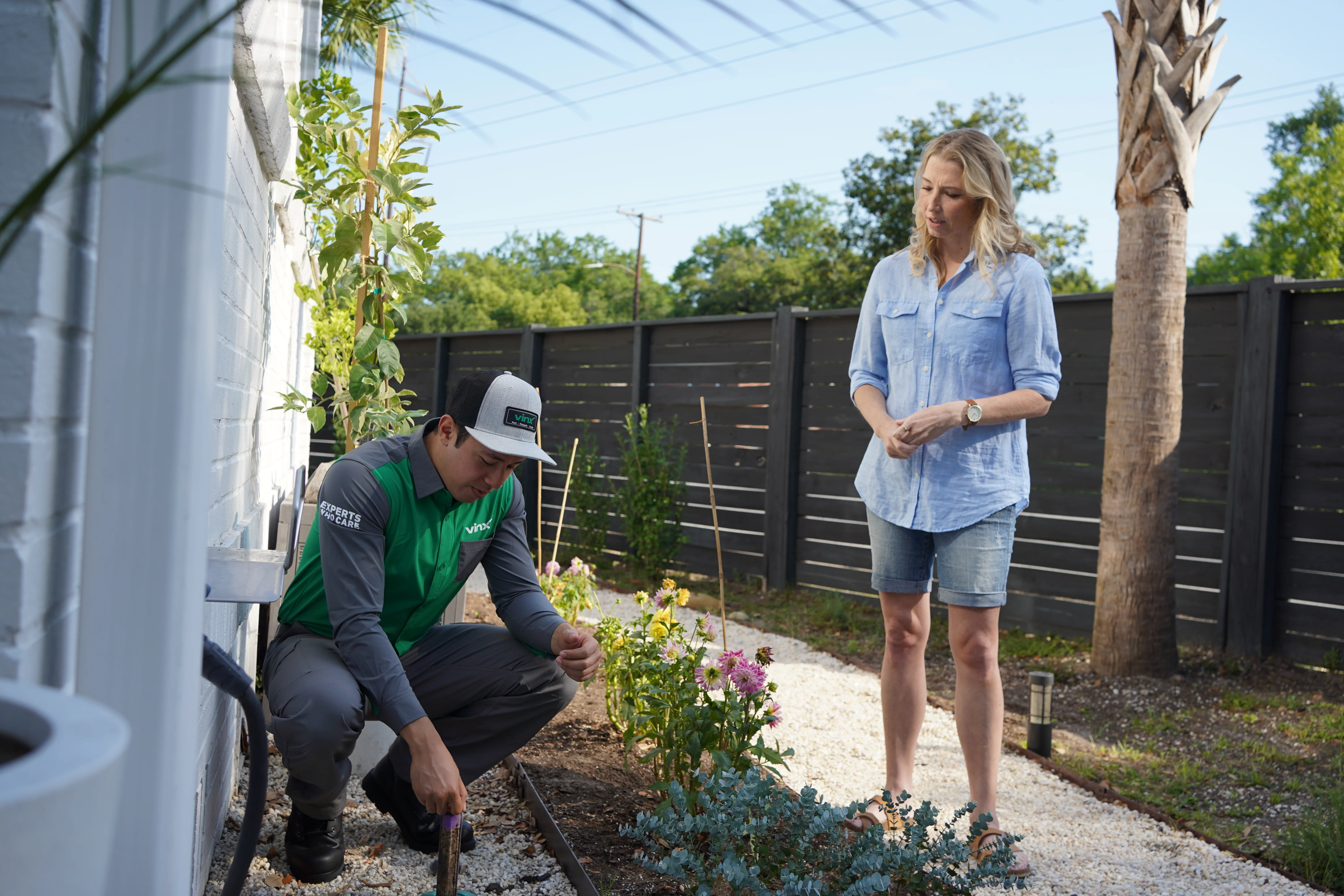
A residual non-repellent barrier goes around the full foundation, every door and window frame and each utility penetration. The ants cross it because they cannot sense it, which is precisely why a non-repellent is used.
Bait & Interior Treatment
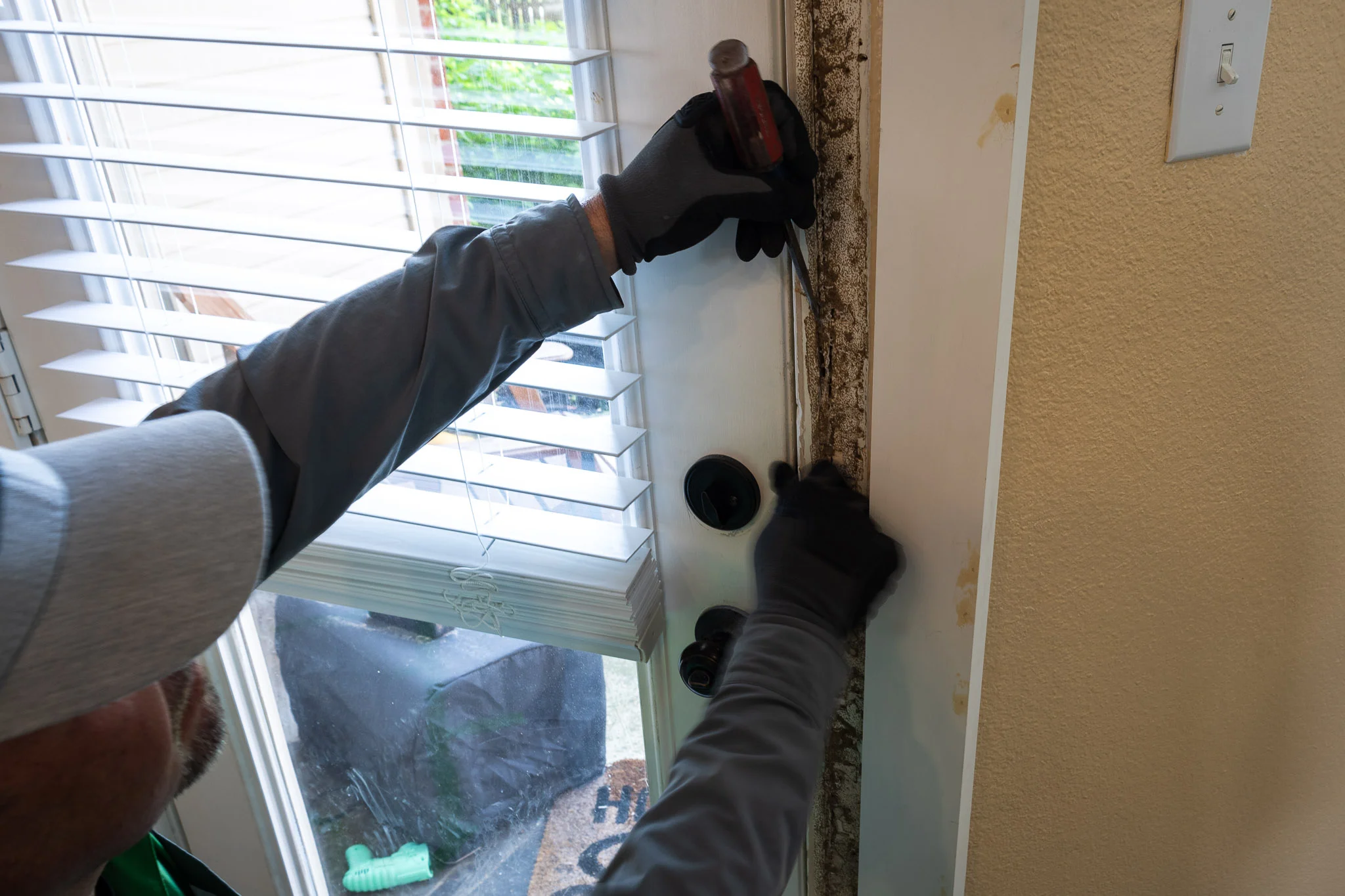
Slow-acting bait goes on active trails and near suspected nests so foragers carry it home. Interior treatment stays on trails and harborage rather than open floor, since product the ants avoid accomplishes nothing.
Quarterly Maintenance & Free Re-Treatments
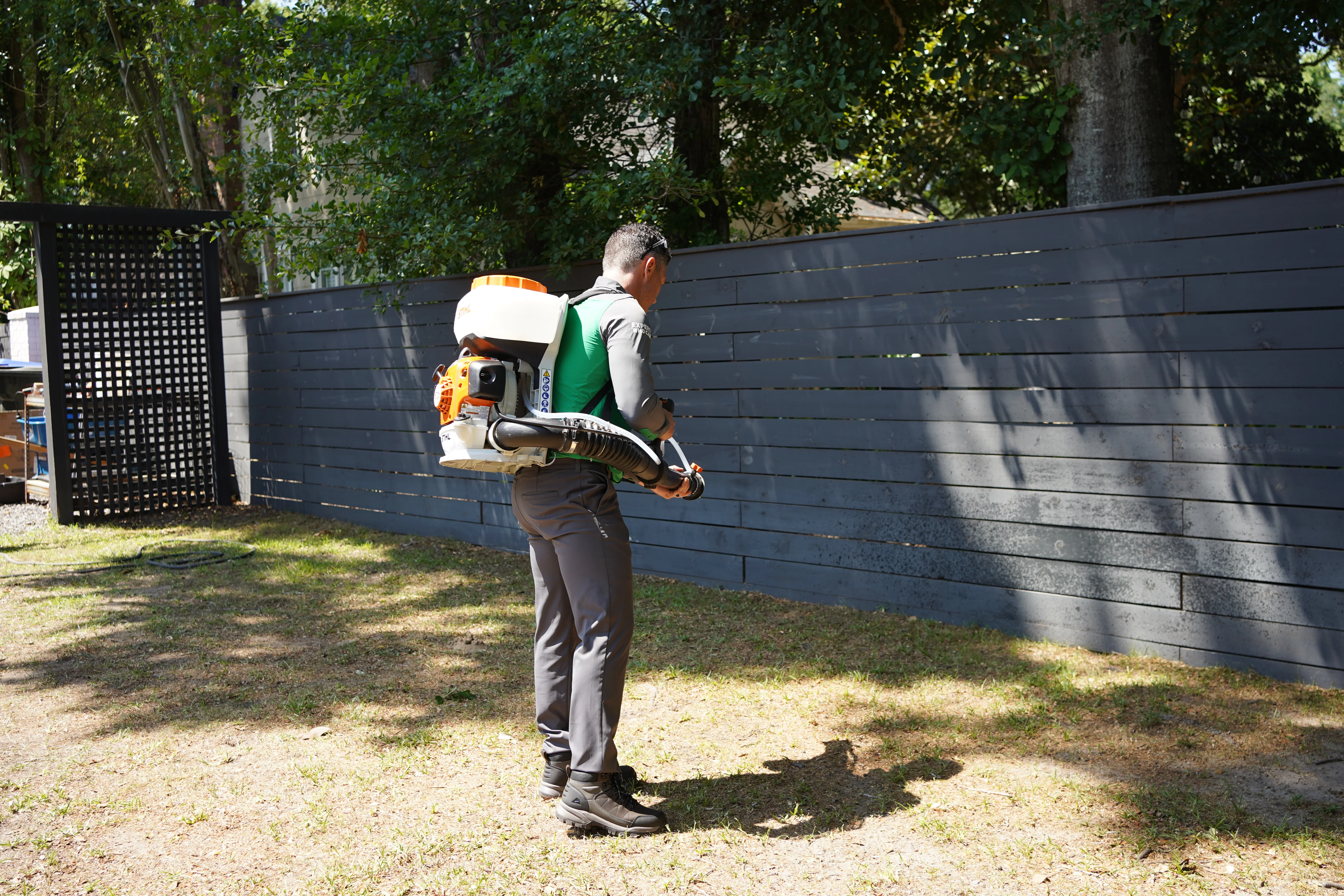
Quarterly visits keep the barrier fresh and catch new colonies before they establish. In Wake Forest that matters most in the growth corridors, where each new phase of grading opens the disturbed ground fire ants colonize first.
Customer Reviews
Real Reviews from Wake Forest Homeowners
Austin came out this afternoon and was thorough and very professional.
Verified Google ReviewLinked up with Vinx and the service and communication is top tier. Scott was awesome
Verified Google ReviewGreat job & so respectful and courteous. Keep up the great work!
Verified Google ReviewMatt and Abbas were great to work with and took care of everything quickly and effectively.
Verified Google ReviewDerek came by today for a no charge reserving for sugar ants. He explained everything he was doing and shared some tidbits of info as to why they were hanging out around the sink. Here's hoping his prevention strategy pays off. We'll know in a week to 10 days.
Verified Google ReviewAdrian was very pleasant when he arrived we spoke about some insect issues I had the night before. He took care what needs to be done worked very well. I am very pleased.
Verified Google ReviewGreat customer service and they do a great job!
Verified Google ReviewAdrian, my Vinx tech continues to knock it out of the park! He’s consistent and reliable.
Verified Google ReviewJordan Did a wonderful job is exterminating my property. He cover the mailbox area. I hope he will be our technician again. I loved his video of work completely.
Verified Google ReviewDakari was very helpful, informative, started on time, and finished promptly.
Verified Google ReviewThe technician, Derek, did a good job and was very friendly.
Verified Google ReviewAnt Pressure by Area
Ant Pressure Across Wake Forest
Downtown Wake Forest & the Historic District: Carpenter Ants
Homes near the Calvin Jones House and the original college-era buildings, with accumulated wood moisture issues, give carpenter ants exactly the damaged wood conditions they look for to build galleries, the highest carpenter ant pressure in town.
Falls Lake & the Wakefield Corridor: Odorous House Ants
The consistently damp ground near the 12,000-acre lake and surrounding woodland supports odorous house ant colonies at a level not typically seen in Wake Forest’s drier neighborhoods, and heavy rain regularly pushes them indoors through foundation gaps.
Heritage & Hasentree: Argentine Ants
Mature, well-irrigated lawns and consistent landscaping moisture throughout these established golf-course communities sustain large Argentine ant supercolonies that spread easily between adjacent properties.
Holding Village, Traditions & Richland Creek: Fire Ants
Freshly graded lots and open, sunny turf in these newer growth corridors give fire ants exactly the conditions they need to build visible mounds each spring and summer, the highest fire ant mound activity anywhere in Wake Forest.
St. Ives, Stonewater & Bishops Grant: Pavement Ants
A mix of settled and recently poured concrete throughout these mid-growth subdivisions creates ideal pavement ant nesting conditions along driveways and foundation edges, often showing up as small piles of displaced soil pushed through expansion joints.
5 Species. One Town.
Why Ant Control in Wake Forest Isn’t One-Size-Fits-All
Ant problems in Wake Forest usually continue because every ant gets the same treatment. Five species are routine and each wants different conditions: fire ants in open sun on graded ground, carpenter ants in moisture-damaged framing, odorous house ants and Argentine ants on a kitchen trail, pavement ants under concrete. With Falls Lake woodland on one edge of town and constant new construction on the other, Wake Forest supports all five comfortably.
Nearly every ant spray sold over the counter is a repellent, and that is the flaw in the whole approach. Spraying a trail kills the visible foragers and signals to the colony that the route is unsafe, so it buds and reroutes. A week later there are two trails and the nest has never been reached.
Professional treatment depends on non-repellent products the ants cannot detect. Foragers cross the treated band, carry the active ingredient back and spread it through the colony during normal food sharing until the nest fails from within. That is what keeps a trail from returning next month.
Wake Forest adds its own twist. The construction boom in Holding Village, Traditions, and Richland Creek is constantly turning undisturbed land into graded lots, and freshly disturbed soil is close to the ideal environment for a new fire ant colony. Meanwhile, the older landscaping near the Historic District and the damp ground along Falls Lake give carpenter ants and odorous house ants years to build large colonies undetected.
The longer-term picture is less simple than warmer equals more ants. In a 2022 review of how ants respond to climate change, Parr and Bishop report that temperate-zone ants generally gain from rising temperatures, with better development and foraging — but that the response is not a straight line: about a degree of warming raised colony abundance and species richness in field work, while nearer two and a half degrees reduced both. Urban ant populations also proved able to shift their thermal tolerance relative to rural ones. In plain terms, the species mix in a Wake Forest yard is not fixed, and a treatment plan that assumes it is will drift out of date.
Wake Forest Ant Species

Fire Ants: Red Imported Fire Ant
Fire ants build the dome-shaped mounds most Wake Forest homeowners recognize on sight, usually in open, sunny lawn areas. Wake County falls inside North Carolina’s fire ant quarantine zone, and mounds establish most aggressively in freshly graded soil, which makes the freshly graded lots and open lawns in Holding Village, Traditions, and Richland Creek some of the highest-risk properties in town.
One mound can hold well over 100,000 workers; a sting raises a painful welt for most people and a genuine anaphylactic reaction in a small percentage, and disturbing a mound brings a mass response within seconds. Mounds are most visible March through November but colonies remain viable underground through Wake Forest’s mild winters.
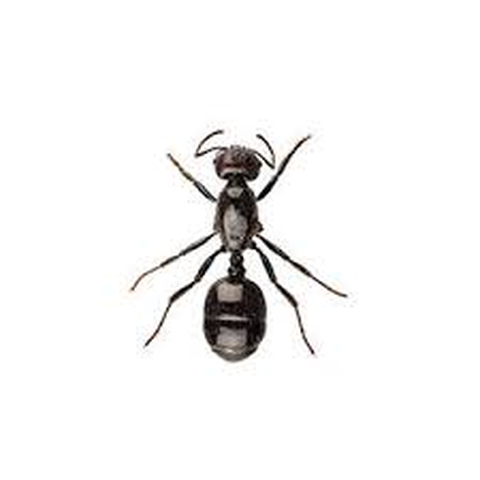
Argentine Ants
Argentine ants don’t sting and rarely build a visible mound, which is exactly what makes them harder to deal with than fire ants in practice. Multiple queens per colony, linked into sprawling underground networks running across several neighboring yards, are why a single-spot treatment rarely settles anything.
Argentine ants are the ant most often behind a kitchen trail that keeps coming back week after week, drawn from the well-irrigated, mature lawns of Heritage and Hasentree into nearby homes, following pheromone trails to any food or moisture source with remarkable precision.
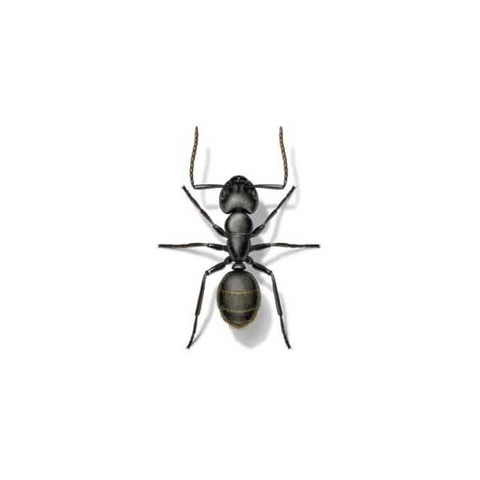
Carpenter Ants
Carpenter ants don’t eat wood, they excavate it to build nesting galleries, and moisture-damaged wood is what draws them in. Homes near the Historic District and the original Wake Forest College campus, with decades of accumulated wood-moisture issues, along with the more wooded lots near Falls Lake, see the most carpenter ant activity in town.
Three to six years is what a mature colony needs to establish fully, and by the time frass shows up — coarse sawdust mixed with insect parts, usually by a window sill or door frame — meaningful structural damage may already be under way.
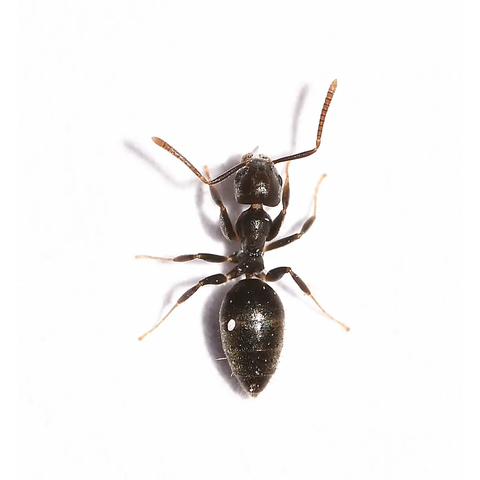
Odorous House Ants
Odorous house ants are the ant most Wake Forest homeowners actually mean when they say they have a kitchen ant problem. Colonies reach the tens of thousands on multiple queens, nesting in mulch beds, beneath stepping stones and inside wall voids. Smell is the giveaway: crushed odorous house ants put out an odor most people call rotten coconut.
The consistently damp ground near Falls Lake and the Wakefield corridor keeps these colonies especially active, and they often flood indoors through foundation gaps within a day or two of a heavy rain.
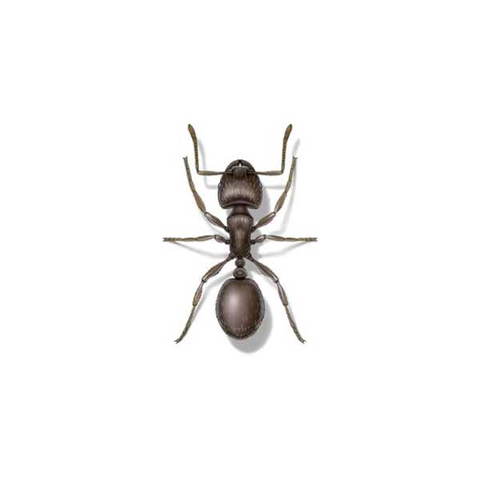
Pavement Ants
Pavement ants nest under concrete (driveways, sidewalks, slab foundations, and patios) and are easiest to spot by the fine soil they push up through cracks as they excavate. Wake Forest’s mix of older downtown sidewalks and the newer concrete work going in around St. Ives, Stonewater, and Bishops Grant gives pavement ants plenty of habitat either way.
Neighboring colonies clash often, and dead ants trailed across a driveway after a warm night reliably means a pavement ant turf war close by.
What to Look For
Signs of an Ant Infestation in Your Wake Forest Home
Trails Along Baseboards and Counters
A single-file line is a supply route; the entry point is the part worth tracking down.
Dome Mounds in Open, Sunny Lawn
The fire ant signature, and it appears within a season on the open lawns of Wake Forest's newer developments.
Coarse Frass Near Trim
Shavings with insect parts by a window or door frame indicate carpenter ant galleries, typically where framing has been damp.
Fine Soil Through Concrete Cracks
Dirt piles along driveway and sidewalk joints are pavement ants excavating underneath the slab.
A Rotten Coconut Smell
Crush one near the kitchen; the odor is the odorous house ant's unmistakable identifier.
More Ants a Day or Two After Rain
Damp ground along the Falls Lake side of town holds water longest, and colonies leaving it move up and indoors quickly.
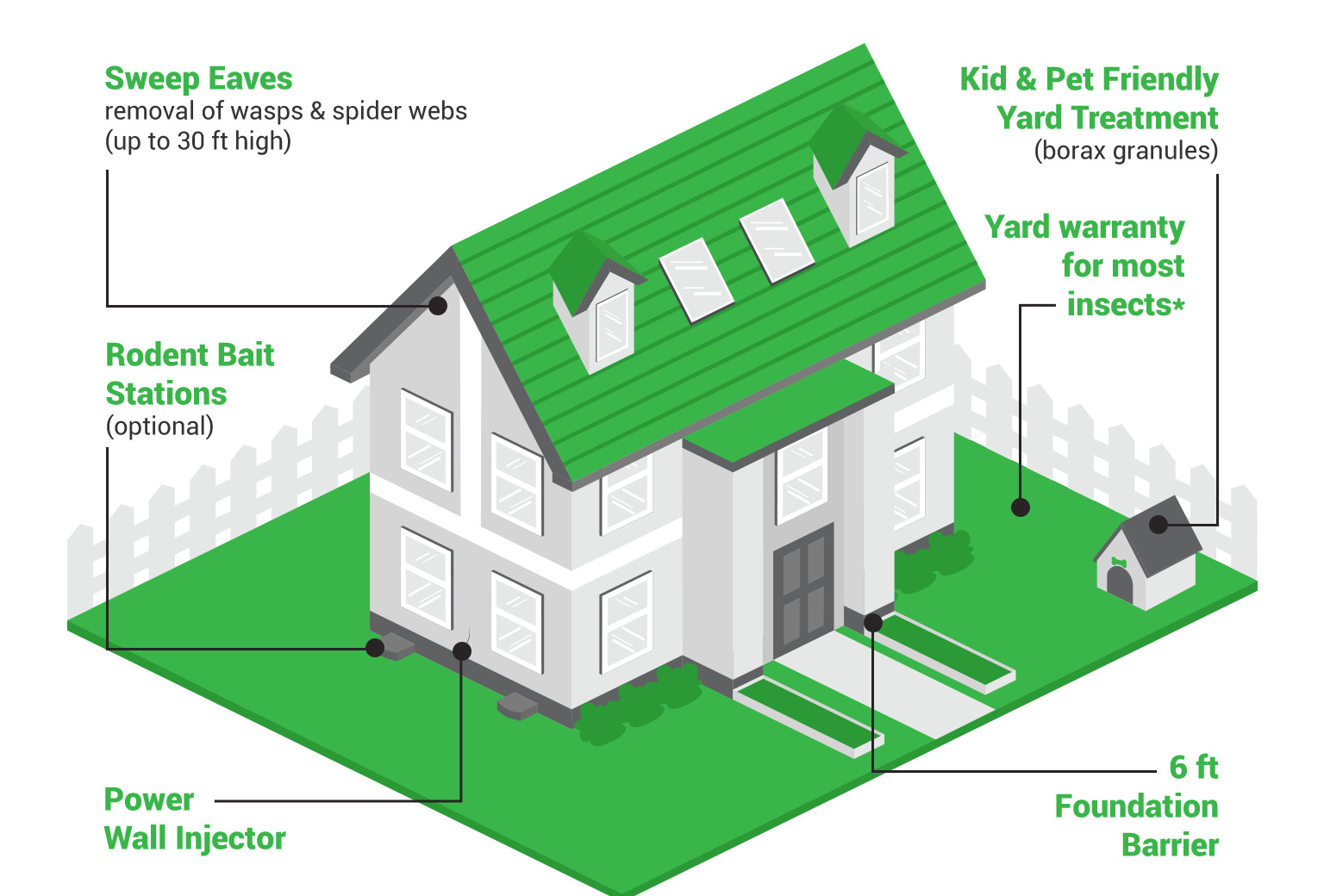
Vinx HomeGuard Plan
What Happens at Every Visit
Our technicians don’t just spray and leave. Every quarterly service covers your full exterior and interior, done right, backed by a written guarantee.
- Sweep Eaves: Wasp nests & spider webs removed up to 30 ft
- Power Wall Injector: Treats wall voids where pests hide
- 6 ft Foundation Barrier: Full perimeter treatment every visit
- Yard Warranty: Free retreatment for most insects
- Kid & Pet Safe Yard Treatment: Borax granules, safe after dry
Homeowner Tips
6 Ways to Reduce Ant Pressure Around Your Wake Forest Home
Kid & Pet Safe
Our Treatments Are Safe for Your Whole Family: Including the Furry Members
Every product we use is EPA-registered and applied strictly at labeled rates by licensed technicians. We take the guesswork out of safety so you can feel confident letting kids and pets back into treated areas quickly.

EPA-Registered Products Only
All products we apply are EPA-registered and used strictly per label requirements. Our licensed technicians are trained to apply the right product in the right place at the right rate, every time.
Dry Time Before Re-Entry
Exterior spray treatments dry in 30–60 minutes. Once dry, treated surfaces are safe for children and pets to contact. Your technician will confirm the all-clear before leaving your property.
Interior Treatment On Request
We treat only what’s needed, where it’s needed. Gel baits in cabinets and crack-and-crevice applications keep products away from areas pets and children frequent most.
Botanical Options Available
Have specific sensitivities? Ask your technician about our plant-derived treatment options. We offer botanical alternatives for households that prefer a more natural approach.
Have a concern about products used near your pets or children? Call 984-600-8469 and we’ll walk you through exactly what we use and why it’s safe.
Explore More
More Pest Control Services in Wake Forest

Pest Control Wake Forest
General pest protection

Mosquito Control Wake Forest
Monthly barrier treatments

Termite Control Wake Forest
Bait systems & liquid treatment

Rodent Control Wake Forest
All rodents covered

Cockroach Control Wake Forest
Roach removal & prevention

Bed Bug Control Wake Forest
Heat & liquid treatments

Spider Control Wake Forest
All spider species covered

Tick & Flea Control Wake Forest
Yard & pet protection

Exterminator Wake Forest
Same-day local exterminators
Frequently Asked Questions
Ant Control FAQ for Wake Forest Homeowners
Ant control is included in the Vinx HomeGuard, Plus and Platinum plans rather than sold separately, with exterior perimeter treatment on every visit and interior bait work as needed. Price follows home size and the species, because a fire ant lawn and a carpenter ant wall void are different jobs. Call (984) 600-8469 for a quote on your Wake Forest home.
A clean kitchen removes the food, not the nest. Wake Forest kitchen ants are typically odorous house ants living outside, in mulch, under a slab or in framing that has taken moisture, and foraging in because nothing stops them. Residue behind an appliance is plenty. Until the colony is treated, the trail keeps re-forming.
Safely means treating the colony rather than the mound itself. Boiling water or an over-the-counter drench mostly disturbs it, and disturbed fire ants relocate, commonly producing a second mound nearby. Keep children and pets away, leave the mound undisturbed and have the colony treated. A mature mound runs to well over 100,000 workers.
Carpenter ants dig nesting galleries out of wood without eating any of it. Termites eat it. The debris tells you which: carpenter ants push out coarse shavings mixed with insect parts, subterranean termites leave mud tubes and no sawdust whatever. Carpenter ants take wood that has already been moisture-damaged, so finding them usually means a leak to fix alongside a colony to treat.
That smell is the odorous house ant's defensive chemistry and the fastest identification available without a lens. It also indicates the nest is close, because these ants forage short distances from home, usually a mulch bed or a wall void near a leak.
Yes. Licensed technicians apply EPA-registered products at labeled rates, with 30–60 minutes of drying before treated areas are safe again. Interior gel bait goes into hidden harborage that kids and pets cannot get to. If you would rather have botanical options, ask your technician.
Pavement ants. They nest in the soil beneath concrete and push fine excavated dirt up through the joints, producing the small piles along a driveway or sidewalk. They are the species most Wake Forest homeowners notice without ever seeing the nest.
Most appointments are available same-day or next-day. If we can’t get to your home by the next business day, your initial service is free. Call (984) 600-8469.
Yes. Vinx services all of Wake Forest, including Wakefield, Heritage, Hasentree, St. Ives, Stonewater, Bishops Grant, Holding Village, Traditions, and the downtown Historic District.
Because a repellent spray never reaches the nest. It kills what you can see and marks the route as unsafe, so the colony buds and re-forms a trail a little further along. Non-repellent products are carried home by the foragers instead, and that is the mechanism that kills a colony.
Yes. Homes near the original Wake Forest College campus and Historic District have had over a century for carpenter ant and odorous house ant colonies to establish in aging, moisture-damaged wood, while the newer subdivisions in Holding Village and Traditions see more fire ant and pavement ant activity tied to freshly graded soil and new concrete.
Yes. Vinx Pest Control holds licensing and registration under the North Carolina Department of Agriculture's Structural Pest Control program and full insurance to operate in NC. Technicians complete ongoing training in ant biology and species-specific treatment methods.
Five of them: fire ants on open sunny ground, odorous house and Argentine ants on kitchen trails, carpenter ants in moisture-damaged framing, pavement ants under concrete. With Falls Lake woodland on one edge of town, carpenter ants make up a larger share of Wake Forest calls than in the drier, more open parts of the county.
Service Coverage
Ant Control Across Wake Forest & Northern Wake County
Serving every neighborhood in and around Wake Forest
Serving the Greater Raleigh Area