
Termite Control in Apex, NC
Termite TotalDefense: Sentricon Bait Stations for Eastern Subterranean Termites
Apex’s termite risk comes from one species, the Eastern subterranean termite, which NC State’s extension program calls the state’s greatest ongoing threat to structures. Wake County’s clay soil keeps them foraging most of the year, and constant new construction introduces fresh, untested soil. Vinx’s Termite TotalDefense program uses Sentricon bait stations around the entire property, with annual inspection and a re-treat warranty. Termite damage isn’t covered by homeowners insurance, continuous protection is the only reliable answer.
Get Started in 60 Seconds
Choose what’s easiest for you
Request a Quote
We usually respond in 2 minutes
Call (984) 600-8469
Get a live person (no AI agents here!)
Sign Up Online
Get pricing and schedule now





Welcome to Vinx Pest Control
A Company That Actually Backs What It Says
At Vinx, we combine professional-grade treatments with a level of service most pest control companies don't offer. Local technicians, fast response times, and a guarantee that actually means something.
Get a Free Quote"I'm not passionate about killing bugs. I'm passionate about customer service. At Vinx, you get experts who show up, do the job right, and stand behind every visit. No runaround, no fine print."
Protection Plans
Protection Plans for Apex Homeowners
Our HomeGuard, Plus, and Platinum plans cover 50+ household pests year-round. Termite protection is a standalone Sentricon program, noted below the plans, because monitoring works differently from quarterly pest treatment.
Standard Residential Protection
- 4 Seasonal Treatments Per Year
- 50+ Covered Pests
- Interior, Exterior & Yard Treatment
- Unlimited Free Re-Services
- 100% Money-Back Guarantee

Upgraded Yard Protection
- 6 Home & Yard Treatments Per Year
- 50+ Covered Pests
- Yard Ant Elimination Guarantee
- Flea & Tick Elimination Guarantee
- 100% Money-Back Guarantee

Most Comprehensive Protection
- 9 Treatments Per Year
- 50+ Covered Pests
- 8 Mosquito Treatments (Mar–Nov)
- Flea, Tick & Ant Coverage
- Free Bed Bug Treatments if Needed*
Termite protection is a standalone Sentricon program starting at $35+/mo, quoted after a free inspection. Existing Vinx customers get a discount on installation: $100 off on HomeGuard, $200 off on Plus, and $400 off on Platinum.
Request Your Free Termite Control Quote
Fill out the form below and a Vinx team member will reach out within 2 minutes.
Prefer to talk? Call (984) 600-8469, no AI agents.
Our Approach
How Vinx Protects Your Apex Home From Termites

Thorough Termite Inspection
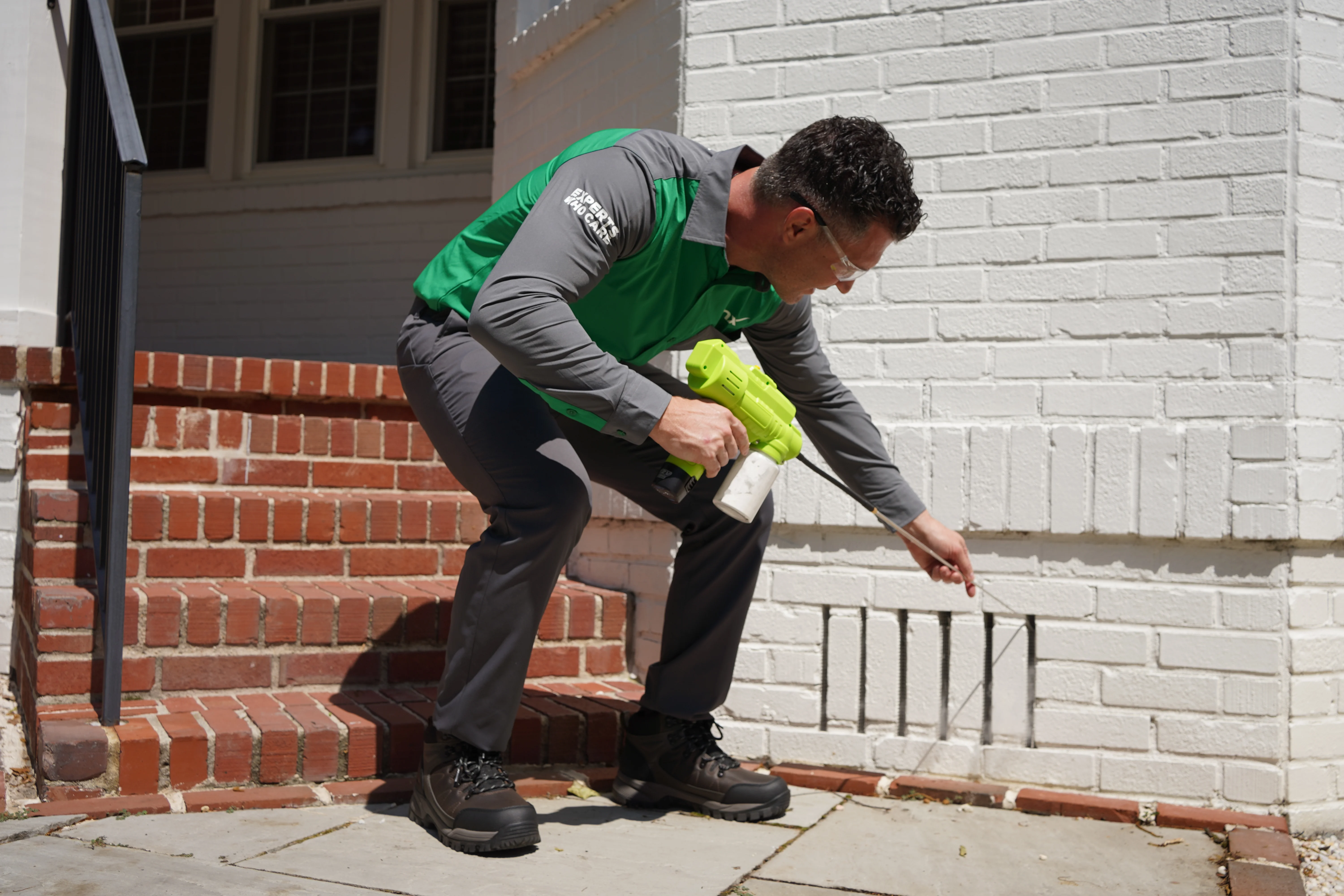
Your technician walks the whole structure, foundation line, crawl space, attic, every point where wood meets soil, looking for mud tubes, frass, hollow-sounding framing and shed wings. On the older streets around downtown Apex and the Historic District the crawl space entry and foundation grade get the most time, because that housing stock predates any pre-treatment requirement at all.
Sentricon Station Installation
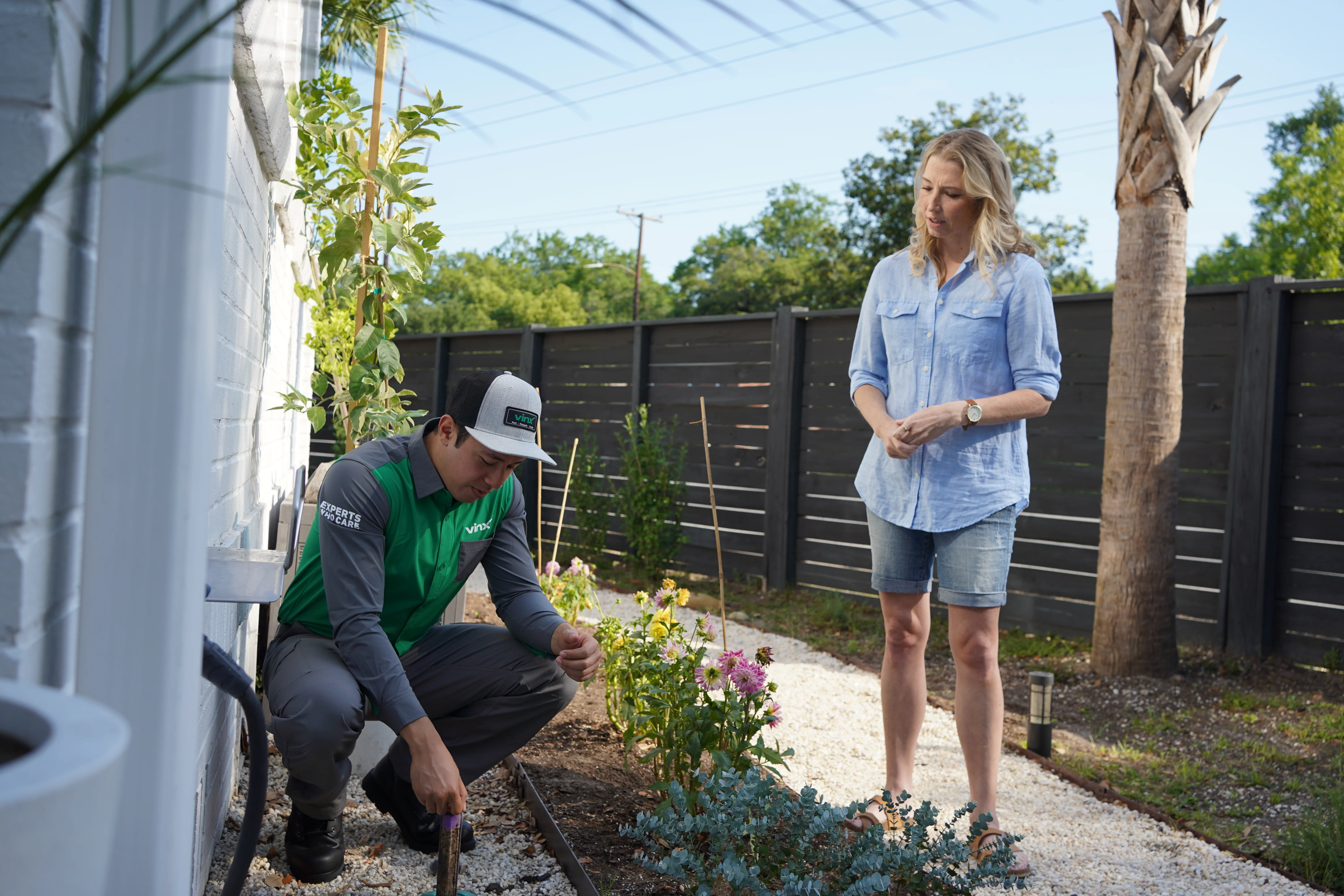
In-ground bait stations ring the full perimeter at roughly ten-foot spacing. Termites already foraging under your yard find them as part of normal movement and carry the bait back to the colony. Nothing is injected into Apex soil, nothing is tented, and on a lot that drains toward one of the town's creeks that matters, because there is no liquid barrier to be washed out of position.
Annual Monitoring & Bait Replacement
A certified technician checks every station once a year and replaces bait at no charge. Annual monitoring earns its keep here specifically because clay keeps colonies foraging later into the fall than a drier soil would, so a station that looked quiet in June can show activity in October.
Re-Treat Warranty & Ongoing Protection
If termites ever reach a structure protected under the program, Vinx re-treats at no additional cost under the re-treat warranty. Qualifying Apex homes can add a damage warranty on top of that, and your technician confirms eligibility at the inspection rather than after the paperwork.
Customer Reviews
Real Reviews from Apex Homeowners
whenever you get work done from a smaller company, there’s always a concern and a worry about quality, efficiency, and cost effectiveness. However, this company has exceeded my expectations. They do great quality work. They’re always on time and efficient, and for the cost, I couldn’t imagine choosing anybody else to handle the pest control of my home
Verified Google ReviewI had a great experience with VINX! Their service was excellent, and they were able to fix several issues I was having. The team was friendly, professional, and reliable throughout the process. I really appreciate their attention to detail and commitment to making sure everything was taken care of. I would definitely recommend VINX PEST to anyone looking for great service and dependable work!
Verified Google ReviewThey sprayed for mosquitoes and my garage for spiders and such. Quick service and nice workers!
Verified Google ReviewMatt was a great sales guy and Abbas did an amazing job with the initial service! A rare time that the door-to-door sales pitch was appreciated and well executed! Glad to have them as a pest control provider!
Verified Google ReviewLinked up with Vinx and the service and communication is top tier. Scott was awesome
Verified Google ReviewJordan Did a wonderful job is exterminating my property. He cover the mailbox area. I hope he will be our technician again. I loved his video of work completely.
Verified Google ReviewThe technician, Derek, did a good job and was very friendly.
Verified Google ReviewThe owner is completely committed to offering affordable pest control, customer service and satisfaction. Thanks for all your help with my pest control needs
Verified Google ReviewScott was very informative in giving me details of my termite inspection. He also was able to treat for my fly problem in the house while he was here. This frees up the tech who was supposed to come tomorrow to do it. Very professional
Verified Google ReviewMatt and Abbas were great to work with and took care of everything quickly and effectively.
Verified Google ReviewGreat first service. Abbas was amazing and extremely helpful.
Verified Google ReviewWhy Apex Has High Termite Risk
Why Eastern Subterranean Termites Are Apex’s Real Threat
Formosan termites turn up on a lot of pest-control pages that have no business mentioning them. They are not established anywhere near Apex. NC State Extension traces North Carolina's first detection to Brunswick County in 1992, in landscaping railroad ties, and the species has stayed penned into a narrow band near the South Carolina line ever since. Apex has exactly one structural termite of consequence, the Eastern subterranean, which the same extension program names the greatest ongoing threat to buildings anywhere in the state.
Why Termites Thrive in Apex Year-Round
Wake County Clay Soil: The Hidden Termite Driver
Piedmont red clay is the reason a Wake County home stays at risk through weather that would dry out a sandy coastal lot in a day. Clay holds rainwater against a foundation and under a crawl space for a week, and in Apex that is compounded by how fast the town is building. Ground cleared for Veridea, Scotts Ridge and Olive Chapel gets graded, compacted and slabbed within a season, and a builder's pre-treatment is only as good as the crew that applied it.
The Neuse / Cape Fear Divide & Apex’s Creeks
Apex straddles the divide between the Neuse and Cape Fear River watersheds, so the town is threaded with small creeks, drainage swales, and stormwater retention ponds on both sides of that line. All of that adds soil moisture to the already-damp clay near foundations, keeping conditions favorable for subterranean termite foraging across much of the year.
New Construction Is Not Termite-Proof
Pre-construction soil treatment applied during building loses effectiveness typically within five to ten years. Homes built across Apex, Scotts Ridge, Olive Chapel, and the Veridea corridor are reaching the point where that protection has expired, leaving them exposed to the termite colonies always present in the clay soil beneath them. Builder pre-treatment also isn’t applied consistently across every new slab.
Older Homes: Decades of Accumulated Exposure
Downtown Apex and the Historic District have a substantial stock of older homes built before modern pre-treatment standards existed. These frequently have wood-to-soil contact points, aging crawl-space timbers, and structural wood that has taken on moisture over years of inadequate crawl-space ventilation, giving Eastern subterranean termites direct, undetected access to structural wood.
One species does not mean one small problem. An Eastern subterranean colony sits 20 to 30 feet down in the clay and sends workers up through pencil-width mud tubes to sill plates, joists and studs, eating from the inside out while the paint and drywall above stay perfectly intact. Hundreds of thousands of workers can be feeding on an Apex home for years before anything shows on the surface.
Apex sits on the divide between the Neuse and Cape Fear watersheds, the highest point on the old Chatham Railroad, and the town is threaded with small creeks and drainage swales running off both sides. That drainage pattern is what makes the risk uneven here. Water falling on one side of Salem Street leaves town in a different direction from water falling on the other, and the low ground between those two systems is where soil stays damp long enough to hold a colony through a dry spell.
Wake County’s clay soil and Apex’s constant wave of new construction make it worse, fresh slabs go in on soil that doesn’t always get consistent pre-treatment, something worth checking if you’ve bought new construction in the last few years near Veridea, Scotts Ridge, or Olive Chapel.
Timing the inspection against the calendar helps. At Raleigh-Durham the median last freeze is April 4 and the freeze-free season runs about 217 days, so subterranean swarms — which come on warm days after rain — land in the weeks right after that date. Swarmers indoors are the one sign a homeowner reliably notices, and they appear for only a short window, so a spring inspection catches the evidence while the colony is still advertising itself rather than months later, once the wings on the windowsill have been swept up and forgotten.
Termite Risk by Area
Termite Risk Across Apex
Downtown Apex & the Historic District: Highest Risk
The town’s oldest housing stock, much of it built before modern pre-treatment standards existed, gives Eastern subterranean termites direct, undetected access to structural wood through older crawl spaces and foundation gaps.
Beaver Creek & North Apex: Moderate Risk
A mix of commercial and residential construction with mulch-heavy retail landscaping keeps moisture conditions favorable near building perimeters.
Salem & West Apex: Moderate-High Risk
Mature root systems from the neighborhood’s established trees create soil channels termites travel through unseen, and decades-old mulch beds hold moisture against older foundations.
Scotts Ridge, Olive Chapel & the Veridea Corridor: Rising Risk
New slab construction on recently cleared land means plumbing penetrations and expansion joints are common entry points, and pre-construction soil treatment isn’t always applied consistently across every builder in Apex’s active growth corridor.
Friendship & South Apex: Moderate Risk
Larger, more rural-adjacent lots with older outbuildings and more direct wood-to-soil contact keep this area’s risk elevated relative to newer, more tightly regulated construction closer to town.
Know the Signs
Signs of Termites in Your Apex Home
Mud Tubes Climbing the Foundation
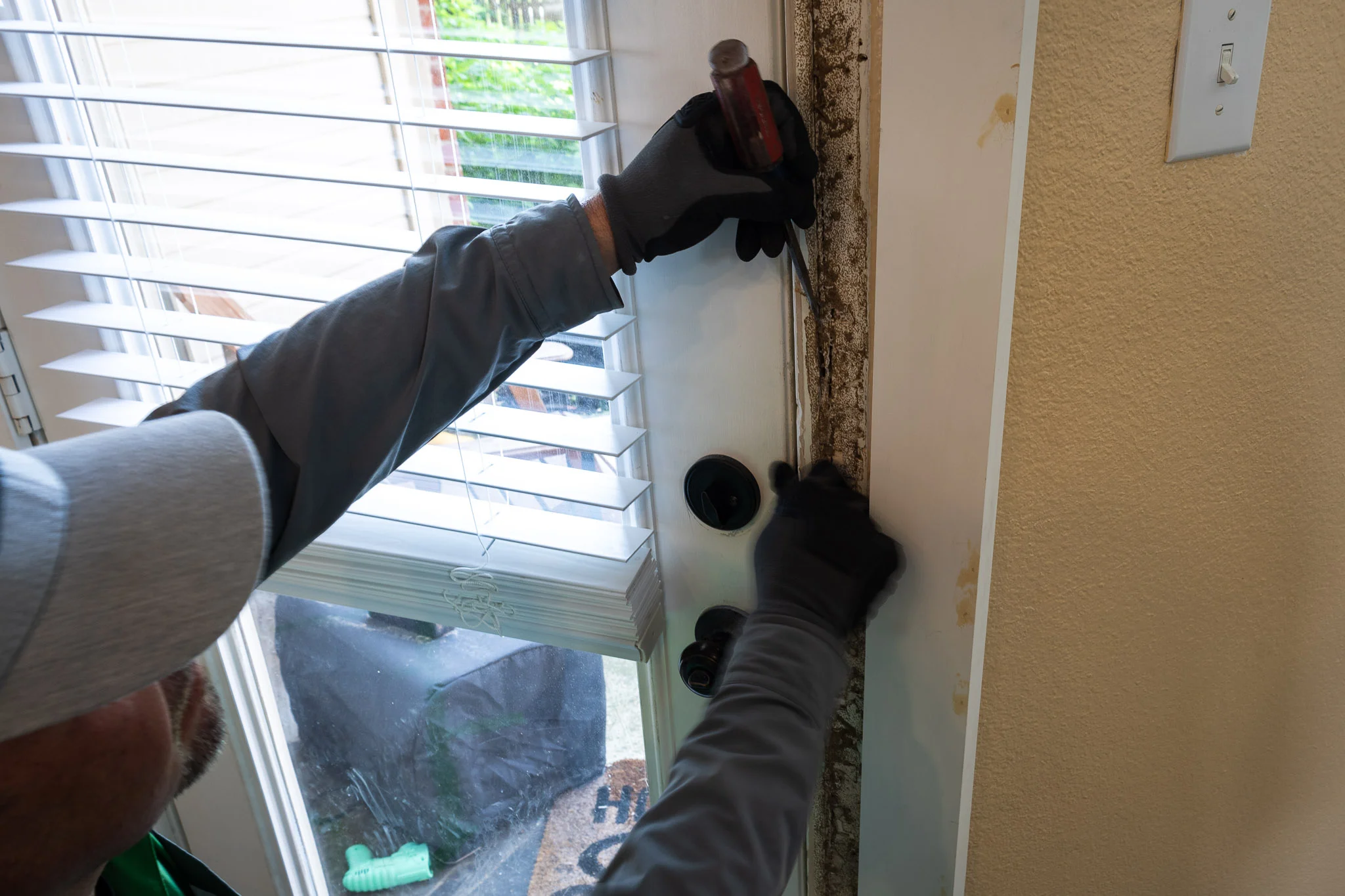
Soil-colored tunnels about as wide as a pencil, running up a block wall or a pier. This is the single most reliable sign, and the one most easily missed behind shrubs.
Wood That Sounds Hollow
Tap a joist or a sill plate with a screwdriver handle. A papery, empty sound means the inside is gone even though the surface looks sound.
Doors and Windows That Start to Stick
Damaged framing plus the moisture that comes with an active colony slowly pulls openings out of square, often the first thing an Apex homeowner actually notices.
Discarded Wings on a Windowsill
Swarmers drop their wings once they land. Finding a small pile inside in April usually means the swarm came from your property, not the neighbor's.
Floors That Feel Soft Underfoot
A spongy patch in a crawl-space home points at joist or subfloor loss, and on the older Apex streets that framing is often original.
Pinholes in Drywall
Small holes, sometimes with a faint rustle behind them, mean workers have reached finished wall space rather than stopping at the framing.
North Carolina homeowners policies exclude termite damage as a maintenance issue, so every month a colony goes undetected under an Apex home is money that will not be reimbursed.
Found mud tubes or swarmers? Call (984) 600-8469, same-day inspections available.
Termite Season
Apex NC Termite Activity: What to Expect Every Season
| Season | Activity in Apex, NC |
|---|---|
| Spring (Mar–May) | Peak swarm window. Winged reproductives leave the colony on warm afternoons after rain, and at Raleigh-Durham the median last freeze is April 4, so most Apex swarms land in the weeks just after that date. Mud-tube construction accelerates as the clay warms. |
| Summer (Jun–Aug) | Heaviest feeding of the year. Workers forage hard, and Apex clay holds enough moisture through a dry August that colonies near the creek lines never slow the way they would on sandy ground. |
| Fall (Sep–Nov) | Feeding continues while the colony stocks up for winter. This is the season annual monitoring tends to catch activity that a spring inspection missed, because foraging under clay runs later here than most homeowners expect. |
| Winter (Dec–Feb) | Colonies drop deeper into the soil but do not stop. With 83 nights a year at or below freezing and a heated crawl space above them, workers keep feeding on the warm side of the floor system all winter. |
Homeowner Tips
6 Ways to Reduce Termite Risk Around Your Apex Home
Kid & Pet Safe
Our Treatments Are Safe for Your Whole Family: Including the Furry Members
Every product we use is EPA-registered and applied strictly at labeled rates by licensed technicians. We take the guesswork out of safety so you can feel confident letting kids and pets back into treated areas quickly.

EPA-Registered Products Only
All products are EPA-registered and applied per strict label requirements by our licensed technicians on every visit.
Safe Re-Entry After Drying
Exterior spray treatments dry in 30–60 minutes. Your technician confirms the all-clear before leaving your property.
Interior Treatment On Request
We treat only what’s needed, where it’s needed. Products placed away from areas pets and children frequent most.
Botanical Options Available
Ask your technician about plant-derived treatment options for households that prefer a more natural approach.
Questions about product safety? Call 984-600-8469 and we’ll walk you through exactly what we use and why it’s safe.
Explore More
More Pest Control Services in Apex

Pest Control Apex
General pest protection

Ant Control Apex
Household ants & others

Bed Bug Control Apex
Chemical + void treatment

Cockroach Control Apex
Roach removal & prevention

Mosquito Control Apex
Monthly barrier treatments

Rodent Control Apex
All rodents covered

Spider Control Apex
All spider species covered

Tick & Flea Control Apex
Yard & pet protection
Exterminator Apex
Same-day local exterminators
Frequently Asked Questions
Termite Control FAQ for Apex Homeowners
Termite TotalDefense starts at $35+/mo. The exact figure depends on the footprint of the house and how many stations the perimeter needs, so it follows an inspection. It is a standalone program, separate from HomeGuard, Plus and Platinum, and existing Vinx customers get $100, $200 or $400 off installation depending on their plan. Call (984) 600-8469 for a number specific to your Apex address.
Yes. Sentricon bait stations are enclosed underground units, nothing accessible to children or pets above ground, and no liquid termiticide is injected into your soil. All products are EPA-registered.
Initial Sentricon installation typically takes 2–4 hours depending on property size and station count. There’s no tenting or fumigation, and you don’t need to leave your home. Annual monitoring visits take about 30–60 minutes.
Sentricon is continuous protection, not a one-time treatment. After installation, stations are inspected annually and bait is replaced as needed at no charge for as long as your monitoring plan stays active. If activity is found, we treat immediately at no additional cost.
Yes. If live termites are found in a structure protected under Termite TotalDefense, Vinx re-treats at no additional charge under the program’s re-treat warranty. Qualifying homes can also add a damage warranty, ask your technician about eligibility.
It is the most important piece of paper in a North Carolina termite contract and the one people sign without reading. State regulations set minimum treatment requirements — among them, drilling and treating concrete slabs attached to the house such as a garage floor or an earth-filled porch, treating voids inside foundation walls and piers within four feet of known termite activity, and treating the side walls of earth-filled porches within three feet of the foundation wall. If any required procedure is not going to be carried out, NC State Extension is explicit that it must be recorded on an official Waiver of Minimum Standards form, and you have to sign it as part of the contract. So the question to ask before signing is a simple one: does this treatment require a waiver, what exactly is not being done, why, and does waiving it affect the guarantee? A waiver is sometimes perfectly reasonable — drilling a finished interior slab can do more harm than good — but it should be a decision you made, not a form you initialled.
No. NC State Extension records the state's first Formosan find in Brunswick County in 1992, in imported landscaping railroad ties, and the established range still sits in a narrow band near the South Carolina border. Apex is a long way inland from it. Your risk here is the Eastern subterranean termite, and the treatment is different.
Spring, concentrated in the weeks after the median last freeze on April 4, and almost always on a warm afternoon following rain. Winged swarmers at a window or a scatter of shed wings on the sill is the clearest early warning an Apex homeowner gets. Call (984) 600-8469 the day you see them, while the evidence is still there to identify.
No. Standard homeowners policies treat termite damage as preventable maintenance and exclude it, which is why a colony working through an Apex floor system for three years is a repair bill you pay yourself. Continuous monitoring costs less than a single joist replacement.
The WDIR-100 is North Carolina's official Wood-Destroying Insect Report, issued by a licensed inspector under NCDA&CS rules, and it is what lenders and buyers rely on at closing. Not every Apex sale requires one, but on the older housing near downtown and the Historic District it is worth having regardless. A clear report describes one day only, so ongoing monitoring afterwards is the part that actually protects you.
Pre-construction soil treatment isn’t applied with the same consistency by every builder, and fresh slab construction creates plumbing penetrations and expansion joints that are common termite entry points. New doesn’t mean immune, an inspection within the first year or two of moving in is a reasonable precaution.
Most appointments are available same-day or next-day. Call (984) 600-8469. If we can’t get to your home by the next business day, your initial service is free.
Yes. Vinx Pest Control is licensed and registered under the North Carolina Department of Agriculture’s Structural Pest Control program and fully insured to operate in NC.
Significantly, and it is worth raising with whoever holds your contract. Tubes on a ceiling or an upper floor point to what NC State Extension calls an aerial infestation — a colony living inside the structure rather than foraging up from the soil, usually because a leaking pipe, roof leak or standing water gave it the constant moisture it needs. Two consequences follow. A conventional soil treatment will not reach it, because the colony is not coming from the ground. And extension guidance notes these above-ground infestations are typically excluded from a termite contract warranty, so a homeowner can be under contract and still not covered for this. The first step is not chemical, it is finding and fixing the moisture source; the treatment only holds once that is done. A tell worth knowing: aerial tubes usually contain wood and drywall rather than soil, because the termites build from whatever they are feeding on.
Service Coverage
Termite Control Across Apex & Western Wake County
Serving every neighborhood in and around Apex.
Serving the Greater Raleigh Area