Exterminator in Woodruff, SC
Woodruff’s pest pressure shifts across a small Spartanburg County town that grew up around a tavern at a rural crossroads and then expanded with two cotton mills. Historic downtown Woodruff, centered on Main Street where Woodruff’s Tavern once anchored the crossroads, carries the town’s oldest, most established construction, the cotton mill village built up around the old Woodruff Cotton Mill and the W.S. Gray Cotton Mill carries closely-built early-1900s mill housing, the US-221 & SC-101/146 corridor through town brings commercial and through-traffic pressure, the rural Spartanburg County fringe carries the agricultural conditions left behind by what were once vast peach orchards, and the wooded country around Triple Tree Aerodrome carries its own rural, wildlife-driven pest pressure. Vinx treats each part of Woodruff according to what it actually needs.
Get Started in 60 Seconds
Choose what’s easiest for you
Request a Quote
We usually respond in 2 minutes
Call (855) 800-8469
Get a live person (no AI agents here!)
Sign Up Online
Get pricing and schedule now





Welcome to Vinx Pest Control
A Company That Actually Backs What It Says
At Vinx, we pair professional-grade treatment with a level of follow-through most pest control companies skip. Local technicians, fast response, and a guarantee that holds up after the invoice is paid.
Get a Free Quote"I'm not passionate about killing bugs. I'm passionate about customer service. At Vinx, you get experts who show up, do the job right, and stand behind every visit. No runaround, no fine print."
PROTECTION PLANS
Woodruff Exterminator Pricing
100% money-back guarantee on every plan.

Standard Residential Protection
- 4 Seasonal Treatments Per Year
- 50+ Covered Pests
- Interior, Exterior & Yard Treatment
- Unlimited Free Re-Services
- 100% Money-Back Guarantee
- Fire Ant Yard Guarantee
- Flea & Tick Coverage
- Mosquito Treatments

Upgraded Yard Protection
- 6 Home & Yard Treatments Per Year
- 50+ Covered Pests
- Interior, Exterior & Yard Treatment
- Unlimited Free Re-Services
- 100% Money-Back Guarantee
- Fire Ant Yard Elimination Guarantee
- Flea & Tick Elimination Guarantee
- Mosquito Treatments

Most Comprehensive Protection
- 9 Treatments Per Year
- 50+ Covered Pests
- Interior, Exterior & Yard Treatment
- Unlimited Free Re-Services
- 100% Money-Back Guarantee
- Fire Ant Yard Elimination Guarantee
- Interior Flea & Tick Coverage
- 8 Mosquito Treatments (Mar–Nov)
- Free Bed Bug Treatments if Needed*
All plans include a $329 initial treatment and a 12-month agreement. Termite protection (Termite TotalDefense, starting at $35/mo standalone) is quoted separately after a free inspection. *Starting rates vary by home size and area. All plans billed monthly.
Get Your Free Woodruff Pest Inspection
Fill out the form below and a Vinx team member will reach out within 2 minutes during business hours.
Prefer to talk? Call (855) 800-8469 for a live person, no AI agents.
Our Process
How Vinx Exterminators Work a Woodruff Property: Step by Step

Inspection & Reporting
A Woodruff extermination job starts with identification — and right now, with a look at what is happening around your property, because active construction, cleared ground and new hardstanding usually explain the timing of a sudden problem. Nothing is applied until a technician has named the pest to species — imported fire ants separated from the nuisance ants they get lumped with, the native eastern subterranean termite confirmed rather than a Formosan pitch — and traced it to its harborage. You get plain findings and a firm price before work begins.
Exterior Foundation Treatment
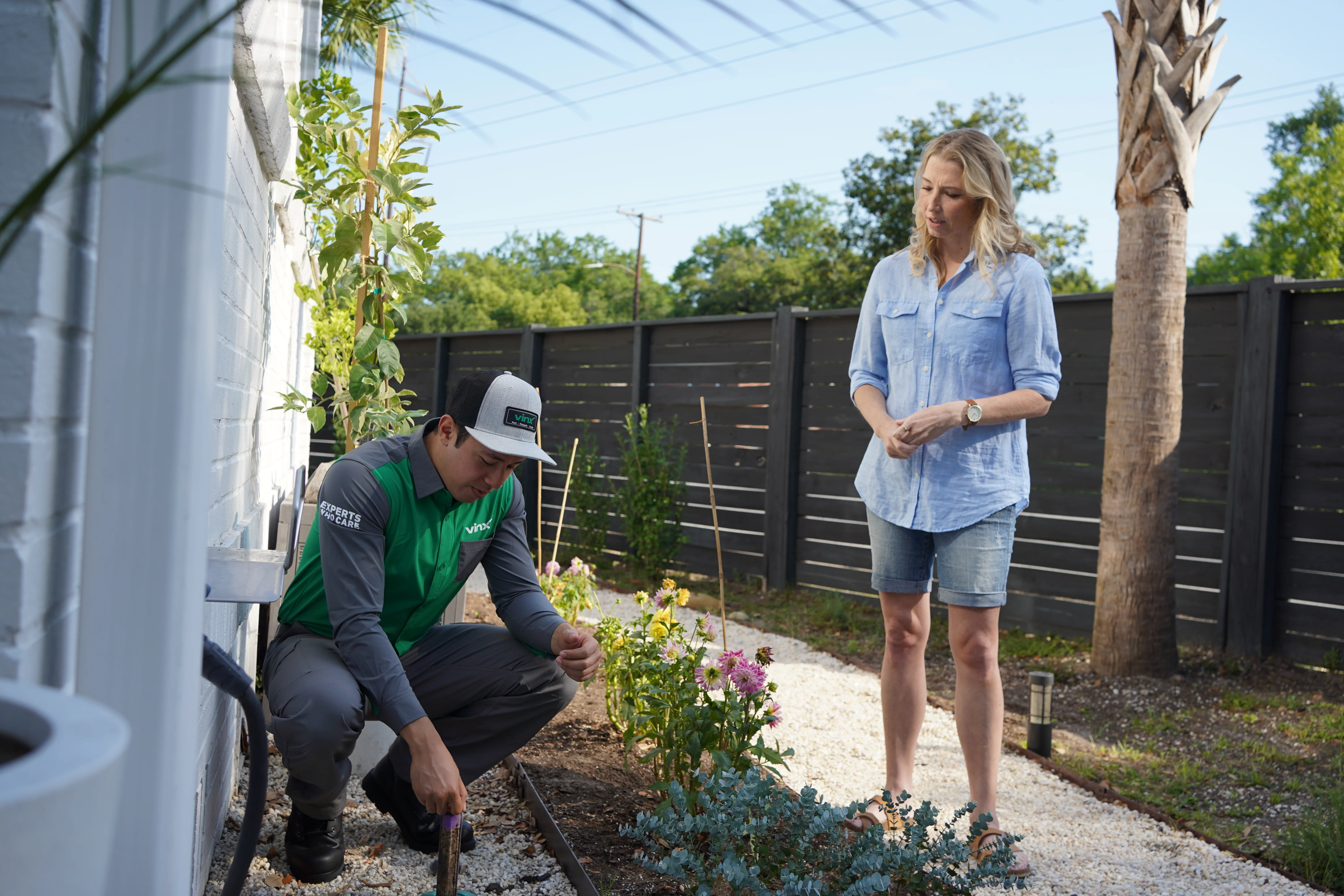
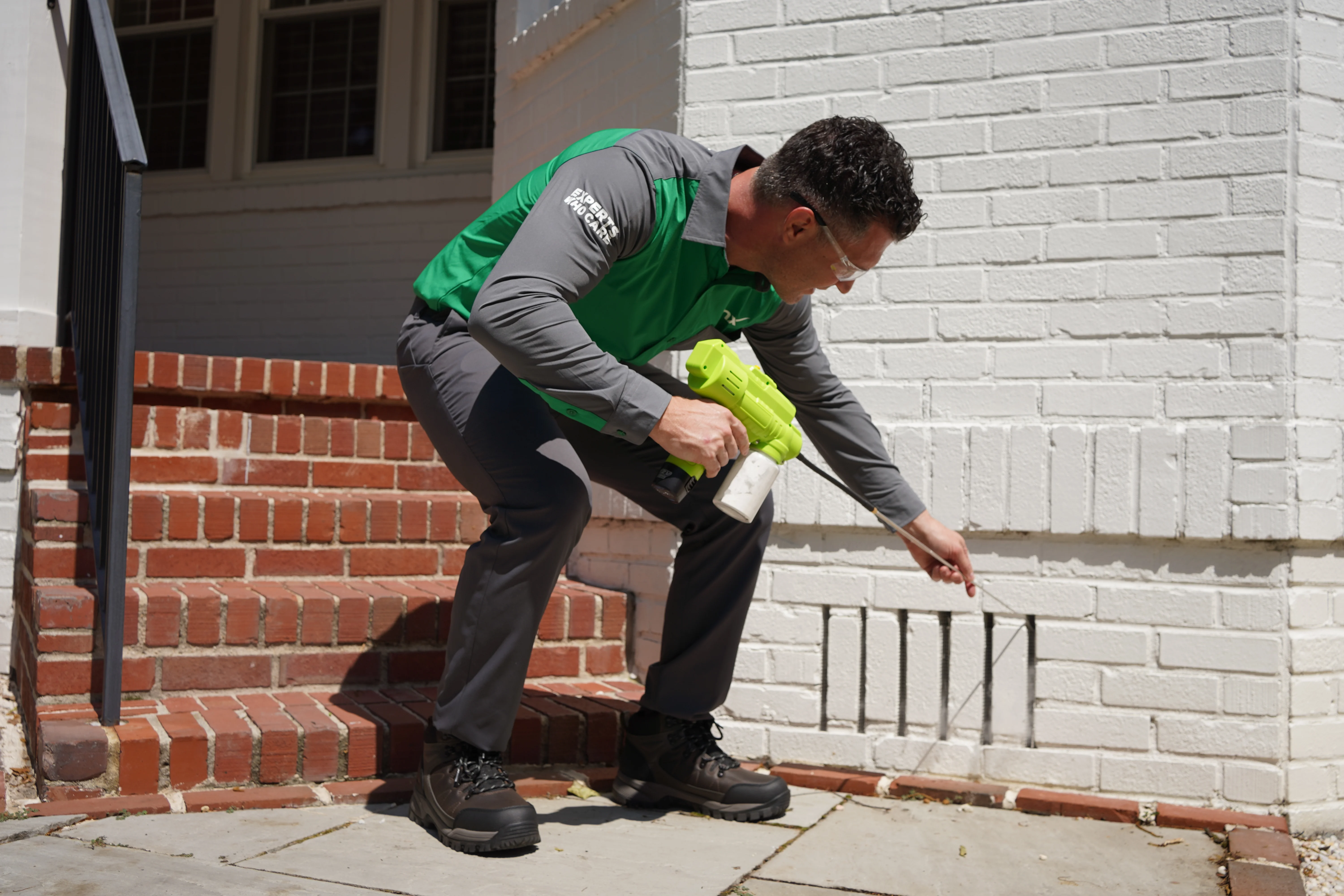
The exterior then gets its defensive line: a micro-encapsulated barrier around the foundation, three feet up and three feet out, intercepting insects at the slab gaps, weep holes and thresholds they actually use to enter. Where a lot faces disturbance — cleared land, grading, trenching — the product is weighted toward that side rather than spread evenly around a perimeter nothing is arriving from.
Yard Treatment
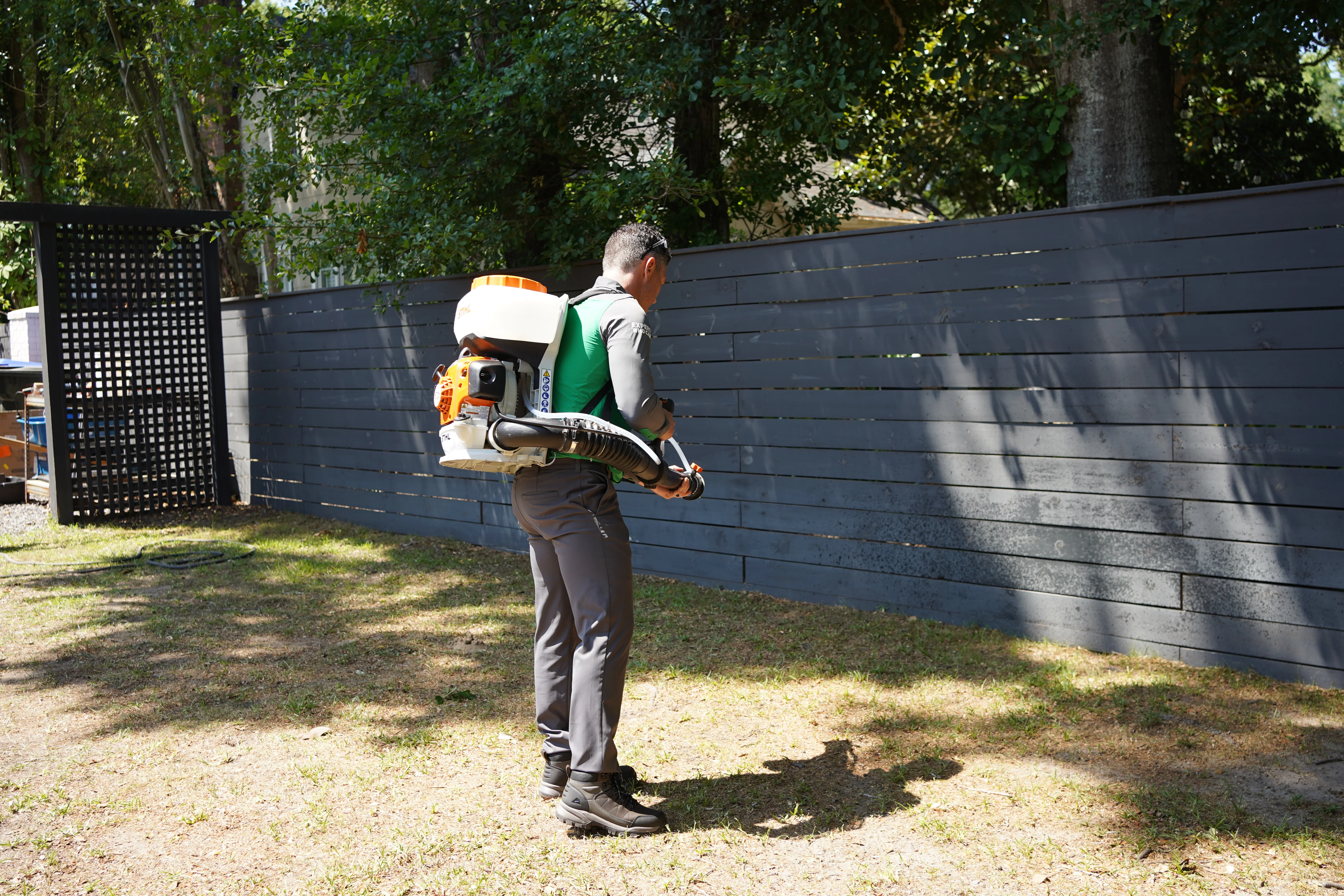
The yard is treated up to 30 feet out, because most of what ends up indoors staged in the lawn first. In Woodruff that means fire ant colonies displaced and split by nearby grading, and mosquito habitat wherever new roofs and roads have sent water to a low corner that now holds it for days. We map where water stands after rain, treat the larval habitat, and advise on the drainage fix rather than fogging adults on repeat.
Sweep & Treat Eaves
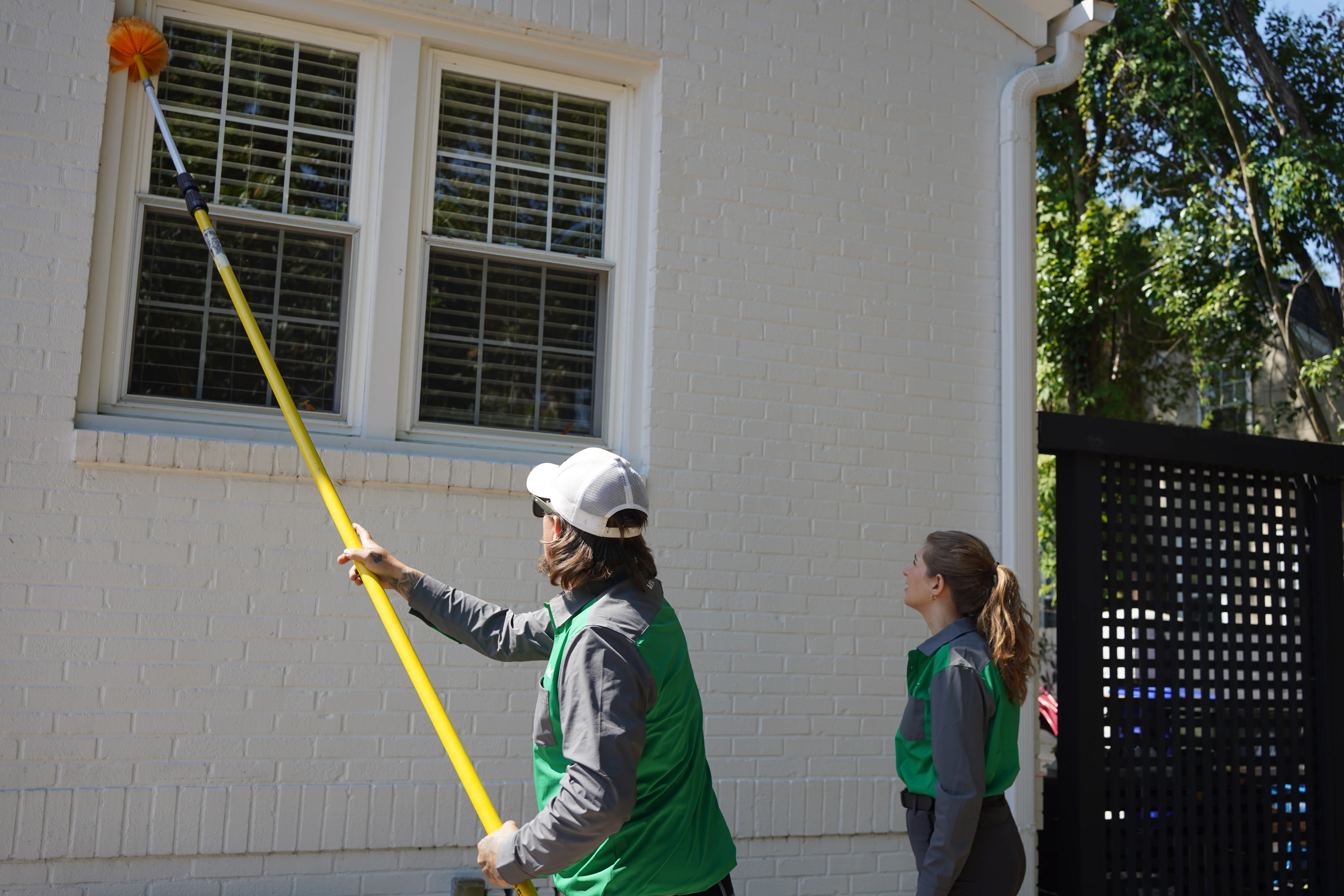
Rooflines are swept clear of webbing and early wasp nests on every visit, then spot-treated with a residual so returning insects contact the treatment instead of rebuilding. The eaves pass doubles as an overhead inspection — on the older housing around Main Street and the early-1900s mill village, that is often where the first carpenter ant signs show.
Power Dust Injection
Cracks, weep holes, pipe penetrations and expansion joints get a dust product driven deep with a compressor tip. That is the treatment that reaches wall voids — and it matters at both ends of Woodruff’s housing stock: the century-altered older homes downtown, and brand-new builds whose utility penetrations the fit-out left unsealed. Because the dust sits protected from rain and heat, it keeps working long between visits.
Interior Treatment (If Needed)
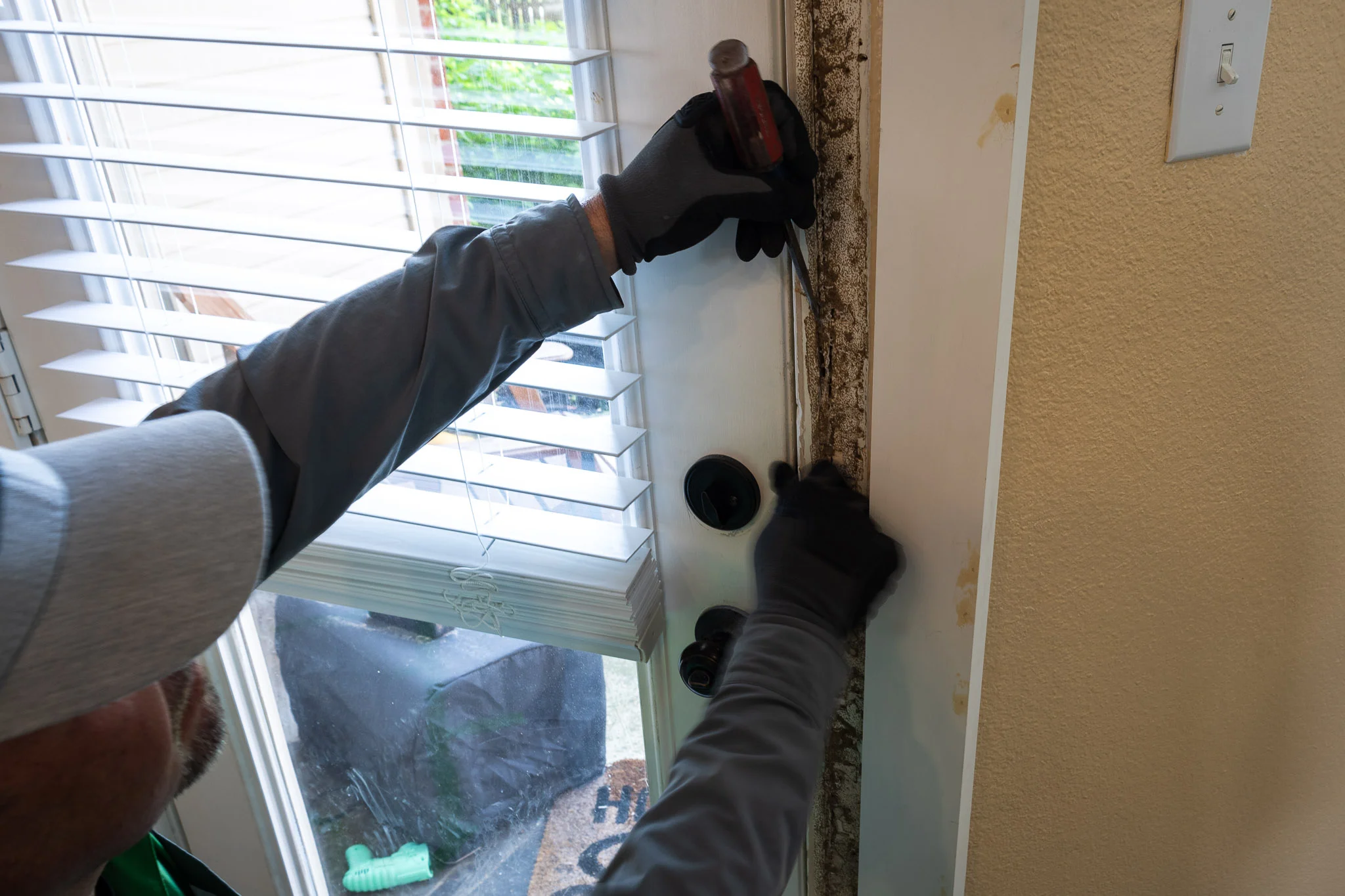
Where an infestation is already established indoors, we treat the harborage directly — gel bait and a growth regulator for roaches, exclusion first and then trapping for rodents — rather than misting a room and hoping. On a new build we also seal what the builder did not, since the near-term risk there is rodents through unsealed penetrations rather than old timber. Interior work and re-services between visits are covered at no extra charge on every plan.
What Customers Say
Real Reviews from Woodruff Homeowners
Friendly and professional I am very pleased with the service
Alex from vinx was great, I couldn't do first thing in the morning and was still get me when I could be home.
Jonathan did a thorough job and was very professional
John did a great job making the repairs and installations that I needed. The pest sanitization process was very simple. And he was very accommodating to my house’s needs.
Tony from Vinx Pest Control came out and identified our rodent problem and explained the process to correct the situation...an excellent technician!
Local Knowledge
Forty Percent Growth, and Where the Pests Went
Last updated: September 4, 2026
Woodruff has grown by about forty percent in three years, and the reason is unusually well documented. Census Gazetteer files record the city’s land area sitting unchanged at 5.074 square miles for years, then jumping to 7.704 square miles in a single vintage — about 2.63 square miles of annexation, roughly 52 percent more land at once. The Census Building Permits Survey shows the construction side: 199 housing units permitted in 2023, 382 in 2024 and 573 in 2025 — about 1,156 units in three years in a city of roughly forty-seven hundred people, with around $199 million of valuation in 2025 alone.
Neither annexation nor construction creates pests; both relocate them. Clearing a field disturbs the imported fire ant colonies in it, and disturbed colonies relocate and often split. Rodents living along a fence line move to the nearest cover that remains — a shed, crawl space or garage on the adjoining street. Grading changes water too: every new roof and driveway sheds runoff that used to soak in, and Clemson HGIC sets the threshold — water standing five days or more can breed mosquitoes, and some species need no more than a tablespoon. If your yard suddenly has problems it never had, this is almost certainly why.
6 Reasons Woodruff Calls an Exterminator
Ants
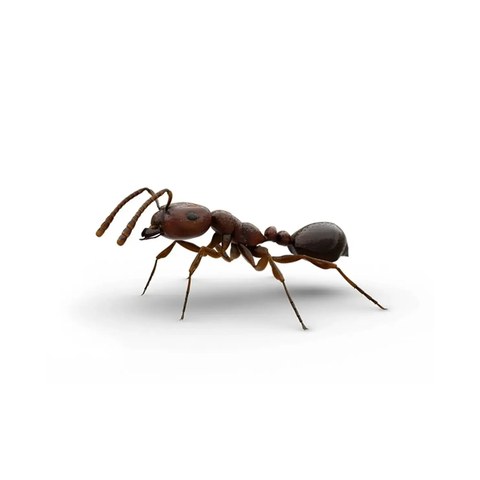
The Woodruff ant call of the moment is displacement: clearing and grading disturbs established fire ant colonies rather than removing them, and disturbed colonies relocate and split into adjacent occupied streets. The productive response is a treated boundary on the construction side for a season or two plus yard-wide baiting, not spot-treating mounds. Carpenter ants and odorous house ants stay concentrated in the early-1900s mill village housing and the older construction near the Main Street crossroads.
Termites
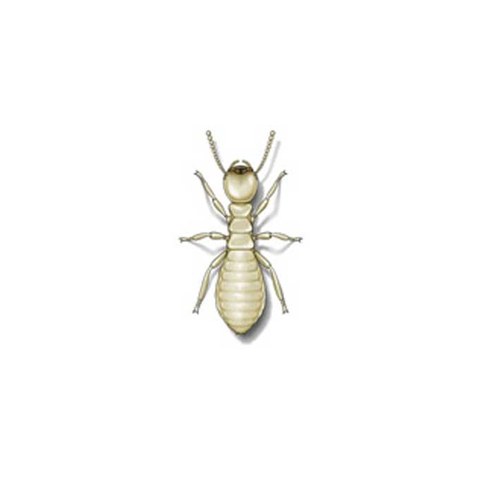
Spartanburg County is not on Clemson’s list of sixteen counties with documented Formosan colonies, so any Formosan-led quote in Woodruff is not describing your risk. The native eastern subterranean termite is the real species — research cited by Clemson Extension found an average of 25 subterranean termite colonies per acre in Carolina residential yards — and on a new build the fresh soil treatment is strong now but gets breached in years two to five by trenching, patios and deck footings. Older stock gets the crawl space and sill inspection instead.
Mosquitoes
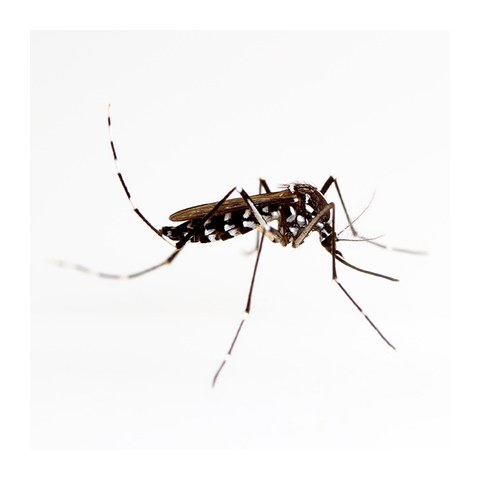
The new mosquito complaints in Woodruff mostly trace to drainage: new roofs, roads and driveways shed water that used to soak in, and it collects downhill — sometimes half a mile from the construction that caused it. Clemson HGIC notes water standing five days or more can breed mosquitoes, and some species need only a tablespoon. We find where water now stands that did not before, treat the larval habitat, and run barrier treatment on resting cover through the warm months.

Rodents
Rodent pressure here is largely displacement too — clearing and brush removal costs rodents their cover, and they move to the nearest structure that remains, often a shed, crawl space or garage on the adjoining street. The commercial buildings along the US-221 and SC-101/146 corridor and the closely-built mill village housing supply harborage as fall arrives. Lasting work is exclusion first — on outbuildings before construction starts nearby, if you can see it coming — then trapping and secured bait.
Spiders
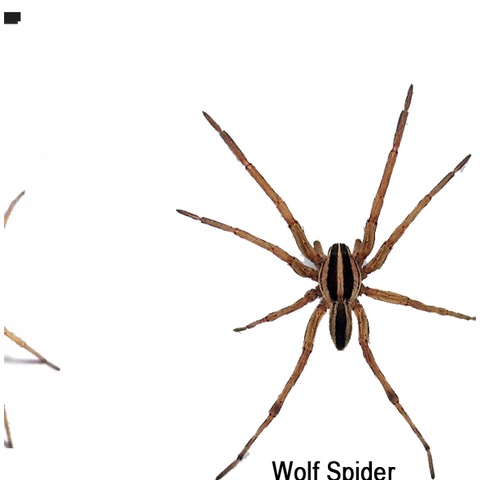
Black widows are the call from Woodruff garages, sheds and storage areas, particularly the older outbuildings around the mill village and downtown, and wolf spiders come in from the open farmland of the rural fringe and the wooded ground near Triple Tree Aerodrome. A spider problem is a prey problem, so we treat the insect population and the harborage together and clear webbing at the eaves on every visit.
Cockroaches
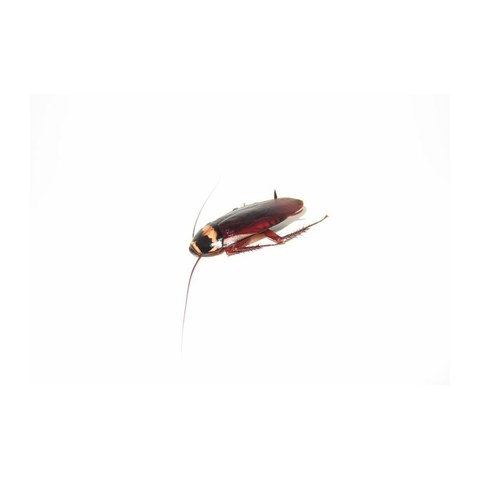
American cockroaches — palmetto bugs — work the older buildings and utility areas around historic downtown and the cotton mill village, where a century of continuous occupancy has opened routes into every void. German cockroaches persist in the food-service and retail buildings along the US-221 and SC-101/146 corridor, and they get a real protocol: gel bait and a growth regulator in the harborage itself, dust in the wall voids, never just a surface spray the population walks around.
Underneath the new town is an old one — chartered in 1874, with the railroad completed in 1885 — and its genuinely old housing has been altered freely for a century, carrying the familiar older-stock picture of ventilated crawl spaces, settled grading and wood set onto soil at replaced porches. On termites the answer should save you money: Spartanburg County is not on Clemson’s list of sixteen counties with documented Formosan colonies, so the native eastern subterranean termite is what we inspect for. Vinx works Woodruff as a licensed exterminator — free inspection that includes what is happening around you, firm prices, next-day appointments.
The Census confirms the shape of that, and it is worth stating plainly: Woodruff got bigger without getting newer. Only about 12% of its housing has been built since 2010, while roughly a third predates 1940 and three-quarters predates 1980, with a median build year of 1962. The forty percent is annexation and boundary, not a building boom — so the stock we are actually working on is old, and about 46% of occupied homes are rented, which is the highest share of the towns around here. Old buildings plus turnover is the combination that decides most of the work in Woodruff.
Pest Pressure by Neighborhood
Where Woodruff Exterminator Calls Come From
Downtown: Century-Altered Older Stock
Woodruff’s oldest construction sits around the Main Street crossroads where the town grew up after its 1874 charter, and most of it has been altered freely for a century — settled grading, blocked crawl vents, wood set onto soil at replaced porches. Calls here start at the substructure and the drainage, not with a spray.
Mill Village: Early-1900s Close-Built Housing
The closely-built housing that grew up around the Woodruff Cotton Mill and the W.S. Gray Cotton Mill carries more than a century of continuous occupancy, which means opened routes for roaches, rodents and carpenter ants. Void dust, exclusion and substructure inspection do the work here that surface treatment cannot.
Highway Corridor: Commercial Roaches & Rodents
Commercial development and through-traffic along Woodruff’s main corridor generate the steadiest German cockroach and rodent calls in town. For a food business a sighting is a compliance problem, so commercial work runs on exclusion, monitoring and documented service records an inspector can see — and loading-dock pressure gets a treated boundary rather than indoor escalation.
New Subdivisions: Displacement & Drainage
The annexed land and roughly 1,156 units permitted across 2023 to 2025 mean whole sections of Woodruff sit next to active clearing, grading and trenching. These streets get directional boundary treatment on the disturbance side, water mapping after grading, and sealed penetrations on new houses — because new does not mean finished.
Rural Fringe: Fire Ants on Old Peach Ground
The agricultural side of Woodruff — once home to vast peach orchards, with more than 200,000 trees within a ten-mile radius of town before World War II — runs on wells, septic systems and open farmland. Fire ants and wolf spiders hold this ground, and outbuildings get inspected alongside the house because they usually hold the population.
Triple Tree: Wooded, Wildlife-Driven Pressure
The wooded, rural country around the internationally known aeromodeling center — which draws visitors from across the country for the annual Joe Nall Week — carries wildlife-driven pest pressure distinct from the rest of town, plus mosquito habitat in the wooded low ground. Calls out here get boundary treatment, larvicide on standing water, and exclusion on outbuildings.
Prevention Tips
6 Ways to Reduce Pest Pressure Around Your Woodruff Home
Complete Coverage
What Our Woodruff Exterminators Treat
Every common Woodruff pest covered under one quarterly service plan

Ants
Ants, Argentine ants, carpenter ants, and odorous house ants. Perimeter bait, mound treatment, crack and crevice application.
All Plans
Cockroaches & Palmetto Bugs
American, Asian, and German cockroaches. Gel bait in harborage areas, exterior perimeter spray, drain treatment.
All Plans
Spiders
Web removal from eaves, exterior perimeter targeting harborage. Black widow identification and targeted treatment.
All Plans
Wasps & Hornets
Nest removal from eaves, soffits, structural voids. Preventative treatment of common nesting sites on each quarterly visit.
All Plans
Fleas & Ticks
Yard treatment targeting grassy and shaded areas. Interior treatment of active infestation areas.
Plus & Platinum
Bed Bugs
Inspection, heat treatment assessment, and targeted chemical treatment. Steady through-traffic along the US-221 and SC-101/146 corridor creates consistent exposure risk.
Platinum (12mo)
Rodents
Exterior bait station monitoring included in Plus and Platinum. Active infestation and full exclusion quoted separately after inspection.
Plus & Platinum
Mosquitoes
Monthly barrier spray and larvicide. Year-round service adjusted seasonally. Up to 90% population reduction per visit.
Platinum Only
Occasional Invaders
Silverfish, earwigs, centipedes, stink bugs, ladybugs, pillbugs. Crack and crevice treatment, perimeter spray, entry point ID.
All PlansWhat to Expect
Woodruff Pest Activity by Season
Most pest companies in Woodruff treat when you call. Vinx’s recurring plans keep your home protected through every seasonal shift, before the pressure peaks.
| Season | Active Pests | What to Watch For |
|---|---|---|
| Spring (Mar–May) | Termite swarmers, ants, mosquitoes, spiders | Termite swarmer wings on windowsills; ant mounds appearing after rain |
| Summer (Jun–Aug) | Mosquitoes, cockroaches, ants, stinging insects | Palmetto bug activity through drains; mosquito pressure near standing water |
| Fall (Sep–Nov) | Rodents, spiders, cockroaches, stink bugs | Brown recluse spiders moving indoors; mice entering through foundation gaps |
| Winter (Dec–Feb) | Rodents, German cockroaches, cockroaches | Rodent droppings in attics; roaches active near HVAC and water heaters |
Kid & Pet Safe
Our Treatments Are Safe for Your Whole Family: Including the Furry Members
Every product we use is EPA-registered and applied strictly at labeled rates by technicians registered with the South Carolina Department of Pesticide Regulation. We take the guesswork out of safety so you can feel confident letting kids and pets back into treated areas quickly.

EPA-Registered Products Only
All products are EPA-registered and applied per strict label requirements by our licensed South Carolina technicians on every visit.
Safe Re-Entry After Drying
Exterior spray treatments dry in 30–60 minutes. Once dry, treated surfaces are safe for children and pets. Your technician confirms before leaving.
Interior Treatment On Request
We treat only what’s needed, where it’s needed. Gel baits placed in areas inaccessible to pets and children for maximum safety.
Botanical Options Available
Ask your technician about our plant-derived treatment options for households that prefer a more natural approach to pest control.
Have a concern about products near your pets or children? Call (855) 800-8469 and we’ll walk you through exactly what we use and why it’s safe.
Explore More
More Pest Control Services in Woodruff

Termite Control Woodruff
Bait systems & liquid treatment
Ant Control Woodruff
Fire ants & all ant species
Mosquito Control Woodruff
Monthly barrier treatments
Tick & Flea Control Woodruff
Yard & interior treatments
Rodent Control Woodruff
All rodents covered
Cockroach Control Woodruff
American & German roaches
Bed Bug Control Woodruff
Heat & liquid treatments
Spider Control Woodruff
All spider species covered

Pest Control Woodruff
Year-round protection plans
Frequently Asked Questions
Exterminator Woodruff SC: Frequently Asked Questions
Recurring plans start at $49 a month and one-off treatment is priced by pest and property. With so much construction about, boundary length and which side faces disturbance often matter more than house size. Inspection is free and the price is firm first. Call 855-800-8469.
Almost certainly because something changed near it. Clearing and grading disturbs established fire ant colonies rather than removing them, and disturbed colonies relocate and split into whatever is adjacent. A treated boundary on that side is the productive response, not spot-treating mounds.
Yes, and it is traceable. Census Gazetteer files show land area jumping from 5.074 to 7.704 square miles in one vintage — about 52 percent more territory through annexation — while the Census Building Permits Survey records roughly 1,156 housing units permitted across 2023 to 2025.
Less than an older house, and not nothing. The pre-construction soil treatment is fresh, so the near-term risks are ants, mosquitoes from new drainage, and rodents through utility penetrations the fit-out left unsealed. The termite question arrives in years two to five, when trenching, patios and deck footings breach the treated soil.
Drainage, most likely. New roofs, roads and driveways shed water that used to soak in, and it collects somewhere downhill. Clemson HGIC notes standing water lasting five days or more can breed mosquitoes, and some species need only a tablespoon. Fixing where it sits beats spraying adults.
No. Clemson’s county tracking lists sixteen counties with documented Formosan colonies and Spartanburg is not one of them. The native eastern subterranean termite is the real local species, and it deserves attention on its own terms.
The substructure, mainly. Woodruff has genuinely old housing but only one National Register listing, so most of it has been altered freely for a century — settled grading, blocked crawl vents, and wood set onto soil at a replaced porch. Those are the findings, and they are fixable once rather than treatable forever.
We cover the whole city plus Enoree, Cross Anchor, Moore and the Highway 101 corridor toward Spartanburg. Most calls get a next-day appointment. Call 855-800-8469.
Service Coverage
Pest Control Across Woodruff & the Greater Spartanburg County Area
Serving every neighborhood in and around Woodruff.