Exterminator in Virginia Beach, VA
Licensed exterminators for Virginia Beach homes, rentals and businesses — next-day appointments, a free City mosquito-yard referral when it applies, and a guarantee behind the work.
Get Started in 60 Seconds
Choose what’s easiest for you
Request a Quote
We usually respond in 2 minutes
Call 757-900-8469
Get a Live Person (no AI agents here!)
Sign Up Online
Get pricing and schedule now




Welcome to Vinx Pest Control
A Company That Actually Backs What It Says
At Vinx, we combine professional-grade treatments with a level of service most pest control companies don't offer. Local technicians, fast response times, and a guarantee that actually means something.
Get a Free Quote"I'm not passionate about killing bugs. I'm passionate about customer service. At Vinx, you get experts who show up, do the job right, and stand behind every visit. No runaround, no fine print."
PROTECTION PLANS
Virginia Beach Exterminator Pricing
100% money-back guarantee on every plan.
Standard Residential Protection
- 4 Seasonal Treatments Per Year
- 50+ Covered Pests
- Interior, Exterior & Yard Treatment
- Unlimited Free Re-Services
- 100% Money-Back Guarantee
- Fire Ant Yard Guarantee
- Flea & Tick Coverage
- Mosquito Treatments

Upgraded Yard Protection
- 6 Home & Yard Treatments Per Year
- 50+ Covered Pests
- Interior, Exterior & Yard Treatment
- Unlimited Free Re-Services
- 100% Money-Back Guarantee
- Fire Ant Yard Elimination Guarantee
- Flea & Tick Elimination Guarantee
- Mosquito Treatments
Most Comprehensive Protection
- 9 Treatments Per Year
- 50+ Covered Pests
- Interior, Exterior & Yard Treatment
- Unlimited Free Re-Services
- 100% Money-Back Guarantee
- Fire Ant Yard Elimination Guarantee
- Interior Flea & Tick Coverage
- 8 Mosquito Treatments (Mar–Nov)
- Free Bed Bug Treatments if Needed*
*Starting rates vary by home size and area. All plans billed monthly.
Request Your Free Pest Control Quote
Fill out the form below and a Vinx team member will reach out within 2 minutes during business hours.
Prefer to talk? Call 757-900-8469 for a live person, no AI agents.
Our Process
How Vinx Exterminators Work a Virginia Beach Property: Step by Step

Inspection & Reporting
An exterminator visit in Virginia Beach starts with identification, not a spray schedule. Nothing gets applied until a technician has confirmed what pest is present and where it is coming from — and that includes an honest answer about the City’s free mosquito-yard program before anything gets quoted for mosquitoes. Termite and recluse claims get the same treatment: identified from physical evidence, never assumed. You hear what we found, in plain terms, with a firm price, before any work begins.
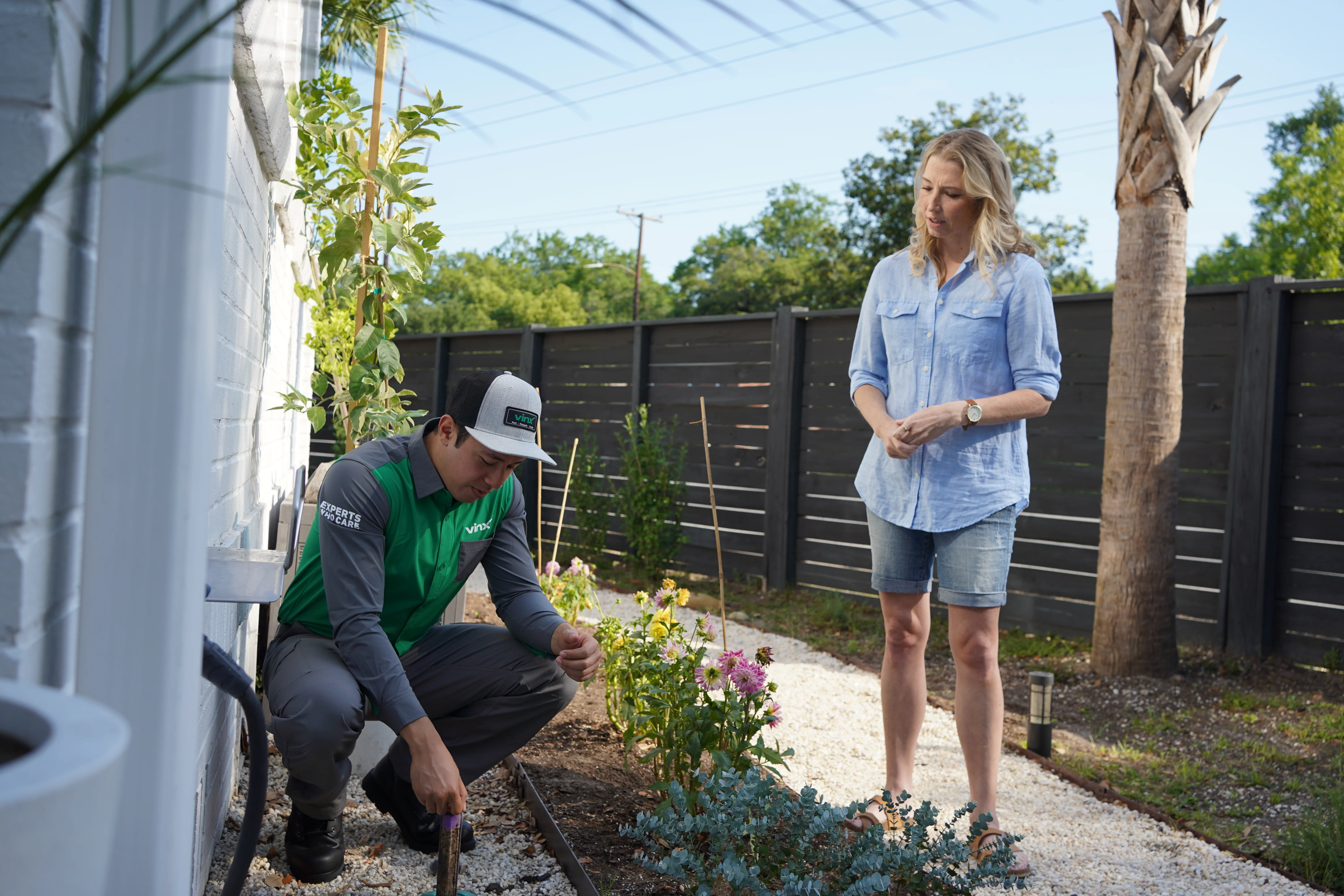
Exterior Foundation Treatment
With the pest identified, the exterior gets a defensive line so it never establishes indoors. We apply a micro-encapsulated barrier around the foundation, three feet up and three feet out, at the slab gaps, weep holes and thresholds insects actually use to get in. The eastern subterranean termite, Virginia’s most common species, works from soil and needs constant contact with moisture, so the foundation line is where inspection and treatment both start.
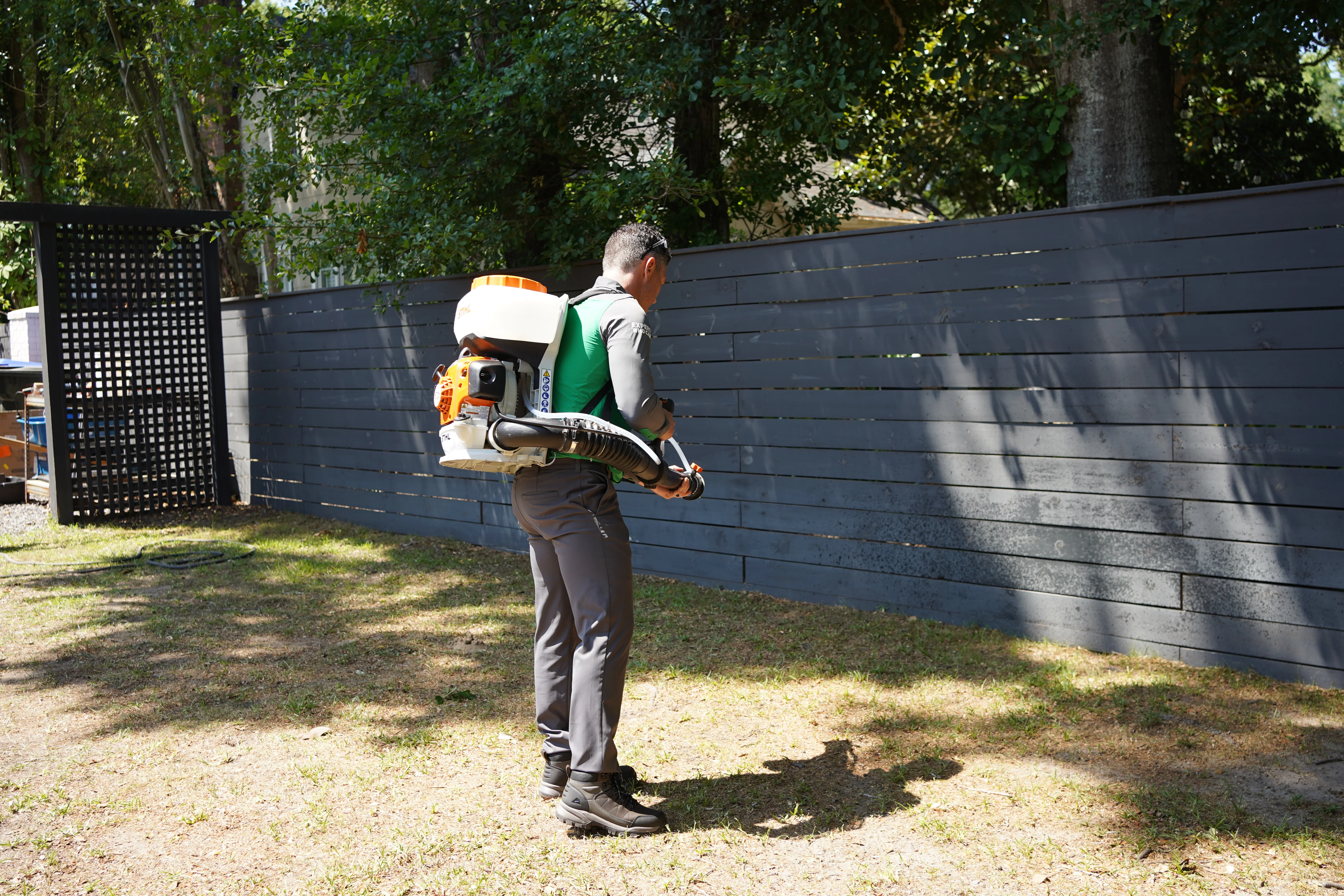
Yard Treatment
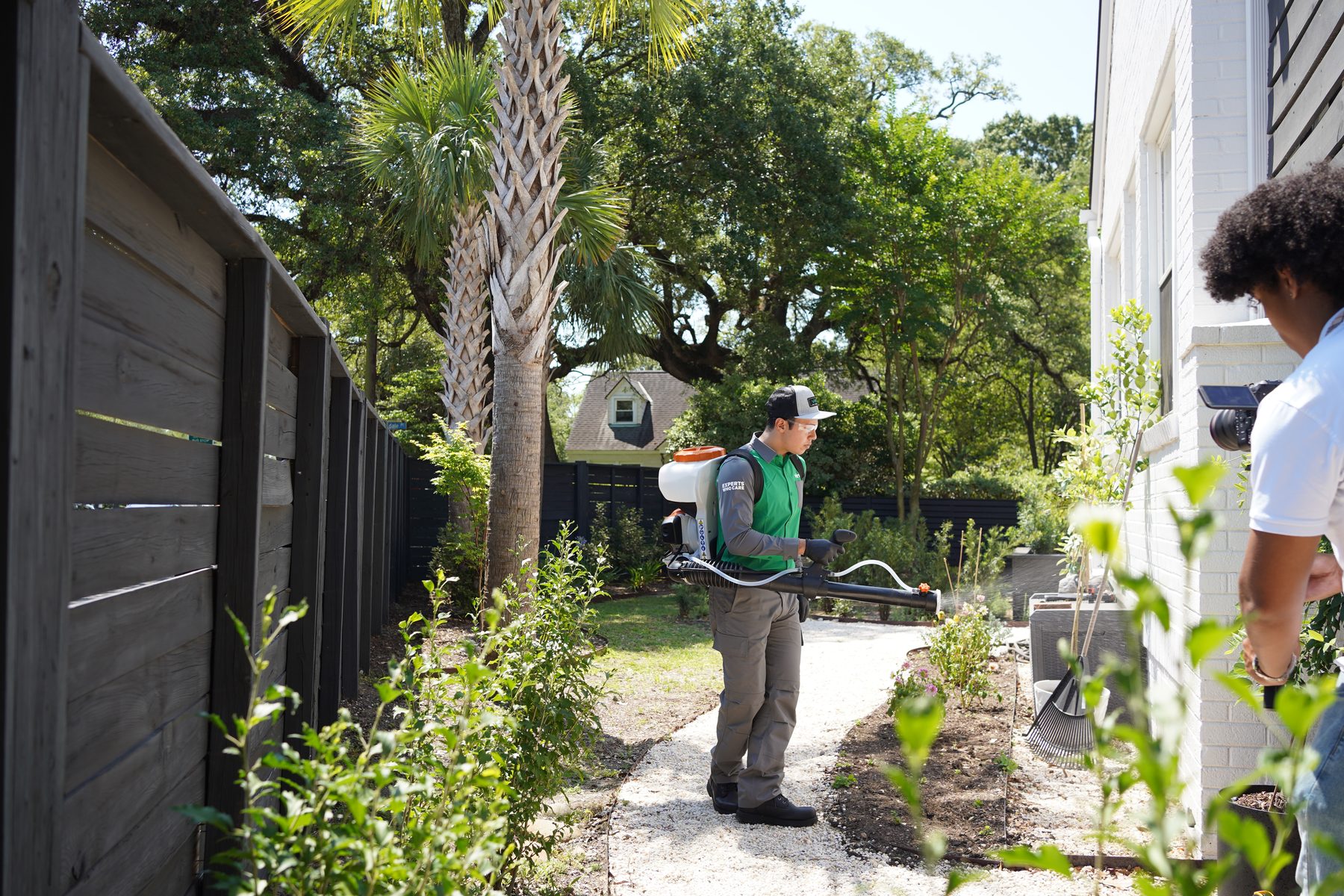
The yard gets treated up to thirty feet out, because most of what ends up indoors staged in the lawn first. If a free City mosquito-yard application and clearing standing water is enough for your property, we will say so rather than sell a plan on top of it — private yard treatment earns its place when one City visit a season is not enough.
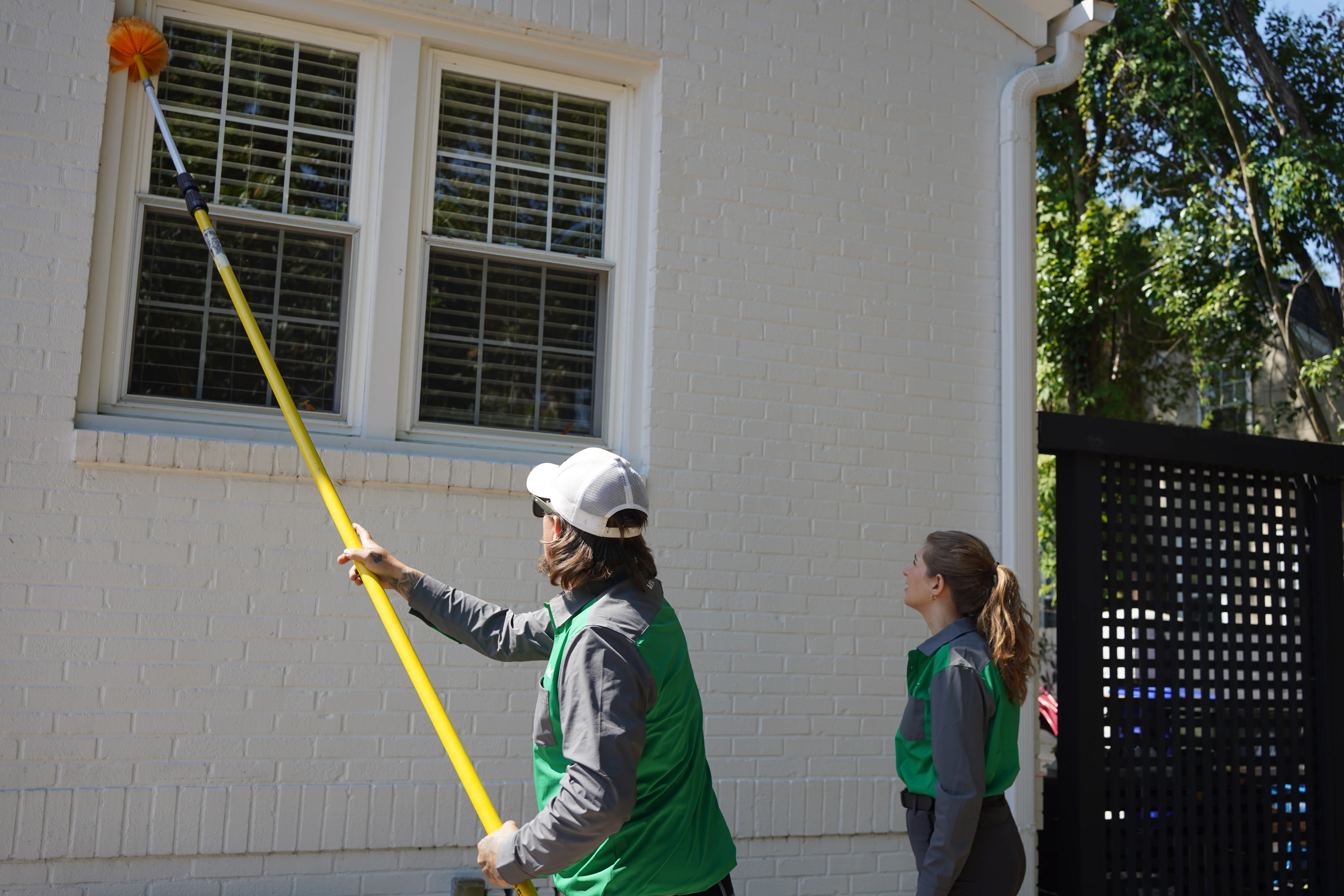
Sweep & Treat Eaves
Rooflines get swept clear of webs and early wasp activity on every visit, then spot-treated with a residual product so returning insects contact the treatment instead of rebuilding. The eaves pass doubles as an inspection of the routes overhead, which matters on Hampton Roads’ older independent-city housing stock as much as on new construction.
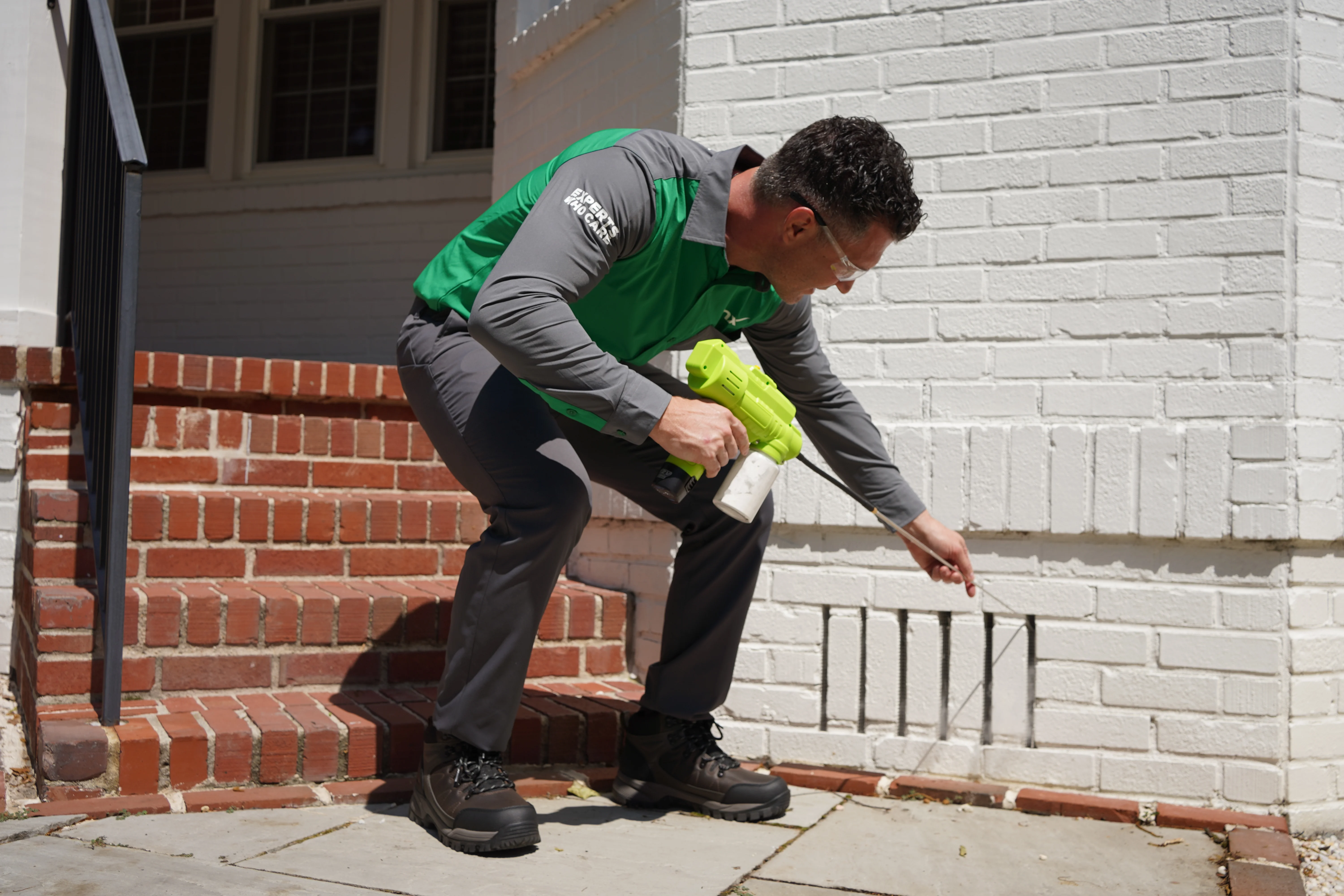
Power Dust Injection
Cracks, weep holes, pipe penetrations and expansion joints get a dust product driven deep with a compressor tip, reaching the wall voids a surface spray cannot. This is also where a suspected wood-destroying pest gets confirmed rather than assumed — Virginia’s licensing structure requires the technician doing termite work to hold the wood-destroying subcategory, not just general pest certification, and we treat that requirement as a floor, not a technicality.
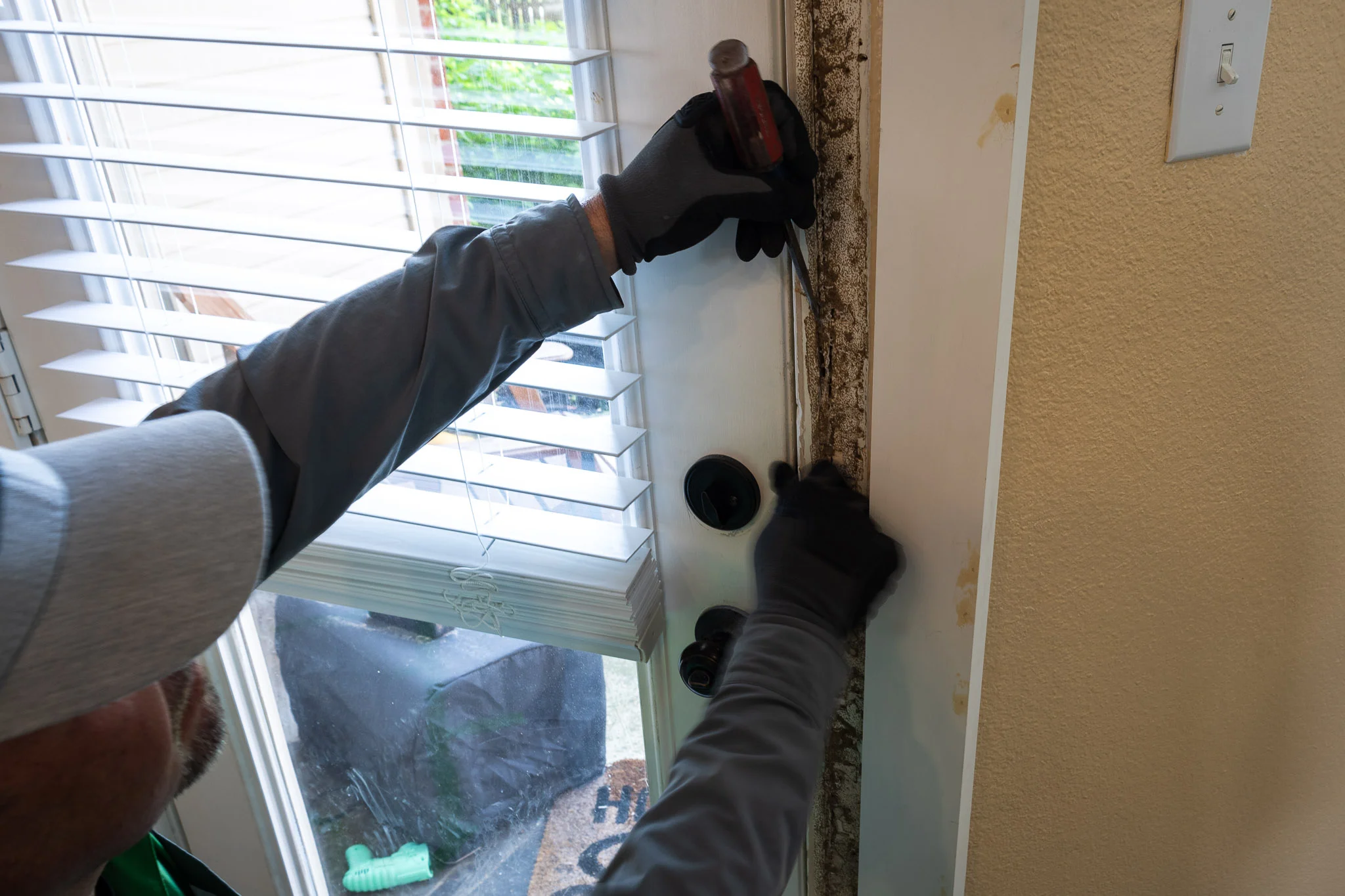
Interior Treatment (If Needed)
Where an infestation is already established indoors, we treat the interior directly, then document the visit in writing. Written records matter here more than in most markets, because Virginia is a “no representations” state — the buyer arranges any wood-destroying-insect inspection, not the seller — so a documented history is exactly what a lender, buyer or landlord will ask to see.
Customer Reviews
What Customers Say About Vinx in Virginia Beach
Kennard showed up on time and worked with me getting home a few minutes after the appt by working the outside first. Was quick and very professional. This was my first treatment and I am very happy with the experience. Time will tell about the products but if the employees are any indication of their overall process I am sure I will be happy.
Clear communication ahead of appointment. Arrived on time. Jonathan was polite and professional. He cleaned up well and was careful of my yard/plants. I would use them again!
Daniel was thorough, friendly and answered any questions I had with thorough knowledge of how the Vinx treatment for ticks would work and what to expect in the next few days. Also, I was assured that if in a few weeks we saw no improvement we could expect Vinx to come out and reapply at no extra charge. He is a good employee working for a good company.
Excellent customer service. Technicians are professional and courteous. Additional services are discussed in a matter of fact fashion, but no pressure. I know when the service of the property will be, always on time.
Cameron is an outstanding technician and truly an asset to VINX. He takes care of our mosquito treatments and is consistently thoughtful and thorough in his work. He clearly cares about doing the job right every time he visits. He is easily one of the best employees on their team, and I highly recommend his services.
Service was amazing! Tristin informed me of everything he did, answered my questions, and even made sure to lock my gate back up before he left since I have dogs. Great experiences so far with Vinx!
Mitch was very thorough and showed me updates as he completed the job. Anything I asked he was willing to go back and double check to ensure it was done properly. He will be coming back to complete the vents. But I am pleased with the work done so far. Thanks Mitch!
Our technician, Tristan provided a thorough explanation of what he’d being doing and about how much time it would take. I love that he wore the shoe covers when he came inside. He listened to my concerns and even reached out to a specialist to visit as soon as possible. This company is doing great.
The Best Pest Control in Virginia Beach Starts With a Free Inspection
Cockroaches in January. Ant mounds in March. Termite swarmers in April. Mosquitoes through November. The only approach that works in the Virginia Beach coastal is consistent quarterly service backed by a guarantee that removes the risk from your side entirely.
Virginia Beach Pest Facts
Why Pest Control in Virginia Beach Is a Year-Round Commitment
Last updated: September 5, 2026
Before you pay anyone for mosquito control in Virginia Beach, make one phone call. The City of Virginia Beach Mosquito Control Bureau will send someone to inspect your yard and treat it — one application between May and October, at no cost — and almost no pest control company in this market volunteers that information. In the City’s own words, a Bureau employee “will visit your property and inspect the yard for any breeding sites and adult mosquitoes,” you need to be present, and you sign a consent form first. The Bureau’s yard-inspection line is published on the City’s mosquito control page. Where private treatment genuinely earns its place is when one application a season is not enough — a heavily shaded lot, a property backing onto marsh or ditch, an event you need the yard usable for, or a household reacting badly to bites.
6 Reasons Virginia Beach Calls an Exterminator
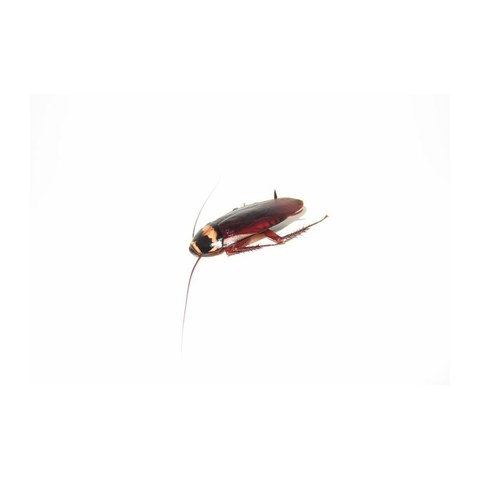
Cockroaches
American cockroaches, the “palmetto bug” of the coast, work moisture-heavy crawl spaces and utility areas across Hampton Roads’ older housing stock, while German cockroaches turn up in kitchens on their own schedule. Treatment goes to the harborage rather than the insect on the wall, with gel bait and growth regulator doing the lasting work.
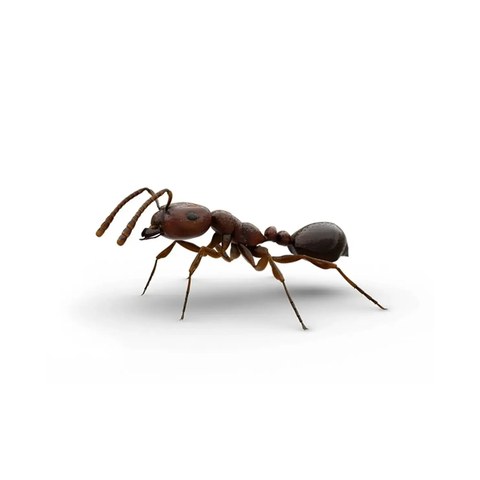
Ants & Odorous House Ants
Odorous house ants and other common species move in loose trails along foundations and slab gaps, especially after rain pushes them out of the yard. We treat the colony rather than the trail, pairing exterior bait with a foundation barrier so a new trail does not simply reappear a week later.
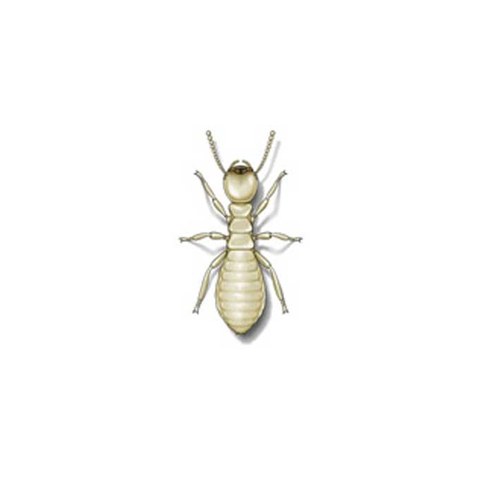
Termites
The eastern subterranean termite is Virginia’s established species, working from soil and needing constant moisture contact — which coastal Hampton Roads has no shortage of. Mature colonies decentralize across several nesting sites linked by tunnels, so the inspection goes to the soil line and the foundation, not just the visible wood.
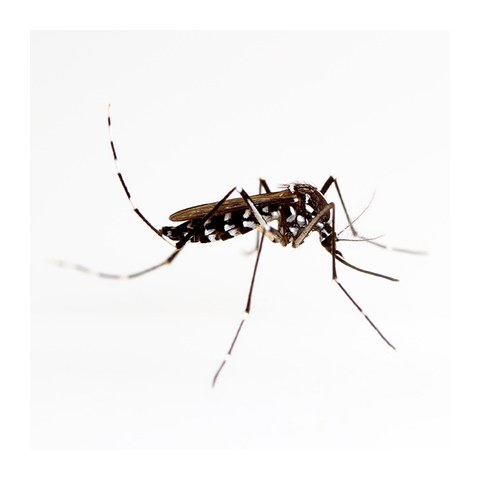
Mosquitoes
Virginia Beach runs a free City mosquito-yard inspection and treatment program between May and October, and we will tell you to use it first if it is enough for your property. Private treatment covers what one seasonal City visit cannot — heavy shade, marsh-adjacent lots, or a household that reacts badly to bites.

Rodents
Rats and mice work fence lines, drainage and older building stock across the independent cities that make up Hampton Roads, moving indoors when outdoor cover disappears. Exclusion on the structure, paired with exterior trapping and monitored bait, is what actually stops the cycle.
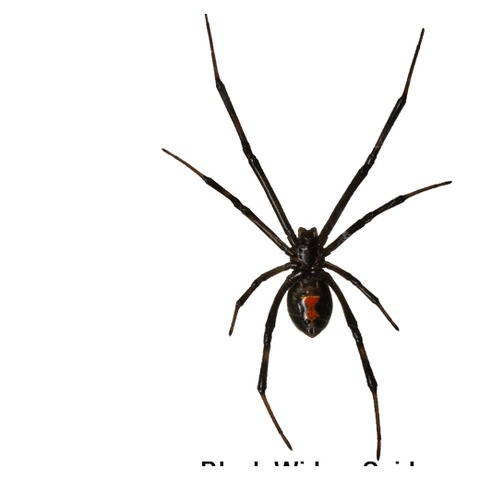
Spiders
Most spider calls in Virginia Beach are wolf spiders, cellar spiders and other common house species rather than anything dangerous. Brown recluse are not an established Virginia population, so before anything is quoted at recluse rates, we ask for the specimen to be identified.
Virginia’s licensing structure gives you a sharper question than “are you licensed?” — and almost nobody uses it. The VDACS Office of Pesticide Services requires a pesticide business license under the Virginia Pesticide Control Act, and separately requires the individual applicator to be certified. Termite work has its own subcategory, and it has a letter worth quoting back: 2VAC5-685-70 defines category 7b as “wood-destroying pest control”, for applicators who control organisms that destroy structures made of wood. That is a different qualification from 7a, which is general pest control. So a company can be entirely properly licensed for ants and roaches while holding nothing that covers termite work. If you have moved here from South Carolina, note the letters are a trap: SC labels its termite category 7A. Anyone doing this properly will confirm they hold it, immediately.
In Virginia the buyer carries the inspection, not the seller. Virginia operates a “no representations” disclosure regime, and Section 55.1-703 of the Code of Virginia advises purchasers to “exercise whatever due diligence a particular purchaser deems necessary including obtaining a home inspection.” A wood-destroying-insect inspection here is something your contract or your lender requires, not something the state obliges a seller to provide. New construction is the one place the state does step in, and it is worth knowing what the requirement actually says: protection against subterranean termites sits in the Virginia Uniform Statewide Building Code, Chapter 3 of the Residential Code, and it is satisfied by one or a combination of accepted methods rather than by chemical pretreatment specifically. So a builder can comply without a soil treatment. VDACS separately publishes the application rates if pretreatment is the method chosen, and advises checking the technician holds a valid applicator certificate. This is building code rather than VDACS.
The termite you actually have is the eastern subterranean termite, Reticulitermes flavipes, which the Virginia Tech Insect ID Lab names as the state’s common structural termite and which swarms in spring. Mature colonies decentralize across several nesting sites linked by tunnels, which is why treating the one spot you can see rarely ends it. We used to quote a worker count here; the Virginia Extension publication it came from has since been withdrawn, so we have taken the number down rather than keep citing something you can no longer check. Formosan termites are not established in Virginia; Virginia Tech places that species in Hawaii, the southeastern Atlantic coast and the Gulf South, with a single detection reported in Norfolk in 2022. Brown recluse spiders are similarly overstated here — Virginia Cooperative Extension places their natural range only at the far southwestern tip of the state, and the Virginia Tech Insect Identification Lab calls them very rare and “more common in the popular press then in real life.”
Pest Pressure by Community
Know Your Neighborhood’s Risk in Virginia Beach
Norfolk: An Independent City and a Major Port
Norfolk is an independent city built around one of the busiest ports on the East Coast, which is exactly why a single Formosan termite detection here in 2022 was worth naming and tracking rather than dismissing. One detection in a port city is a reason for annual inspections, not a reason to buy exotic-termite protection outright.
Chesapeake: The Region’s Largest Independent City by Land Area
Chesapeake borders the Great Dismal Swamp and covers more land than any other city in the region, which means more properties sitting against sustained moisture. That is exactly the condition the eastern subterranean termite and mosquitoes both need, so soil-line inspection and standing-water checks matter more here than the address alone suggests.
The Peninsula: Some of the Oldest Settled Ground in the Country
Hampton is built on some of the oldest continuously settled ground in the country, and Newport News runs long and narrow along the James River. Older housing stock on both sides of the Peninsula means more crawl spaces and sill lines that have had decades to develop moisture and termite issues worth a soil-level inspection rather than a surface look.
Portsmouth: Dense Older Housing Around the Harbor
Portsmouth’s dense, older housing stock sits close together around the harbor, which is the kind of building age and proximity that keeps rodent and termite calls steady year over year. Exclusion on the structure and a soil-line termite check are the starting point here rather than an afterthought.
Low-Lying and Marsh-Fringed Communities
Poquoson is a small independent city surrounded by marsh on three sides, Yorktown sits at the seat of York County, and Gloucester is a county across the York River — all low-lying enough that standing water and moisture-loving pests need more attention than they would further inland. Mosquito and moisture-pest pressure runs higher on these lots because of the terrain, not because of anything unusual about the houses themselves.
Historic Cores and Small-Town Building Stock
Williamsburg is built around a preserved 18th-century core, and Smithfield is a town within Isle of Wight County with both town and county services applying. Older construction in both places means the inspection needs to account for building methods and materials that predate modern soil treatment standards, rather than assuming a one-size approach.
Complete Coverage
What Our Virginia Beach Exterminators Treat
Every common Virginia Beach pest covered under one quarterly service plan

Ants
Ants, Odorous house ants, carpenter ants, and odorous house ants. Perimeter bait, mound treatment, crack and crevice application.
All Plans
Cockroaches & Palmetto Bugs
American, Asian, and German cockroaches. Gel bait in harborage areas, exterior perimeter spray, drain treatment.
All Plans
Spiders
Web removal from eaves, exterior perimeter targeting harborage. Black widow identification and targeted treatment.
All Plans
Wasps & Hornets
Nest removal from eaves, soffits, structural voids. Preventative treatment of common nesting sites on each quarterly visit.
All Plans
Fleas & Ticks
Yard treatment targeting grassy and shaded areas. Interior treatment of active infestation areas.
Plus & Platinum
Bed Bugs
Inspection, heat treatment assessment, and targeted chemical treatment. Virginia Beach’s tourism industry creates consistent exposure risk.
Platinum (12mo)
Rodents
Exterior bait station monitoring included in Plus and Platinum. Active infestation and full exclusion quoted separately after inspection.
Plus & Platinum
Mosquitoes
Monthly barrier spray and larvicide. Year-round service adjusted seasonally. Up to 90% population reduction per visit.
Platinum Only
Occasional Invaders
Silverfish, earwigs, centipedes, stink bugs, ladybugs, pillbugs. Crack and crevice treatment, perimeter spray, entry point ID.
All PlansKid & Pet Safe
Our Treatments Are Safe for Your Whole Family: Including the Furry Members
Every product we use is EPA-registered and applied strictly at labeled rates by licensed technicians. We take the guesswork out of safety so you can feel confident letting kids and pets back into treated areas quickly.

EPA-Registered Products Only
All products we apply are EPA-registered and used strictly per label requirements. Our licensed technicians are trained to apply the right product in the right place at the right rate, every time.
Dry Time Before Re-Entry
Exterior spray treatments dry in 30–60 minutes. Once dry, treated surfaces are safe for children and pets to contact. Your technician will confirm the all-clear before leaving your property.
Interior Treatment On Request
We treat only what’s needed, where it’s needed. Gel baits in cabinets and crack-and-crevice applications keep products away from areas pets and children frequent most.
Botanical Options Available
Have specific sensitivities? Ask your technician about our plant-derived treatment options. We offer botanical alternatives for households that prefer a more natural approach.
Have a concern about products used near your pets or children? Call 757-900-8469 and we’ll walk you through exactly what we use and why it’s safe.
Explore More
More Pest Control Services in Virginia Beach
Ant Control Virginia Beach
Household ants & others
Bed Bug Control Virginia Beach
Heat & liquid treatments
Cockroach Control Virginia Beach
American & German roaches
Mosquito Control Virginia Beach
Monthly barrier treatments
Rodent Control Virginia Beach
All rodents covered
Spider Control Virginia Beach
All spider species covered
Termite Control Virginia Beach
Bait systems & liquid treatment
Wasp Control Virginia Beach
Nest removal & prevention

Tick & Flea Control Virginia Beach
Yard & pet protection

Pest Control Virginia Beach
Year-round protection plans
Frequently Asked Questions
Exterminator Virginia Beach VA: Frequently Asked Questions
Recurring plans start at $49 a month and cover more than fifty pests. Termite, mosquito and flea-and-tick work is quoted separately. Inspection is free and the price is firm before anything starts — and if the City’s free service covers what you need, we will tell you that instead. Call 855-800-8469.
Yes. the City of Virginia Beach Mosquito Control Bureau states that an employee “will visit your property and inspect the yard for any breeding sites and adult mosquitoes,” with treatment limited to one application between May and October. You need to be present and sign consent. The number is published on the City’s mosquito control page.
Often you would not, and we would rather say so. Private treatment earns its place when one application a season is not enough — heavy shade, marsh or ditch frontage, an event you need the yard usable for, or someone in the household reacting badly to bites.
Whether the technician holds the wood-destroying subcategory for termite work. 2VAC5-685-70 defines it as being for applicators controlling “organisms that destroy structures made of wood,” and it is separate from general pest certification. Also check the company holds a pesticide business license — both are required.
Ask about category 7b specifically. Virginia regulation 2VAC5-685-70 defines 7b as wood-destroying pest control, for applicators using or supervising pesticides against organisms that destroy structures made of wood. Category 7a is general pest control excluding fumigation. They are separate certifications, so a company can be entirely legitimate for ants and roaches without holding anything that covers termite work. Ask which the technician actually holds rather than the generic 'are you licensed?' question, because almost nobody does and the answer is informative. Vinx holds Virginia pesticide business license 16029 through VDACS.
Yes, officially. Virginia Beach sits inside the Virginia Imported Fire Ant Quarantine administered by VDACS, along with Norfolk, Chesapeake, Hampton, Newport News, Portsmouth, Suffolk and Poquoson. The quarantine covers 18 counties and 15 independent cities, was established in 2009 and was last expanded in May 2025. It restricts moving regulated articles such as soil, sod, potted or balled nursery stock, baled hay and soil-moving equipment out of the area without certification. People often assume fire ants are a Deep South problem borrowed for marketing copy; in Hampton Roads the quarantine is centerd on exactly this region.
No. Virginia is a “no representations” state. § 55.1-703 of the Code of Virginia advises purchasers to “exercise whatever due diligence a particular purchaser deems necessary including obtaining a home inspection.” Any repair obligation comes from your contract, not from the state.
The eastern subterranean termite, Reticulitermes flavipes — Virginia Tech names it as the state’s common structural termite, and it swarms in spring. Colonies decentralize across multiple nesting sites linked by tunnels, so activity in one spot says little about the total. We previously quoted a worker count here, sourced to a Virginia Extension publication that has since been withdrawn, so we have removed the number rather than cite something you can no longer check.
Very unlikely. Virginia Cooperative Extension places the natural range only at the far southwestern tip of Virginia, with a few isolated populations elsewhere attributed to household goods or firewood carried in. The Virginia Tech Insect Identification Lab calls them very rare here and “more common in the popular press then in real life.” Ask for the specimen to be identified.
We cover the whole city and the wider Hampton Roads communities listed above. Most calls get a next-day appointment and an active infestation gets moved up. Call 855-800-8469.
Because most of the neighborhood is reaching the same age together. Nearly 27% of Virginia Beach homes, 51,708 units, went up in the 1980s and the median local home dates to 1984. Weather stripping, garage door sweeps, foundation seals and crawl space vent screening all have a service life, and a cohort of houses built within a few years of each other reaches the end of it at the same time. For termites specifically, any soil treatment applied when those homes were built predates the 1988 chlordane ban and is long gone. Nothing has changed about the pests; the buildings have opened up.
The season is long enough that quarterly is the sensible floor rather than an upsell. The median last spring freeze in this area is March 20 and the first fall freeze is November 25, a 248-day freeze-free stretch, so there is no hard cold snap to reset populations. Rodents breed year-round, termites feed year-round in coastal soil, and cockroaches carry on in heated interiors regardless. Mosquitoes are the genuine exception, running roughly May into early November, which is why we treat those seasonally and say so rather than charging for treatments in January that would not do anything.
Service Coverage
Pest Control Across Virginia Beach & Hampton Roads
Serving every neighborhood in the Virginia Beach metro area