Exterminator in Cane Bay, SC
Cane Bay Plantation was approved in 2005 and sold its first homes in 2007 on what the Post and Courier describes as industrial timberland. Census figures for ZIP 29486 show 73.7% of the housing here built since 2000, and freshly graded lots with new sod are the open, sunny, disturbed ground fire ant queens choose. The National Weather Service puts the Summerville station's first fall freeze at Nov 12 and last spring freeze at Mar 22, so the pests on that ground stay active for roughly eight frost-free months. From the 300-acre lake system to the apartments along Highway 176, the plan is built around your lot and the pests actually active on it. 100% satisfaction guarantee.
Get Started in 60 Seconds
Choose what’s easiest for you
Request a Quote
We usually respond in 2 minutes
Call (855) 800-8469
Get a Live Person (no AI agents here!)
Sign Up Online
Get pricing and schedule now




Welcome to Vinx Pest Control
A Company That Actually Backs What It Says
At Vinx, we combine professional-grade treatments with a level of service most pest control companies don’t offer. Local technicians, fast response times, and a guarantee that actually means something.
“I’m not passionate about killing bugs. I’m passionate about customer service. At Vinx, you get experts who show up, do the job right, and stand behind every visit. No runaround, no fine print.”

Founder & Owner, Vinx Pest Control
PROTECTION PLANS
Cane Bay Exterminator Pricing
100% money-back guarantee on every plan.
Standard Residential Protection
- 4 Seasonal Treatments Per Year
- 50+ Covered Pests
- Interior, Exterior & Yard Treatment
- Unlimited Free Re-Services
- 100% Money-Back Guarantee
- Fire Ant Yard Guarantee
- Flea & Tick Coverage
- Mosquito Treatments

Upgraded Yard Protection
- 6 Home & Yard Treatments Per Year
- 50+ Covered Pests
- Interior, Exterior & Yard Treatment
- Unlimited Free Re-Services
- 100% Money-Back Guarantee
- Fire Ant Yard Elimination Guarantee
- Flea & Tick Elimination Guarantee
- Mosquito Treatments

Most Comprehensive Protection
- 9 Treatments Per Year
- 50+ Covered Pests
- Interior, Exterior & Yard Treatment
- Unlimited Free Re-Services
- 100% Money-Back Guarantee
- Fire Ant Yard Elimination Guarantee
- Interior Flea & Tick Coverage
- 8 Mosquito Treatments (Mar–Nov)
- Free Bed Bug Treatments if Needed*
*Starting rates vary by home size and area. All plans billed monthly.
Request Your Free Pest Control Quote
Fill out the form below and a Vinx team member will reach out within 2 minutes during business hours.
Prefer to talk? Call (855) 800-8469 for a live person, no AI agents.
Our Process
How Vinx Exterminators Work a Cane Bay Property: Step by Step

Inspection & Reporting
An extermination visit in Cane Bay starts at the soil line, since ninety-four percent of infested buildings in a Charleston study were entered from ground-based colonies rather than aerial ones. The builder’s original soil pre-treatment gets noted at this stage, because it was a point-in-time protection and not a permanent one. You get a firm price before any work begins.
Exterior Foundation Treatment
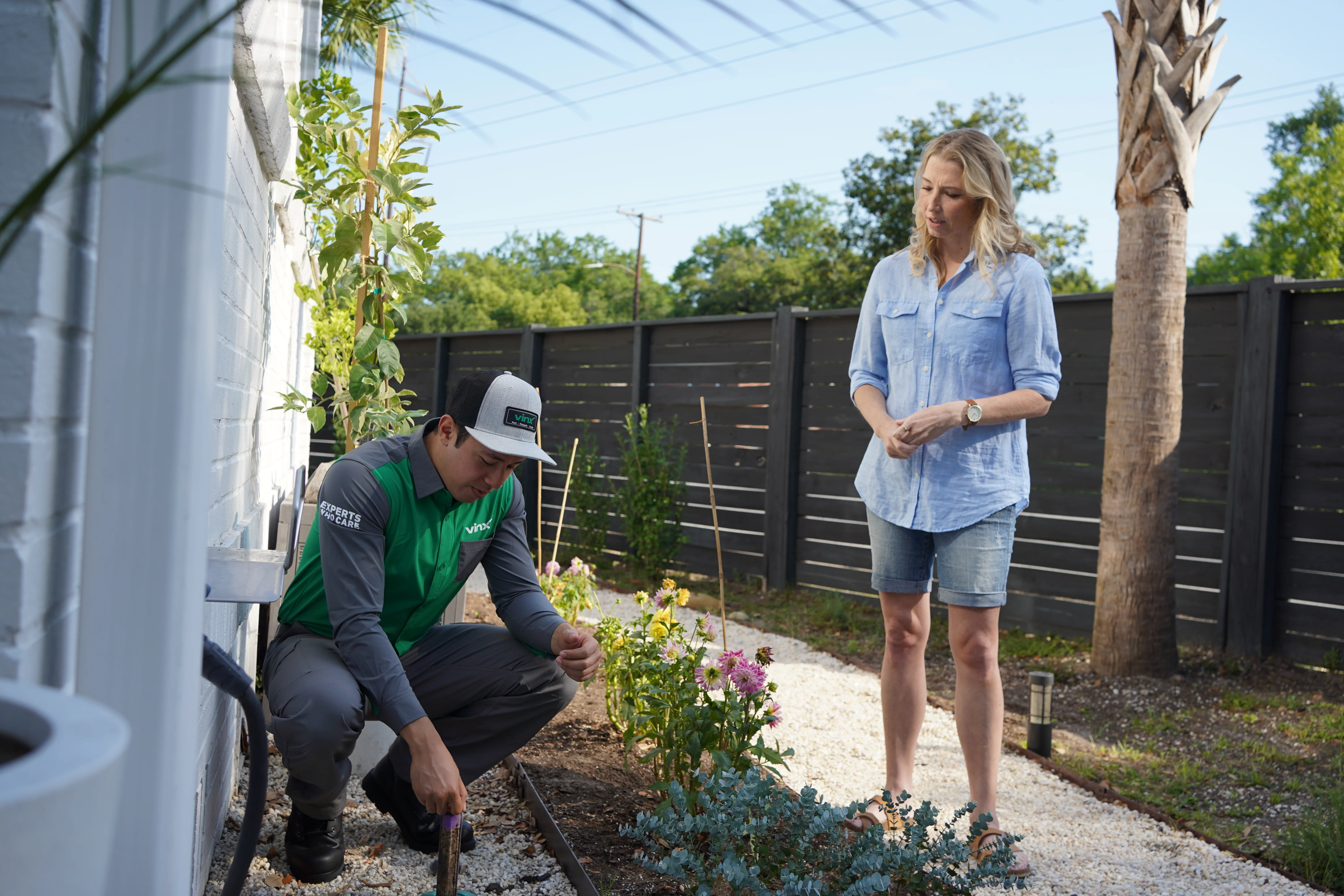
The exterior gets a micro-encapsulated barrier three feet up and three feet out, intercepting insects at the slab gaps and thresholds they actually use to get in. Berkeley County is on Clemson's Formosan list, so this line is treated as termite defense first on every property.
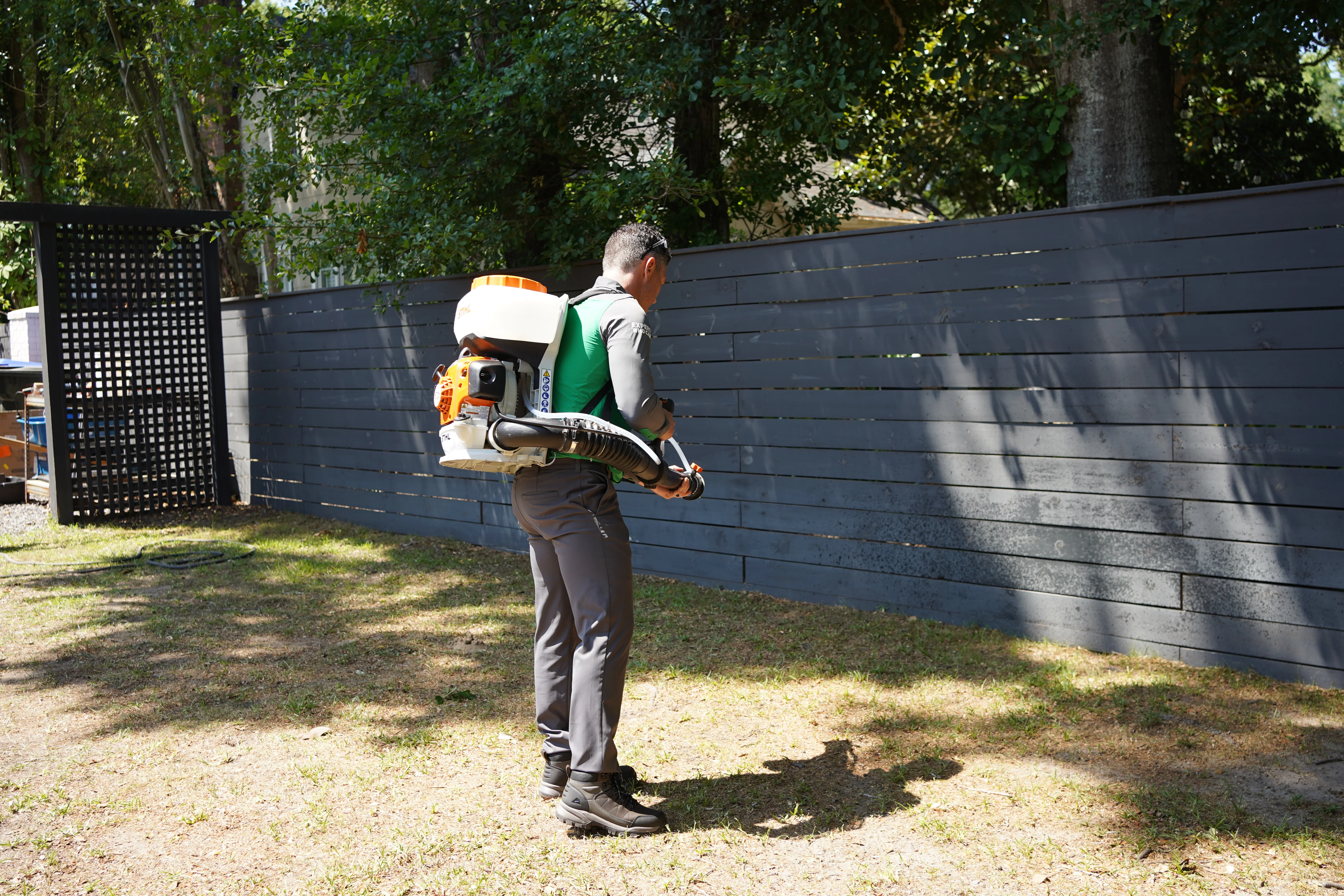
Yard Treatment
We treat the yard up to 30 feet out, clearing standing water that Clemson HGIC says will breed mosquitoes in as little as five days, some species in a tablespoon, and correcting wood-to-soil contact created by landscaping added after the builder handed over the lot.
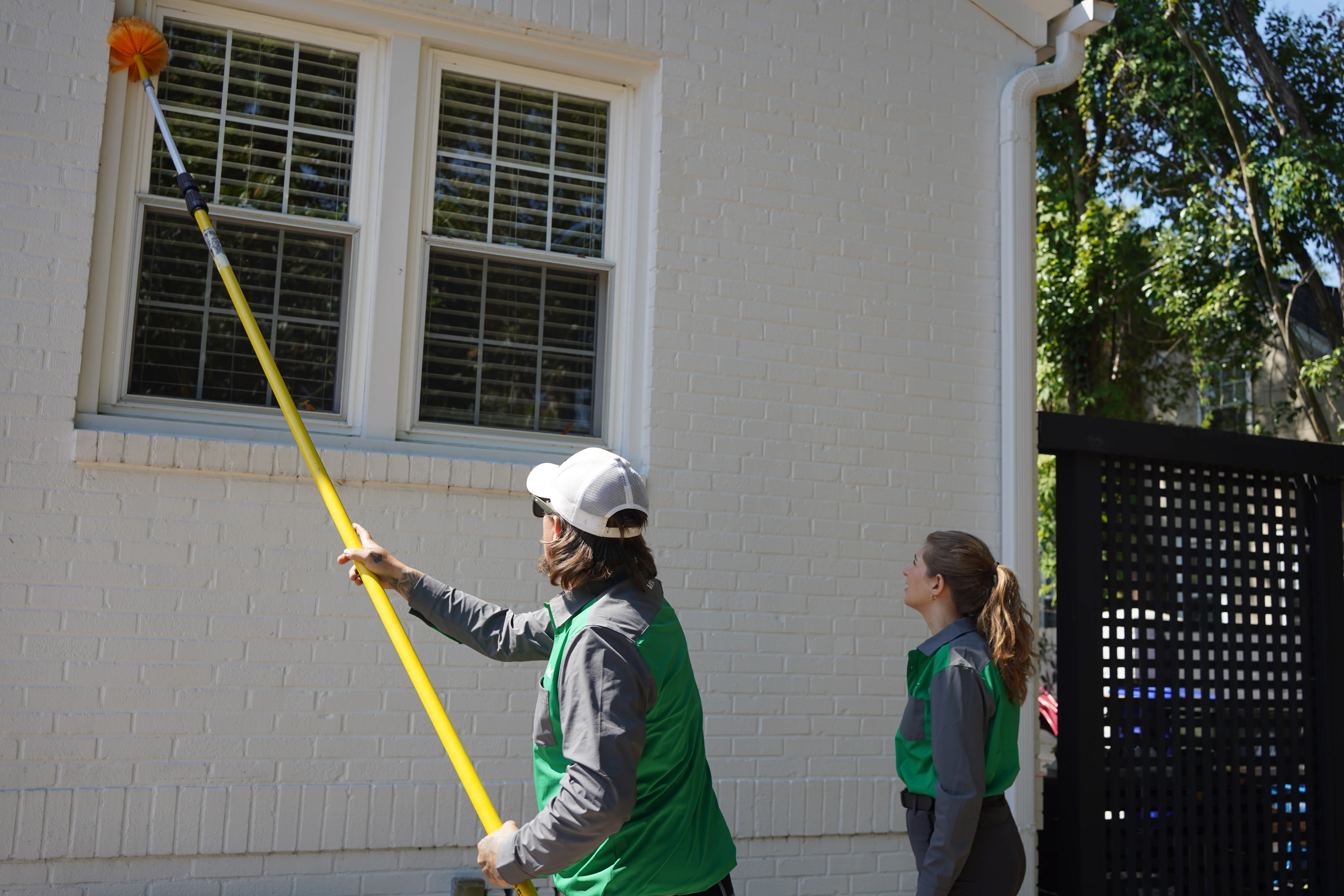
Sweep & Treat Eaves
Rooflines are swept clear of webs and early wasp nests on every visit, then spot-treated with a residual product. Where a lot backs onto Cane Bay's preserved woodland and trail edges, this pass also checks for carpenter ant activity in limbs bridging onto the roofline.
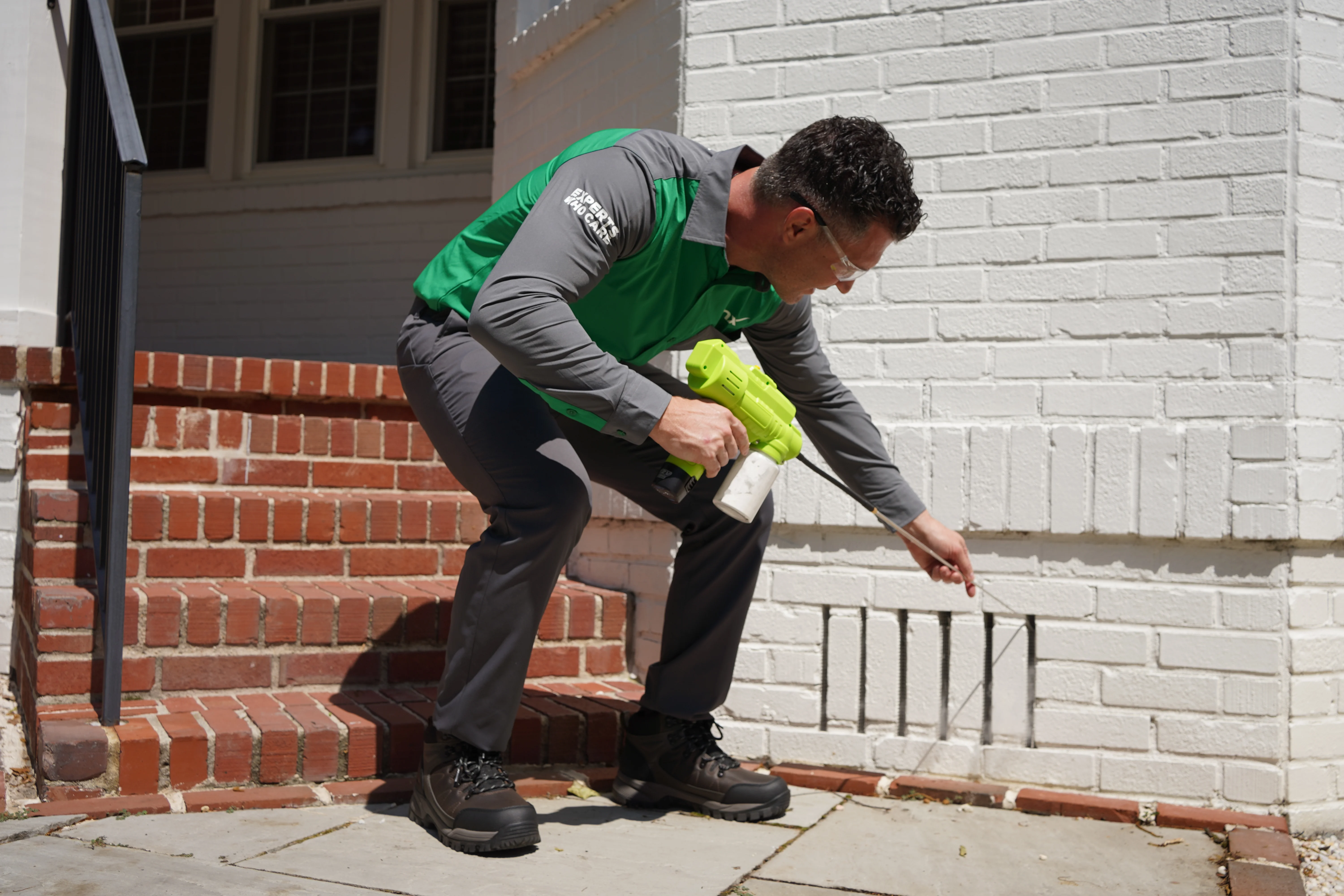
Power Dust Injection
Cracks, weep holes and expansion joints get a dust product driven in with a compressor tip, reaching wall voids a surface spray never touches. On newer construction, weep holes and expansion joints are the openings a surface spray never reaches, which is why the dust matters on a Cane Bay slab.
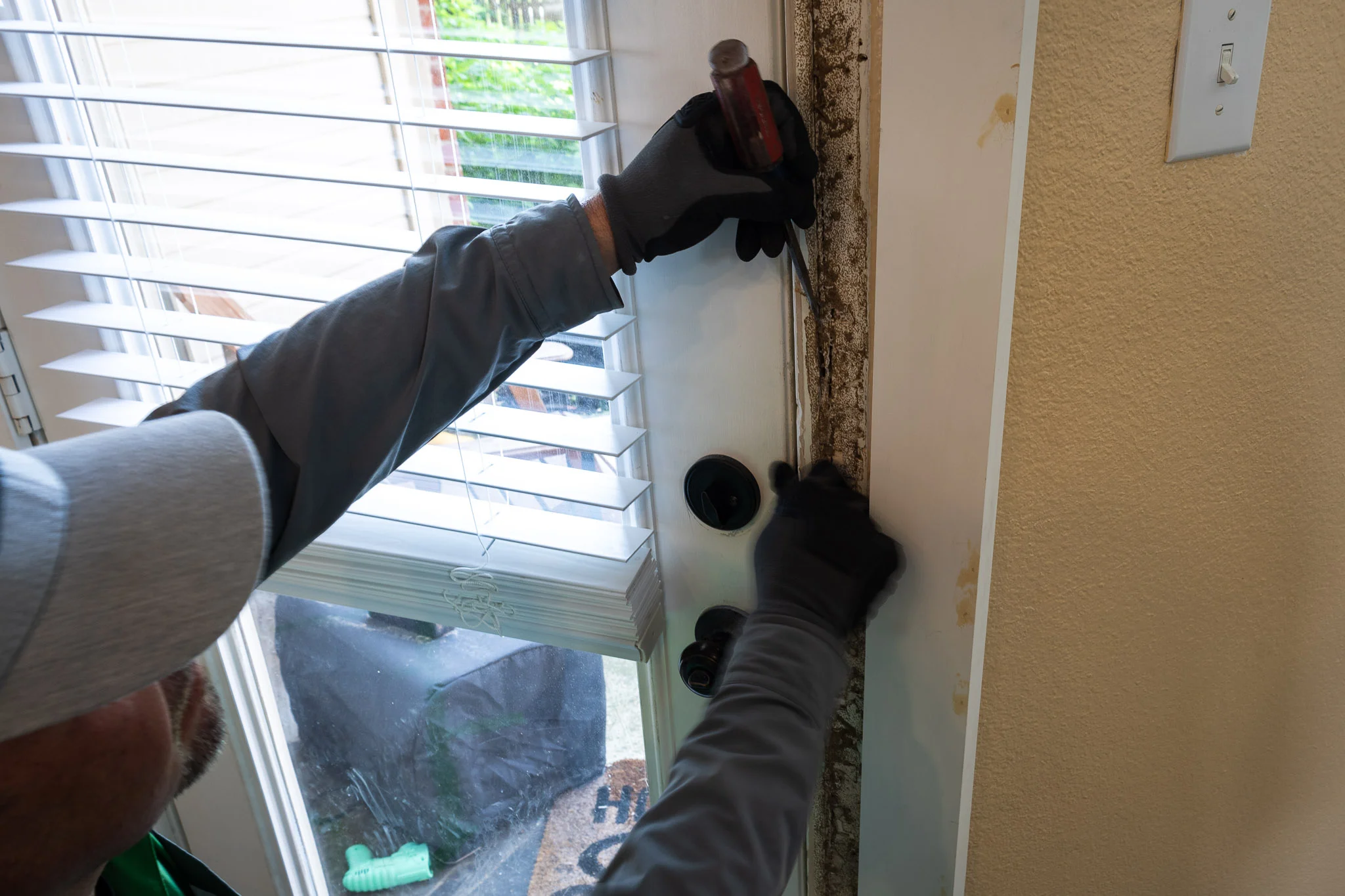
Interior Treatment (If Needed)
Where termite activity is found, we treat the colony first and document the findings, because the builder’s original pre-treat was applied once and is not doing the job on its own — the sequence matters here. Interior work and unlimited free re-services between visits are covered on every plan.
Conducive Condition Report
At the end of every visit, your technician documents any conditions increasing pest pressure, moisture entry points, foundation gaps, vegetation contact, clogged gutters, standing water near the foundation. Cane Bay's lake banks and retention ponds are on that list.
Customer Reviews
Trusted by Cane Bay Families: 4.8 Stars on Google
Great job by Jonathan today! He did my rodent control. He was on time. Had great communication and did a wonderful job. He explained everything he did. I would highly recommend Jonathan at Vinx pest control. Tracy
Darrell was very professional and explained exactly what was completed around the house. He walked through the steps for future appointments and answered all of my questions promptly. Also provided his card for any future requests/issues.
We have been very pleased with our service. We live along the marsh and get lots of bugs sticking to the exterior walls and Vinx does a great job clearing them off and then treating.
John was my technician today and he did a great job! He was friendly, professional and personable. Even though the rain started pouring John was quick to let me know the company values service and quality, therefore they would be coming back out to finish sweeping the eaves and re-spraying the outside. Thanks again John! Scott thanks for coming out the next day to finish were John left off! It's a hot one 🥵
Jack is the best of the best!!!! He is thorough and knowledgeable! I have never had my pest control explained to me in such detail! Jack truly takes care of his customers!!!! Thank you, Jack!!!
John came to treat our place and he was the absolute best. He understood and sympathized with our situation and was very kind the whole time. We’re moving out and he even helped us move our dresser down a flight of stairs. He was so kind, professional, and fun to talk with. If we ever need a pest control service we will always choose Vinx. Thank you again John!
Built on Pine Forest
Why Pest Control in Cane Bay Is a Year-Round Commitment
Last updated: September 24, 2026
When plans for Cane Bay Plantation were approved in 2005, Highway 176 through here was, in the Post and Courier’s words, a two-lane road that cut through pine forests with just a few homes dotted along the way. Sales began in 2007, and the paper’s January 2026 count puts the community at over 13,000 residents, up from roughly 4,300 at the start of 2015. The developer is still building out the 2,031-acre Wildcat Tract it bought from Plum Creek Timberlands and Georgia-Pacific in 2016, so a large share of the ground here is freshly cleared, graded and sodded. The USDA soil survey of Berkeley County says 95% of the county’s soils hold excess water in the profile, which is what keeps that fresh ground soft for burrowing rats and wet for roaches. The soil termite pre-treatment the state code requires on new construction lasts, in Clemson’s words, as long as the thoroughness of the application, termite foraging intensity and conducive conditions allow.
6 Reasons Cane Bay Calls an Exterminator
Palmetto Bugs
American cockroaches — palmetto bugs — use the storm drains and pond outfalls in every Cane Bay subdivision, the same retaining ponds the Post and Courier reported overflowing their banks in the October 2015 rain. The smoky-brown roach breeds in the pine-straw mulch left over from the timberland this community was built on. Wall-void dust injection and drain-line treatment outperform surface spraying on this layout.
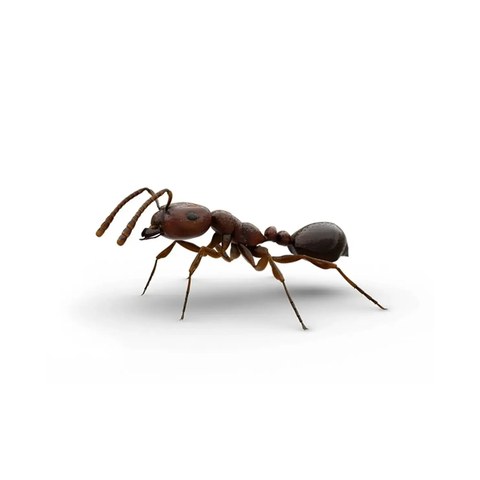
Fire & Argentine Ants
Fire ant queens found colonies on open, sunny, recently disturbed ground, and Census figures for ZIP 29486 show 22.8% of the housing built in 2020 or later, so fresh sod and bare road edges are the default lot here. Treating a single mound rarely holds since the colony scatters; a yard-wide bait program manages the population as a system rather than chasing individual mounds.
Termites
Berkeley County is on Clemson's sixteen-county Formosan list, updated June 2022. Clemson puts Formosan swarms from mid-May to July, often in the evening and drawn to lights, so shed wings on a lit porch after dark are worth a call that week. A Cane Bay home's builder pre-treatment was a point-in-time application, and an inspection beats an assumption about what it is still doing.

Mosquitoes
Berkeley County Mosquito Abatement has identified 55 species in the county. Its trucks spray at night where surveillance finds adults rather than on a set schedule, and Cane Bay is not one of the county's named spray zones. The container-breeding Asian tiger mosquito in your gutters and plant saucers beside the 300-acre lake system is the part we handle.

Rodents
Rodent pressure in Cane Bay concentrates along the banks of the 300-acre lake system and the retention ponds, where Norway rats burrow, and a soils survey for the Cane Bay transmission-line corridor found poorly to somewhat poorly drained soils on about 80% of it, which keeps those banks soft. Exclusion comes first, then trapping and secured bait rather than bait alone in an open structure.

Spiders
Spiders here follow the insect activity along Cane Bay's woodland edges, trails and pond margins, and the National Weather Service's Nov 12 average first freeze is when wolf spiders start turning up in garages instead. Black widows and wolf spiders are the real local species; the brown recluse is not established in the Lowcountry. We treat the insect population and clear webbing at the eaves on every visit rather than escalating chemical treatment indoors.
Cane Bay sits in unincorporated Berkeley County, one of the sixteen South Carolina counties on Clemson’s list of documented Formosan colonies, with Charleston and Dorchester counties on the same list on either side. Census figures for ZIP 29486 show 73.7% of the housing built since 2000, and the soil pre-treatment applied to that construction is the fact most homeowners rest on. Clemson describes that pre-treat as two steps, after the foundation footings and shortly after completion, and says its life depends on the thoroughness of the application and the conditions around it. With 17.1% of the ZIP’s residents having moved in within the last year, many of these homes have changed hands on a CL-100, the Official South Carolina Wood Infestation Report, which records what an inspector can see on the day and nothing more. Neither is a standing defense for a 2007 house now approaching eighteen years old.
Water decides most of what happens to the insects here, starting with the 52.70 inches of rain a year in NOAA’s 1991–2020 normals for the Summerville station. In the October 2015 rain, the Post and Courier reported, the retaining ponds that dot the subdivisions in areas like Cane Bay overflowed their banks. Tropical Storm Debby in August 2024 dropped 17.27 inches at Summerville by the National Weather Service’s measurement, and Berkeley County told Cane Bay residents to shelter in place. Live 5 News reports residents of Moody’s Plantation off Highway 176 counting roads flooded 15-plus times in five years, with the county saying it is evaluating drainage concerns. Berkeley County Mosquito Abatement larvicides where its inspectors find larvae and sprays at night, but the container-breeding mosquito in a gutter and the rat burrowing into a pond bank are the homeowner’s problem — and ours.
Pest Pressure by Neighborhood
Where Cane Bay Exterminator Calls Come From
New Construction Lots: Fire Ant Ground
Fire ant queens choose open, sunny, recently disturbed ground, and Census figures for ZIP 29486 show 22.8% of the housing built in 2020 or later with another 36.1% from the 2010s, so a freshly graded lot with new sod is the norm here rather than the exception. Rain does not create mounds; it collapses tunnels and the colony rebuilds, so the mounds that appear after a storm were already there. The 2,031-acre Wildcat Tract, former timberland still being built out off Highway 176, is where that ground is freshest.
Lakefront & Retention-Pond Homes: Mosquitoes and Rats at the Bank
The 300-acre lake system and the retention ponds in every subdivision put standing water within yards of the back door, and a SC Sea Grant review of 52 stormwater facilities found 14 mosquito species in 34% of them, wherever mosquitofish were absent. These are the same ponds the Post and Courier reported overflowing their banks in October 2015. Norway rats burrow into soft pond banks and follow the shoreline to patios and grills, so pond-lot homes get a bank-side inspection along with the yard treatment.
Highway 176 Corridor: Roaches and Rodents in Commercial Density
The Publix-anchored shopping center and the 54,000-square-foot Cane Bay Family YMCA anchor a commercial strip on a road the Post and Courier says was two lanes through pine forest before it was widened to four between Cane Bay and Nexton. Dumpster pads, loading doors and drain lines there, and at the hotels off the I-26 exit 197B interchange, carry the corridor’s palmetto bug and rodent pressure, and commercial work runs on a documented schedule with service records, which is what a health inspection asks for.
Preserved Woodland & Trail Edges: Ticks, Smoky-Brown Roaches and Spiders
Lots backing onto preserved woodland and the walking and biking trails sit against the leaf litter and pine straw where the lone star tick, which Clemson lists as the most collected tick species in South Carolina, quests for a host. SCDNR’s 2024 harvest report puts Berkeley County at 6.3 deer per square mile to carry those ticks in. Smoky-brown roaches breed in the same pine straw and black widows and wolf spiders hunt there, so the treatment line runs along the woodland edge and the fence line, not just the foundation.
Apartment Living & Rental Turnover: Bed Bugs and German Roaches
Census figures for ZIP 29486 show 17.1% of residents moved in within the last year, and bed bugs and German cockroaches both ride in with belongings rather than walking in from the yard, so Cane Bay’s apartment sections and rented townhomes see the most of both. An inspection at move-in, and treating shared-wall units as a block rather than one door at a time, is what actually holds.
Complete Coverage
What Our Cane Bay Exterminators Treat
Every common Lowcountry pest covered under one recurring service plan
Palmetto Bugs
Storm drains, pond outfalls, plumbing penetrations.
All Plans
Fire & Argentine Ants
Fresh sod & disturbed ground on new lots. Requires Plus or Platinum.
Plus & PlatinumSpiders
Black widow, wolf spider. Cobweb removal included every visit.
All Plans
Wasps & Hornets
Nest removal from soffits and eaves through roughly eight frost-free months.
All Plans
Fleas & Ticks
Exterior flea/tick treatment. Interior flea covered in Platinum.
Plus & PlatinumMosquitoes
Monthly treatment Mar–Oct against the 55 species Berkeley County has identified.
Platinum OnlyRodents
Roof rats, fence lines, power lines, roofline gaps. Exterior bait stations.
All PlansTermites
Formosan termite core range. Sentricon TotalDefense from $35/mo+.
Add-On
Bed Bugs
Covered after 12 months of Platinum service.
Platinum 12moKid & Pet Safe
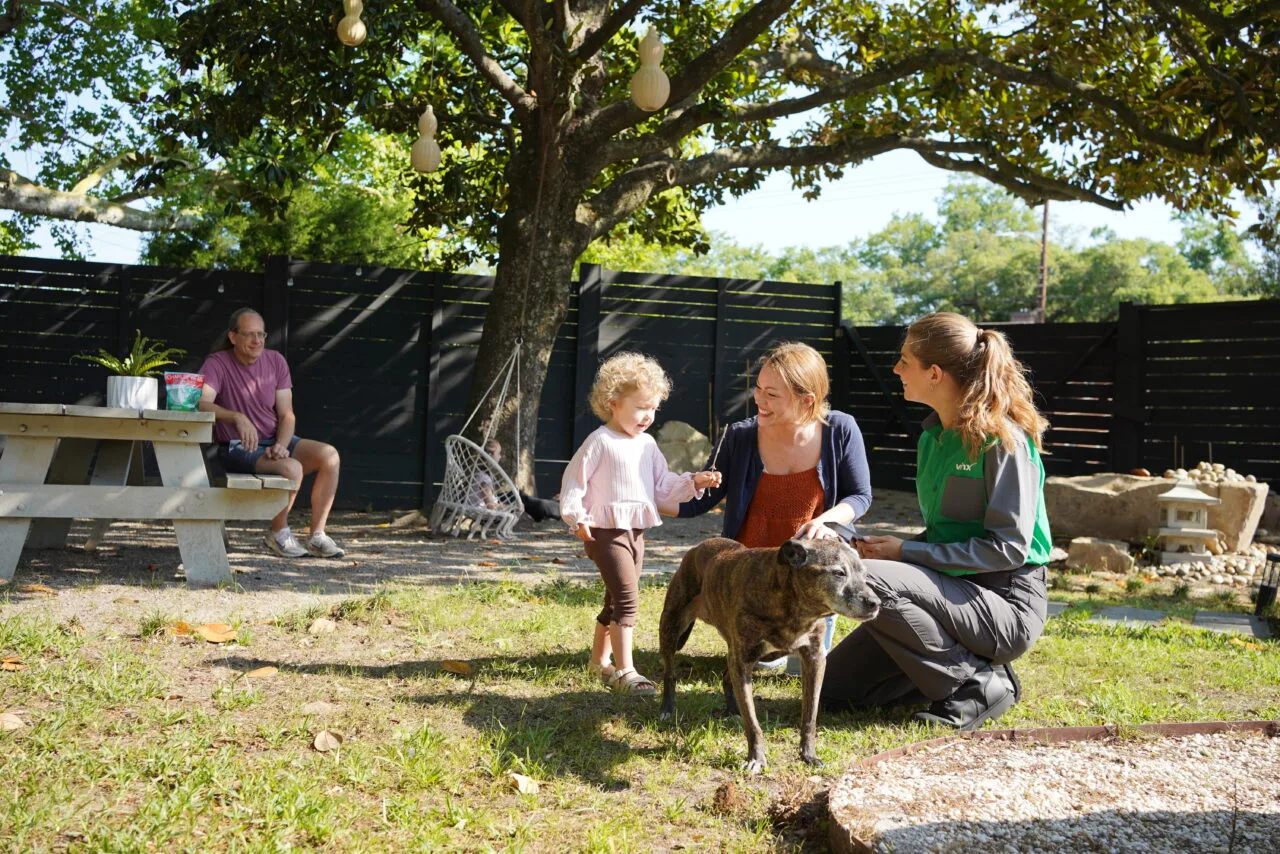
Our Treatments Are Safe for Your Whole Family: Including the Furry Members
Every product we use is EPA-registered and applied strictly at labeled rates by licensed South Carolina technicians. We take the guesswork out of safety so you can feel confident letting kids and pets back into treated areas quickly.
EPA-Registered Products Only
All products we apply are EPA-registered and used strictly per label requirements. Our licensed technicians are trained to apply the right product in the right place at the right rate, every time.
Dry Time Before Re-Entry
Exterior spray treatments dry in 30–60 minutes. Once dry, treated surfaces are safe for children and pets to contact. Your technician will confirm the all-clear before leaving your property.
Interior Treatment On Request
We treat only what’s needed, where it’s needed. Gel baits and crack-and-crevice applications keep products away from areas pets and children frequent most.
Botanical Options Available
Have specific sensitivities? Ask your technician about our plant-derived treatment options. We offer botanical alternatives for households that prefer a more natural approach.
Have a concern about products used near your pets or children? Call (855) 800-8469 and we’ll walk you through exactly what we use and why it’s safe.
Explore More
More Pest Control Services in Cane Bay
Termite Control Cane Bay
Sentricon bait system
Mosquito Control Cane Bay
Monthly barrier treatments
Ant Control Cane Bay
Household ants & others
Spider Control Cane Bay
All spider species covered
Cockroach Control Cane Bay
Palmetto bugs & German roaches
Rodent Control Cane Bay
All rodents covered
Bed Bug Treatment Cane Bay
Heat & liquid treatments

Tick & Flea Control Cane Bay
Yard & pet protection

Pest Control Cane Bay
Year-round protection plans
Frequently Asked Questions
Exterminator Cane Bay SC: Frequently Asked Questions
Recurring plans start at $49 a month and a one-off treatment is priced by pest and property, so a single-pest callout on a small house and a whole-home plan on an acre lot are not the same number. The inspection is free and you get a firm price before anything is treated. Call 855-800-8469.
Not indefinitely. Clemson describes new-construction pre-treatment as two steps, after the foundation footings and shortly after completion, and says how long it lasts depends on thoroughness of the application, termite foraging intensity and conducive conditions. Later landscaping, patios and irrigation lines disturb that treated soil, and Clemson adds that mulch must never touch siding or door and window framing. Berkeley County is on Clemson’s documented Formosan list, so an inspection beats an assumption in either direction.
Quarterly suits most properties here. NOAA’s 1991–2020 normals for the same Summerville station put the July mean high at 91.1°F and the January mean low at 35.0°F, so ant, mosquito and roach pressure overlaps for roughly eight frost-free months with only the Nov 12 to Mar 22 freeze window as a pause. Fire ants rebuild collapsed tunnels after every heavy rain rather than moving on, so the treatment calendar is weighted to that stretch rather than spread evenly across the year.
Yes. Cane Bay sits in Berkeley County, and Clemson’s county tracking lists Berkeley among the sixteen South Carolina counties with documented Formosan colonies, a list updated June 2022, alongside Charleston and Dorchester next door. Clemson dates the species’ introduction to Charleston to the mid-1950s, which makes this one of the oldest footholds in the country. Clemson also notes a listed county “does not mean they are found uniformly throughout a county,” so an inspection beats an assumption in either direction.
Timing and wings. Clemson HGIC puts Formosan swarms from mid-May to July, often in the evening and attracted to lights — native subterranean termites swarm in the afternoon in early spring. Termite swarmers have four wings of equal length and a straight waist; ants have a pinched waist and a longer front pair. If you have a pile of shed wings on a windowsill after a warm May evening, that is worth a call the same week.
For nuisance ants and the odd spider, a clean kitchen and a good exterior seal go a long way. The case for a professional here is specific: subterranean termites and fire ants, because retail products do not reach a subterranean colony and a single-mound drench scatters a fire ant colony rather than ending it — you can kill foragers for weeks while the nest keeps producing. All 46 South Carolina counties sit inside the USDA fire ant quarantine, and 0.5–2% of people stung react systemically.
Yes. Residential and commercial both, including the Publix-anchored shopping center, the 54,000-square-foot YMCA and the businesses along Highway 176 and the I-26 exit 197B interchange. Commercial work runs on a documented schedule with service records, which is what a health inspection asks for.
We cover all of Cane Bay’s over 13,000 residents by the Post and Courier’s January 2026 count, from Lakes of Cane Bay and Lindera Preserve to Pine Hills, Sanctuary Cove and the apartment sections, plus Nexton, Carnes Crossroads and Moncks Corner next door. Most calls get a next-day appointment and an active infestation gets moved up. Call 855-800-8469 for a free inspection.
It is the Official South Carolina Wood Infestation Report, a statewide form most lenders want before closing, and it records what an inspector can see on the day. Census figures for ZIP 29486 show 17.1% of residents moved in within the last year, so a lot of Cane Bay homes change hands on one; it is a report, not a treatment, so pair it with an inspection of what the builder’s pre-treat is still doing.
Over fifty, covering ants, cockroaches, spiders, silverfish, millipedes, wasps and rodents, with interior, exterior and yard treatment and unlimited free re-services. Termites, mosquitoes and flea-and-tick sit outside the standard plan because they need different products and a different visit schedule.
Service Coverage
Pest Control Across Cane Bay & Berkeley County
Serving the 20,146 households Census figures count in ZIP 29486, in and around Cane Bay Plantation