Termite Control in Cane Bay, SC
Formosan, Eastern Subterranean & Drywood Termite Experts: Sentricon TotalDefense Bait System
Cane Bay Plantation, ten minutes from downtown Summerville on Highway 176 in Berkeley County, was industrial timberland until its plans were approved in 2005 and home sales began in 2007; the Post and Courier counted roughly 4,300 residents at the start of 2015 and more than 13,000 in 2026. Census figures for ZIP 29486 put 73.7% of the housing at built since 2000 and only 0.7% before 1970, so there is no century-old heart pine here: what stands between a Cane Bay house and the soil is the pre-treatment South Carolina’s building code required when it was built, a point-in-time protection that on the earliest homes is now approaching eighteen years old. Berkeley County, where all of Cane Bay sits, is one of the 16 counties on Clemson’s Formosan subterranean termite list, updated June 2022.
Get Started in 60 Seconds
Choose what’s easiest for you
Request a Quote
We usually respond in 2 minutes
Call (855) 800-8469
Get a Live Person (no AI agents here!)
Sign Up Online
Get pricing and schedule now





Welcome to Vinx Pest Control
A Company That Actually Backs What It Says
At Vinx, we combine professional-grade treatments with a level of service most pest control companies don't offer. Local technicians, fast response times, and a guarantee that actually means something.
Get a Free Quote"I'm not passionate about killing bugs. I'm passionate about customer service. At Vinx, you get experts who show up, do the job right, and stand behind every visit. No runaround, no fine print."
WELCOME TO VINX PEST CONTROL
Protection Plans for Cane Bay Homeowners
Standard Residential Protection
- 4 Seasonal Treatments Per Year
- 50+ Covered Pests
- Interior, Exterior & Yard Treatment
- Unlimited Free Re-Services
- 100% Money-Back Guarantee

Upgraded Yard Protection
- 6 Home & Yard Treatments Per Year
- 50+ Covered Pests
- Yard Ant Elimination Guarantee
- Flea & Tick Elimination Guarantee
- 100% Money-Back Guarantee

Most Comprehensive Protection
- 9 Treatments Per Year
- 50+ Covered Pests
- 8 Mosquito Treatments (Mar–Nov)
- Flea, Tick & Ant Coverage
- Free Bed Bug Treatments if Needed*
*Starting rates vary by home size and area. All plans billed monthly.
Request Your Free Termite Inspection
Fill out the form below and a Vinx team member will reach out within 2 minutes during business hours.
Prefer to talk? Call (855) 800-8469 for a live person, no AI agents.
Our Approach
How Vinx Protects Your Cane Bay Home from Termites
Thorough Termite Inspection
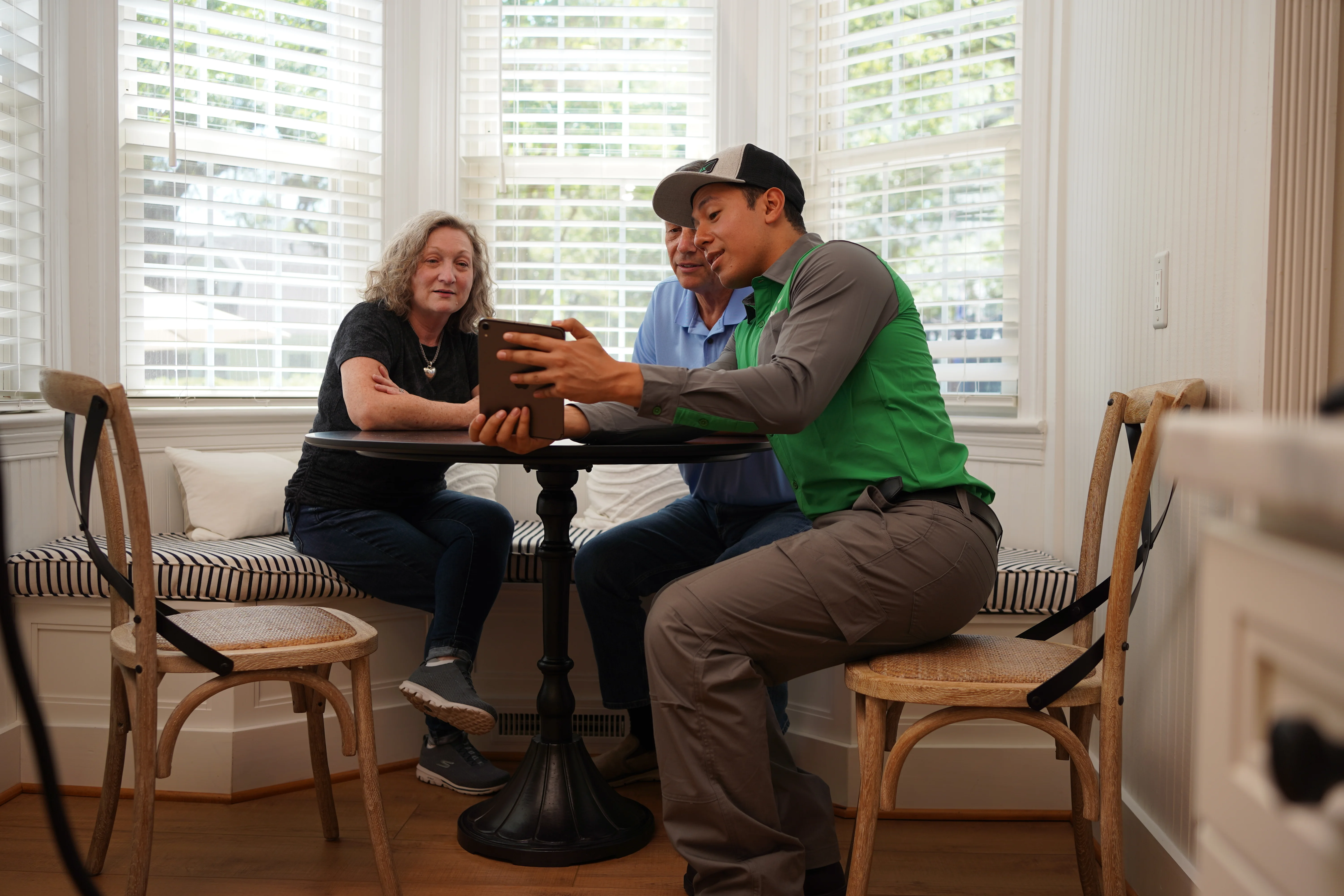
Your technician inspects the full structure, and in Cane Bay the checklist is written for new construction: the foundation edge and expansion joints, plumbing and utility penetrations, the grade the builder left, any form boards or stakes buried beside the footing, and the pre-treatment record itself. On a townhome the ground along the shared-wall line gets the same attention. Findings drive the plan.
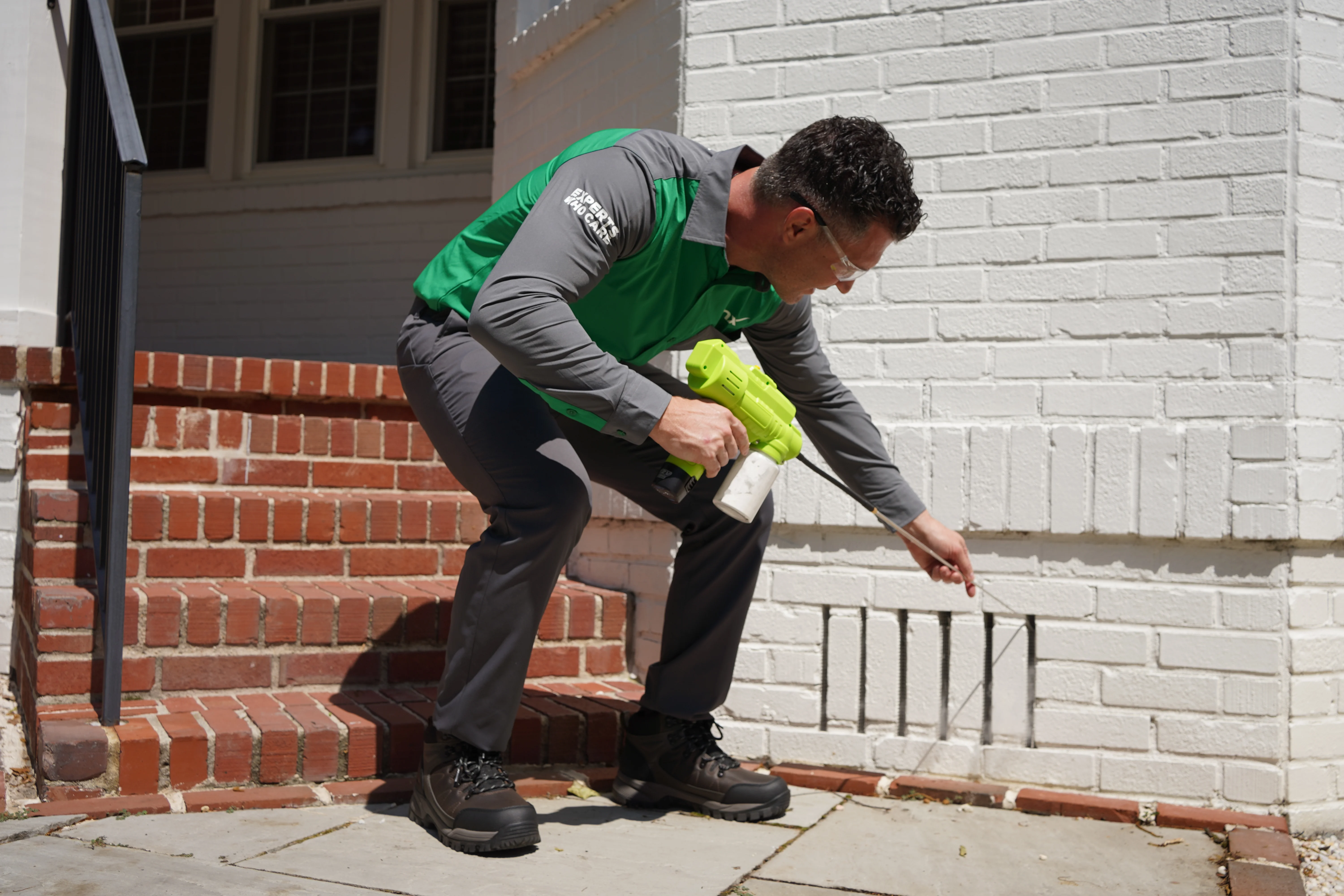
Foundation & Perimeter Treatment
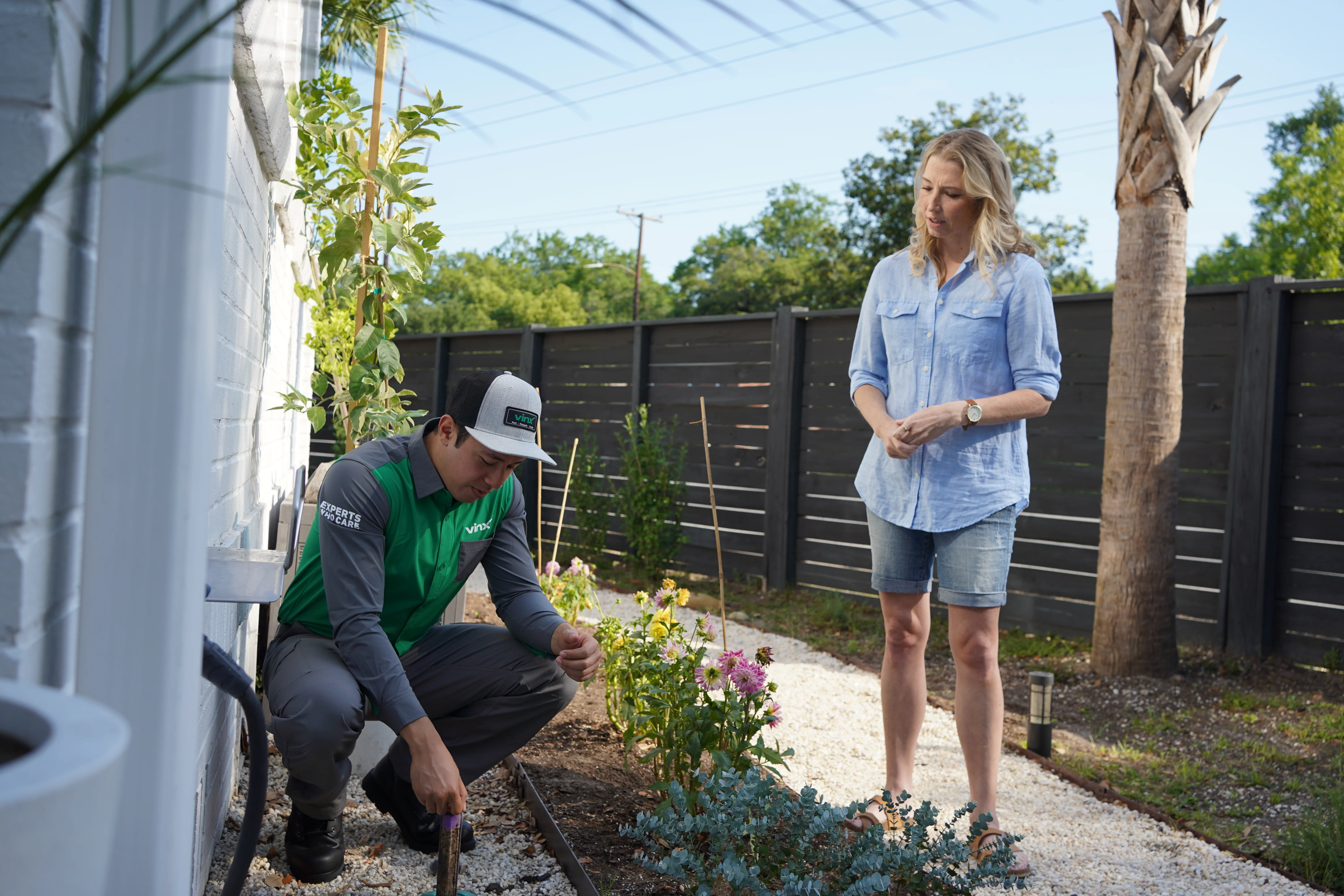
A liquid termiticide barrier is applied around the full foundation perimeter, beneath slab edges and around utility penetrations, on both interior and exterior faces. On a Cane Bay lot this is effectively a renewal of the builder’s original soil pre-treatment, placed by a technician who can see how the finished grade, patios and irrigation lines actually sit.
Direct Colony Treatment
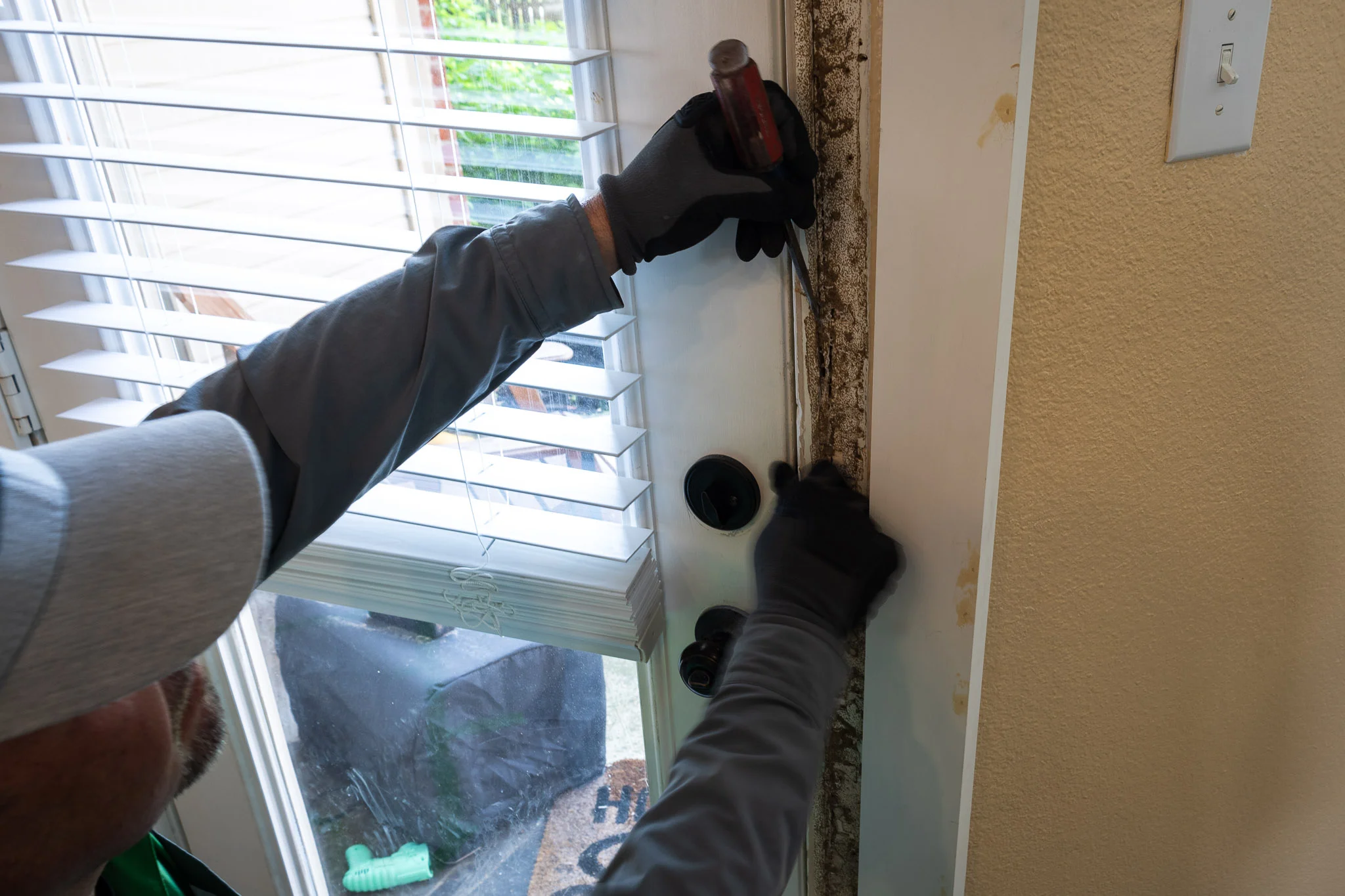
Active galleries and mud tubes are treated directly with termiticide foam or dust. Where a colony is found in a stump or root mass left in the soil from clearing the pine woodland, or in a tree retained along a lot line, it is treated where it lives; disturbing an untreated colony can push it toward the house.
Annual Inspection & Re-Treatment Guarantee
Annual inspections keep protection current and catch new activity early, and if termites return between visits we re-treat at no charge. Your technician also flags irrigation that keeps the foundation soil damp, the main conducive condition on a new-sod lot with the sprinklers still running on the builder’s schedule.
What Our Customers Say
What Cane Bay Homeowners Say About Vinx Termite Control
Courteous and prompt service. Pleasant and professional team members. Affordable services.
The tech who came by was a very nice guy. He answered all my questions and I could tell that he was good at his job. He gave me confidence that I made the right choice going with Vinx for our termite bond.
Just changed from prior pest control service to Vinx after concerns with prior company’s cost for pest and termite services. While researching found 2 of my friends used Vinx and both were highly satisfied with value and service. Just had 2 different services performed and was impressed by both teams I worked with - all were professional, knowledgeable, polite and efficient. Glad I selected them.
Referred by a friend. Ryan and Jack have always been great! Upgraded to Vinx Plus for the extra coverage :-) we will be going with them when our termite bond is up also! They price matched for a great deal!
Dylan was fantastic very thorough and great to work with.
Johnathan from Vinx did a fantastic job at our home. Very professional
Devin was extremely informative and provided outstanding customer service. Employee of the month candidate!!!
Vinx Pest Control did initial installation for termite prevention and pest control at both church and parsonage. The technician was prompt, communicated effective and went about his work professionally. Though this was just the initial introduction to the company, if all service appointments are conducted this well, I believe we will be most pleased.
I hadn’t been home the last few times Vince came out so I scheduled a time. James could not have been more accommodating. He was very professional and met all of the needs and concerns I had.
Ready to Protect Your Cane Bay Home?
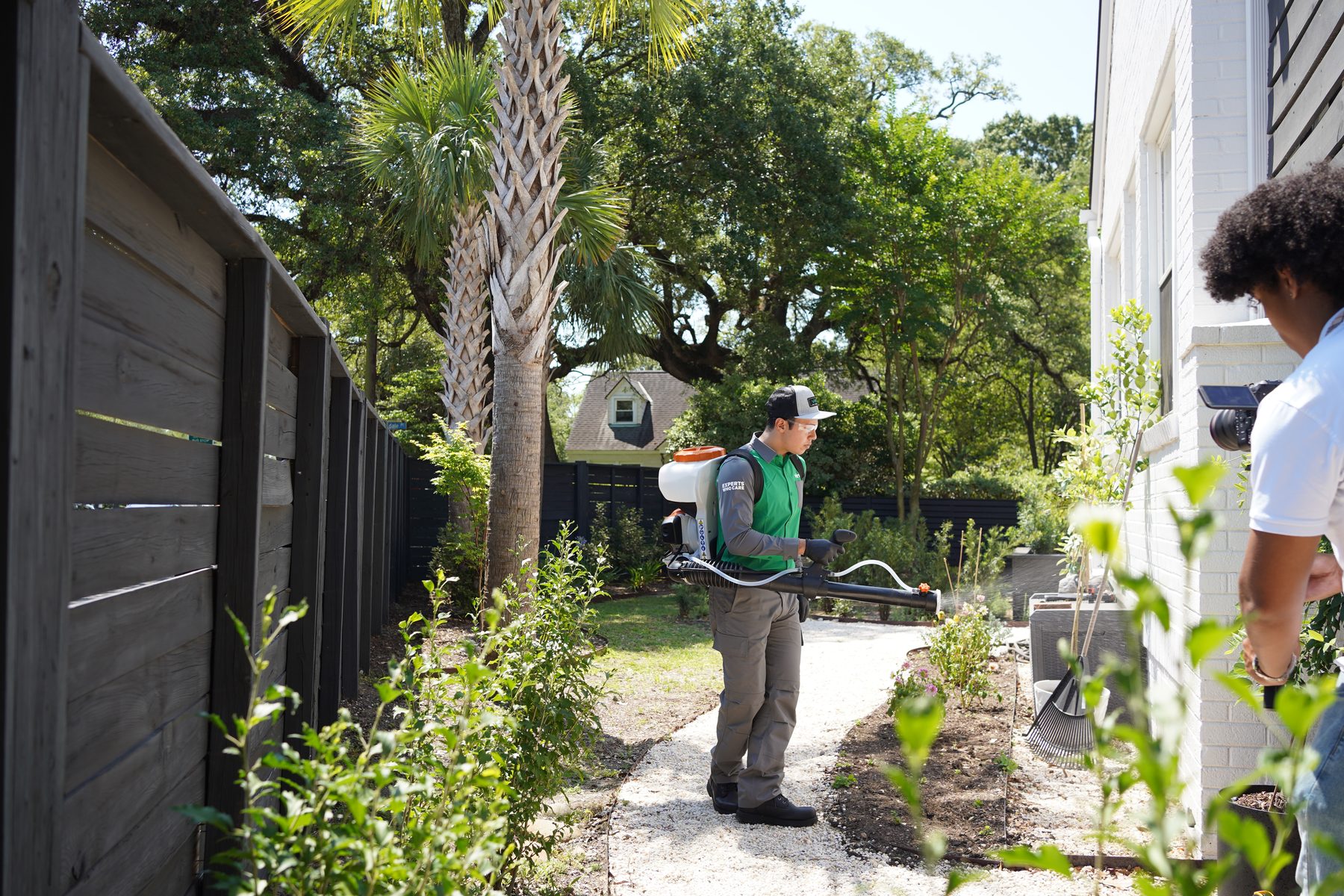
Free termite inspection for Cane Bay homes, same-day availability in most cases. Lakes of Cane Bay or Lindera Preserve, single-family or townhome, we inspect for the way a new house actually fails and tell you plainly what we find.
The Local Threat
Why Termite Control in Cane Bay Isn’t One-Size-Fits-All
Cane Bay is one of the few places in the region where a more aggressive termite has a documented foothold and the housing is almost entirely new. The Formosan subterranean termite was first documented on the U.S. mainland at Charleston in the 1950s, and Berkeley County, where all of Cane Bay Plantation sits, is one of the 16 counties on Clemson’s Formosan list, updated June 2022. Census figures for ZIP 29486 show 22.8% of the housing built in 2020 or later and 73.7% since 2000, so for every address the live question is whether the soil pre-treatment was done properly when the lot went in, and whether anyone can still produce the paperwork.
That makes Cane Bay’s risk point-in-time rather than accumulated. Clemson’s subterranean termite guidance says a new-construction pre-treatment is generally done in two steps, after the foundation footings and again shortly after the structure is completed, and that how long it lasts “depends on thoroughness of the application, termite foraging intensity, conducive conditions and environmental conditions”; on the earliest Cane Bay homes it is now approaching eighteen years old. Add the ground itself: the Post and Courier describes Highway 176 here as a two-lane road that cut through pine forests, and in January 2017 it reported the developer buying the adjoining 2,031-acre Wildcat Tract from Plum Creek Timberlands and Georgia-Pacific, so cleared timberland with stumps and roots decaying in the soil is still being built on now.
Moisture is what draws any subterranean colony toward a foundation, and Cane Bay’s ground holds it: the USDA soil survey of Berkeley County says 95% of the county’s soils have excess water in the profile, and the soil survey for the Cane Bay transmission-line corridor rated about 80% of it poorly to somewhat poorly drained. A 300-acre lake system, retention ponds in nearly every subdivision and the 52.70 inches of rain a year in NOAA’s 1991–2020 normals for the Summerville station keep that soil damp. The native Eastern subterranean termite is the baseline, drywood termites need no soil contact and travel in furniture, and Vinx treats for all three.
Census figures for ZIP 29486 show 17.1% of residents moved in within the last year, and Berkeley County grew 3.3% in the year to July 2025, from 264,276 to 274,666 people, so a large share of the homes changing hands here are resales. A CL-100 Wood Infestation Report records what an inspector could see on the day; it is not a warranty and does not tell you whether the pre-treatment underneath is still working. On a resale, the report and the pre-treatment record are two different questions.
Cane Bay Termite Species
Formosan Subterranean Termite
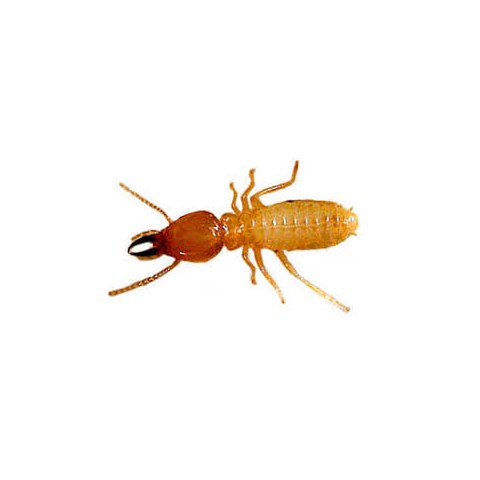
The Formosan subterranean termite (Coptotermes formosanus) was first documented on the U.S. mainland in nearby Charleston in the mid-1950s, and Clemson University entomologists have since confirmed its activity in Berkeley County, where all of Cane Bay sits, as well as the neighboring Charleston-area counties. Colonies can number in the millions of workers, several times larger than a native subterranean colony, giving them a far larger foraging range and a documented ability to infest live trees as well as structures.
Individual Formosan workers aren’t resistant to termiticides and colonies aren’t invincible, but their sheer size means an undetected infestation can progress faster and cause more extensive damage than a native colony of the same age, which is why bait systems here are installed with a colony of that scale in mind.
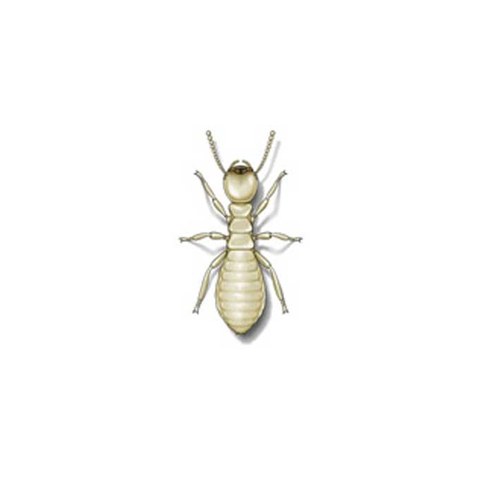
Eastern Subterranean Termite
The native Eastern subterranean termite remains the most widespread termite threat throughout Cane Bay and the broader Lowcountry. Colonies live underground and build pencil-width mud tubes to travel from soil to wood while avoiding light and dry air.
Mature colonies can count hundreds of thousands and cause serious structural damage over years, commonly with nothing visible on the surface until the damage is extensive. Quarterly inspections with bait station monitoring are the most reliable route to catching activity pre-repair.
Drywood Termite
Unlike subterranean and Formosan termites, drywood termites need no soil contact at all, they nest directly inside dry structural wood, attic framing, and furniture. Clemson research notes drywood termites are most common specifically along South Carolina’s humid coastal areas, making Cane Bay, about thirty minutes from the beaches, more exposed to this species than most inland communities; in a neighborhood this new, an infested piece of furniture is the usual route in.
Because colonies are hidden entirely within wood, infestations are often only discovered during renovation work or a professional inspection, and treatment sometimes requires localized wood treatment or structural fumigation rather than a soil-based approach.
Know Your Risk
Termite Risk Across Cane Bay
Lakes of Cane Bay & Four Seasons: Eastern Subterranean Termite Risk
Lakes of Cane Bay and the Four Seasons 55+ neighborhood are built around the 300-acre lake system, and the ground here does not shed water: the Post and Courier reported that in the October 2015 rain the retention ponds that dot Cane Bay’s subdivisions overflowed their banks, and NWS gauges put Tropical Storm Debby at 17.27 inches at Summerville in August 2024. Foundation soil that stays that wet is the condition subterranean termites follow to a house.
- USDA soil survey: 95% of Berkeley County soils hold excess water
- Irrigated lawns and beds against the foundation
- Native subterranean colonies in the surrounding soil
- Bait station monitoring catches activity before it’s extensive
Lindera Preserve: Formosan Termite Risk
Lindera Preserve, built by Lennar and now sold out, is a finished neighborhood where every sale from here on is a resale, and with 17.1% of ZIP 29486 residents having moved in within the last year by Census figures, those sales are frequent. The wooded margins retained beside the lots matter: Clemson documents Formosan colonies in living trees, and Berkeley County is one of the 16 counties on its list.
- Sold-out neighborhood, so every sale is a resale with a CL-100
- Preserved wooded margins beside the lots
- Formosan termites documented infesting live trees, not just structures
- Full property inspection, trees included, matters here
Pine Hills & Pine Crest: Eastern Subterranean Termite Risk
Pine Hills and Pine Crest carry the name of what stood here first. The land was industrial timberland: the Post and Courier describes Highway 176 as a two-lane road that cut through pine forests, and the 2,031-acre Wildcat Tract the developer bought in 2016 came from Plum Creek Timberlands and Georgia-Pacific. Clearing a pine stand leaves stumps and roots decaying in the soil, a food source in place before the first foundation was poured.
- New construction on cleared woodland
- Decaying stumps and roots feed colonies below grade
- Fresh wood-to-soil contact at form boards and stakes if left in place
- Annual inspection plus perimeter bait recommended
Sanctuary Cove, Westpark & Pender Woods: Subterranean Termite Risk
Sanctuary Cove, Westpark and Pender Woods are single-family and townhome streets where the builder’s soil pre-treatment is the only barrier the house has ever had; Census figures for ZIP 29486 put 22.8% of the housing at built in 2020 or later and 36.1% in the 2010s. Clemson says how long that treatment lasts depends on the thoroughness of the application, and the exposure sits at expansion joints, plumbing penetrations and the grade the builder left.
- Builder pre-treatment is a snapshot, not permanent protection
- Townhome shared walls put several homes on one continuous foundation line
- About 80% of the Cane Bay corridor rated poorly drained in the transmission-line soil survey
- Confirm the pre-treatment record; if nobody can, monitor
Highway 176 Corridor & Apartments: Drywood Termite Risk
The apartment communities and townhomes along the widened Highway 176 corridor turn over fastest, with 17.1% of ZIP 29486 residents having moved in within the last year by Census figures, and drywood termites need no soil contact at all: they arrive inside furniture and reach roof and joist timber regardless of how well the ground beneath is protected.
- 52.70 inches of rain a year (NOAA normals, Summerville station) keeps the humid air drywood termites favor
- Drywood termites nest directly in structural lumber and furniture
- High move-in turnover brings infested pieces in unseen
- Localized wood treatment may be needed alongside bait systems
Warning Signs
Signs of Termites in Your Cane Bay Home
Mud Tubes on Piers or Slab Edge
Pencil-width soil tunnels up a foundation edge, a porch pier or a garage stem wall, the route subterranean termites use from soil to framing.
Hollow-Sounding Wood
Tap framing or trim with a screwdriver handle. A papery sound means the interior is gone while the surface is intact.
Sticking Doors and Windows
Damage and the moisture that comes with it warp frames; on a house under twenty years old it is easy to blame settling instead.
Bubbling Paint Near the Floor
Paint that blisters in odd patterns near baseboards or window frames can signal moisture from activity below the surface.
Frass on Window Sills
Drywood termites push sand-like pellets out of kick-out holes; small piles collect on window sills and under furniture that came in from another home.
Wings on a Summer Evening
Clemson puts Formosan swarms at mid-May to July, often in the evening and attracted to lights; wings on a sill or under a porch fixture are a classic sign.
Soft Spots Underfoot
A spongy floor or a soft sill at an exterior door can mean damaged subfloor or framing behind an intact surface.
A Hollowing Tree Beside the House
Clemson documents Formosan colonies in live trees, and Berkeley County is on its 16-county list. A tree with dead limbs or mud on the bark near the house is a colony reservoir.
Homeowner Tips
6 Ways to Reduce Termite Risk Right Now
Kid & Pet Safe
Our Treatments Are Safe for Your Whole Family: Including the Furry Members
Every product we use is EPA-registered and applied strictly at labeled rates by licensed technicians. We take the guesswork out of safety so you can feel confident letting kids and pets back into treated areas quickly.
EPA-Registered Products Only
All products we apply are EPA-registered and used strictly per label requirements. Our licensed technicians are trained to apply the right product in the right place at the right rate, every time.
Dry Time Before Re-Entry
Exterior spray treatments dry in 30–60 minutes. Once dry, treated surfaces are safe for children and pets to contact. Your technician will confirm the all-clear before leaving your property.
Interior Treatment On Request
We treat only what’s needed, where it’s needed. Gel baits in cabinets and crack-and-crevice applications keep products away from areas pets and children frequent most.
Botanical Options Available
Have specific sensitivities? Ask your technician about our plant-derived treatment options. We offer botanical alternatives for households that prefer a more natural approach.
Have a concern about products used near your pets or children? Call (855) 800-8469 and we’ll walk you through exactly what we use and why it’s safe.
Explore More
More Pest Control Services in Cane Bay

Pest Control Cane Bay
General pest protection

Mosquito Control Cane Bay
Monthly barrier treatments
Ant Control Cane Bay
Household ants & others
Spider Control Cane Bay
All spider species covered
Cockroach Control Cane Bay
Palmetto bug & roach removal

Rodent Control Cane Bay
All rodents covered

Bed Bug Treatment Cane Bay
Heat & liquid treatments

Tick & Flea Control Cane Bay
Yard & pet protection
Exterminator Cane Bay
Same-day local exterminators
Frequently Asked Questions
Termite Control FAQ for Cane Bay Homeowners
Vinx termite protection starts at $75/month as part of the Protection Plus plan, which includes Sentricon bait station installation, ongoing monitoring and the free re-treatment guarantee. Installation cost depends on how many linear feet of foundation there are. Call (855) 800-8469 for an exact quote for your Cane Bay property.
Yes. Set into the ground as enclosed units, Sentricon stations keep the active ingredient from children and pets. No liquid is put into your soil or foundation, all products are EPA-registered, and your family can be home during and after installation.
Putting Sentricon in initially takes 2 to 4 hours depending on foundation footprint and station count, with no tenting and no need to move out. Newer Cane Bay lots with clear access around the foundation make station placement straightforward. Monitoring visits occupy 30 to 60 minutes.
Sentricon is a continuous form of protection, not a one-time treatment. Stations are monitored on a schedule across the year, with activity treated immediately at no added cost. On a Cane Bay house whose builder pre-treatment may now be up to eighteen years old, it is the practical renewal once that original barrier has aged out.
Yes. Live termites found in a structure we protect bring a free Vinx re-treatment, no deductible, no fine print. The guarantee attaches to Protection Plus and Premium and stays live while annual monitoring continues.
Most Cane Bay appointments are same-day or next-day. Call (855) 800-8469 to book, and if we cannot service your home the next business day your initial service is free. We serve all of Cane Bay Plantation, from Lakes of Cane Bay and Four Seasons to Lindera Preserve, Pine Hills, Pine Crest, Westpark, Pender Woods, Sanctuary Cove, Lochton and Woodwinds.
Yes. Census figures for ZIP 29486 put 22.8% of the housing at built in 2020 or later and 73.7% since 2000, and a new house sits on freshly disturbed ground, which is the ground subterranean termites colonize first; here that ground was pine timberland, with stumps and roots still decaying in it. What protects the house is the builder’s soil pre-treatment, which South Carolina’s building code requires, and Clemson’s guidance is that it is generally done in two steps, after the foundation footings and again shortly after the structure is completed, with a life that “depends on thoroughness of the application, termite foraging intensity, conducive conditions and environmental conditions.” Two things are worth confirming rather than assuming: that wood stakes and form boards were pulled before the concrete was poured, since buried cellulose beside a foundation is a food source with a direct route in, and that someone can produce the pre-treatment record. If nobody can, treat that as an open question.
Berkeley County, where all of Cane Bay sits, is one of the 16 counties on Clemson University’s Formosan list as updated in June 2022, alongside Charleston and Dorchester counties next door. Clemson documents the species in live trees, so the trees retained along preserved margins and lot lines here are a reservoir as well as a backdrop, and a colony of that size forages far enough to reach a subdivision from outside it.
Swarms of native Eastern subterranean termites come in early spring in the afternoon per Clemson, usually on a warm day following rain; Formosan termites swarm mid-May to July, often in the evening and attracted to lights, with larger golden-brown swarmers. Between the last spring freeze on March 22 and the first fall freeze on November 12 in NWS Charleston’s averages for the Summerville station, colonies have roughly eight frost-free months to forage. Wings under a porch light in June are the sign to call about.
No. Standard South Carolina policies exclude termite damage as a maintenance issue rather than a sudden loss, so repairs come entirely out of pocket. On a Cane Bay house otherwise too new to have needed major repairs, that bill lands on the homeowner, and a termite bond is the only cover that exists for it.
The official Wood Infestation Report in South Carolina is the CL-100, used in real estate transactions. It records visible evidence of wood-destroying insects and fungi in accessible areas on the day of inspection, and most SC lenders require one before closing. The regulation states it is not a warranty and places no repair obligation on anyone; treat it as a snapshot, not a guarantee.
A contract for service with a licensed pest control company giving ongoing protection and re-treatment. In Cane Bay, where the earliest builder pre-treatments are now approaching eighteen years old and the county sits on Clemson’s Formosan list, a bond is standard practice. The termite protection agreement is handled by the Vinx Plus plan.
No — the CL-100 is a statewide form and the rules do not change by county. It is the Official South Carolina Wood Infestation Report, most lenders ask for one before closing, and only a company whose inspector is certified in Category 7A may issue it, that being the mandatory license category for structural pest control in this state. Vinx holds South Carolina license B3623. Two points are commonly misunderstood and worth stating plainly. A CL-100 records what an inspector found on the day; it is not a warranty against future infestation. And the report itself obliges nobody to repair what it lists — any duty to fix damage, and any deadline for producing the report, comes from your contract or your lender, not from the state. You will also hear that a CL-100 is valid for thirty days; no validity period appears anywhere in the regulation, so treat that as lender practice and confirm the window with your lender. What does differ locally is what gets found: on newer Cane Bay homes the findings are more often moisture and grading than live insects.
Service Coverage
Termite Control Across Cane Bay & Berkeley County
Serving every Cane Bay Plantation neighborhood and the 53,975 people Census figures count in ZIP 29486
Serving the Greater Charleston Area