Pest Control in Cane Bay, SC
Full-Service Pest Control for Cane Bay Plantation: From the Lakes of Cane Bay to Lindera Preserve & the Highway 176 Corridor
Cane Bay Plantation was cut out of industrial timberland along Highway 176; home sales began in 2007, and the Post and Courier counted roughly 4,300 residents at the start of 2015 against more than 13,000 today. Census figures for ZIP 29486 show 73.7% of all housing built since 2000, and open, freshly disturbed ground is exactly what founding fire ant queens look for. NOAA’s 1991–2020 normals for the Summerville station give this area 52.70 inches of rain a year, and the 300-acre lake system and the retention ponds in every subdivision hold much of it within a mosquito’s range. Berkeley County is on Clemson’s sixteen-county Formosan termite list, and a builder’s original pre-treatment is point-in-time protection, so Vinx builds a plan around your home, your neighborhood, and the pests actually active in it. 100% satisfaction guarantee.
Get Started in 60 Seconds
Choose what’s easiest for you
Request a Quote
We usually respond in 2 minutes
Call (855) 800-8469
Get a Live Person (no AI agents here!)
Sign Up Online
Get pricing and schedule now




Welcome to Vinx Pest Control
A Company That Actually Backs What It Says
At Vinx, we combine professional-grade treatments with a level of service most pest control companies don’t offer. Local technicians, fast response times, and a guarantee that actually means something.
“I’m not passionate about killing bugs. I’m passionate about customer service. At Vinx, you get experts who show up, do the job right, and stand behind every visit. No runaround, no fine print.”

Founder & Owner, Vinx Pest Control
PROTECTION PLANS
Protection Plans for Cane Bay Homeowners
100% money-back guarantee on every plan.
Standard Residential Protection
- 4 Seasonal Treatments Per Year
- 50+ Covered Pests
- Interior, Exterior & Yard Treatment
- Unlimited Free Re-Services
- 100% Money-Back Guarantee
- Fire Ant Yard Guarantee
- Flea & Tick Coverage
- Mosquito Treatments

Upgraded Yard Protection
- 6 Home & Yard Treatments Per Year
- 50+ Covered Pests
- Interior, Exterior & Yard Treatment
- Unlimited Free Re-Services
- 100% Money-Back Guarantee
- Fire Ant Yard Elimination Guarantee
- Flea & Tick Elimination Guarantee
- Mosquito Treatments

Most Comprehensive Protection
- 9 Treatments Per Year
- 50+ Covered Pests
- Interior, Exterior & Yard Treatment
- Unlimited Free Re-Services
- 100% Money-Back Guarantee
- Fire Ant Yard Elimination Guarantee
- Interior Flea & Tick Coverage
- 8 Mosquito Treatments (Mar–Nov)
- Free Bed Bug Treatments if Needed*
*Starting rates vary by home size and area. All plans billed monthly.
Request Your Free Pest Control Quote
Fill out the form below and a Vinx team member will reach out within 2 minutes during business hours.
Prefer to talk? Call (855) 800-8469 for a live person, no AI agents.
Our Process
How Vinx Treats Your Cane Bay Home: Step by Step

Inspection & Reporting
Each visit is an inspection just as much as a treatment. The inspection covers early termite activity, moisture near the foundation, entry points and wasp nests hidden from ground view. In Cane Bay that starts at the soil line, since 94% of infested buildings in a Charleston study were infested from ground colonies, and on a house built since 2007 it means the foundation edge and the builder’s pre-treatment record.
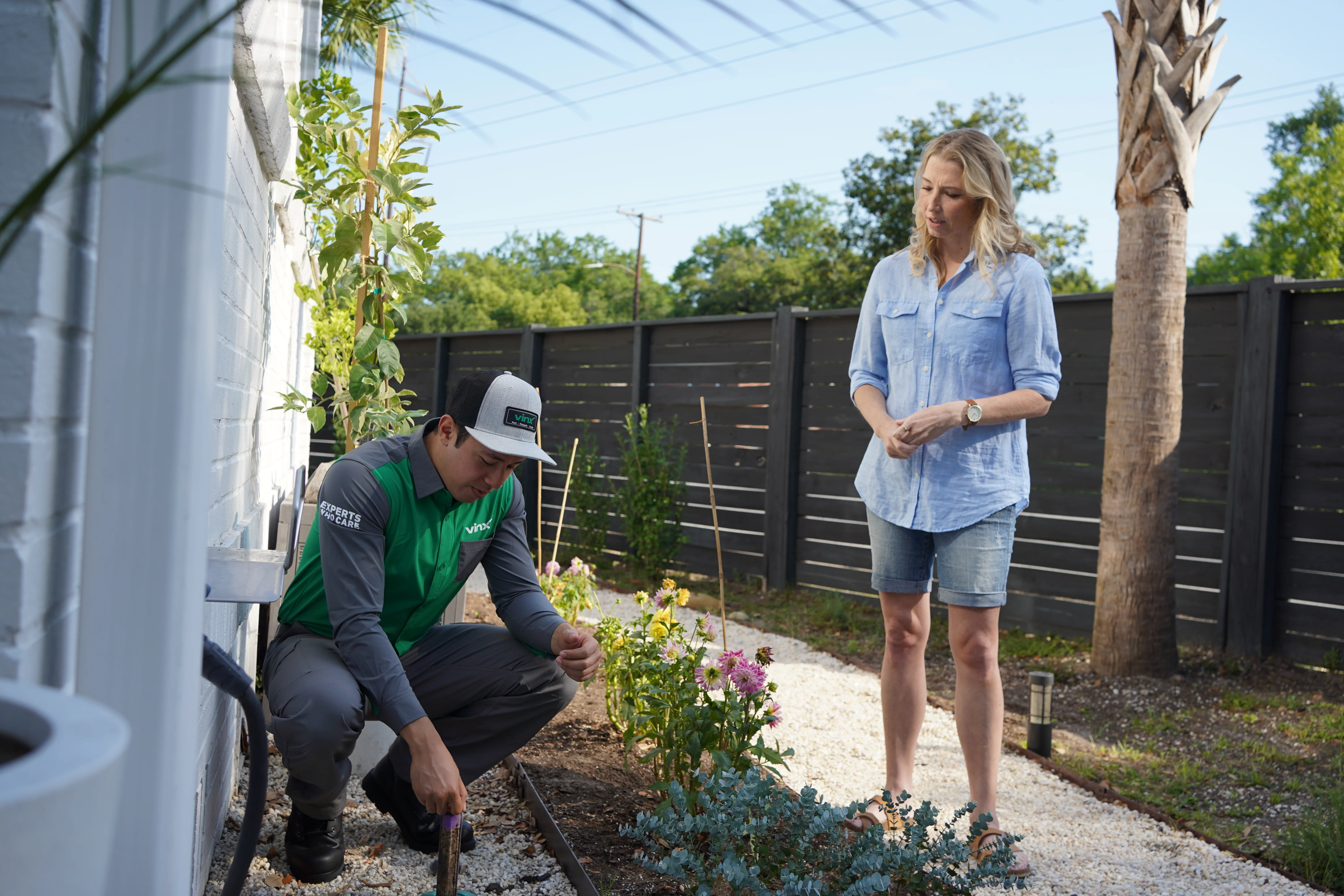
Exterior Foundation Treatment
The foundation gets a micro-encapsulated barrier, three feet up and three feet out, covering utility penetrations, mulch beds, pine straw and the vegetation at the wall. Cane Bay’s lots were graded out of pine woodland within the last two decades, so the mulch beds, pine straw and the wooded edge of the lot are where a barrier earns its keep. The products are safe for kids and pets after 15 to 20 minutes of drying.
Yard Treatment
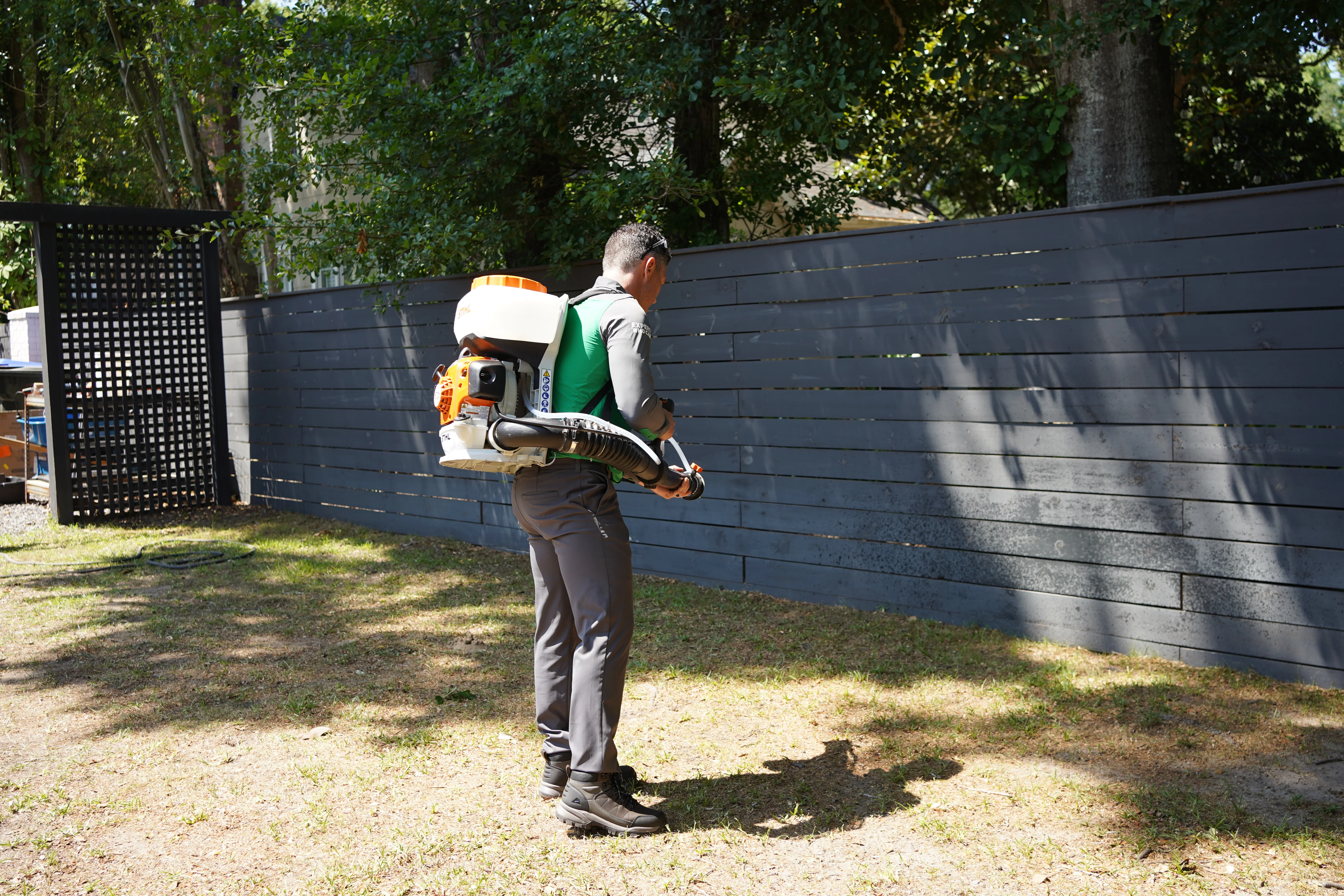
The full yard is treated up to 30 feet out, clearing standing water that Clemson says breeds mosquitoes in as little as five days, some species in a tablespoon, and correcting wood-to-soil contact. Fire ant granular goes on lawn areas on Plus and Platinum, flea and tick treatment covers ground cover, pine straw and fence lines, and Platinum mosquito treatment targets the resting foliage along the lake edges and beside the subdivision retention ponds.
Sweep & Treat Eaves
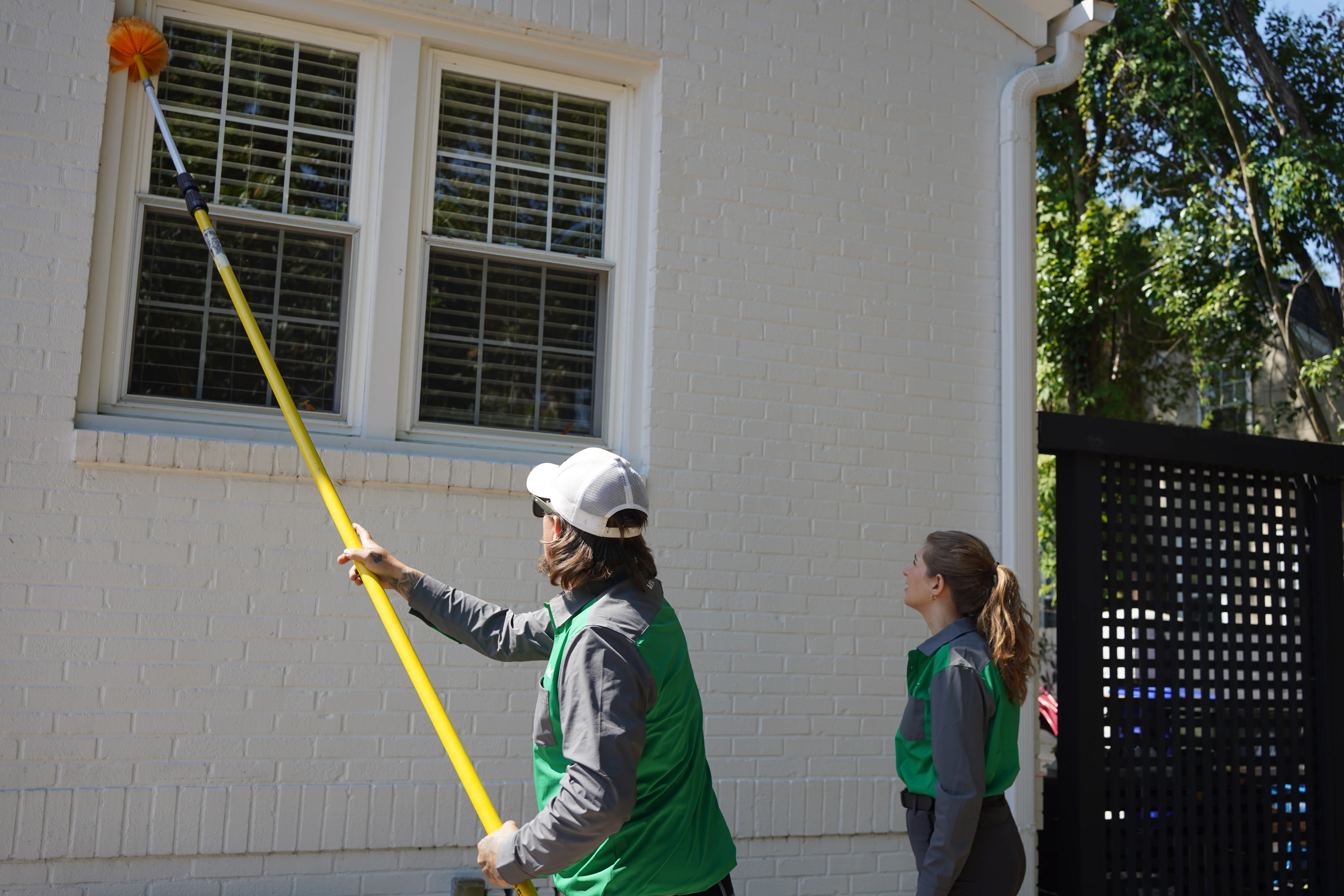
First- and second-story eaves are swept every visit, cobwebs, wasp nests and spider webs all come down, and the spots are treated with a residual so returning wasps meet product. Pine straw matted in gutters gets flagged too, because a blocked downspout on a Cane Bay lot is a mosquito site the county’s truck-based spraying never reaches.
Power Dust Injection
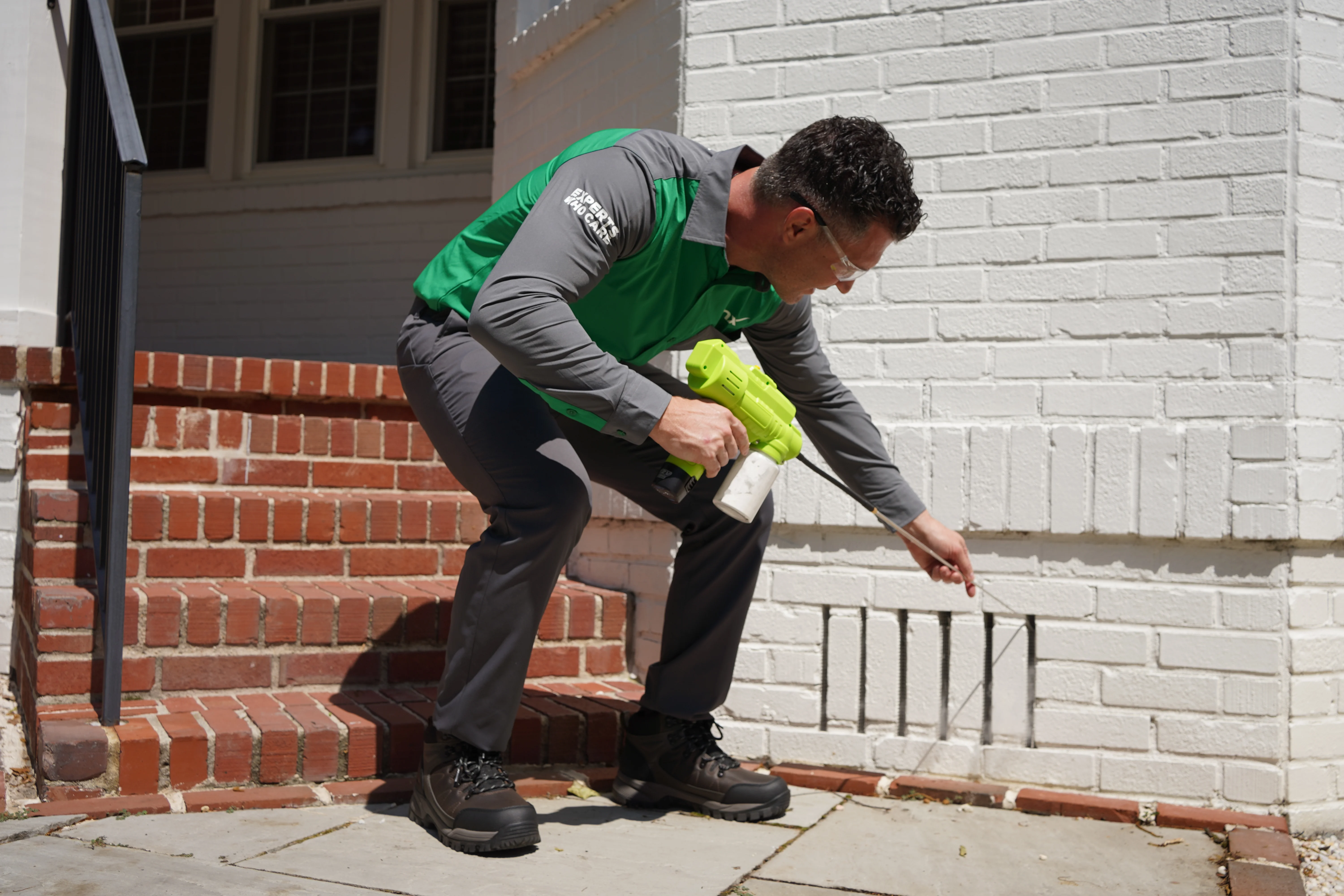
A handheld compressor injects dust deep into exterior cracks, weep holes, expansion joints and pipe gaps. On new construction the voids matter as much as on an old house: expansion joints, weep holes and the gaps left around pipe penetrations at framing are where roaches and ants settle out of reach of a surface spray; the dust flushes them and stays active far longer.
Interior Treatment (If Needed)
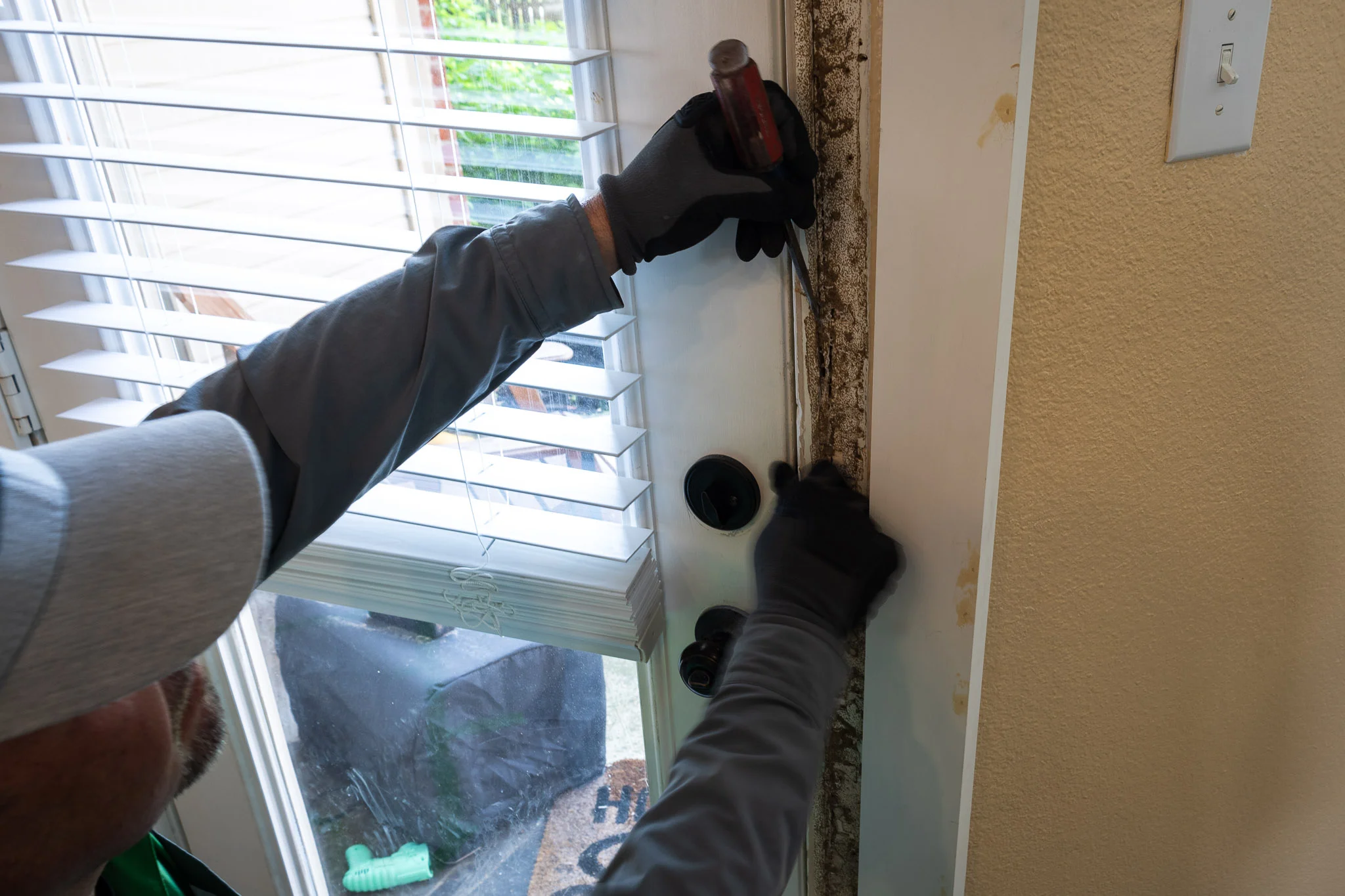
Inside treatment is rarely needed, by design. When something does get in, the interior is covered under your guarantee at no extra charge: targeted applications along baseboards, under appliances, in utility rooms and around plumbing penetrations, plus gel bait for roach and ant activity.
Conducive Condition Report
At the end of every visit, your technician documents any conditions increasing pest pressure, moisture entry points, foundation gaps, vegetation contact, clogged gutters, standing water near the foundation. On a lot where the USDA soil survey of Berkeley County says 95% of the county’s soils have excess water in the profile, the moisture line is the first thing on the report.
Customer Reviews
Trusted by Cane Bay Families: 4.8 Stars on Google
Thank you to our tech Austin who has gone above and beyond to make sure my questions are answered and I am satisfied with my service! He’s so professional and courteous. Vinx & Austin definitely make sure you’re taken care of like you’re a member of their family…. Thank you again!
Today's visit by Vinx pest service was extremely outstanding. Anthony was very pleasant and very knowledgeable about his service. He also informed me of service's that I'm not receiving and should consider. Anthony is a valuable asset to the Vinx Pest family. Thank you.
Technician was on time and very thorough checking my bait stations. Highly recommend him and Vinx. I have been a satisfied customer for over 5 years.
Johnathan was able to fit me in earlier and he very professional. He helped me to understand the process!! Highly recommend
Vinx has been great the 9 months we have been with them! All techs super friendly and knowledgeable. No issues with pests or anything.
Anthony came out today and did our initial treatment for pest control. He was very informative and showed me all of our problem areas and how to fix them. He did a great job.
Year-Round Pest Pressure
Why Pest Control in Cane Bay Is a Year-Round Commitment
Most places get a genuine winter break from pests. Cane Bay does not: NOAA’s 1991–2020 normals for the Summerville station put the January mean low at 35.0°F. The National Weather Service’s average freeze dates for the same station run from November 12 to March 22, roughly eight frost-free months. Census figures for ZIP 29486 show 73.7% of all housing built since 2000 on ground that was industrial timberland, and open, sunny, recently disturbed soil is exactly what a founding fire ant queen looks for. A builder’s termite pre-treatment is protection at a point in time, so an address from the first wave of 2007 sales is carrying a pre-treat approaching eighteen years old.
6 Pest Pressures in Cane Bay
Palmetto Bugs
The Lowcountry's most recognized pest, locally called the palmetto bug. In Cane Bay the outdoor smoky-brown cockroach lives in pine mulch and the wooded strips between subdivisions, while the American cockroach, the true palmetto bug, uses drain lines, storm outfalls and plumbing penetrations to reach the house. Those drains carry the 52.70 inches of rain a year in NOAA’s normals, and the Post and Courier recorded Cane Bay’s retention ponds overflowing their banks in the October 2015 rain. Pressure peaks in summer, when the same normals put the July mean high at 91.1°F.
Fire & Argentine Ants
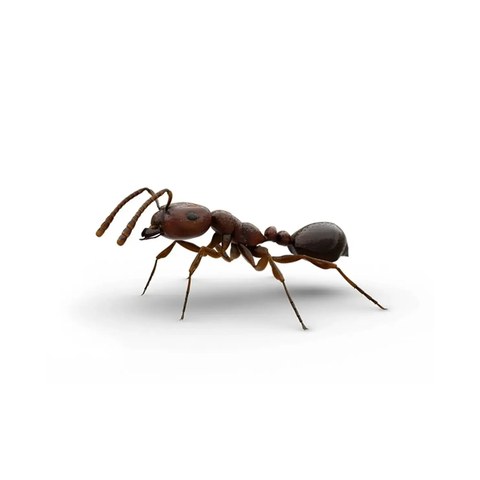
Fire ant mounds appear almost overnight on Cane Bay's freshly graded lots, new sod and road edges, because founding queens choose open, sunny, recently disturbed ground, and the 2,031-acre Wildcat Tract the developer bought from Plum Creek Timberlands and Georgia-Pacific is still being graded. Argentine ants trail persistently wherever irrigation runs: three months of dry-season watering raised nest counts 54% in the Menke and Holway study.
Termites
Formosan subterranean termites put Cane Bay homes at risk beyond the native Eastern subterranean species: Berkeley County is on Clemson’s sixteen-county Formosan list, updated June 2022. Clemson puts the Formosan swarm from mid-May to July, often in the evening and drawn to lights. Clemson also says how long a new-construction pre-treatment lasts “depends on thoroughness of the application, termite foraging intensity, conducive conditions and environmental conditions,” and the earliest Cane Bay homes date to 2007. With Sentricon TotalDefense, colony elimination is continuous.

Mosquitoes
Cane Bay's mosquito season runs from the National Weather Service’s average last spring freeze on March 22 to its first fall freeze on November 12, roughly eight frost-free months. The 300-acre lake system and the retention ponds in every subdivision are the habitat: an SC Sea Grant review of 52 stormwater facilities found mosquitoes breeding in 34% of them, and presence tracked the absence of mosquitofish. Berkeley County Mosquito Abatement has identified 55 species in the county. Its trucks go out on surveillance counts rather than a set schedule, not after the Asian tiger mosquito breeding in your gutters.

Rodents
Roof rats travel along fence lines, power lines and the tree lines preserved between Cane Bay's subdivisions, and Norway rats burrow into the banks of the 300-acre lake system and the retention ponds. The National Weather Service’s average first freeze on November 12 is when they push indoors through roofline gaps, gable vents and utility entry points.
Spiders
Garage-heavy new construction, with Census figures for ZIP 29486 showing 22.8% of housing built in 2020 or later, gives spiders new garages full of stored boxes for roughly eight frost-free months. Black widows are common in undisturbed areas, woodpiles, under decks, garage corners. Wolf spiders hunt the edges of the 300-acre lake system; the brown recluse is rare and unverified this far into the Lowcountry. Cobweb removal from eaves is included on every Vinx visit.
Cane Bay’s defining trait is its youth. Plans were approved in 2005 and home sales began in 2007, on land the Post and Courier describes as industrial timberland where Highway 176 was a two-lane road through pine forest. Census figures for ZIP 29486 show only 0.7% of housing built before 1970, so nearly every lot was cleared, graded and sodded within living memory, and open, sunny, disturbed soil is precisely where fire ant founding queens settle. Berkeley County is on Clemson’s sixteen-county Formosan list, which adds exposure to larger, more destructive colonies than the native Eastern subterranean termite alone.
Mild winters compound the problem. NOAA’s 1991–2020 normals put the January mean low at 35.0°F, so fire ants stay viable in graded lots from Pine Hills to Pender Woods and smoky-brown roaches stay active in pine mulch through the winter. The USDA soil survey of Berkeley County says 95% of the county’s soils have excess water in the profile. The cultural-resources survey for the Cane Bay transmission line rated about 80% of its corridor poorly to somewhat poorly drained, ground that stays wet between rains. And a home’s original termite pre-treatment, required by South Carolina building code, is protection at a point in time, not for the life of the house.
The scale of the change is the point. The Post and Courier counted roughly 4,300 residents in Cane Bay at the start of 2015 and more than 13,000 today. Census estimates put Berkeley County at 264,276 people in July 2024 and 274,666 in July 2025, a 3.3% rise in one year. Census Reporter’s profile of ZIP 29486 now counts 53,975 people in 20,146 households. Every one of those homes sits on ground that was timberland a few years earlier, and the insects that lived in that woodland did not leave when the trees did.
Pest Pressure by Neighborhood
Know Your Neighborhood’s Risk in Cane Bay
Lakes of Cane Bay & Four Seasons: Mosquito & Moisture Risk
The 300-acre lake system is the community's centerpiece. In August 2024 Tropical Storm Debby put an NWS-measured 17.27 inches on Summerville and Berkeley County told Cane Bay residents to shelter in place. An SC Sea Grant review of 52 stormwater facilities found mosquitoes in 34% of them, wherever mosquitofish were absent. Platinum, with monthly mosquito treatment March through October, is the appropriate level for lakefront and pond-edge lots here, including the Four Seasons 55+ section.
Lindera Preserve: Fire Ant & Roach Risk
Built out by Lennar and now sold out, Lindera Preserve is past the construction phase, but its sod and mulch beds are still the open, sunny, recently disturbed ground that Tschinkel's fire ant research shows founding queens choose. NOAA's normals give this area 52.70 inches of rain a year, and damp pine-straw beds are the smoky-brown roach's harborage. Plus with fire ant coverage plus a spring barrier treatment ahead of peak activity is the reliable approach here.
Pine Hills & Pine Crest: Fire Ant & Termite Risk
These subdivisions sit on cleared, sunny ground that fire ant queens settle first, with pine mulch and straw at the foundation that termites and roaches both use, and Clemson's termite fact sheet says mulch must never touch siding or door and window framing. Clemson describes new-construction pre-treatment as two steps, after the foundation footings and shortly after completion, in a county it lists among the 16 with established Formosan colonies. Plus or Platinum with fire ant coverage and Sentricon monitoring is the appropriate level here.
Sanctuary Cove, Westpark & Pender Woods: Ant & Spider Risk
Sections with young landscaping and irrigation systems support steady Argentine ant activity, since three months of dry-season watering raised nest counts 54% in the Menke and Holway study, and garage-heavy construction gives black widows the undisturbed corners they favor. The National Weather Service's average freeze dates of November 12 and March 22 leave roughly eight frost-free months for that activity to run. Quarterly perimeter treatment with cobweb removal, upgraded to Plus where fire ants appear, is the approach here.
Highway 176 Corridor & Apartments: Roach & Rodent Risk
Apartment living, the Publix-anchored shopping center and the retail along a Highway 176 now widened to four lanes bring the German cockroach that rides in with belongings, and Census figures for ZIP 29486 show 17.1% of residents moved in within the last year, each move a chance to carry one in. Roof rats follow dumpsters and utility lines to the same buildings. Quarterly treatment plus exterior bait stations, with interior service as needed, is the approach for townhomes and apartments here.
Complete Coverage
What Vinx Treats in Your Cane Bay Home
Every common Lowcountry pest covered under one recurring service plan
Palmetto Bugs
Drain lines, storm outfalls, plumbing penetrations, fed by 52.70 in of rain a year.
All Plans
Fire & Argentine Ants
Freshly graded ground; 22.8% of ZIP 29486 homes built since 2020. Requires Plus or Platinum.
Plus & PlatinumSpiders
Black widow, wolf spider. Cobweb removal included every visit.
All Plans
Wasps & Hornets
Nest removal from soffits and eaves. Active through roughly eight frost-free months.
All Plans
Fleas & Ticks
Exterior flea/tick treatment. Interior flea covered in Platinum.
Plus & PlatinumMosquitoes
Monthly treatment Mar–Oct. Berkeley County Mosquito Abatement counts 55 species.
Platinum OnlyRodents
Roof rats, fence lines, power lines, roofline gaps. Exterior bait stations.
All PlansTermites
Berkeley County is on Clemson’s 16-county Formosan list. Sentricon TotalDefense from $35/mo+.
Add-On
Bed Bugs
Covered after 12 months of Platinum service.
Platinum 12moKid & Pet Safe
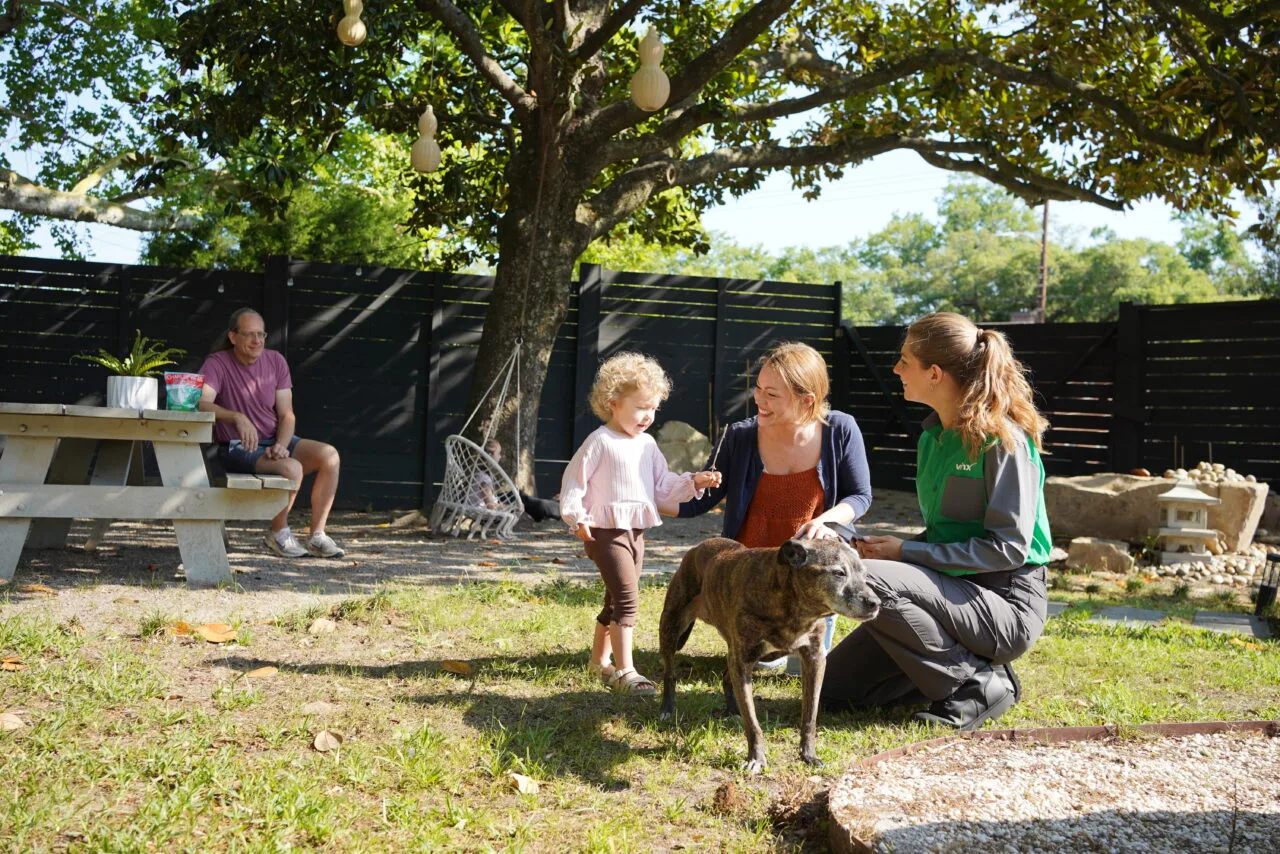
Our Treatments Are Safe for Your Whole Family: Including the Furry Members
Every product we use is EPA-registered and applied strictly at labeled rates by licensed South Carolina technicians. We take the guesswork out of safety so you can feel confident letting kids and pets back into treated areas quickly.
EPA-Registered Products Only
All products we apply are EPA-registered and used strictly per label requirements. Our licensed technicians are trained to apply the right product in the right place at the right rate, every time.
Dry Time Before Re-Entry
Exterior spray treatments dry in 30–60 minutes. Once dry, treated surfaces are safe for children and pets to contact. Your technician will confirm the all-clear before leaving your property.
Interior Treatment On Request
We treat only what’s needed, where it’s needed. Gel baits and crack-and-crevice applications keep products away from areas pets and children frequent most.
Botanical Options Available
Have specific sensitivities? Ask your technician about our plant-derived treatment options. We offer botanical alternatives for households that prefer a more natural approach.
Have a concern about products used near your pets or children? Call (855) 800-8469 and we’ll walk you through exactly what we use and why it’s safe.
Explore More
More Pest Control Services in Cane Bay
Termite Control Cane Bay
Sentricon bait system
Mosquito Control Cane Bay
Monthly barrier treatments
Ant Control Cane Bay
Household ants & others
Spider Control Cane Bay
All spider species covered
Cockroach Control Cane Bay
Palmetto bugs & German roaches
Rodent Control Cane Bay
All rodents covered
Bed Bug Treatment Cane Bay
Heat & liquid treatments

Tick & Flea Control Cane Bay
Yard & pet protection
Exterminator Cane Bay
Same-day local exterminators
Frequently Asked Questions
Pest Control in Cane Bay: Your Questions Answered
HomeGuard quarterly is $49 per month on homes up to 3,000 sq ft, $52 from 3,000 to 4,000, $55 from 4,000 to 5,000, and $59 for anything larger. Bi-monthly Plus with fire ant and flea and tick coverage begins at $75, Platinum with monthly mosquito service at $109. Pricing is published online.
Every plan covers palmetto bugs and household ants, spiders, wasps and hornets, silverfish, earwigs, pill bugs, crickets, beetles, centipedes, millipedes and exterior mice and rats. Plus covers fire ants and exterior flea and tick treatment, and Platinum covers mosquitoes and interior flea treatment. Termites fall under the separate Sentricon add-on, with bed bugs covered after 12 months of Platinum. In Cane Bay the fire ant line matters most: Census figures for ZIP 29486 show 22.8% of housing built in 2020 or later, on the freshly graded, sunny ground founding queens choose.
Yes, on every plan. The work targets palmetto bugs' exterior routes, drain lines, storm outfalls, utility penetrations and foundation gaps, and interior treatment can be added on request. In Cane Bay the pine mulch and straw beds of new landscaping are the smoky-brown cockroach's harborage, and the American cockroach, the true palmetto bug, follows the drains and pond outfalls to the house, drains that carry the 52.70 inches of rain a year in NOAA's normals for this area.
Yes. The Sentricon TotalDefense program runs in-ground bait stations around the perimeter, with annual inspection and a re-treat warranty. Berkeley County is on Clemson's sixteen-county Formosan list, updated June 2022. Clemson says how long a builder's soil pre-treatment lasts depends on thoroughness of the application and conducive conditions, and the first Cane Bay homes sold in 2007, so those pre-treats are approaching eighteen years old; Sentricon is the practical renewal.
HomeGuard operates quarterly, at 90 days. Plus operates bi-monthly, at 60 days. Platinum is monthly for mosquito season, March to October, with one winter service, making nine visits a year. All plans include free re-treatment between visits if pests come back indoors. Platinum's March-to-October window tracks the National Weather Service's average freeze dates of March 22 and November 12, and Plus is the sensible minimum on Cane Bay’s freshly graded fire ant ground.
Yes. Each Vinx product is EPA-registered and applied at labeled rates by licensed South Carolina technicians. Outside treatments are dry in 30 to 60 minutes. Inside treatments use targeted bait placement rather than broadcast sprays. Any precautions specific to your visit will be explained by your technician.
Yes, depending on the schedule. Call (855) 800-8469 and you reach a live person, not a menu, and most Cane Bay appointments land same-day or next-day. Should we be unable to service your home the next business day, your initial service is free.
HomeGuard at $49/month covers the core pest list on a quarterly cycle, ideal for general pest maintenance. Plus at $75/month adds fire ant treatment plus exterior flea/tick coverage with bi-monthly visits, recommended where yards see use or adjacent construction drives fire ants. Platinum ($109/month) adds monthly mosquito control during peak season, the right choice for any property near retention ponds, wooded pine buffers, or with significant outdoor use.
Yes, through the Platinum plan: monthly service March through October plus a winter treatment. Cane Bay's mosquitoes come from the 300-acre lake system, the retention ponds in every subdivision, and the gutters and containers around the house. Berkeley County Mosquito Abatement has identified 55 species in the county. It says it does not spray on a set schedule but sends trucks out at night on surveillance counts and larvicides standing water where staff find larvae; Cane Bay is not one of its named spray zones, the nearest being the Whitesville zones, and no public program treats your gutters.
Vinx services all of Cane Bay Plantation: Lakes of Cane Bay and Four Seasons, Westpark, Pine Hills, Pine Crest, Pender Woods, Lochton, Woodwinds, Lindera Preserve, Sanctuary Cove, The Hammocks and the apartment communities, plus neighboring Nexton, Carnes Crossroads, Moody's Plantation, Whitesville, Moncks Corner, Goose Creek and Summerville.
Every Vinx plan is on a 12-month service agreement. If you cancel early, you pay a fee equal to the discount applied to your initial service. Following 12 months, plans continue month to month.
Not necessarily. Exterior-only treatments can proceed without you present. Interior treatment calls for you or someone aged 18 or over to be present. Whether you are in or out, your technician leaves a detailed service report.
Service Coverage
Pest Control Across Cane Bay Plantation & Berkeley County
Serving every Cane Bay neighborhood and the 53,975 people Census figures count in ZIP 29486