Termite Control in Daniel Island, SC
Formosan, Eastern Subterranean & Drywood Termite Experts: Sentricon TotalDefense Bait System
Almost nothing on Daniel Island is old. The island was a Guggenheim Foundation farming and hunting preserve until residential development began in 1997, so nearly every home here went up under modern code with a builder’s soil pre-treatment. Charleston is among the oldest known Formosan termite infestations in the continental United States — the species arrived through the Port of Charleston in the mid-1950s, the period Clemson HGIC gives for its introduction here, and it is established across Charleston County today. On Daniel Island the question is not whether a pre-treat was done but how long ago, because a liquid soil barrier does not last indefinitely.
Get Started in 60 Seconds
Choose what’s easiest for you
Request a Quote
We usually respond in 2 minutes
Call (855) 800-8469
Get a Live Person (no AI agents here!)
Sign Up Online
Get pricing and schedule now





Welcome to Vinx Pest Control
A Company That Actually Backs What It Says
At Vinx, we combine professional-grade treatments with a level of service most pest control companies don't offer. Local technicians, fast response times, and a guarantee that actually means something.
Get a Free Quote"I'm not passionate about killing bugs. I'm passionate about customer service. At Vinx, you get experts who show up, do the job right, and stand behind every visit. No runaround, no fine print."
WELCOME TO VINX PEST CONTROL
Protection Plans for Daniel Island Homeowners
Standard Residential Protection
- 4 Seasonal Treatments Per Year
- 50+ Covered Pests
- Interior, Exterior & Yard Treatment
- Unlimited Free Re-Services
- 100% Money-Back Guarantee

Upgraded Yard Protection
- 6 Home & Yard Treatments Per Year
- 50+ Covered Pests
- Yard Ant Elimination Guarantee
- Flea & Tick Elimination Guarantee
- 100% Money-Back Guarantee

Most Comprehensive Protection
- 9 Treatments Per Year
- 50+ Covered Pests
- 8 Mosquito Treatments (Mar–Nov)
- Flea, Tick & Ant Coverage
- Free Bed Bug Treatments if Needed*
*Starting rates vary by home size and area. All plans billed monthly.
Request Your Free Termite Inspection
Fill out the form below and a Vinx team member will reach out within 2 minutes during business hours.
Prefer to talk? Call (855) 800-8469 for a live person, no AI agents.
Our Approach
How Vinx Protects Your Daniel Island Home from Termites

Thorough Termite Inspection
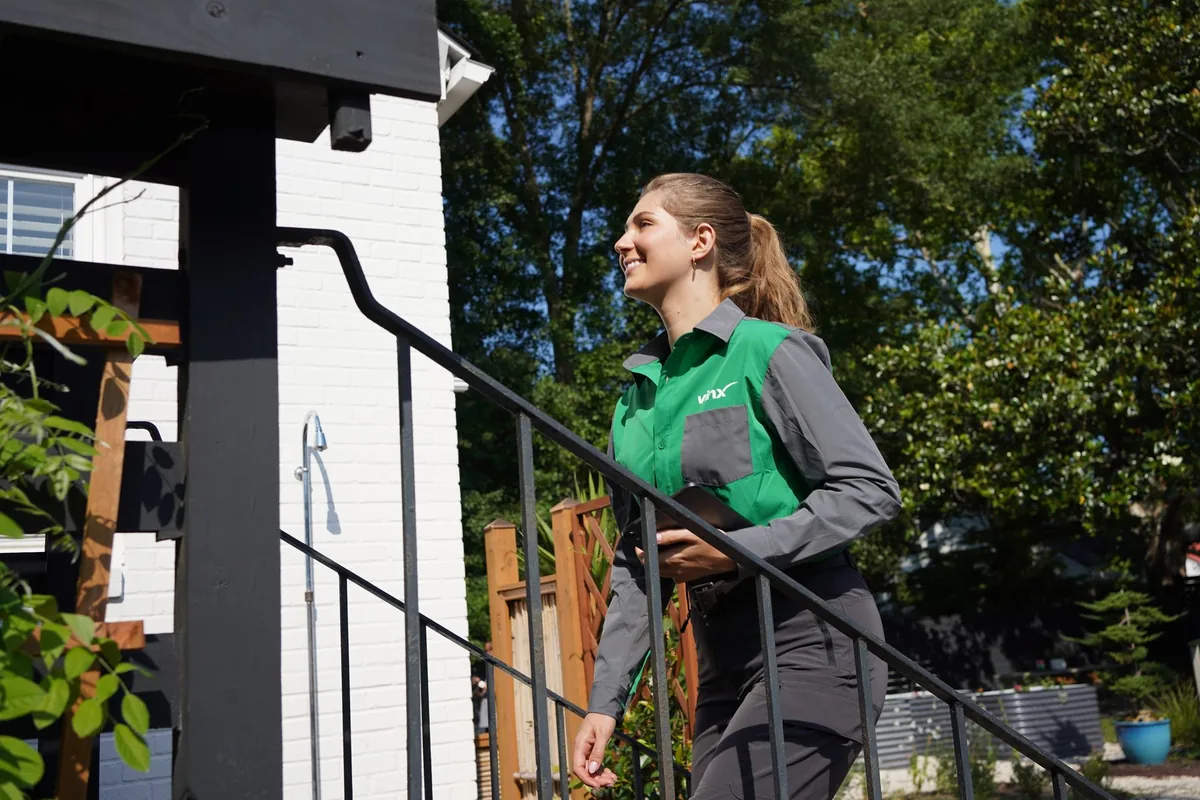
Your technician inspects the full structure and, on Daniel Island, the paperwork around it: the crawl space or slab edge, the wood-to-soil contacts landscaping has created since the build, the attic framing, and the exposed foundation wall the design guidelines cap in height. Mud tubes, frass, hollow wood and swarm evidence are documented alongside the date of the last recorded treatment.
Foundation & Perimeter Treatment
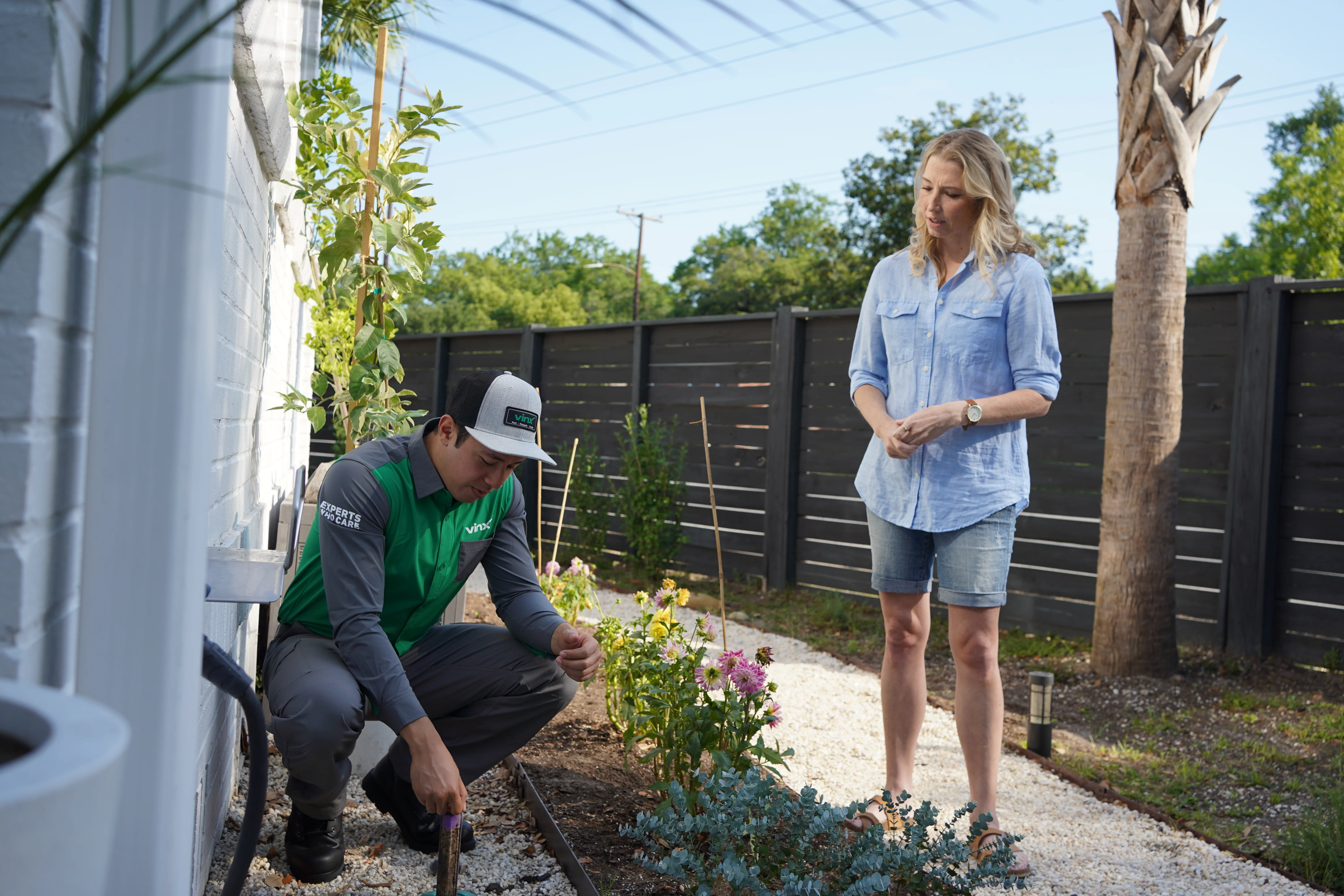
A liquid termiticide barrier is applied around the full foundation perimeter, including utility penetrations and beneath slab edges, on both interior and exterior faces. On a 1990s or 2000s Daniel Island house this renews a builder pre-treatment that has been quietly expiring since the certificate of occupancy.
Direct Colony Treatment
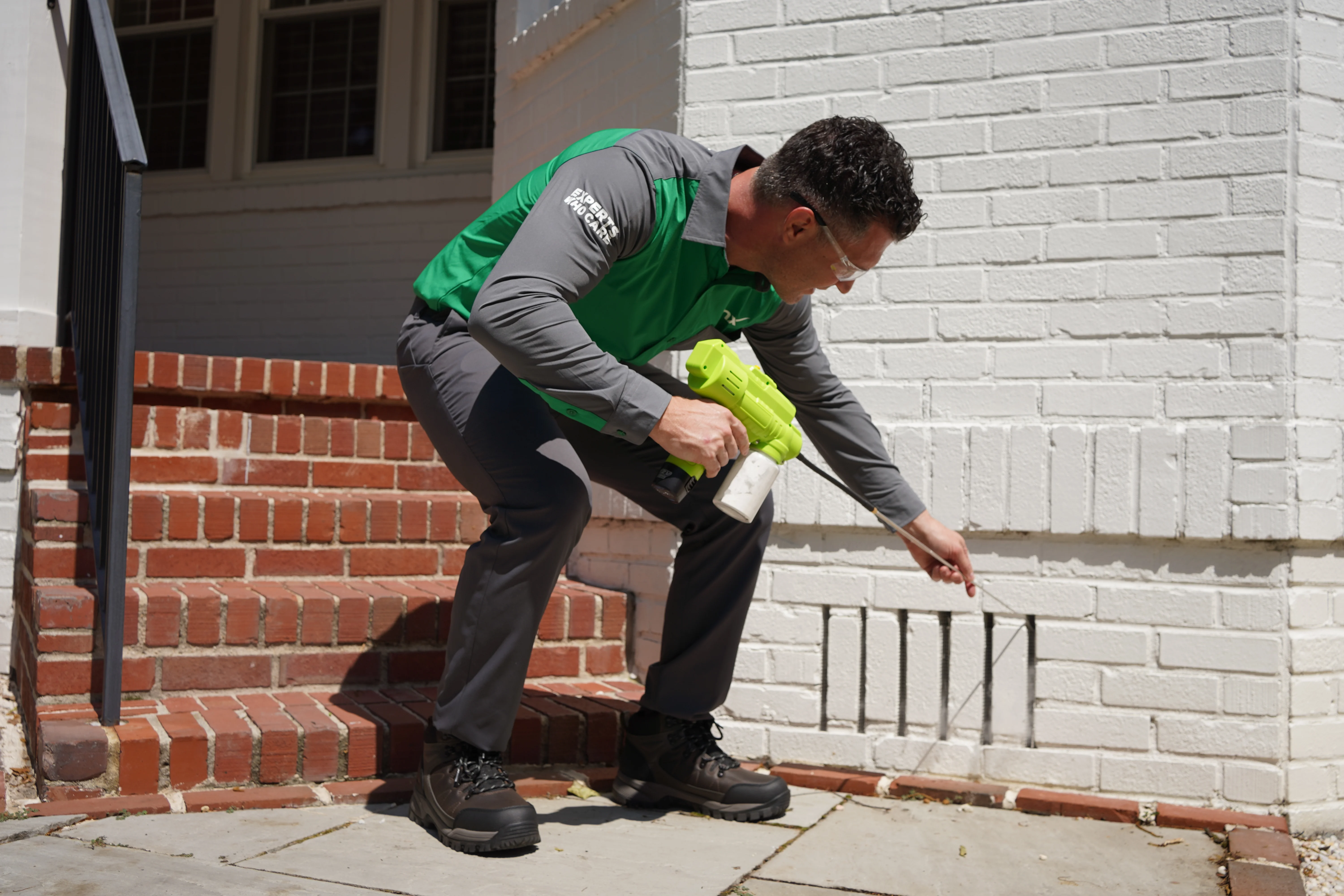
Active galleries and mud tubes are treated directly with termiticide foam or dust, reaching into the colony’s tunnels. On the island the marsh-side lots along Beresford Creek get particular attention, because Formosan colonies here are documented in live trees as well as structures and a colony in the buffer can feed a house from outside.
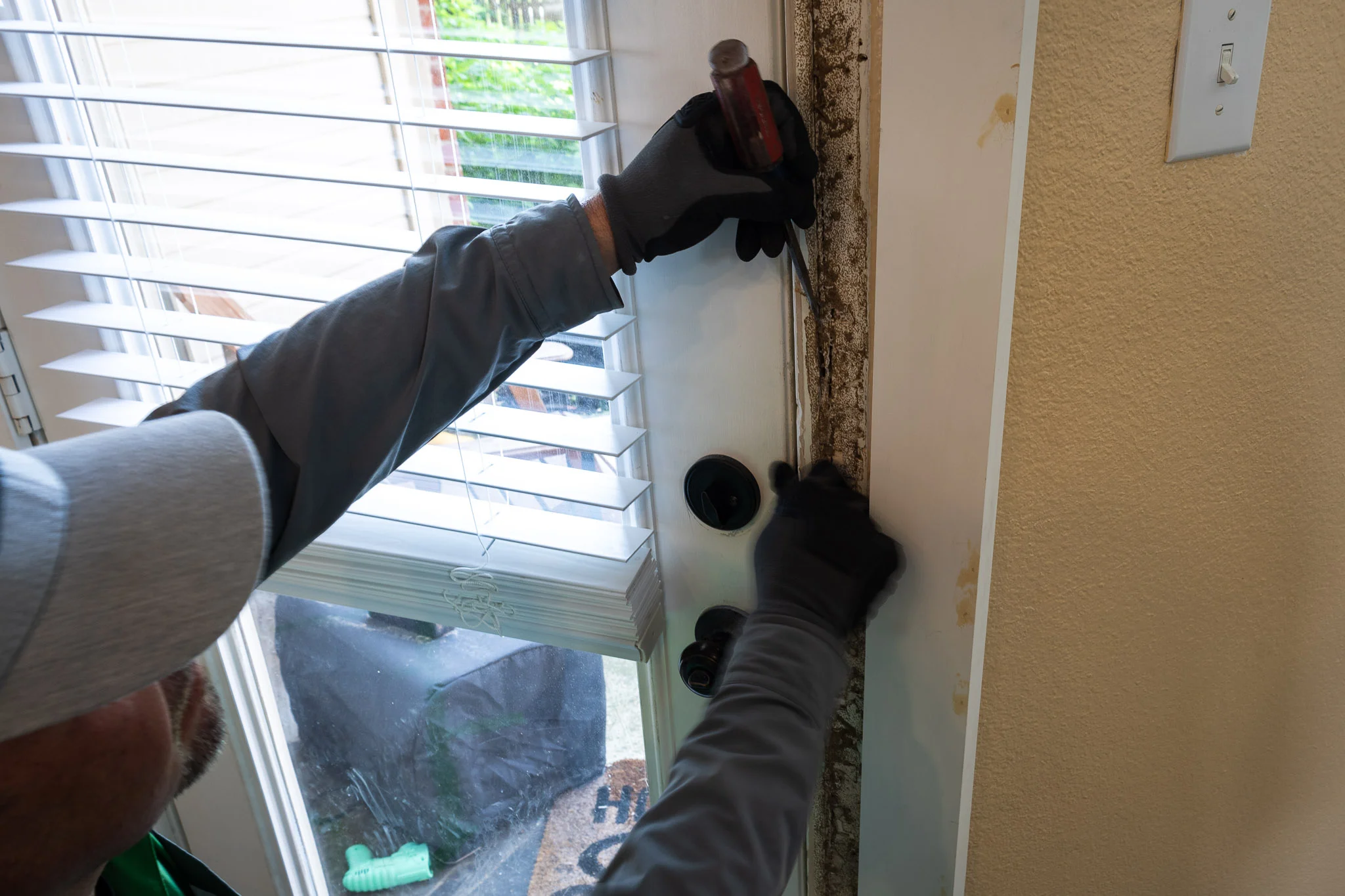
Annual Inspection & Re-Treatment Guarantee
Annual inspections keep protection current and catch new activity early, and if termites return between visits we re-treat at no charge. Your technician also advises on drainage and irrigation adjustments, since the island’s scheduled watering keeps foundation soil moist year-round.
What Our Customers Say
What Daniel Island Homeowners Say About Vinx Termite Control
Just changed from prior pest control service to Vinx after concerns with prior company’s cost for pest and termite services. While researching found 2 of my friends used Vinx and both were highly satisfied with value and service. Just had 2 different services performed and was impressed by both teams I worked with - all were professional, knowledgeable, polite and efficient. Glad I selected them.
Referred by a friend. Ryan and Jack have always been great! Upgraded to Vinx Plus for the extra coverage :-) we will be going with them when our termite bond is up also! They price matched for a great deal!
Dylan was fantastic very thorough and great to work with.
Johnathan from Vinx did a fantastic job at our home. Very professional
Devin was extremely informative and provided outstanding customer service. Employee of the month candidate!!!
Vinx Pest Control did initial installation for termite prevention and pest control at both church and parsonage. The technician was prompt, communicated effective and went about his work professionally. Though this was just the initial introduction to the company, if all service appointments are conducted this well, I believe we will be most pleased.
I hadn’t been home the last few times Vince came out so I scheduled a time. James could not have been more accommodating. He was very professional and met all of the needs and concerns I had.
Johnathan was able to fit me in earlier and he very professional. He helped me to understand the process!! Highly recommend
Can’t say enough good things about this company and it’s employees. Our sales rep, Julian, did a great job of explaining the value and services of our plan. Our technicians, Chris and De’Rico were on time, quick, and extremely thorough when explaining the work they completed. We recommend Vinx to anyone who actually wants to feel good about the money they spend on pest control/ termite prevention!
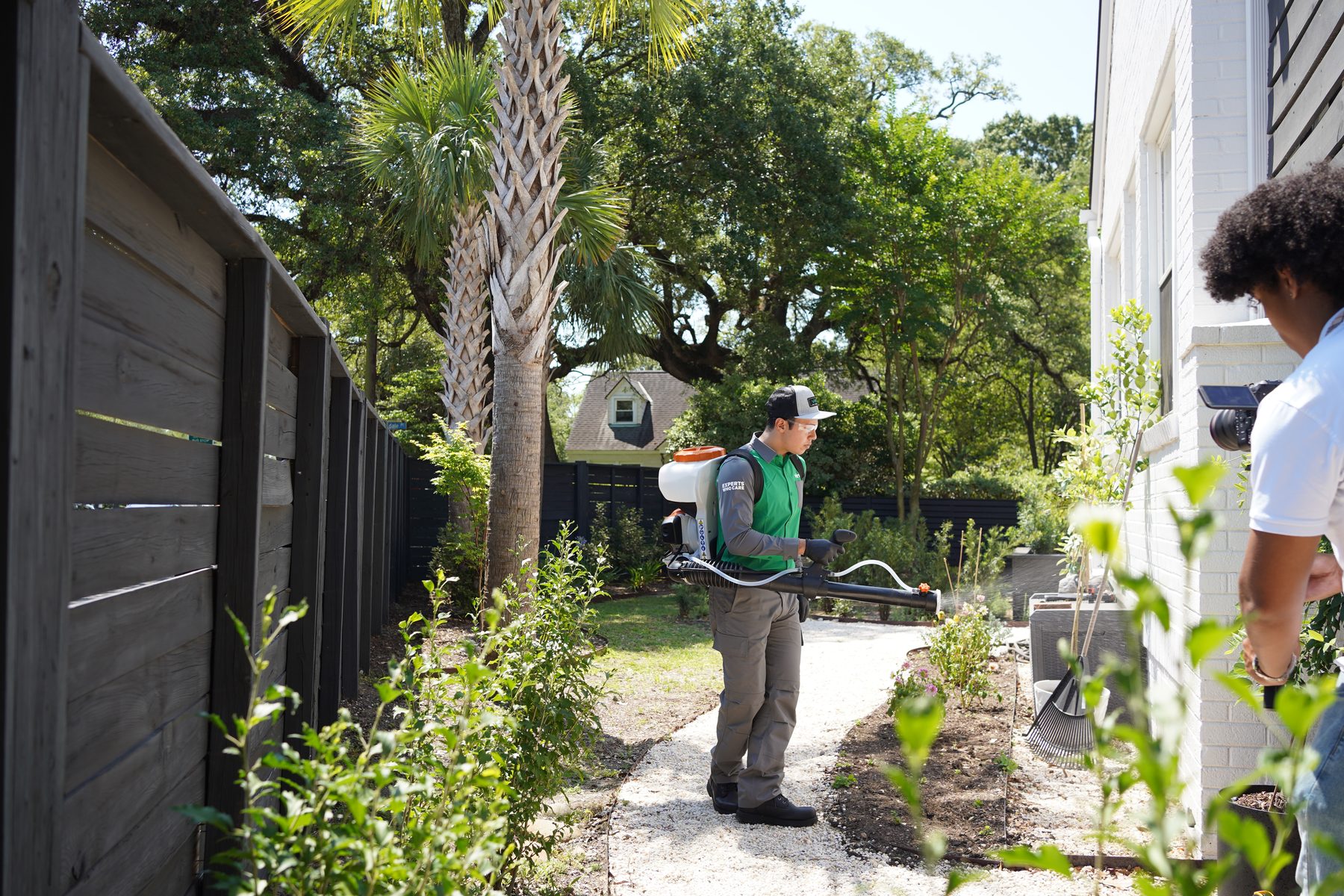
Ready to Protect Your Daniel Island Home?
Free termite inspection for Daniel Island homes, same-day availability in most cases. We find out when your phase’s pre-treatment went in and what has been renewed since, then tell you plainly what it needs.
The Local Threat
Why Termite Control in Daniel Island Isn’t One-Size-Fits-All
Daniel Island is one of the few places in the country where a genuinely more aggressive termite has been established for decades and almost every house is younger than the infestation. The Formosan subterranean termite arrived through the Port of Charleston in the mid-1950s, the period Clemson HGIC gives for its introduction; the island’s homes went up after 1997 on what had been the Guggenheim Foundation’s preserve. Every one of them received a builder’s soil pre-treatment, and on the earliest phases that treatment is now decades old.
Daniel Island is unusual in the Lowcountry because almost none of it is old. The island was master-planned and built out from the 1990s onward, so nearly every home here was constructed under modern codes with a builder's soil pre-treatment as part of the process. That is genuinely protective, and it also creates the specific gap worth closing: those treatments were applied once, decades ago in the earliest phases, and a liquid soil barrier does not last indefinitely. On Daniel Island the question is rarely whether a pre-treat was done — it is how long ago, and what has been done since.
A mature Formosan colony can run to several million workers, several times a native colony. On a twenty-five-year-old island the practical exposure is documentary as much as biological: find out when the pre-treat went in, what phase the house belongs to, and what has been renewed since. The native Eastern subterranean termite remains the baseline everywhere, and drywood termites, needing no soil contact, are genuinely more common on this coast than inland. Vinx treats for all three.
A pair of height limits in the local design rules has a direct consequence for inspection. Daniel Island Park’s guidelines require finished floor levels to meet FEMA flood plain requirements as a minimum, but not to exceed the required flood height by more than two feet, and separately cap exposed foundation wall at roughly four to five feet as seen from the street. Those rules exist for appearance and for flood compliance, and between them they keep crawl spaces here deliberately low. A low crawl is harder to move through and easier to inspect badly, which is worth saying plainly: on these houses the quality of a termite inspection depends on whether the inspector actually got all the way under the building.
Daniel Island Termite Species
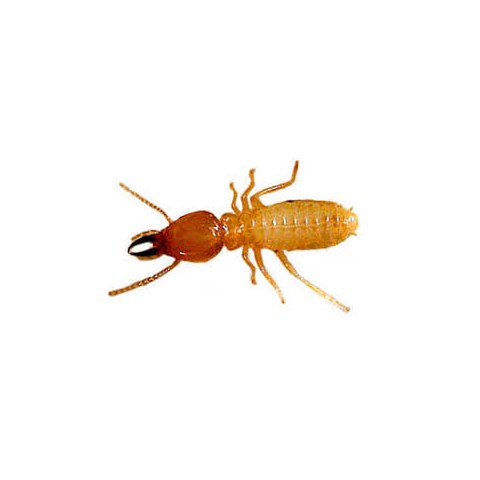
Formosan Subterranean Termite
The Formosan subterranean termite (Coptotermes formosanus) was first documented on the U.S. mainland in the Charleston area in the mid-1950s, and it remains well-established throughout the greater Charleston area today. Colonies can number in the millions of workers, several times larger than a native subterranean colony, giving them a far larger foraging range and a documented ability to infest live trees as well as structures.
Individual Formosan workers aren’t resistant to termiticides and colonies aren’t invincible, but their sheer size means an undetected infestation can progress faster and cause more extensive damage than a native colony of the same age, which is why bait systems here are installed with a colony of that scale in mind.
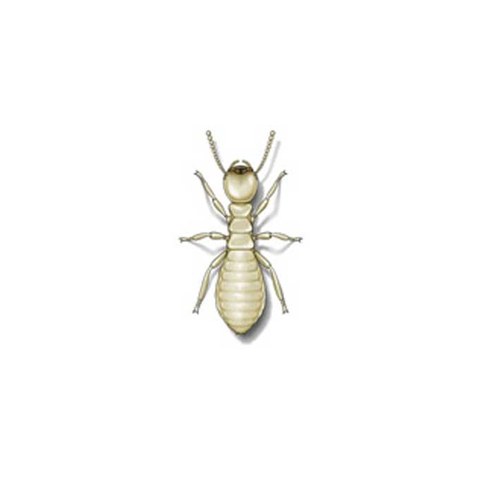
Eastern Subterranean Termite
The native Eastern subterranean termite remains the most widespread termite threat throughout Daniel Island and the broader Lowcountry. Colonies live underground and build pencil-width mud tubes to travel from soil to wood while avoiding light and dry air.
A mature colony may run to hundreds of thousands and do serious structural damage across years, often showing nothing on the surface until the damage is extensive. Quarterly inspections plus bait station monitoring are the surest way to catch activity before it turns into a major repair.
Drywood Termite
Unlike subterranean and Formosan termites, drywood termites need no soil contact at all, they nest directly inside dry structural wood, attic framing, and furniture. Clemson research notes drywood termites are most common specifically along South Carolina’s humid coastal areas, making Daniel Island more exposed to this species than most inland cities.
Because colonies are hidden entirely within wood, infestations are often only discovered during renovation work or a professional inspection, and treatment sometimes requires localized wood treatment or structural fumigation rather than a soil-based approach.
Know Your Risk
Termite Risk Across Daniel Island
Daniel Island Park & Golf Club Corridor: Formosan Termite Risk
The golf club corridor keeps irrigation running on maintained turf and mature plantings all season. Consistently damp soil against a slab edge is the condition Formosan colonies exploit, and on an island this young the barrier beneath that slab is the only thing standing between the two.
- Century-old homes built before modern pest-proofing
- Settled foundations with wood-to-soil contact
- Established Formosan super-colonies documented by Clemson University
- Annual species-specific inspection strongly recommended
Codner’s Ferry Park & Beresford Creek Corridor: Formosan Termite Risk
Beresford Creek frontage puts tidal water and saturated ground within reach of the foundation line. Charleston’s relative sea level has risen about 1.38 inches per decade, and ground that drains more slowly each year keeps soil moisture high where it matters most.
- Earliest-established homes with settled foundations Formosan colonies exploit
- Damp, low-lying ground near the creek keeps soil moisture elevated
- Formosan termites documented infesting live trees, not just structures
- Full property inspection, trees included, matters here
Cochran Park & Barfield Park Corridor: Eastern Subterranean Termite Risk
These park-adjacent streets were built in the island’s earliest residential phases, which means their soil pre-treatments are now the oldest on Daniel Island. They are also the addresses least likely to have had anything done since.
- Freshly graded, disturbed soil favors early foraging
- New wood-to-soil contact points before landscaping settles
- Native subterranean colonies in the surrounding soil
- Bait station monitoring catches activity before it’s extensive
Smythe Park & Center Park Corridor: Eastern Subterranean Termite Risk
Smythe Lake and the central park system mean permanent standing water and irrigated green space threaded between homes. Native Eastern subterranean termites track that moisture, and a park boundary is a foraging corridor rather than a barrier.
- Decades-old housing stock with settled foundations
- Aging crawl-space timbers and wood-to-soil contact
- Native subterranean pressure is the baseline here
- Annual inspection plus perimeter bait recommended
Downtown Daniel Island & Seven Farms Corridor: Drywood Termite Risk
Mixed-use construction downtown puts retail, office and residential in the same structures, with courtyards, planters and street trees held tight against the walls. Drywood termites need no soil contact at all, so shared roof and joist systems carry risk between units regardless of what is in the ground.
- Humid coastal air favors drywood colonization
- Drywood termites nest directly in structural lumber
- Infestations often found only during renovation or inspection
- Localized wood treatment may be needed alongside bait systems
Warning Signs
Signs of Termites in Your Daniel Island Home
Mud Tubes on the Foundation Wall
Pencil-width soil tunnels on the exposed foundation, the travel route subterranean termites use from soil to framing.
Hollow-Sounding Wood
Tap framing or trim with a screwdriver handle. A papery sound means the interior is gone while the surface is intact.
Sticking Doors and Windows
Termite damage and the moisture it brings warp frames, a common first complaint in the island’s humid, irrigated yards.
Bubbling Paint Near Baseboards
Paint that blisters in odd patterns near floors or window frames can signal moisture from activity below the surface.
Frass Piles on Window Sills
Drywood termites push sand-like pellets out of kick-out holes; small piles collect on sills and baseboards.
Discarded Wings After a Warm Evening
Formosan swarmers fly on May-to-July evenings toward lights; wings on a sill or under a porch fixture are a classic sign.
Soft Spots Underfoot
A spongy floor, especially near a bathroom or exterior door, can mean damaged subfloor or joists below.
Pinholes in Drywall
Small round holes, sometimes with faint rustling inside the wall, can signal an active colony in the framing.
Homeowner Tips
6 Ways to Reduce Termite Risk Right Now
Kid & Pet Safe
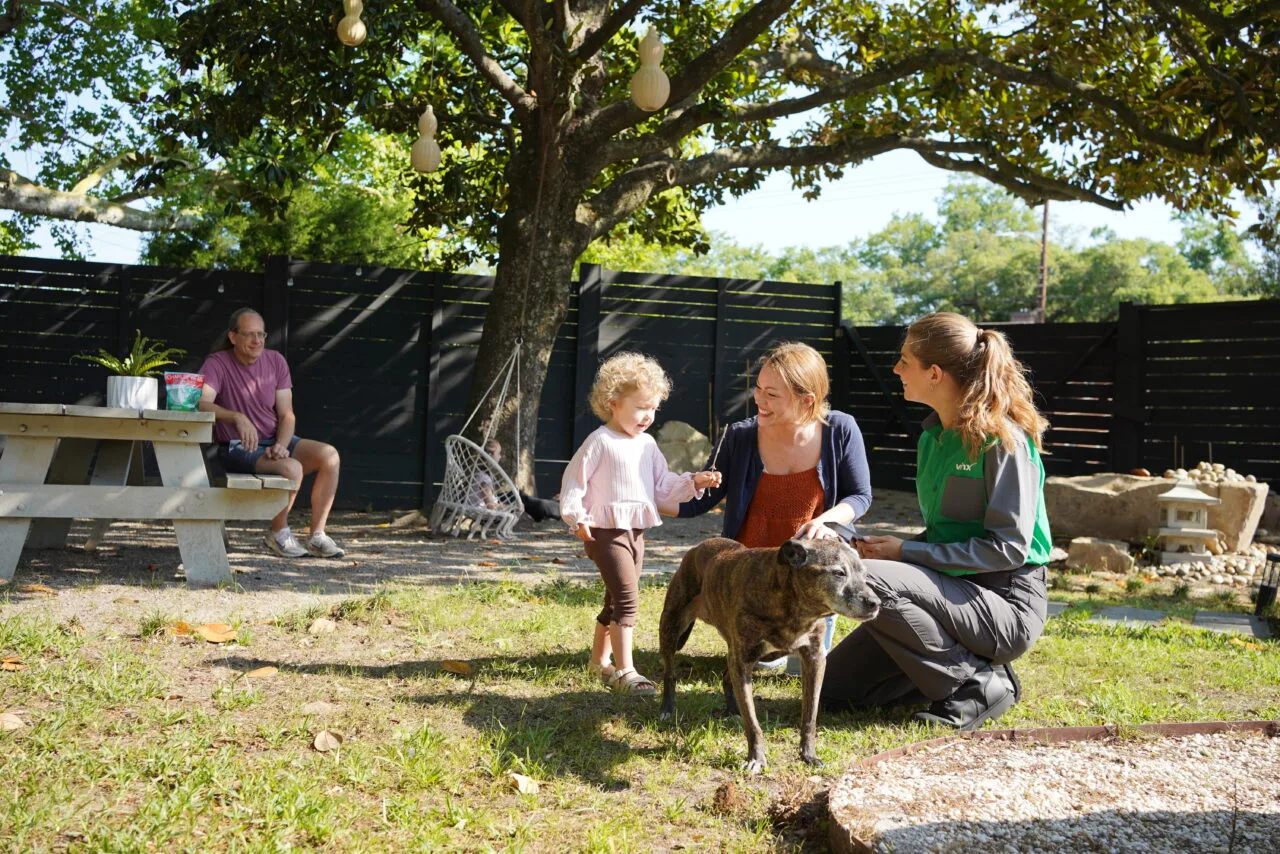
Our Treatments Are Safe for Your Whole Family: Including the Furry Members
Every product we use is EPA-registered and applied strictly at labeled rates by licensed technicians. We take the guesswork out of safety so you can feel confident letting kids and pets back into treated areas quickly.
EPA-Registered Products Only
All products we apply are EPA-registered and used strictly per label requirements. Our licensed technicians are trained to apply the right product in the right place at the right rate, every time.
Dry Time Before Re-Entry
Exterior spray treatments dry in 30–60 minutes. Once dry, treated surfaces are safe for children and pets to contact. Your technician will confirm the all-clear before leaving your property.
Interior Treatment On Request
We treat only what’s needed, where it’s needed. Gel baits in cabinets and crack-and-crevice applications keep products away from areas pets and children frequent most.
Botanical Options Available
Have specific sensitivities? Ask your technician about our plant-derived treatment options. We offer botanical alternatives for households that prefer a more natural approach.
Have a concern about products used near your pets or children? Call (855) 800-8469 and we’ll walk you through exactly what we use and why it’s safe.
Explore More
More Pest Control Services in Daniel Island

Pest Control Daniel Island
General pest protection

Mosquito Control Daniel Island
Monthly barrier treatments

Ant Control Daniel Island
Household ants & others

Spider Control Daniel Island
All spider species covered

Cockroach Control Daniel Island
Palmetto bug & roach removal

Rodent Control Daniel Island
All rodents covered

Bed Bug Treatment Daniel Island
Heat & liquid treatments

Tick & Flea Control Daniel Island
Yard & pet protection
Exterminator Daniel Island
Same-day local exterminators
Frequently Asked Questions
Termite Control FAQ for Daniel Island Homeowners
Vinx termite protection starts at $75/month as part of the Protection Plus plan, which includes Sentricon bait station installation, ongoing monitoring and the free re-treatment guarantee. Installation is priced by the linear footage of your foundation. Call (855) 800-8469 for an exact quote for your Daniel Island property.
Yes. Sentricon bait stations are sealed units set into the ground, keeping the active ingredient out of reach of children and pets. Nothing liquid goes into your soil or foundation, every product is EPA-registered, and the family stays home during installation and after.
Initial Sentricon installation typically takes 2 to 4 hours depending on the foundation footprint and the number of stations. There is no tenting and no need to leave; the island’s lots are compact, so installation is usually at the short end. A monitoring visit runs 30 to 60 minutes.
Sentricon gives continuous protection rather than a one-time treatment. After installation the stations are checked on a schedule through the year, and if activity is found we treat immediately at no added cost. On Daniel Island most homeowners adopt it as the renewal of a pre-treatment that has aged out.
Yes. Find live termites in a structure we protect and Vinx re-treats free, with no deductible and no fine print. The guarantee is part of Protection Plus and Premium and holds while annual monitoring continues.
Most Daniel Island appointments are same-day or next-day. Call (855) 800-8469 to book, and if we cannot service your home the next business day your initial service is free. We cover the whole island, from Daniel Island Park and the club to Codner’s Ferry Park, Smythe Park, Center Park and downtown Seven Farms.
That depends almost entirely on how long ago it was applied and which kind it was. Daniel Island was master-planned and built out from the 1990s onward, so nearly every home here was constructed under modern codes with a soil pre-treatment as part of the build — which is genuinely protective, and is also exactly why the gap here is different from elsewhere in the Lowcountry. A liquid termiticide forms a treated zone in the soil, and Clemson is direct that how long it remains effective depends on the thoroughness of the original application, termite foraging pressure, conducive conditions and the soil and climate it sits in. It is not permanent. On the earliest Daniel Island phases that treatment is now decades old. Nobody can tell you from the curb whether it is still intact, which is the honest answer — what an inspection establishes is whether there is evidence of activity now, and what monitoring establishes is whether anything changes.
Yes. Berkeley County is on Clemson’s list of sixteen counties with documented Formosan colonies, and the species is established across the Charleston area, including in live trees. On Daniel Island the highest exposure is the marsh-side lots along Beresford Creek and the mature-oak lots around Daniel Island Park, where the buffer canopy the guidelines preserved can hold a colony that never appears under the house.
Native Eastern subterranean termites swarm from February through April, typically on a warm day following rain. Formosan termites swarm later, mid-May into July per Clemson, in the evening and strongly drawn to porch and street lighting, and their swarmers are larger and golden brown. On an island built around evening outdoor living, wings under the porch light are the sign most homeowners notice first.
No. Standard South Carolina policies exclude termite damage as a maintenance issue rather than a sudden loss, so repair costs are entirely out of pocket. Even on a house built in 2005 that is worth knowing, because a lapsed pre-treatment is not something the insurer will cover for you. Ongoing monitoring is the only financial protection.
South Carolina's official Wood Infestation Report is the CL-100, used in real estate transactions. It records visible evidence of wood-destroying insects and fungi in accessible areas on the day of inspection. Most SC lenders require one before closing. On Daniel Island a clear CL-100 on a 2000s house is common; it does not tell you when the pre-treatment expires, which is the more useful question.
A service agreement with a licensed pest control company covering ongoing protection and re-treatment. On Daniel Island, where the housing is young but the Formosan pressure is old, a bond is the standard way to carry protection forward once the builder’s pre-treatment has aged out. Your termite protection agreement is the Vinx Plus plan.
Both work; they fail differently, and on Daniel Island the choice usually turns on what is already in the ground. A liquid treatment aims to create a continuous treated zone around and under the structure, which means trenching the perimeter and drilling slab sections where the barrier would otherwise be interrupted. It is effective, it acts immediately at the barrier, and its weakness is that it has to be complete — termites need one gap. Bait stations take the opposite approach: Clemson describes below-ground stations installed every ten to twenty feet around the building and monitored on a schedule, carrying no residual chemical in the soil and capable of reducing and even eliminating a colony rather than only repelling it from one structure. They are slower, and they depend on the monitoring actually happening. On newer planned construction with clean, regular footings a liquid barrier is straightforward to establish; where landscaping, hardscape and irrigation have been built up around a home over twenty-odd years, stations are often the more practical answer.
Service Coverage
Termite Control Across Daniel Island & the Tri-County Area
Serving every neighborhood in and around Daniel Island
Serving the Greater Charleston Area