
Flea & Tick Control in Apex, NC
Lone Star Tick, American Dog Tick & Cat Flea Treatment for Wake County Homeowners
Apex sits in Wake County, which has one of the highest white-tailed deer population densities of any urban county in the southeastern United States. Deer browsing the greenway buffers and wooded lot margins deposit tick populations in the transition zones next to Apex yards throughout the seven to eight month active season. Lyme disease is documented in Wake County. Call (984) 600-8469 for a free quote.
Get Started in 60 Seconds
Choose what’s easiest for you
Request a Quote
We usually respond in 2 minutes
Call 855-800-8469
Get a Live Person (no AI agents here!)
Sign Up Online
Get pricing and schedule now





Welcome to Vinx Pest Control
A Company That Actually Backs What It Says
At Vinx, we combine professional-grade treatments with a level of service most pest control companies don't offer. Local technicians, fast response times, and a guarantee that actually means something.
Get a Free Quote"I'm not passionate about killing bugs. I'm passionate about customer service. At Vinx, you get experts who show up, do the job right, and stand behind every visit. No runaround, no fine print."
WELCOME TO VINX PEST CONTROL
Flea & Tick Control Plans for Apex Homeowners

Standard Residential Protection
- 4 Seasonal Treatments Per Year
- 50+ Covered Pests
- Interior, Exterior & Yard Treatment
- Unlimited Free Re-Services
- 100% Money-Back Guarantee

Upgraded Yard Protection
- 6 Home & Yard Treatments Per Year
- 50+ Covered Pests
- Stinging Insect Elimination Guarantee
- Flea & Tick Elimination Guarantee
- 100% Money-Back Guarantee

Most Comprehensive Protection
- 9 Treatments Per Year
- 50+ Covered Pests
- 8 Mosquito Treatments (Mar–Nov)
- Flea, Tick & Ant Coverage
- Free Bed Bug Treatments if Needed*
*Starting rates vary by home size and area. All plans billed monthly.
Request Your Free Flea & Tick Quote
Fill out the form below and a Vinx team member will reach out within 2 minutes during business hours.
Prefer to talk? Call (984) 600-8469 for a live person, no AI agents.
Our Approach
How Vinx Treats Fleas & Ticks in Your Apex Yard

Full Property Inspection
Your technician walks the whole property before anything is applied, paying most attention to the transition line where mowed lawn meets something else, a tree buffer, an unmowed margin, the vegetation along the Beaver Creek Trail or the American Tobacco Trail. In Apex that edge is where nearly all tick transfer happens, because the town's greenway network runs wooded corridors right up against back fences.
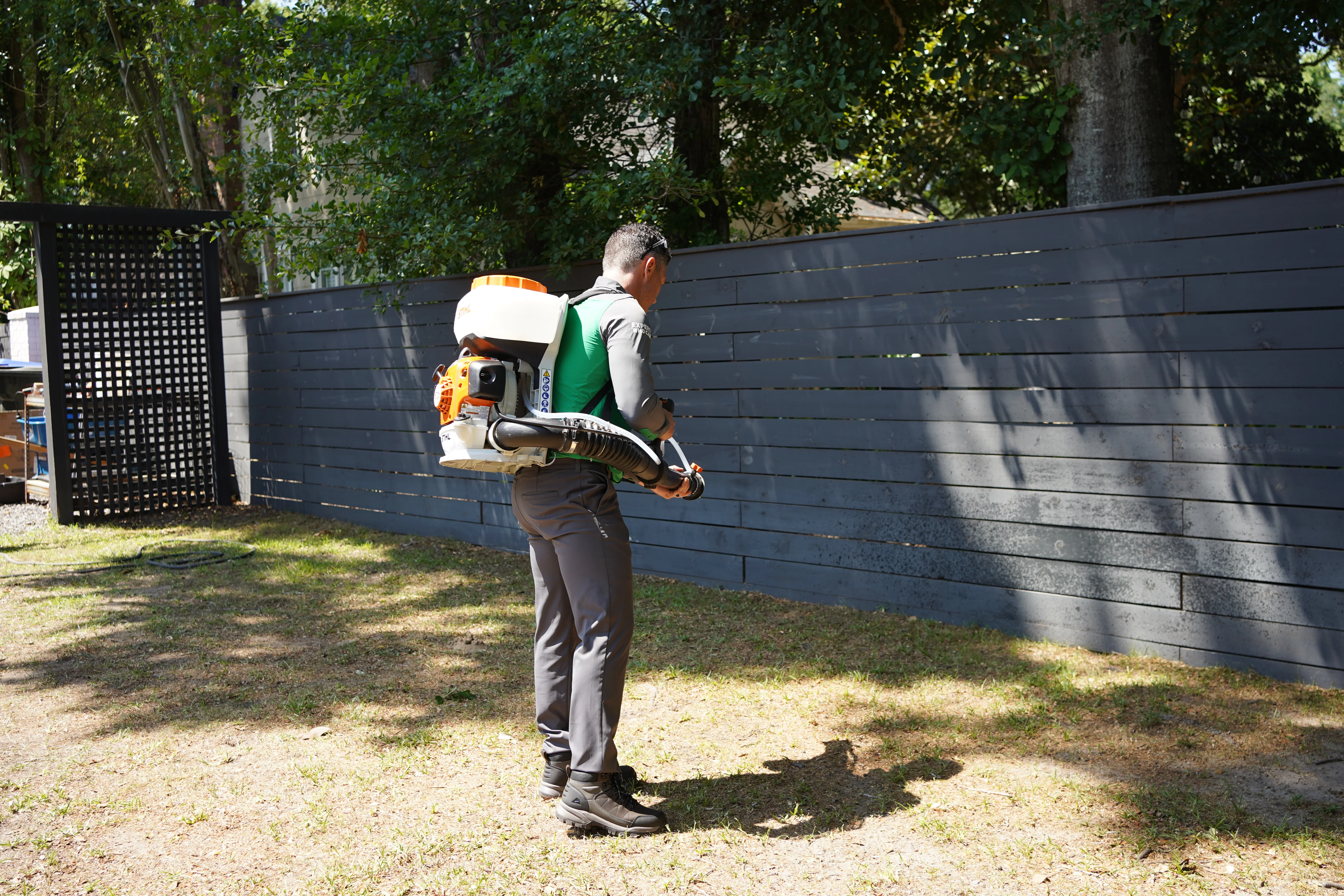
Yard & Ground-Cover Treatment
Exterior treatment goes onto ground cover, mulch beds, vegetated areas and those wooded edge margins on every Plus and Platinum visit. The point is not to blanket a lawn; it is to treat the narrow band where questing ticks actually wait and where wildlife carrying fleas moves through. On the larger, more wooded Friendship lots on Apex's southern edge that band can run the full length of a property line.
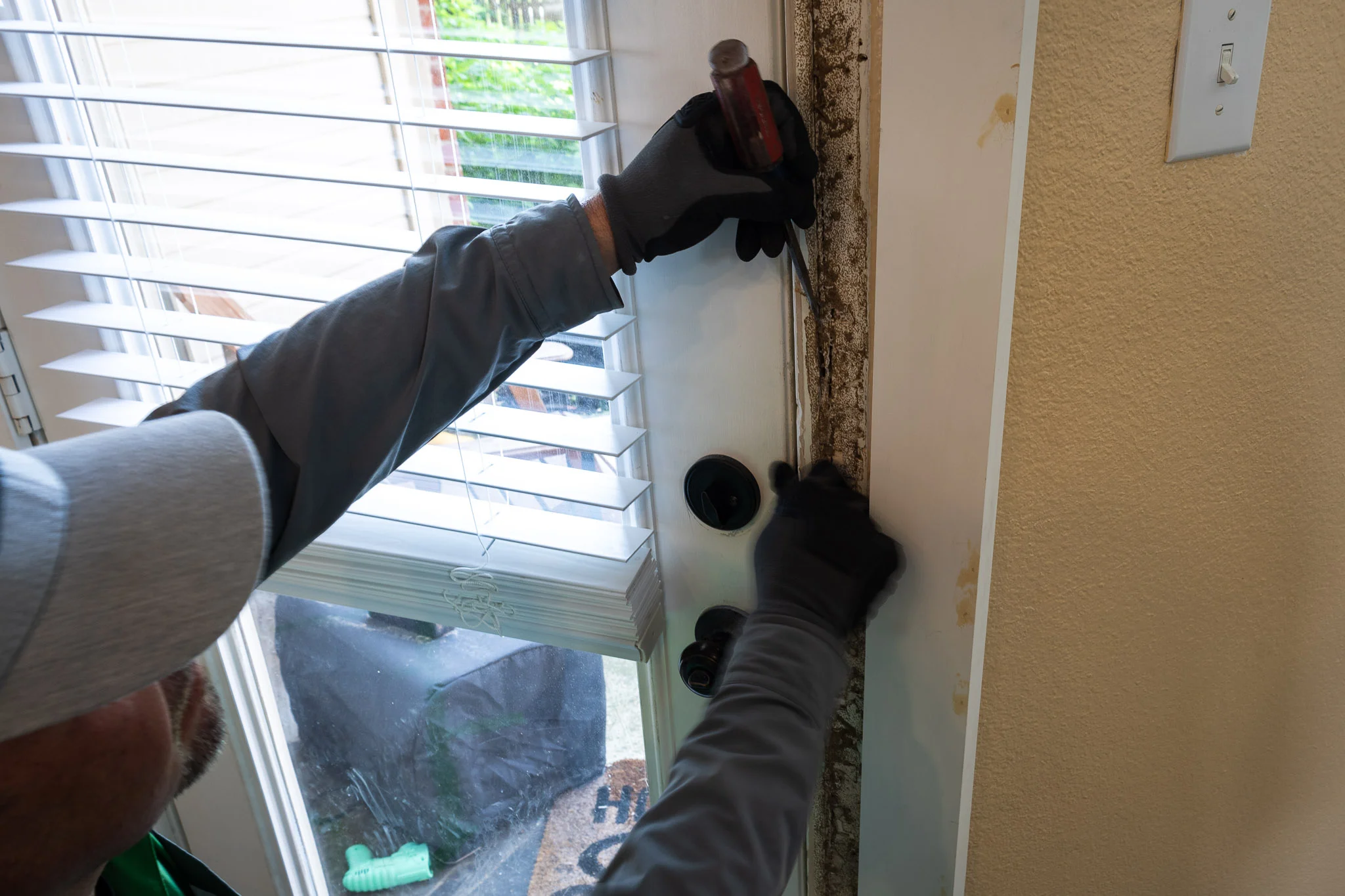
Interior Flea Treatment: Platinum Plan
About 95 percent of a flea population is not the adults on your pet, it is eggs, larvae and pupae down in carpet fiber, pet bedding and upholstery. Interior flea treatment on the Platinum plan targets that reservoir directly, which is the only way to break a cycle that keeps restarting in the same room.
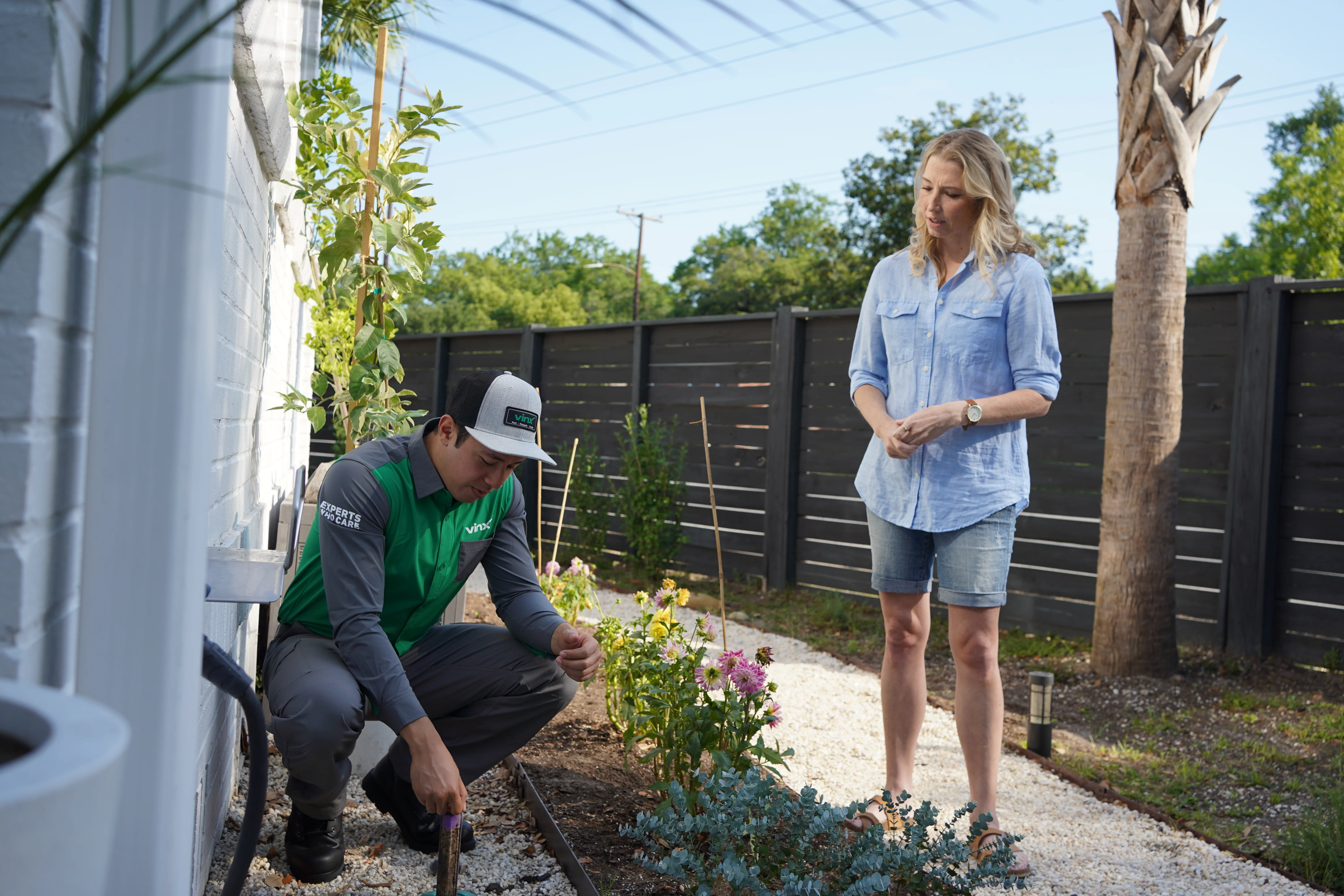
Free Return If Activity Persists
If fleas or ticks come back between scheduled visits, call (984) 600-8469 any time during the active season and we return free. No service fee and no argument about whether it counts, because on a greenway-adjacent Apex lot reintroduction from the corridor is expected rather than exceptional.
What Customers Say
What Apex Customers Say About Vinx: 4.8 Stars on Google
Great experience with Derek! The technician arrived right on time and was very friendly. He was thorough, professional, and took care of all the specific areas I asked him to treat. Highly recommend
He was quick and wanted to know if I had any questions. He was willing to explain anything I needed to know about the service.
Joseph was informative, professional and customer focused. He gave us suggestions on what we could do to ensure the best quality for our service.
Dakari was so kind and patient and really listened to my concerns. I named a few different pest concerns and he never seemed annoyed or like he didn't want to do it. And that's saying a lot because it was very hot outside. I appreciate the kindness and the great job!
Adrian did a great job. He communicated well, did a thorough job and was professional and kind.
Great first service. Abbas was amazing and extremely helpful.
By Neighborhood
Flea & Tick Pressure Across Apex
Friendship & South Apex
Highest Risk Larger, rural-adjacent lots near Jordan Lake and surrounding wooded land carry the highest deer and wildlife density in the Apex service area, translating directly to the heaviest tick introduction pressure and the most consistent flea harborage from wildlife.
Scotts Ridge, Olive Chapel & the Veridea Corridor
Rising Risk New construction bordering recently cleared or still-wooded land puts these properties directly at the edge of tick habitat during the transition from undeveloped lot to finished yard, and tall grass on adjacent unbuilt parcels is a common questing zone for lone star and American dog ticks alike.
Beaver Creek & North Apex
Moderate Risk The Beaver Creek Trail greenway corridor brings regular wildlife movement adjacent to residential lots, and tall grass along the trail edge is a common tick-questing zone during warmer months.
Downtown Apex & the Historic District
Moderate Risk Mature tree canopy and established gardens support a steady population of raccoons and opossums that carry fleas into residential yards year-round, plus outdoor and community cats that add to flea pressure in older, established neighborhoods.
Salem & West Apex
Moderate Risk Decades-old mulch beds and dense landscaping in this built-out neighborhood hold moisture and provide flea harborage, though tick exposure is lower here than on lots bordering undeveloped land.
Lone Star Tick Country
Why Flea & Tick Control in Apex Is More Complicated Than Most Homeowners Think
Apex sits squarely in lone star tick country. When UNC-Chapel Hill researchers collected ticks across this part of the state, the lone star accounted for 90 to 95 percent of everything they recovered, and that ratio is what a homeowner here actually meets. It matters because the lone star is an aggressive hunter that will cross open lawn toward a person or a dog rather than waiting to be brushed against.
Rocky Mountain spotted fever, carried mostly by the American dog tick, is still the tick-borne illness reported most often in North Carolina, which is worth knowing because the name misleads people into thinking it belongs somewhere else. Ehrlichiosis, carried by the lone star, is the one that tracks with the tick you are statistically most likely to find on an Apex property.
That seasonal break is real but shorter than it sounds. Raleigh-Durham records 22 January nights at or below freezing and about 15 nights a year at 20°F or colder, yet the freeze-free season still runs roughly 217 days, from a median last freeze on April 4 to a first freeze on November 6. That is seven months of open season for lone star ticks, so the useful window for getting ahead of them is March, before the last freeze has even passed.
Winter genuinely helps here, and it is worth being precise about how much. Raleigh-Durham runs a January mean minimum of 28.6°F and averages 22 January nights at or below freezing, enough to end flea reproduction outdoors and push tick activity down hard. What it does not do is reset the year. The freeze-free season still runs about 217 days, so a yard that ended October with an established population starts April with the survivors.
Apex Flea & Tick Species
Lone Star Tick (Amblyomma americanum)
By far the tick most likely to bite people and pets in Apex: UNC research puts it at 90 to 95 percent of ticks recovered from people statewide. Lone star ticks actively quest for hosts, extending their front legs toward passing movement, and their bite is notably more irritating than other species even without infection.
They’re the primary vector for ehrlichiosis in North Carolina and are linked to STARI (a Lyme-mimicking rash that is a distinct condition, not Lyme) and to alpha-gal syndrome, the tick-triggered red-meat allergy documented in NC residents. Larval “seed tick” clusters are a common summer encounter on wooded or overgrown Apex lots.
- 90–95% of ticks found on people statewide
- Ehrlichiosis, STARI & alpha-gal syndrome
- Seed-tick clusters common in summer
American Dog Tick (Dermacentor variabilis)
Found in open, grassy, and brushy areas, unmowed field borders, trail edges, and yard margins bordering wooded lots are typical Apex encounter zones. Though encountered less frequently than the lone star tick, the American dog tick is historically linked to Rocky Mountain spotted fever, which remains the most commonly reported tick-borne illness in North Carolina. Most active in spring and summer.
- Rocky Mountain spotted fever vector
- Open fields, trail edges & yard margins
- Peak season: spring–summer
Blacklegged Tick / Deer Tick (Ixodes scapularis)
Blacklegged ticks are present in North Carolina and Lyme disease can be acquired in parts of the state, with cases historically concentrated closer to the Virginia border. Density in Wake County is considerably lower than on the South Carolina coast or in the Northeast, but nymphs, active in spring and roughly poppy-seed sized, are worth checking for after time in wooded or leaf-littered areas.
- Lyme vector, lower density in Wake County
- Nymphs active in spring
- Check after wooded / leaf-litter exposure
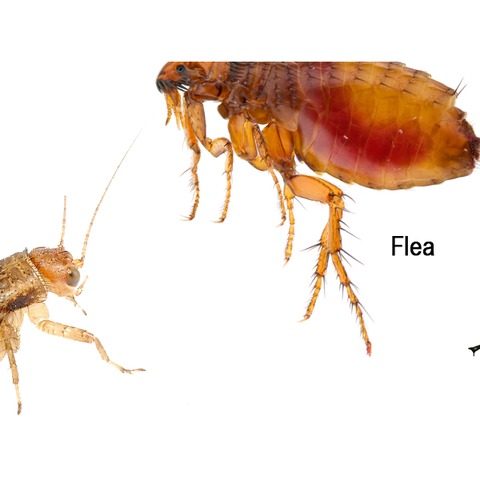
Cat Flea (Ctenocephalides felis)
The primary flea species found on dogs, cats, and neighborhood wildlife throughout Apex. Only about 5 percent of a flea population in an infested yard or home are the biting adults visible on a pet, the remaining 95 percent are eggs, larvae, and pupae living in yard vegetation, carpet fibers, and pet bedding. Veterinary prevention handles the pet; yard treatment and, when needed, interior IGR treatment handle the environment.
- 95% of the population is off-pet (environment)
- Sustained by raccoons, opossums & outdoor cats
- Interior IGR treatment: Platinum plan
What to Look For
Signs of a Flea or Tick Problem at Your Apex Property
A Dog or Cat That Will Not Stop Scratching
Persistent scratching, biting or licking around the head, neck and tail base is usually the first thing anyone notices, and it starts well before you see a flea.
Flea Dirt in the Coat
Dark specks that smear red on a damp paper towel. That is digested blood, and it confirms an active population rather than a single hitchhiker.
Fleas Jumping Onto Light Socks
Walk the yard or the carpet in white socks. Adult fleas questing for a host show up against the fabric immediately.
A Tick Found on Skin or Fur
Most often picked up along a wooded margin or a greenway edge. Remove it promptly and keep an eye on the bite site for a week or two.
Worn Wildlife Paths Through the Yard
Deer, raccoon and opossum trails are the delivery route for both pests. On Apex lots backing the Beaver Creek Trail these paths are often obvious once you look for them.
Clusters of Itchy Bites Around the Ankles
Flea bites concentrate where bare skin meets infested carpet or yard vegetation, which is why they stop at sock height.
If you develop fever, rash or flu-like symptoms in the weeks after a tick bite, tell a doctor about the bite specifically. Tick-borne illness responds far better to early treatment than to treatment started once symptoms have progressed.
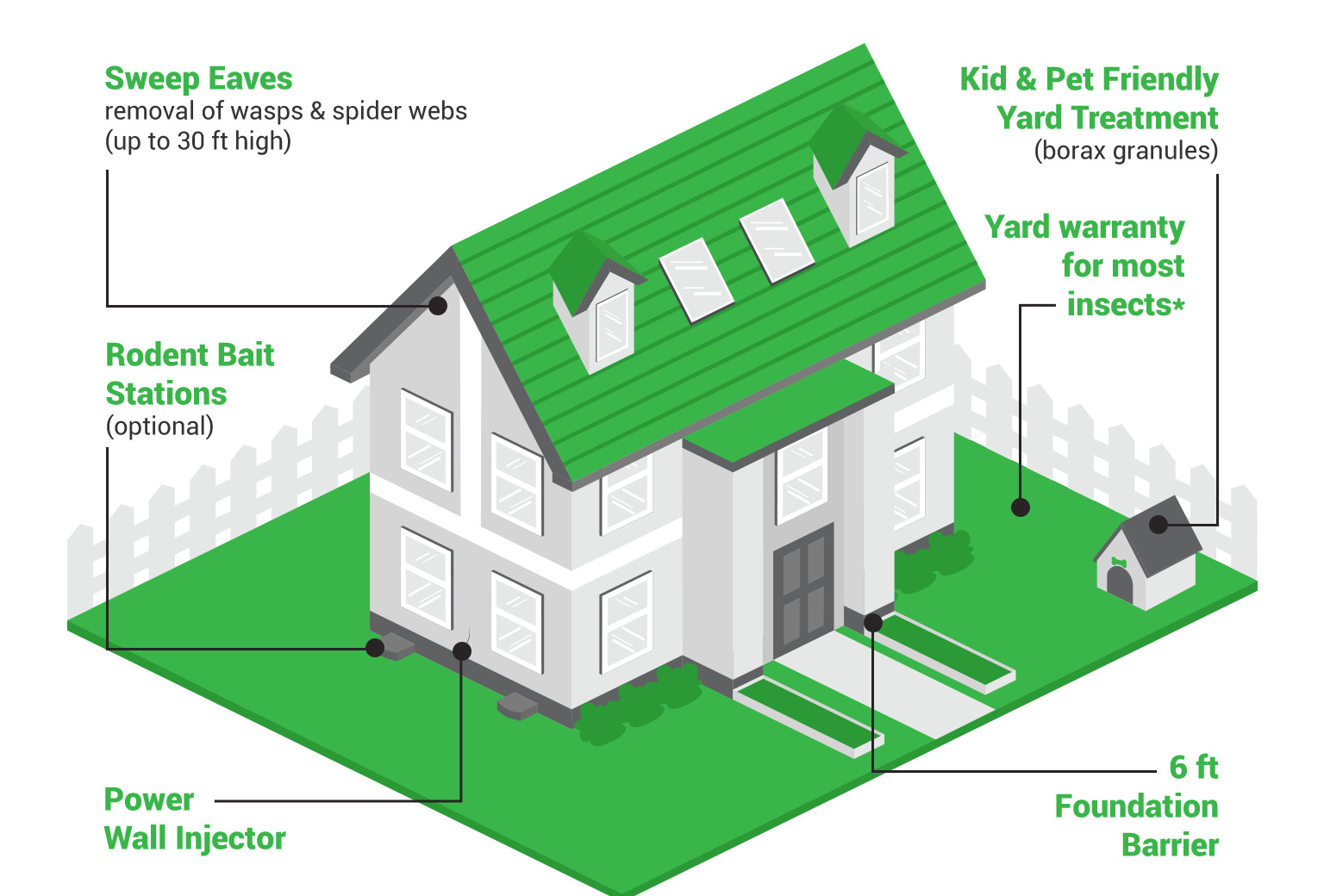
Vinx HomeGuard Plan
What Happens at Every Visit
Our technicians don’t just spray and leave. Every quarterly service covers your full exterior and interior, done right, backed by a written guarantee.
- Yard & Margin Treatment: Ground cover, mulch beds, and vegetation borders treated every visit
- Power Wall Injector: Treats wall voids where pests hide
- 6 ft Foundation Barrier: Full perimeter treatment every visit
- Yard Warranty: Free retreatment for most insects
- Kid & Pet Safe Yard Treatment: Borax granules, safe after dry
Homeowner Tips
6 Ways to Reduce Flea & Tick Pressure Around Your Apex Home
Kid & Pet Safe
Our Treatments Are Safe for Your Whole Family: Including the Furry Members
Every product we use is EPA-registered and applied strictly at labeled rates by licensed technicians. We take the guesswork out of safety so you can feel confident letting kids and pets back into treated areas quickly.

EPA-Registered Products Only
All products we apply are EPA-registered and used strictly per label requirements. Our licensed technicians are trained to apply the right product in the right place at the right rate, every time.
Dry Time Before Re-Entry
Exterior spray treatments dry in 30–60 minutes. Once dry, treated surfaces are safe for children and pets to contact. Your technician will confirm the all-clear before leaving your property.
Interior Treatment On Request
We treat only what’s needed, where it’s needed. Gel baits in cabinets and crack-and-crevice applications keep products away from areas pets and children frequent most.
Botanical Options Available
Have specific sensitivities? Ask your technician about our plant-derived treatment options. We offer botanical alternatives for households that prefer a more natural approach.
Have a concern about products used near your pets or children? Call 855-800-8469 and we’ll walk you through exactly what we use and why it’s safe.
Explore More
More Pest Control Services in Apex

Pest Control Apex
General pest protection
Ant Control Apex
Household ants & others

Bed Bug Control Apex
Chemical + void treatment
Cockroach Control Apex
Roach removal & prevention

Mosquito Control Apex
Monthly barrier treatments

Rodent Control Apex
All rodents covered
Spider Control Apex
All spider species covered
Exterminator Apex
Same-day local exterminators
Termite Control Apex
Bait systems & liquid treatment
Frequently Asked Questions
Flea & Tick Control FAQ for Apex Homeowners
Flea and tick service is part of the Vinx Plus and Platinum plans rather than a separate line item, with exterior yard treatment on every visit and interior flea treatment included on Platinum. Pricing depends on lot size and how much wooded edge the property carries, which on the larger Friendship and South Apex lots is the main variable. Call (984) 600-8469 for a figure on your address.
Yes, and by a wide margin. UNC-Chapel Hill researchers collecting ticks in this part of the state found lone stars made up 90 to 95 percent of what they recovered. It is also the species most willing to move toward a host across open ground, which is why Apex homeowners pick them up on mowed lawn rather than only in the woods.
There is real risk in North Carolina, but it is concentrated rather than uniform. Blacklegged ticks, the Lyme vector, are present in the state and cases are acquired here, with the mountains carrying the heaviest burden. In Wake County the far more likely exposures are ehrlichiosis from lone star ticks and Rocky Mountain spotted fever from American dog ticks.
STARI stands for Southern Tick-Associated Rash Illness. It follows a lone star tick bite and produces an expanding rash that looks very much like the Lyme bull's-eye, which is exactly why it causes confusion. It is not Lyme disease and the bacterium behind Lyme is not the cause. Because the rash is so similar, take a photograph and see a doctor rather than trying to tell them apart yourself.
Because the preventive works on your pet and the problem is mostly not on your pet. Roughly 95 percent of a flea population exists as eggs, larvae and pupae in carpet fiber, bedding and upholstery. The animal is simply where newly emerged adults go to feed, so treating it while leaving the reservoir alone produces exactly the pattern you are seeing.
Ticks become active as soon as spring warms, and with the median last freeze at Raleigh-Durham on April 4 that is usually late March into April in Apex. Pressure runs through to the first hard freezes in November. Fleas overlap that window and can persist indoors all winter, because a heated house never gets the 28.6°F January nights that stop them outdoors.
Only if you have symptoms, and it is worth understanding why before asking for the blood test. A UNC study published in July 2026 tested 3,000 blood donor samples across ten states and found alpha-gal antibodies are far more common than the syndrome itself. In the five highest-prevalence states — Arkansas, Kentucky, Missouri, Tennessee and Virginia — about one adult in four tested positive, with Arkansas highest at 31.2%. North Carolina was not among those five, and the headline figure is not our number. More importantly, the researchers are explicit that a positive test does not mean you have alpha-gal syndrome: many people are sensitized and never develop a single symptom, and diagnosis requires both a compatible clinical history and the lab result. Their concern is the opposite of alarm — that testing people without symptoms leads to overdiagnosis and unnecessary dietary restriction. Current public health guidance is to test only where symptoms fit, which for alpha-gal means a delayed reaction some hours after eating red meat or other mammal products. If that is happening to you, see a doctor. If it is not, a tick bite alone is not a reason to ask for the panel.
Three things, and the state names all three. The NC Division of Public Health’s prevention guidance is to conduct regular tick checks after time outdoors, use EPA-registered insect repellents, and wear permethrin-treated clothing. Permethrin is the one most people skip: it is applied to clothing and gear rather than to skin, survives repeated washing, and is particularly worth it for anyone regularly on trails or working in brush. Tick checks matter more here than the word suggests, because the lone star’s nymphs are small enough to be mistaken for a freckle or a smudge of dirt, and all three life stages are active from late spring through summer rather than arriving in one wave. On the property side, the aim is to reduce the questing habitat where people actually walk — mown edges, cleared leaf litter and trimmed margins between lawn and woodline — because a lone star tick waits with its front legs extended for something to brush past, and the edge is where that happens.
Yes. All products are EPA-registered and applied strictly at labeled rates by licensed technicians. Exterior treatments dry within 30–60 minutes, after which treated areas are safe for children and pets.
Ticks don’t require deep woods, tall grass, ground cover, trail edges, and even wildlife trails through a suburban yard are enough. Properties near greenways like the Beaver Creek Trail, or bordering any undeveloped or overgrown parcel, see regular tick introduction from wildlife passing through.
Both are bacterial tick-borne illnesses with flu-like symptoms, but they’re carried by different ticks. Rocky Mountain spotted fever is historically linked to the American dog tick and remains the most commonly reported tick-borne illness in North Carolina, while ehrlichiosis is primarily spread by the lone star tick, the species most commonly found on people in the state. Both require prompt medical attention and antibiotic treatment.
Most appointments are available same-day or next-day. Call (984) 600-8469. If we can’t get to your home by the next business day, your initial service is free.
Yes. Vinx Pest Control is licensed and registered under the North Carolina Department of Agriculture’s Structural Pest Control program and fully insured to operate in NC.
It deals with the dog, which is not the same as dealing with the property. Veterinary preventives work on the animal — they kill or repel what gets onto it — and they are genuinely effective at that job. What they cannot do is reduce the population waiting in the yard, which is why a well-protected dog can still walk ticks and fleas into the house on its coat, and why people in the household get bitten by ticks that never touched the dog at all. Flea biology makes the split clearer: eggs laid after a blood meal fall off wherever the animal goes, so the reservoir ends up in carpet, bedding and yard rather than on the pet. The two approaches are complementary and neither substitutes for the other — veterinary prevention handles the animal, and yard treatment with interior work where needed handles the environment.
Almost always the pupal stage, and it is the single most misunderstood thing about fleas. A flea larva spins a silken cocoon with debris worked into it, and that cocoon shields the developing flea from insecticide — nothing you spray reaches it. Fleas can wait inside one for anything from under a week to more than four months, and what brings them out is physical disturbance or the presence of a warm-blooded animal. That is why a house can seem to erupt the week a family gets back from holiday, or a few weeks after a treatment that appeared to work: those fleas were never killed, they were waiting. Two things follow. Expect to repeat the vacuum-and-treat cycle about three weeks later, once the next batch has emerged and is finally exposed. And skip the flea bomb — foggers scatter product across a room rather than driving it into the floor edges, cracks, pet bedding and shaded yard areas where the larvae actually are. Thorough vacuuming does real work here too, because it lifts eggs and larvae and shakes fleas out of their cocoons where treatment can finally reach them; bin the vacuum bag outside afterwards.
Service Coverage
Flea & Tick Control Across Apex & Western Wake County
Serving every neighborhood in and around Apex.