
Exterminator in Apex, NC
Apex has grown to nearly 80,000 residents, and Wake County’s red clay soil and long, humid season keep ants, termites, roaches, and mosquitoes active most of the year. Vinx provides recurring residential pest control across Apex from $49/mo, backed by a free re-treatment guarantee and a 4.8-star rating across 3,600+ reviews.
Get Started in 60 Seconds
Choose what’s easiest for you
Request a Quote
We usually respond in 2 minutes
Call (984) 600-8469
Get a Live Person (no AI agents here!)
Sign Up Online
Get pricing and schedule now





Welcome to Vinx Pest Control
A Company That Actually Backs What It Says
At Vinx, we combine professional-grade treatments with a level of service most pest control companies don’t offer. Local technicians, fast response times, and a guarantee that actually means something.
“I’m not passionate about killing bugs. I’m passionate about customer service. At Vinx, you get experts who show up, do the job right, and stand behind every visit. No runaround, no fine print.”

Founder & Owner, Vinx Pest Control
PROTECTION PLANS
Apex Exterminator Pricing
100% money-back guarantee on every plan.
Standard Residential Protection
- 4 Seasonal Treatments Per Year
- 50+ Covered Pests
- Interior, Exterior & Yard Treatment
- Unlimited Free Re-Services
- 100% Money-Back Guarantee
- Flea & Tick Coverage
- Mosquito Treatments

Upgraded Yard Protection
- 6 Home & Yard Treatments Per Year
- 50+ Covered Pests
- Interior, Exterior & Yard Treatment
- Unlimited Free Re-Services
- 100% Money-Back Guarantee
- Flea & Tick Elimination Guarantee
- Mosquito Treatments

Most Comprehensive Protection
- 9 Treatments Per Year
- 50+ Covered Pests
- Interior, Exterior & Yard Treatment
- Unlimited Free Re-Services
- 100% Money-Back Guarantee
- Interior Flea & Tick Coverage
- 8 Mosquito Treatments (Mar–Nov)
- Free Bed Bug Treatments if Needed*
*Starting rates vary by home size and area. All plans billed monthly.
Request Your Free Pest Control Quote
Fill out the form below and a Vinx team member will reach out within 2 minutes during business hours.
Prefer to talk? Call (984) 600-8469 for a live person, no AI agents.
Our Process
How Vinx Exterminators Work a Apex Property: Step by Step

Inspection & Reporting
An Apex extermination job starts with identification, and the first thing the inspection establishes here is roughly when the house was built — a century-old frame downtown and a 2010s slab near Veridea almost never share a problem. Nothing is applied until a technician has named the species, traced it back to its harborage, and noted the conditions feeding it. You get the findings in plain terms, with a firm price, before any work begins.
Exterior Foundation Treatment
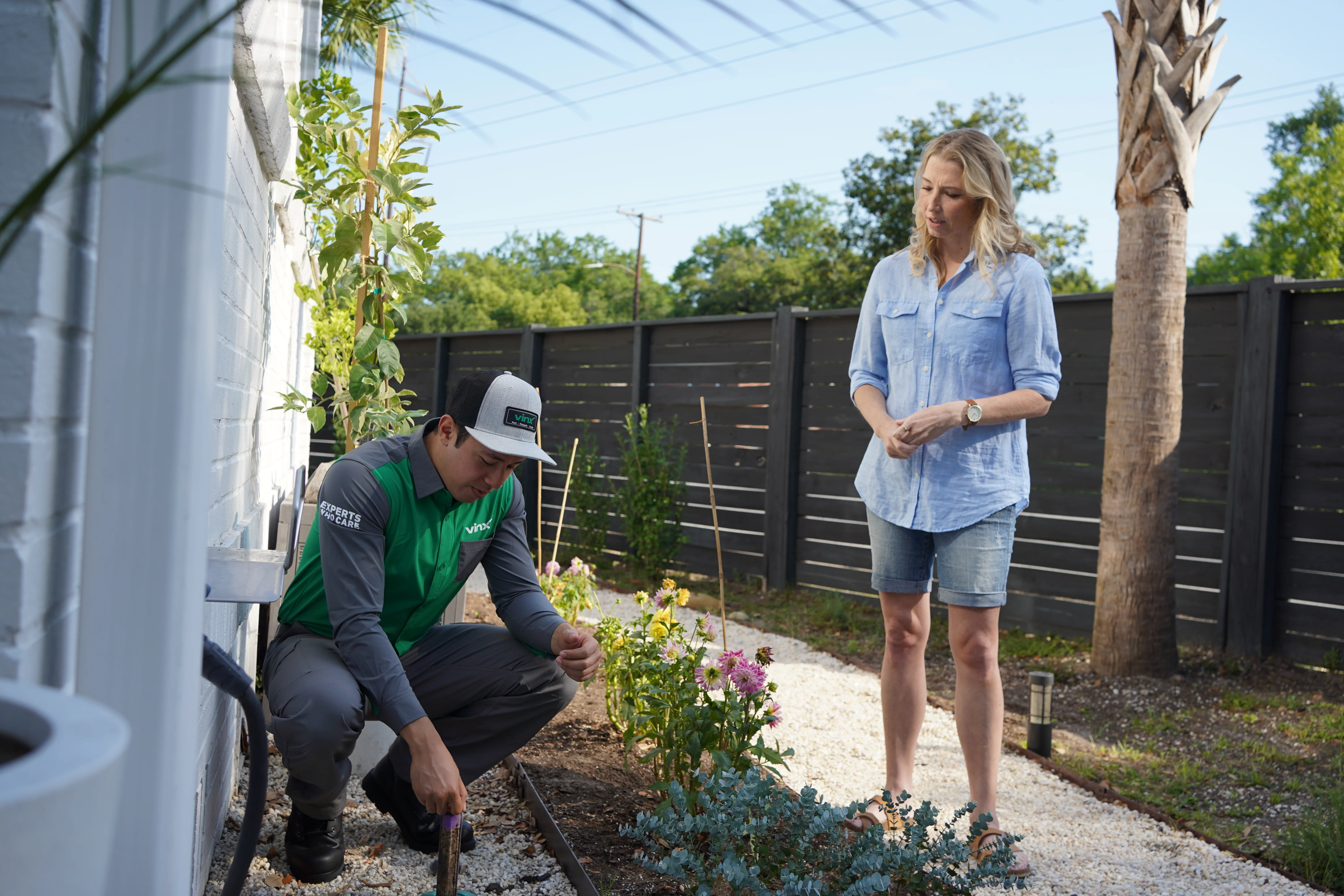
Once the problem is identified, the exterior gets its defensive line so the next wave never makes it indoors. A micro-encapsulated barrier goes around the foundation, three feet up and three feet out, intercepting insects at the slab gaps, weep holes and thresholds they actually use. Wake County’s red clay holds rainwater against foundations far longer than sandy soil, so the perimeter is where pressure concentrates after every storm — and where the strongest treatment belongs.
Yard Treatment
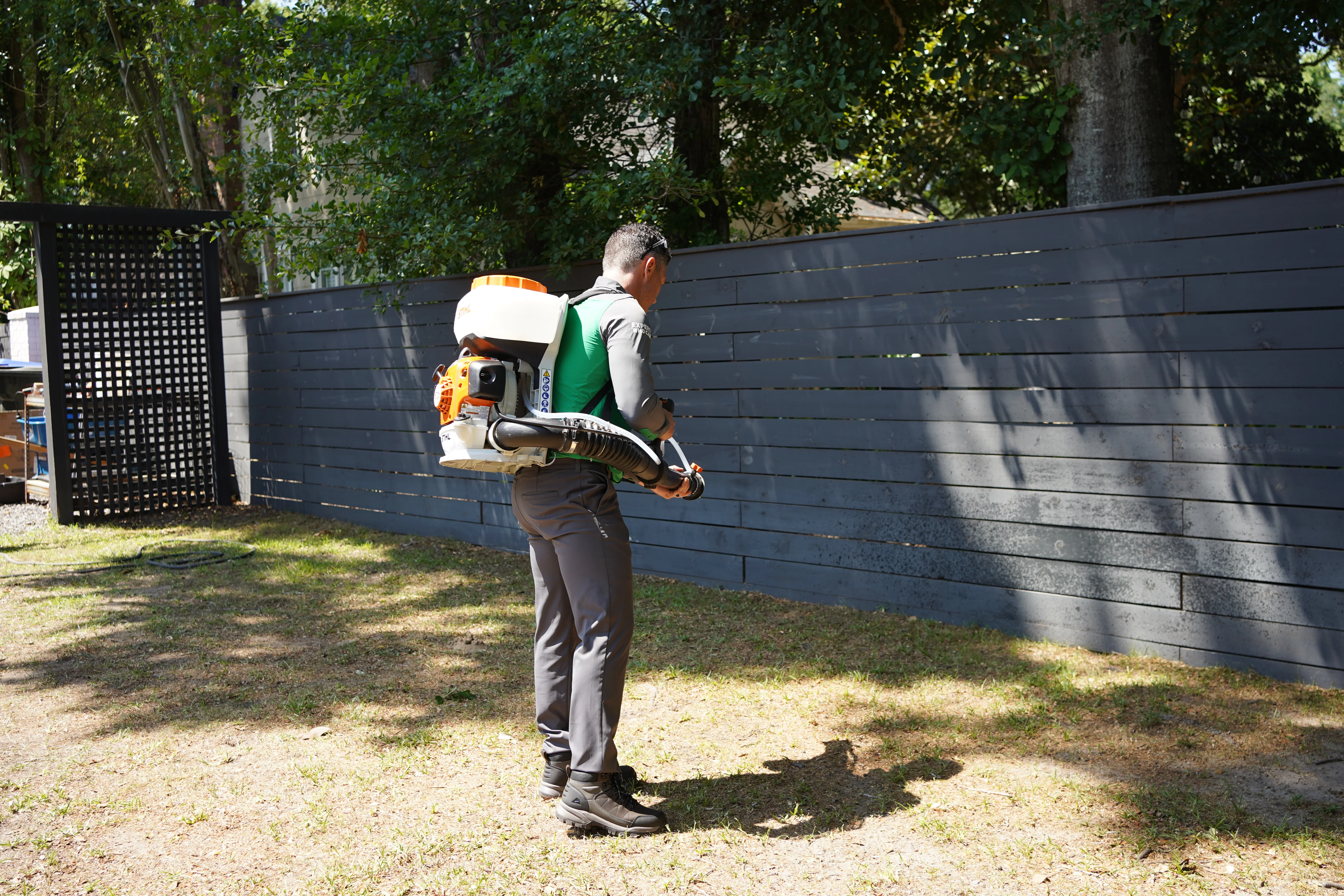
The yard gets treated up to 30 feet out, because most of what ends up inside staged in the lawn first. In Apex that means fire ant mounds on the freshly graded turf of the newest phases around Scotts Ridge and Olive Chapel — Wake County sits inside the state’s fire ant quarantine — plus mosquito harborage around the creeks and retention basins threading the town. Cutting that pressure back keeps the foundation barrier from being tested constantly.
Sweep & Treat Eaves
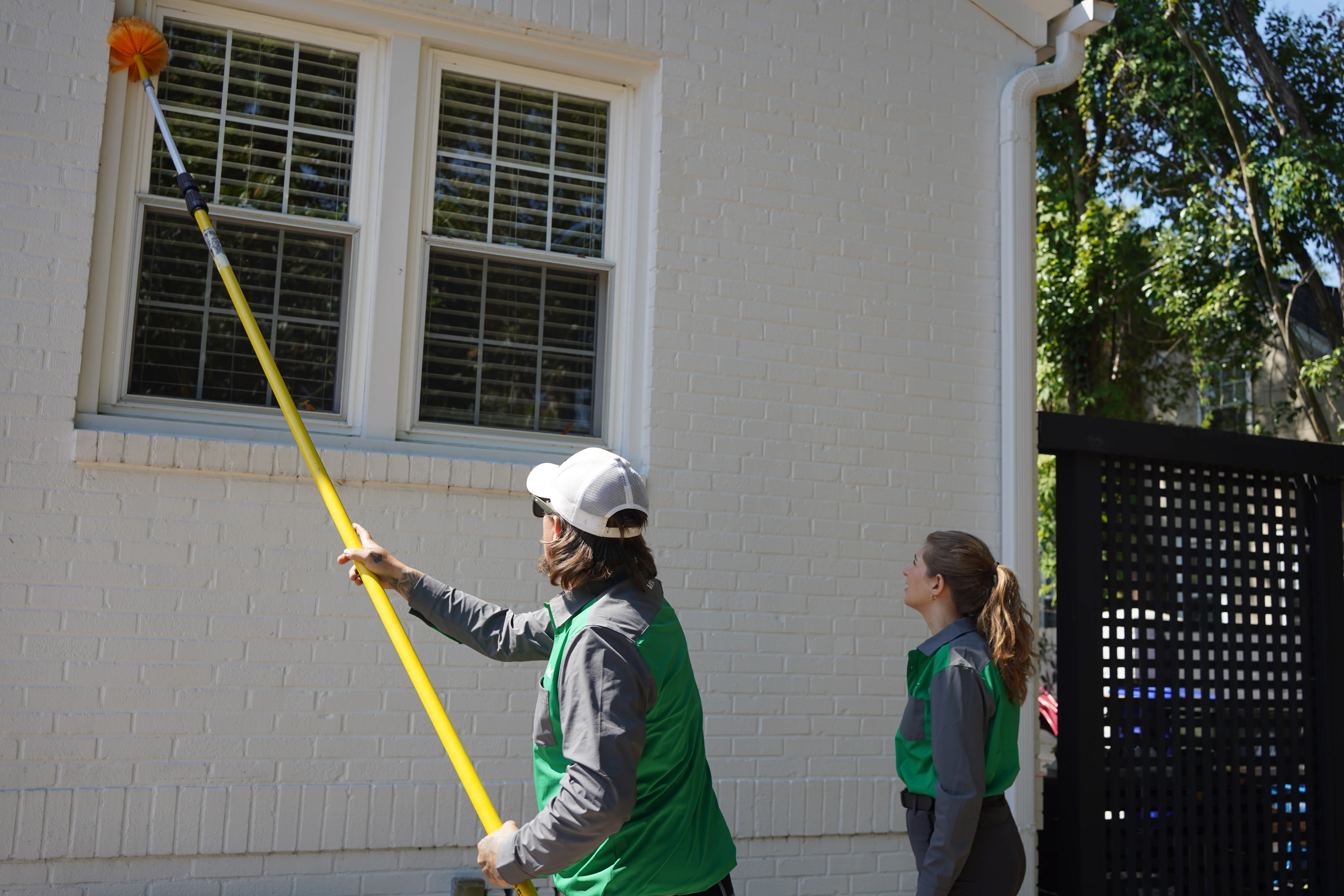
Rooflines are swept clear of webs and early wasp nests on every visit, then spot-treated with a residual product so returning insects contact the treatment instead of rebuilding. The eaves pass doubles as an inspection of the routes overhead — on the older blocks around downtown Apex, where mature limbs reach the roofline, that is often where the first carpenter ant and rodent activity shows.
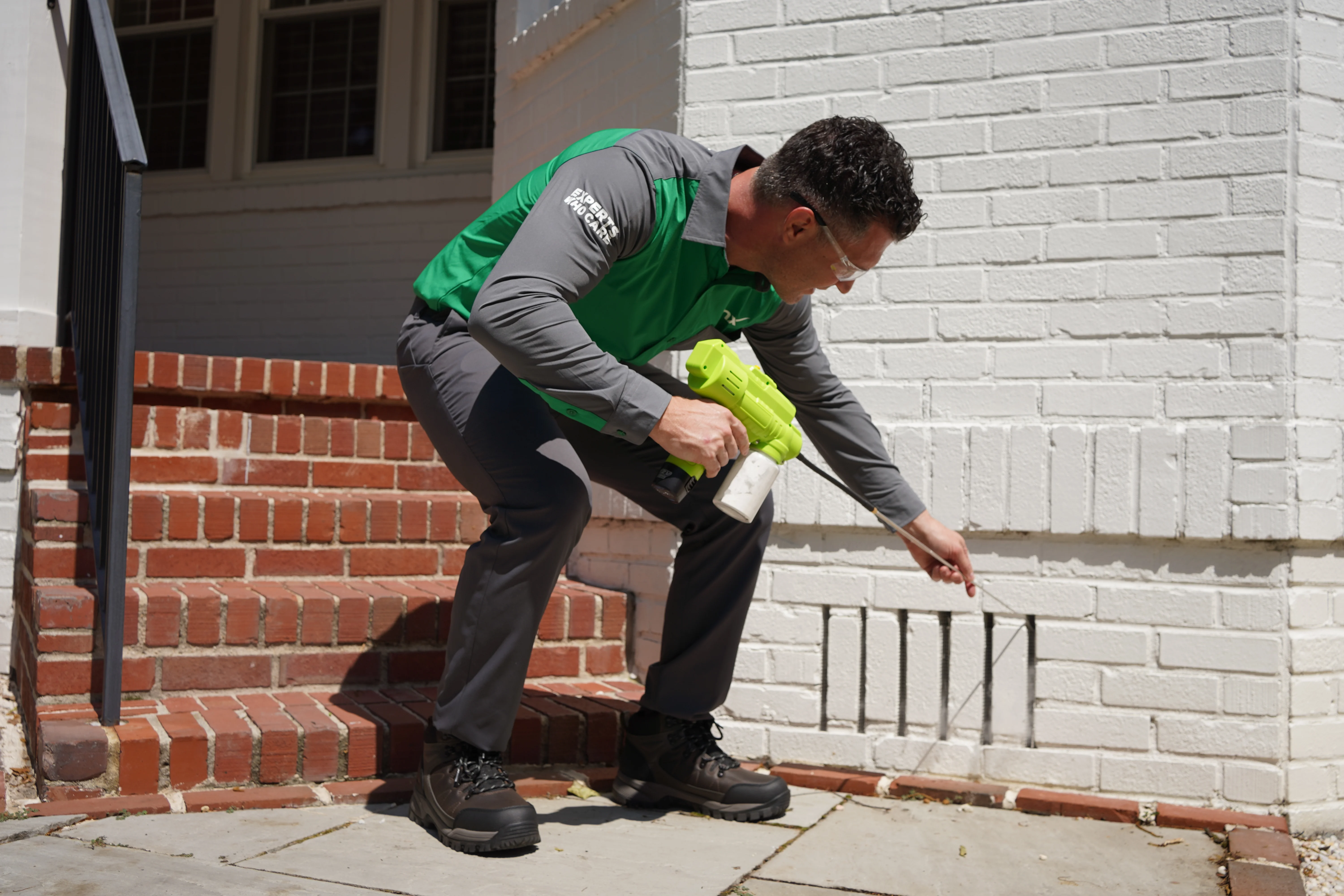
Power Dust Injection
Cracks, weep holes, pipe penetrations and expansion joints get a dust product driven deep with a compressor tip. This is the treatment that reaches wall voids, which matters in Apex’s historic core, where a hundred years of settling has opened more routes through the masonry than any surface spray can cover. Because the dust sits protected from rain and heat, it keeps working long between visits.
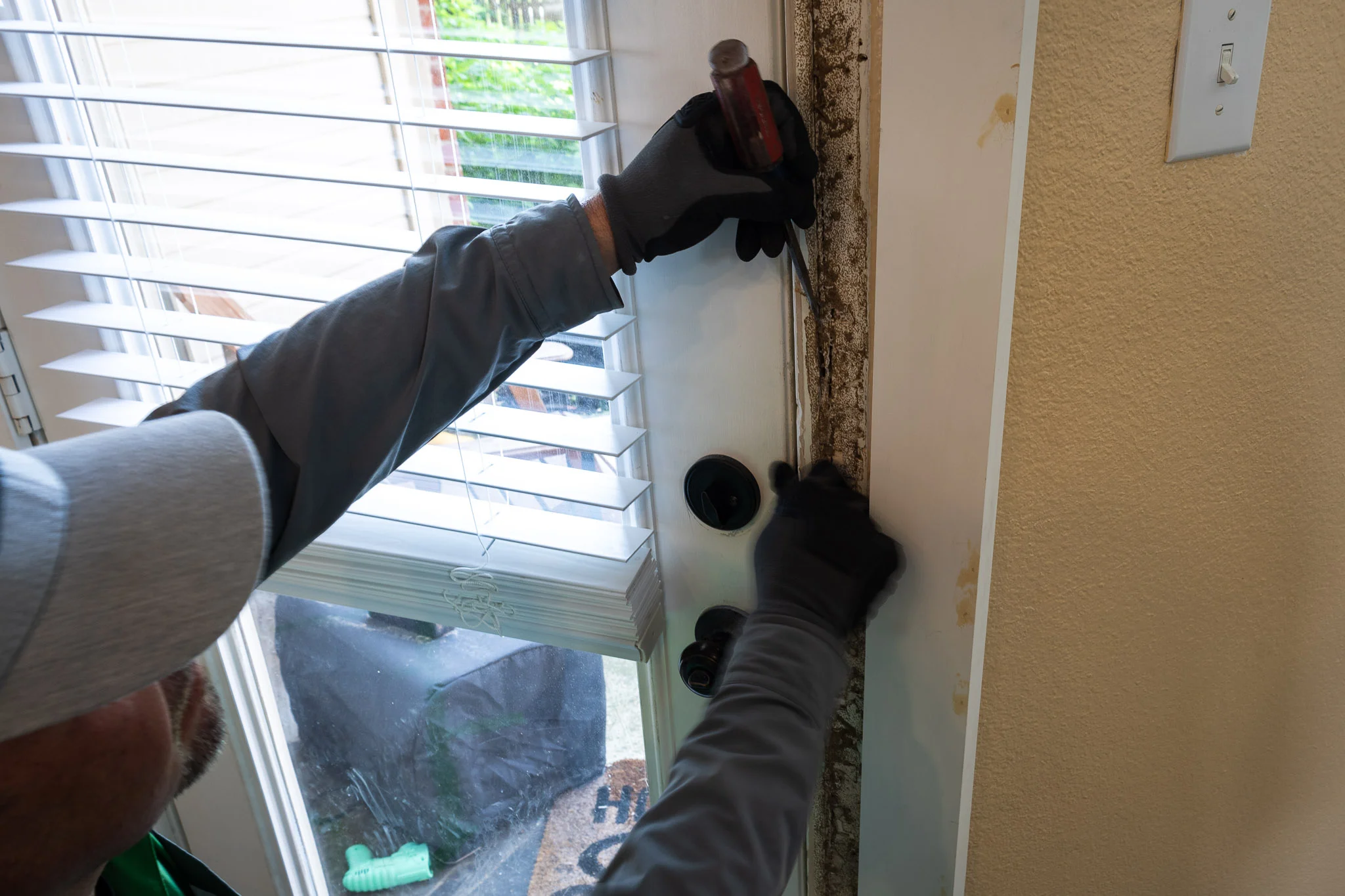
Interior Treatment (If Needed)
Where an infestation is already established indoors, we treat the harborage directly — gel bait and a growth regulator for roaches, exclusion first and then trapping for rodents — rather than misting a room and hoping. In a townhome or apartment building we look at the whole structure, since a population surviving on the other side of a shared wall simply comes back. Interior work and re-services between visits are covered at no extra charge on every plan.
Customer Reviews
Real Reviews from Apex Homeowners
Just signed up with Vinx. Scott did an excellent job, was very knowledgeable and helpful.
Verified Google ReviewScott was amazing! Very thorough and knew his stuff. Would highly recommend this service
Verified Google ReviewAbbas did a great job! Matt and his team are super professional and quick. Thanks so much!
Verified Google ReviewDid a great job and very friendly and knowledgeable
Verified Google ReviewDerek was awesome, he provided excellent customer service and performed bimonthly extermination services. Thank you!
Verified Google ReviewGreat company. Matt has been really helpful.
Verified Google ReviewMiguel serviced my home and he was super quick and helpful
Verified Google ReviewScott went above and beyond for our move in treatments. Highly recommend.
Verified Google ReviewDerek and the Vinx Team are great, addressed all my concerns and would highly recommend the Platinum package.
Verified Google Review“Excellent service from start to finish. The technician was professional, punctual, and very knowledgeable.
Verified Google ReviewAdrian did a great job. He communicated well, did a thorough job and was professional and kind.
Verified Google ReviewLocal Knowledge
A Historic Core Ringed by Subdivisions — Two Different Jobs
Last updated: September 4, 2026
Apex has managed something unusual: it has grown explosively while keeping a genuine historic downtown rather than replacing it. That leaves a small core of century-old buildings surrounded by decades of subdivision, and the two need entirely different attention. In the historic district the questions are about damp sills, crawlspace ventilation, powderpost beetles in old floors and the gaps that a hundred years of settling opens in masonry. A mile out, in a subdivision from the 2010s, none of that applies.
6 Reasons Apex Calls an Exterminator
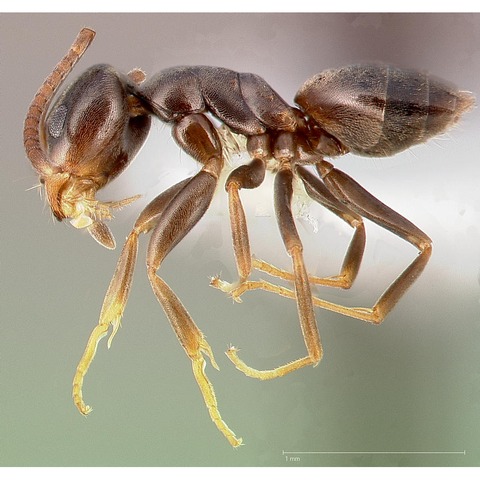
Ants
Argentine and odorous house ants flood into Apex kitchens through foundation gaps after heavy rain saturates Wake County’s red clay, and carpenter ants work the moisture-damaged wood on the wooded lots of Salem and west Apex. Fire ants are the new-construction call — Wake County sits inside the state’s imported fire ant quarantine, and freshly graded turf around Scotts Ridge and Veridea is the ground they take first. We trace ants to the colony rather than spraying the trail.
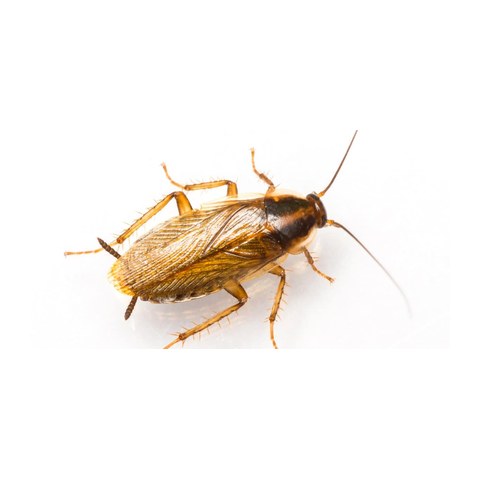
Cockroaches
American cockroaches — palmetto bugs — use the aging storm and sewer lines near downtown Apex as a direct route into the older housing stock, where crawlspace moisture keeps them comfortable. German cockroaches are the shared-wall problem in apartments and townhomes, and they need a real extermination protocol: gel bait and a growth regulator placed in the harborage itself, plus dust in the wall voids, not a surface spray the population walks around.
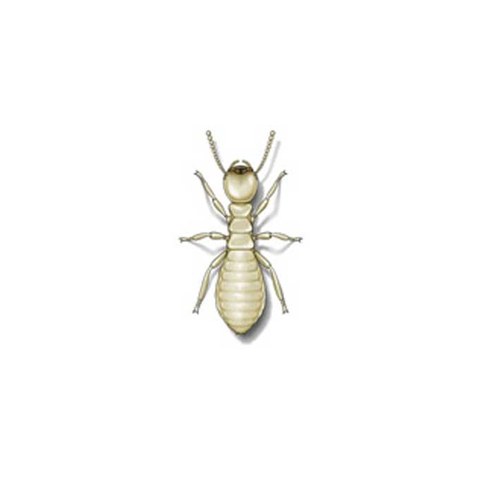
Termites
The eastern subterranean termite is active throughout Apex and all of Wake County, with swarm season running February through April. Older downtown homes on crawlspace foundations carry the highest individual risk, while newer slabs near Veridea are exposed once the builder pre-treatment ages out. Formosan termites are not the local issue — they are confined to Brunswick and Rutherford counties — and if you are selling, we inspect for the WDIR-100 report North Carolina closings rely on.
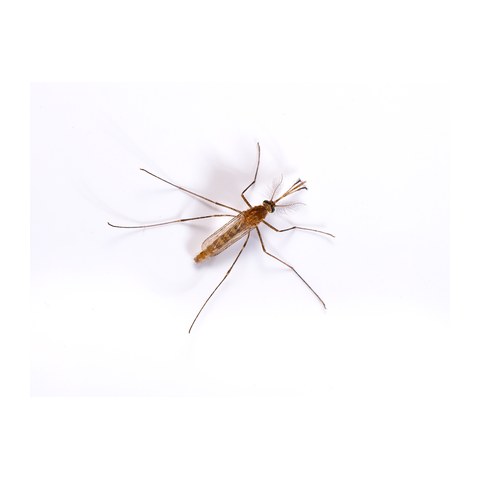
Mosquitoes
Apex sits on the divide between the Neuse and Cape Fear watersheds, threaded with small creeks, drainage ponds and stormwater retention basins — and the Asian tiger mosquito needs only a few days of standing water to breed. A birdbath or a clogged gutter is enough. We treat the water we can reach with larvicide and put a barrier treatment on the resting vegetation where adult mosquitoes spend their daylight hours.
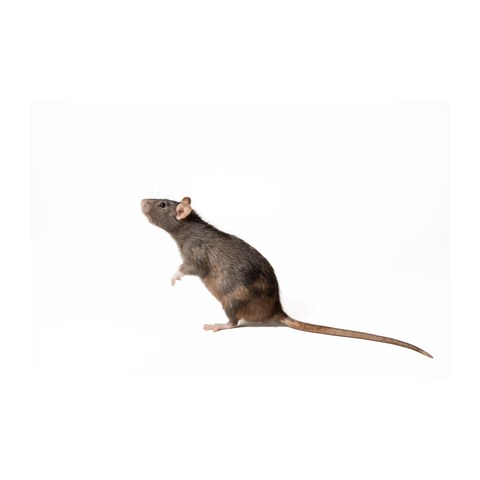
Rodents
Rodent calls in Apex track the construction: Norway rats displaced from active growth corridors relocate toward the nearest finished yard, while roof rats work the wooded lots of Friendship and south Apex. Colder Piedmont winters drive a pronounced fall migration indoors, so a lot that backs onto trees needs sealing before autumn rather than after the first mouse. Extermination that lasts starts with exclusion, then trapping and secured bait.
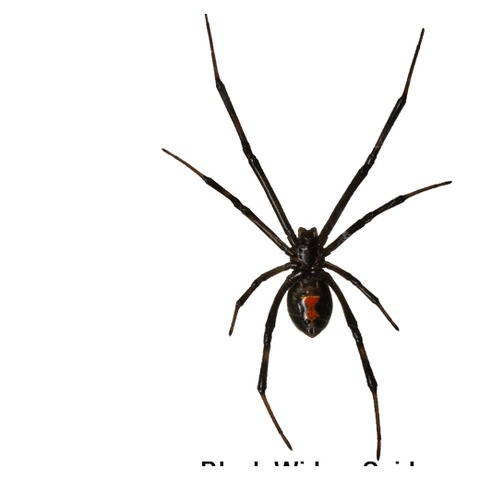
Spiders & Other Pests
Black widows turn up in Apex garages and undisturbed storage, wolf spiders wander in from wooded lot lines, and orb weavers build at exterior lighting each fall under the town’s mature canopy. A spider call is usually a prey problem — the spiders are there because the insects are — so we treat both together and clear webbing at the eaves on every visit, along with the wasp and hornet nests that go up spring through fall.
On the newer streets the questions become fire ants on graded turf — Wake County falls inside North Carolina’s imported fire ant quarantine, which now covers 81 counties — wasps on new eaves, and whether the pre-construction termite treatment has survived later landscaping. One reassurance holds across the whole town: Formosan termites are confined to Brunswick and Rutherford counties in North Carolina, so the native eastern subterranean termite is the local threat. Sending the same treatment to both halves of Apex would be lazy.
Most of Apex is neither the historic core nor last year’s phase; it is the twenty to forty year old subdivisions in between, and those are the ones people underestimate. That age is precisely when the grade has settled, downspout extensions have gone missing, decks and patios have been added across the treated soil line, and the shrubs planted at construction have grown into the siding. It is the least dramatic housing in town and it generates a good share of the termite findings — and if you are selling, North Carolina closings use the WDIR-100 report, current within 30 days.
The historic core is more precisely dated than most, because Apex burned twice. A fire in February 1905 took a number of frame commercial buildings and a second on June 12, 1911 destroyed much of the business district, and the Town notes the fires gave merchants a strong incentive to rebuild in fireproof brick. Town Hall went up in 1912, the 100 block of Salem Street was rebuilt with pressed-brick front stores by 1913 and Union Depot in 1914. So downtown is masonry of a known age rather than the frame that preceded it, and the Apex Historic District was listed on the National Register in 1994 with boundary increases in 1995, 2001 and 2008.
Year-Round Awareness
Apex NC Pest Activity: What to Expect Every Season
| Season | Pest Activity in Apex NC |
|---|---|
| Spring March–May |
Termite swarmers emerge as Wake County clay soil warms; odorous house ants establish new colonies; mosquitoes become active from March as temperatures hit 55°F+; stinging insects begin nest building on eaves and soffits. |
| Summer June–August |
Peak pressure across all species; mosquitoes at maximum activity near Falls Lake, Jordan Lake, and the Neuse River corridor; cockroaches surge in the older storm drains near downtown Apex; 100°F+ days drive spiders and cockroaches indoors seeking cooler conditions. |
| Fall September–November |
Spiders, rodents, and cockroaches move indoors seeking warmth; stinging insects become aggressive before colony die-off; mosquitoes remain active through October in warm Apex falls; termites continue feeding in heated crawlspaces beneath older homes throughout Wake County. |
| Winter December–February |
Rodents and cockroaches remain active indoors in heated structures; subterranean termites continue foraging in heated crawlspaces; Wake County clay soil retains moisture keeping termite conditions active; reduced outdoor activity but indoor pest pressure continues year-round. |
Pest Pressure by Neighborhood
Where Apex Exterminator Calls Come From
Downtown Apex: Roaches & Aging Foundations
The 1994 historic district and the streets around the old Apex Union Depot carry the town’s oldest housing stock, much of it on crawl spaces with foundation grades that predate current code. Moisture collects underneath these homes easily — the single biggest driver of American cockroach calls downtown — and the older sewer and storm lines nearby give roaches a direct path in.
Beaver Creek: Ants & Wasps Along the Greenway
The commercial corridor around Beaver Creek Crossings sits close to the Beaver Creek Trail greenway, and the tree buffers left along it support a steady insect population that spills into the surrounding streets. Odorous house ants and pavement ants are the most common calls here, along with eave-nesting wasps drawn to the mix of landscaped parking lots and adjacent yards.
Salem & West Apex: Termites in Mature Landscaping
The neighborhoods around Salem Elementary and Salem Pond Park were largely built out in the 1990s and 2000s, so the trees and mulch beds are now fully mature. Good for curb appeal — but shaded, moisture-retentive ground cover and established root systems are exactly what lets subterranean termites colonize undetected for years. Carpenter ants are a frequent call here too.
The Growth Edge: Fire Ants & Disturbed Soil
Apex’s active growth edge, anchored by the $3 billion Veridea development, is being built on land cleared within the last few years. Freshly graded soil is close to ideal for new fire ant mounds, and builders do not always pre-treat consistently — homes finished in the last two to three years here are often the ones with the least termite protection in place.
Friendship: Rodents & Ticks at the Wooded Edge
The Friendship community along Apex’s southern border toward Holly Springs runs to larger lots and more wooded edges than the denser subdivisions near downtown. That combination brings more roof rat and tick activity, so these properties need a treated margin where the mown grass meets the rough cover — for ticks in season and rodents come autumn.
Kid & Pet Safe
Our Treatments Are Safe for Your Whole Family: Including the Furry Members
Every product we use is EPA-registered and applied strictly at labeled rates by licensed North Carolina pest control technicians. We take the guesswork out of safety so you can feel confident letting kids and pets back into treated areas quickly.

EPA-Registered Products Only
All products we apply are EPA-registered and used strictly per label requirements. Our licensed technicians are trained to apply the right product in the right place at the right rate, every time.
Dry Time Before Re-Entry
Exterior spray treatments dry in 30–60 minutes. Once dry, treated surfaces are safe for children and pets to contact. Your technician confirms the all-clear before leaving.
Interior Treatment On Request
We treat only what’s needed, where it’s needed. Gel baits and crack-and-crevice applications keep products away from areas pets and children frequent most.
Botanical Options Available
Ask your technician about our plant-derived treatment options. We offer botanical alternatives for households that prefer a more natural approach.
Have a concern about products used near your pets or children? Call (984) 600-8469 and we’ll walk you through exactly what we use and why it’s safe.
Apex NC Pest Control Services
Pest Control Services in Apex

Termite Control Apex
Bait systems & liquid treatment

Mosquito Control Apex
Monthly barrier treatments

Ant Control Apex
Household ants & others

Spider Control Apex
All spider species covered

Cockroach Control Apex
American & German roaches

Rodent Control Apex
All rodents covered

Bed Bug Treatment Apex
Heat & liquid treatments

Pest Control Apex
Year-round protection plans

Tick & Flea Control Apex
Yard & pet protection
Frequently Asked Questions
Exterminator Apex NC: Frequently Asked Questions
Most Apex calls are scheduled for the next day, and active infestations are moved forward.
One-off treatments are priced against the pest and the property; recurring plans start at $49 a month with a $329 first visit. Call 855-800-8469.
It matters a great deal. Century-old downtown timber raises questions about sills, crawlspace damp and powderpost beetles. A recent subdivision house raises questions about fire ants, fresh timber and whether the pre-treat has been compromised.
Yes. Wake County falls inside North Carolina's imported fire ant quarantine, which now covers 81 counties.
Yes, in practice. North Carolina closings use the state Wood-Destroying Insect Information Report, form WDIR-100, current within 30 days.
No. They are confined to Brunswick and Rutherford counties in North Carolina, so the native eastern subterranean termite is the local threat.
Yes, and those need a treated margin where the mown grass meets the rough cover, for ticks as well as autumn rodents.
Yes. EPA-registered products, licensed technician, safe once dry.
Service Coverage
Pest Control Across Apex & Western Wake County
Serving every neighborhood in and around Apex