Exterminator in Johns Island, SC
Johns Island is South Carolina’s largest island: 84 square miles of working farmland, tidal creeks, and centuries-old live oaks, including the famous Angel Oak, just minutes from downtown Charleston. That scale brings genuinely rural, wildlife-adjacent pest pressure most Charleston suburbs never see, alongside the marsh-driven mosquitoes and coastal humidity of the tidal Stono River. From the historic oaks near Main Road to the deepwater estates along River Road to the busy Maybank Highway corridor, Vinx treats by what this uniquely large, uniquely rural island actually demands. 100% satisfaction guarantee.
Get Started in 60 Seconds
Choose what’s easiest for you
Request a Quote
We usually respond in 2 minutes
Call (855) 800-8469
Get a Live Person (no AI agents here!)
Sign Up Online
Get pricing and schedule now


Welcome to Vinx Pest Control
A Company That Actually Backs What It Says
At Vinx, we combine professional-grade treatments with a level of service most pest control companies don’t offer. Local technicians, fast response times, and a guarantee that actually means something.
“I’m not passionate about killing bugs. I’m passionate about customer service. At Vinx, you get experts who show up, do the job right, and stand behind every visit. No runaround, no fine print.”

Founder & Owner, Vinx Pest Control
PROTECTION PLANS
Johns Island Exterminator Pricing
100% money-back guarantee on every plan.
Standard Residential Protection
- 4 Seasonal Treatments Per Year
- 50+ Covered Pests
- Interior, Exterior & Yard Treatment
- Unlimited Free Re-Services
- 100% Money-Back Guarantee
- Fire Ant Yard Guarantee
- Flea & Tick Coverage
- Mosquito Treatments

Upgraded Yard Protection
- 6 Home & Yard Treatments Per Year
- 50+ Covered Pests
- Interior, Exterior & Yard Treatment
- Unlimited Free Re-Services
- 100% Money-Back Guarantee
- Fire Ant Yard Elimination Guarantee
- Flea & Tick Elimination Guarantee
- Mosquito Treatments

Most Comprehensive Protection
- 9 Treatments Per Year
- 50+ Covered Pests
- Interior, Exterior & Yard Treatment
- Unlimited Free Re-Services
- 100% Money-Back Guarantee
- Fire Ant Yard Elimination Guarantee
- Interior Flea & Tick Coverage
- 8 Mosquito Treatments (Mar–Nov)
- Free Bed Bug Treatments if Needed*
*Starting rates vary by home size and area. All plans billed monthly.
Request Your Free Pest Control Quote
Fill out the form below and a Vinx team member will reach out within 2 minutes during business hours.
Prefer to talk? Call (855) 800-8469 for a live person, no AI agents.
Our Process
How Vinx Exterminators Work a Johns Island Property: Step by Step

Inspection & Reporting
An extermination visit on Johns Island covers the whole property, not just the house — the house, outbuildings, fence line and drainage, plus the location of septic, drain field and wellhead, get noted before any product is chosen. You get a firm price before any work begins.
Exterior Foundation Treatment
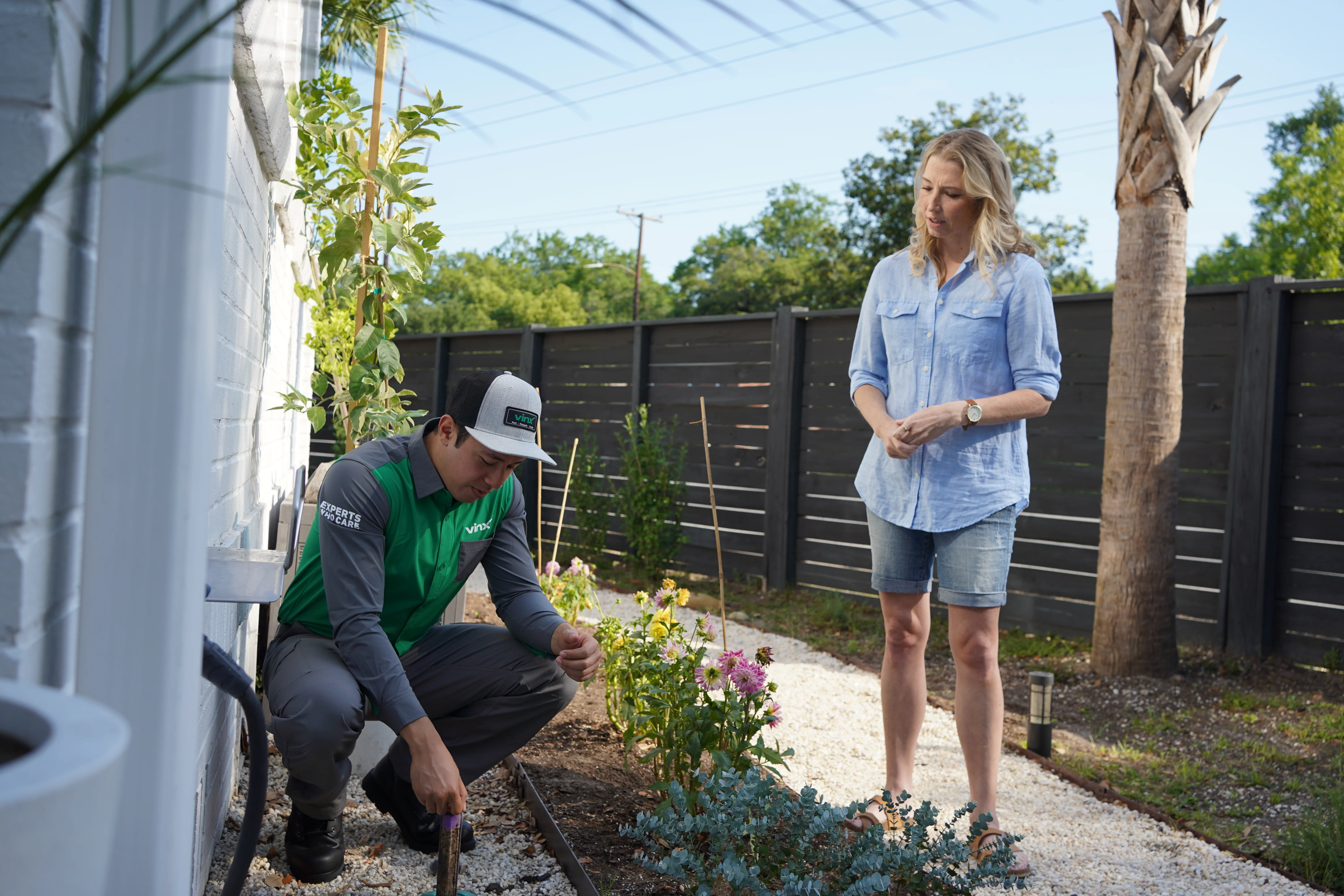
The exterior gets a micro-encapsulated barrier three feet up and three feet out, with buffers around the septic drain field, wellhead and any marsh frontage respected rather than worked around. On an island where mature oaks stand close to the house, any tree within reach of the roofline gets noted at this stage too.
Yard Treatment
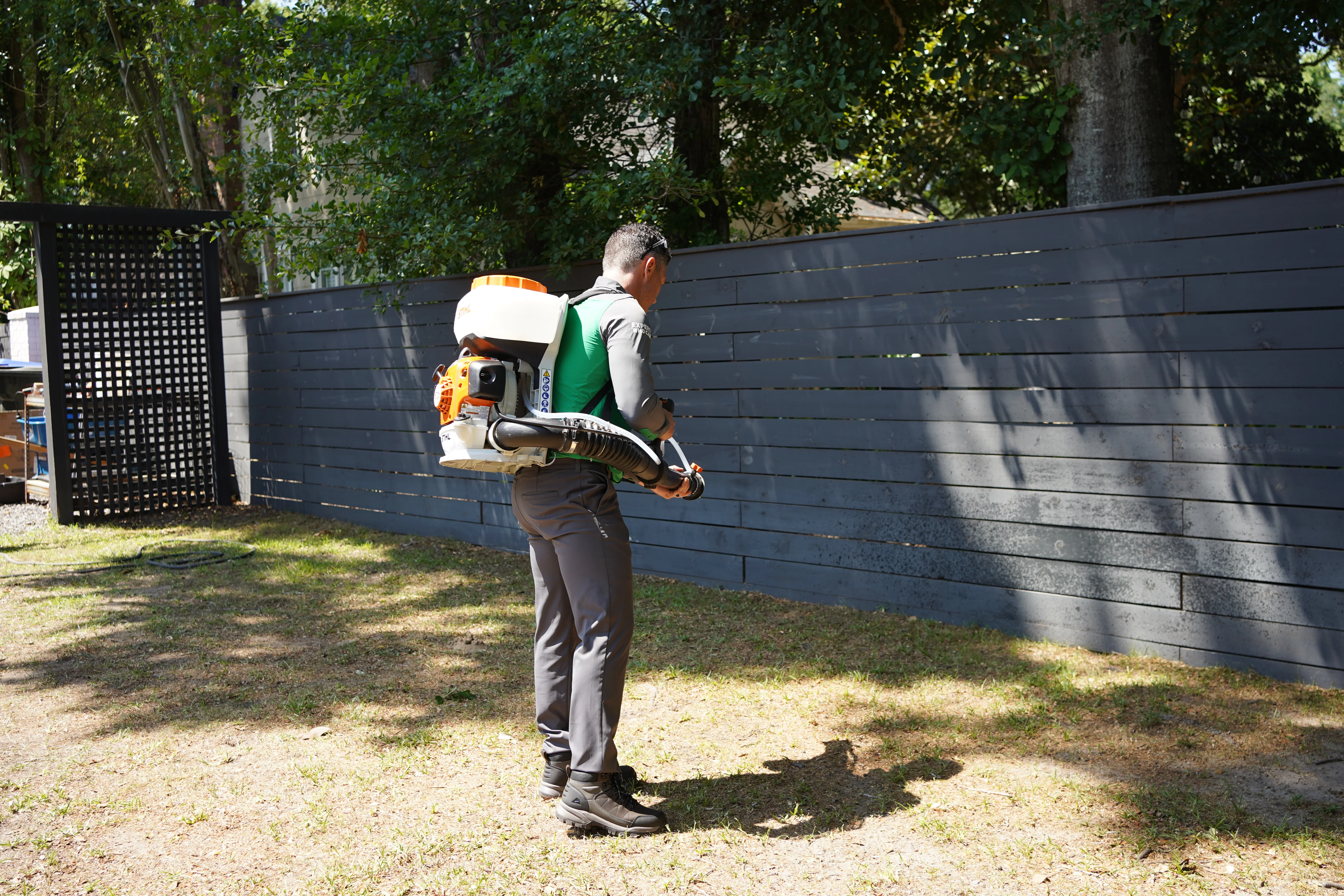
We treat the yard up to 30 feet out, starting with outbuildings first — barns, sheds and feed storage are drier, quieter and better provisioned than the house, so they hold the population that keeps re-entering it. Treating the house alone on a rural lot is why people end up on a callout cycle they never escape.
Sweep & Treat Eaves
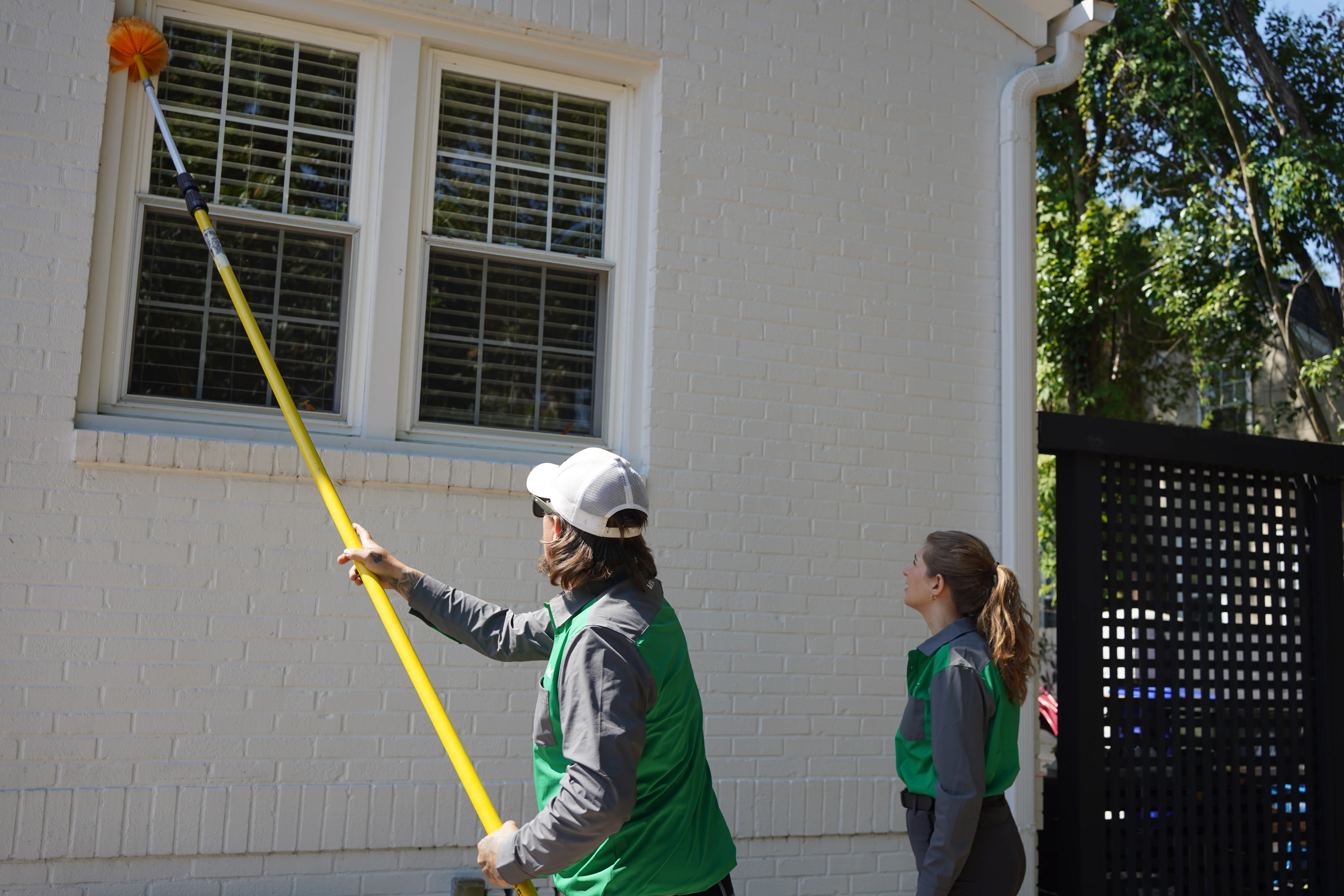
Rooflines are swept clear of webs and early wasp nests on every visit, with particular attention to limbs overhanging from mature live oaks, since overhanging limbs are a bridge for rodents and for carpenter ants nesting in dead wood above the roofline.
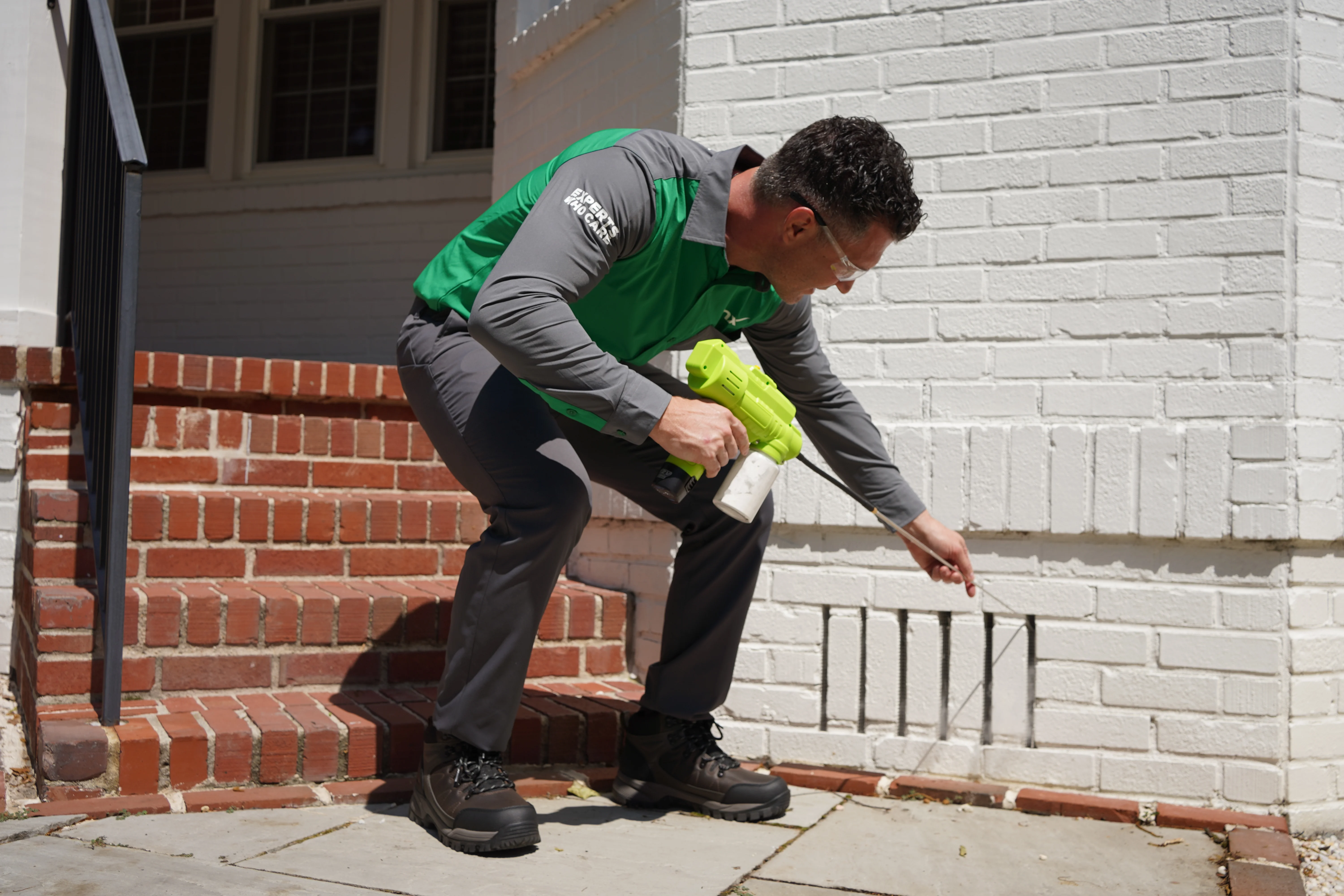
Power Dust Injection
Cracks, weep holes and expansion joints get a dust product driven in with a compressor tip, reaching wall voids a surface spray never touches. This matters most on older farmhouse construction, where wells and septic systems limit how close to the structure certain products can be applied.
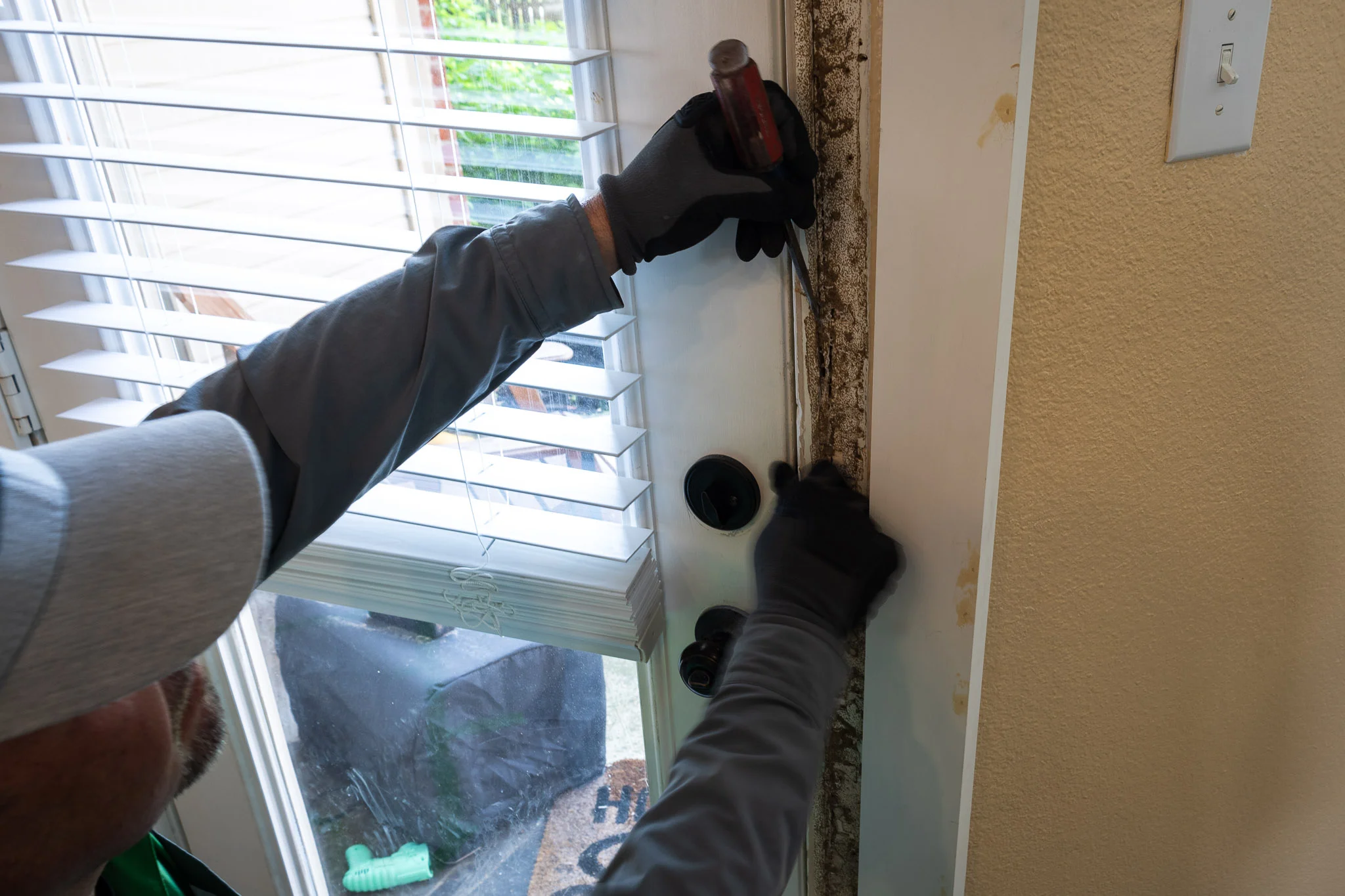
Interior Treatment (If Needed)
Where rodents, carpenter ants or termites are already established indoors or in an outbuilding, we treat the harborage directly rather than misting a room and hoping. Interior work and unlimited free re-services between visits are covered on every plan, with septic and wellhead buffers respected throughout.
Conducive Condition Report
At the end of every visit, your technician documents any conditions increasing pest pressure, moisture entry points, foundation gaps, vegetation contact, clogged gutters, standing water near the foundation. Johns Island's coastal environment creates specific conducive conditions that most companies never flag. We do, every single time.
Customer Reviews
Trusted by Johns Island Families: 4.8 Stars on Google
We've had Vinx a while now. Austin was our tech. He always does a terrific job. He treated some areas inside that we asked him to. He was pleasant, friendly and accommodating. He was thorough with all the outside treatment. Happy with our service.
Thank you to our tech Austin who has gone above and beyond to make sure my questions are answered and I am satisfied with my service! He’s so professional and courteous. Vinx & Austin definitely make sure you’re taken care of like you’re a member of their family…. Thank you again!
Today's visit by Vinx pest service was extremely outstanding. Anthony was very pleasant and very knowledgeable about his service. He also informed me of service's that I'm not receiving and should consider. Anthony is a valuable asset to the Vinx Pest family. Thank you.
Technician was on time and very thorough checking my bait stations. Highly recommend him and Vinx. I have been a satisfied customer for over 5 years.
Johnathan was able to fit me in earlier and he very professional. He helped me to understand the process!! Highly recommend
Vinx has been great the 9 months we have been with them! All techs super friendly and knowledgeable. No issues with pests or anything.
A Working Rural Island
Why Pest Control in Johns Island Is a Year-Round Commitment
Last updated: September 5, 2026
6 Reasons Johns Island Calls an Exterminator
Palmetto Bugs
American cockroaches — palmetto bugs — establish readily in barns, sheds and feed storage before ever reaching the house, since outbuildings are drier and better provisioned. Treatment starts on the outbuildings first, then the house, rather than the other way round.
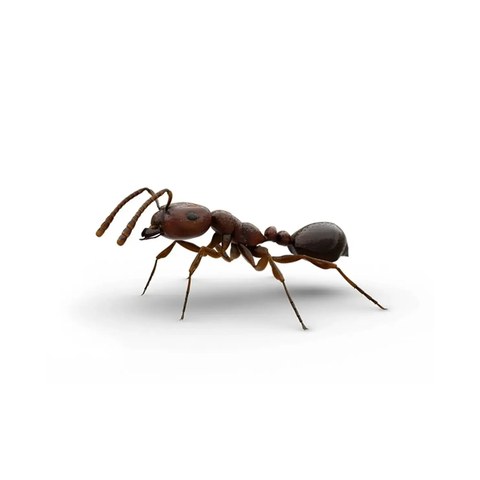
Fire & Argentine Ants
Fire ants find open, disturbed ground at field edges and along fence lines, forming a reservoir that repopulates the yard continuously. A treated boundary at the field edge, paired with a yard-wide bait program, holds the line better than chasing individual mounds.
Termites
Johns Island is in Charleston County, on Clemson's list of sixteen counties with documented Formosan colonies, and a USDA Forest Service co-authored survey found oaks and maples the most damaged genera in Formosan-infested patches around Charleston. Any large oak near the house gets assessed as part of a soil-first termite inspection.

Mosquitoes
Sea-island drainage answers to the tide as much as to rainfall, and a ditch or low corner that once drained in a day can now hold water for several. We map where water sits on the property and treat the larval stage directly, since five days of standing water is enough for mosquitoes to breed.

Rodents
Outbuildings on a rural lot — barns, sheds, feed storage — are drier and better provisioned than the house, so they hold the rodent population that keeps re-entering it. Exclusion and treatment on the outbuildings first is what actually breaks the cycle.
Spiders
Spiders on Johns Island follow prey availability around outbuildings and field edges rather than establishing as an independent problem. We treat the insect population and harborage together and clear webbing at the eaves on every visit.
Johns Island is still a working rural island, and that is the part most pest control companies get wrong about it. Septic systems, private wells, barns and equipment sheds, unpaved drives, and farm fields running up to back fences change what you are dealing with and, just as importantly, what can legally and sensibly be applied where. Much of the island is on septic and a good deal of it on private wells, which is unusual in our service area and genuinely constrains treatment — Clemson’s coastal water-quality guidance advises coastal homeowners to have septic inspected every one to two years and pumped every three to five, and to keep a buffer of roughly ten to thirty feet free of fertilizer and pesticide where property meets marsh or creek. A failing or saturated drain field is a moisture source, and moisture is what brings roaches, millipedes and subterranean termites toward a structure, so the first questions on an island property are where the tank and field sit, where the wellhead is, and where the water goes after a hard rain.
The island’s most famous resident is a tree. the City of Charleston puts the Angel Oak at three to four hundred years old, sixty-five feet tall, twenty-five and a half feet in circumference, casting roughly seventeen thousand square feet of shade. Live oaks of that character are everywhere here, and mature canopy has consequences: shade keeps soil and siding damp for longer after rain, overhanging limbs bridge rodents and carpenter ants into the roofline, and a USDA Forest Service co-authored survey around Charleston found that thirty-seven percent of seventy-one surveyed forest patches held Formosan infestations, with oaks and maples the most damaged genera, the termites hollowing living trunks outward from the dead heartwood. A big oak near the house is something to have looked at, not simply admired.
On a rural lot the house is rarely where a problem originates. Barns, tack rooms, equipment sheds, feed storage and woodpiles are drier, quieter and better provisioned than anything indoors, so rodents and wasps establish there and move to the house when the weather turns or the food runs out. The same logic applies to the field edge — where cultivated or fallow ground meets a fence line, you get a reservoir of rodents, ticks and fire ants that repopulates the yard continuously. Johns Island is also in Charleston County, on Clemson’s list of sixteen counties with documented Formosan colonies, and NOAA’s Charleston tide station shows a rising sea level trend that means a ditch or low corner that used to drain in a day now sometimes holds water for several — enough, per Clemson HGIC, to breed mosquitoes.
Industrial-scale pest management is not new to these islands; it has institutional roots here. Charleston County’s historical survey records that one of South Carolina’s five agricultural experiment stations, run jointly by Clemson College and the US Department of Agriculture, was the Charleston station — and that it stressed large-scale farming with machinery and chemicals, concentrating on truck crops, beef and forestry, testing tomato varieties and planting pecan orchards on the neighboring islands. A century of that leaves both expertise and residue in the local landscape, and it is part of why rural properties here need a plan built for working land rather than a suburban lot.
Pest Pressure by Neighborhood
Where Johns Island Exterminator Calls Come From
Septic & Well Lots: Moisture Is the Real Driver
A saturated or failing drain field is a standing moisture source that draws termites, roaches and millipedes toward the structure. We locate the tank, field and wellhead first and treat the moisture problem as the actual cause rather than just spraying the symptom.
Under the Canopy: Formosan Risk in Living Trees
Large live oaks throughout the island can hollow from the heartwood outward while looking healthy from the driveway. We assess any large tree within reach of the roofline and treat before considering removal, since disturbing an untreated colony can push it toward the house.
Barns & Sheds: Where It Usually Starts
Barns, tack rooms and feed storage are drier, quieter and better provisioned than the house, so they hold the rodent and wasp populations that keep re-entering it. Treating only the house on a property like this is why people end up on a callout cycle that never ends.
Maybank Corridor: Farm & Commercial Mix
Businesses and working farms along Maybank Highway and River Road run on a documented commercial schedule with service records. Field-edge fire ants and rodents are the steadiest calls in this stretch, tracking with the fallow and cultivated ground nearby.
Complete Coverage
What Our Johns Island Exterminators Treat
Every common Lowcountry pest covered under one recurring service plan
Palmetto Bugs
Year-round pressure. Drain lines, crawlspace vents, plumbing penetrations.
All Plans
Fire & Argentine Ants
Sandy coastal soil & new construction displacement. Requires Plus or Platinum.
Plus & PlatinumSpiders
Black widow, wolf spider. Cobweb removal included every visit.
All Plans
Wasps & Hornets
Nest removal from soffits and eaves. Persistent in warm coastal climate.
All Plans
Fleas & Ticks
Exterior flea/tick treatment. Interior flea covered in Platinum.
Plus & PlatinumMosquitoes
Monthly treatment Mar–Oct. Tidal proximity demands this level.
Platinum OnlyRodents
Roof rats, fence lines, power lines, roofline gaps. Exterior bait stations.
All PlansTermites
Formosan termite core range. Sentricon TotalDefense from $35/mo+.
Add-On
Bed Bugs
Covered after 12 months of Platinum service.
Platinum 12moKid & Pet Safe
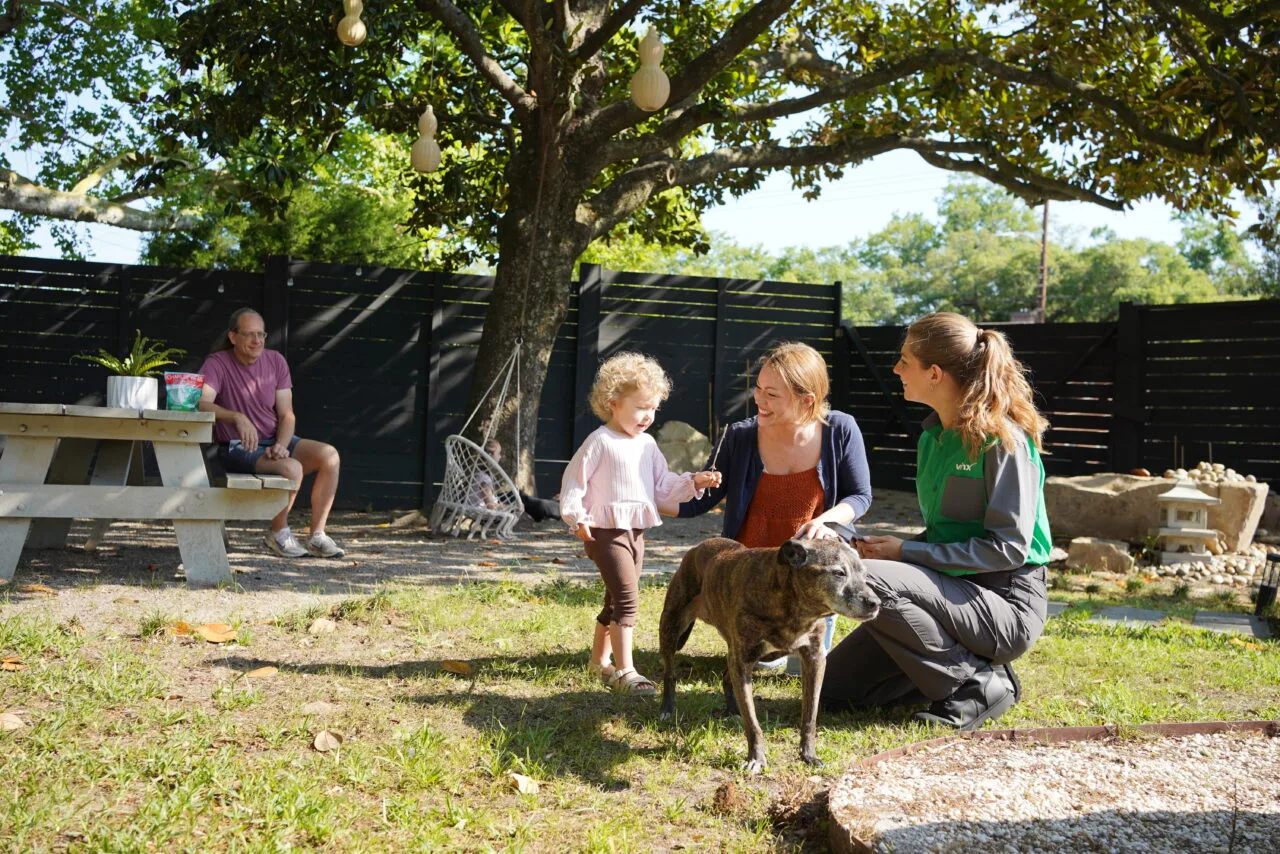
Our Treatments Are Safe for Your Whole Family: Including the Furry Members
Every product we use is EPA-registered and applied strictly at labeled rates by licensed South Carolina technicians. We take the guesswork out of safety so you can feel confident letting kids and pets back into treated areas quickly.
EPA-Registered Products Only
All products we apply are EPA-registered and used strictly per label requirements. Our licensed technicians are trained to apply the right product in the right place at the right rate, every time.
Dry Time Before Re-Entry
Exterior spray treatments dry in 30–60 minutes. Once dry, treated surfaces are safe for children and pets to contact. Your technician will confirm the all-clear before leaving your property.
Interior Treatment On Request
We treat only what’s needed, where it’s needed. Gel baits and crack-and-crevice applications keep products away from areas pets and children frequent most.
Botanical Options Available
Have specific sensitivities? Ask your technician about our plant-derived treatment options. We offer botanical alternatives for households that prefer a more natural approach.
Have a concern about products used near your pets or children? Call (855) 800-8469 and we’ll walk you through exactly what we use and why it’s safe.
Explore More
More Pest Control Services in Johns Island
Termite Control Johns Island
Sentricon bait system
Mosquito Control Johns Island
Monthly barrier treatments
Ant Control Johns Island
Household ants & others
Spider Control Johns Island
All spider species covered
Cockroach Control Johns Island
Palmetto bugs & German roaches
Rodent Control Johns Island
All rodents covered
Bed Bug Treatment Johns Island
Heat & liquid treatments

Tick & Flea Control Johns Island
Yard & pet protection

Pest Control Johns Island
Year-round protection plans
Frequently Asked Questions
Exterminator Johns Island SC: Frequently Asked Questions
Recurring plans start at $49 a month. On island properties the variable is usually acreage and outbuildings rather than house size, so a farmhouse with three sheds prices differently from a similar house on a quarter acre. Inspection is free and the price is firm first. Call 855-800-8469.
Yes, provided whoever is treating knows where the tank and field are. We keep product off the drain field and treat the moisture a struggling field creates, because that moisture is usually the real reason pests are moving toward the house. Clemson’s coastal water-quality guidance sets out the inspection and pumping intervals worth keeping to.
Worth checking rather than worrying. a USDA Forest Service co-authored survey around Charleston found oaks and maples were the most damaged genera in Formosan-infested patches, and the species hollows living trunks from the heartwood outward, so a tree can look healthy and be substantially empty. Treat before you consider removal — disturbing an untreated colony can push it toward the house.
Because the barn is almost certainly the source. Outbuildings are drier, quieter and better provisioned than the house, so they hold the population that keeps re-entering it. Treating only the kitchen is how people end up on a callout cycle that never ends.
Yes. Johns Island is in Charleston County, which Clemson’s county tracking lists among the sixteen South Carolina counties with documented colonies, and Clemson dates the introduction in Charleston to the mid-1950s. Clemson also notes a listed county does not mean uniform presence throughout it, so an inspection is the answer rather than an assumption either way.
It affects where water sits, which is the same thing. NOAA’s Charleston tide station shows a rising trend at the Charleston station and nineteen minor flood days in 2023 against a mid-century baseline of nought to three. A low corner that once drained overnight can now hold water for days, and five days is all Clemson HGIC says mosquitoes need.
Yes. Residential, agricultural outbuildings and commercial premises, including the businesses along Maybank Highway and River Road. Commercial work runs on a documented schedule with service records.
We cover the whole island including Fenwick, Rushland and the Maybank corridor, plus Wadmalaw and James Island next door. Most calls get a next-day appointment. Call 855-800-8469.
Service Coverage
Pest Control Across Johns Island & the Lowcountry
Serving every neighborhood in and around Johns Island