Tick & Flea Control in Poquoson, VA
Lone Star, Blacklegged, American Dog Tick & Flea Experts
Poquoson reads as a marsh-and-water city, but the open salt marsh itself isn’t the tick problem — the shrub-scrub and wooded cover around it is. The Plum Tree Island refuge boundary carries blacklegged ticks and the deer behind them, wooded lot lines along Wythe Creek Road carry lone star ticks, and established multi-pet yards carry the steadiest flea pressure.
Get Started in 60 Seconds
Choose what’s easiest for you
Request a Quote
We usually respond in 2 minutes
Call 855-800-8469
Get a live person (no AI agents here!)
Sign Up Online
Get pricing and schedule now





Welcome to Vinx Pest Control
A Company That Actually Backs What It Says
At Vinx, we pair professional-grade treatment with a level of follow-through most pest control companies skip. Local technicians, fast response, and a guarantee that holds up after the invoice is paid.
Get a Free Quote"I'm not passionate about killing bugs. I'm passionate about customer service. At Vinx, you get experts who show up, do the job right, and stand behind every visit. No runaround, no fine print."
WELCOME TO VINX PEST CONTROL
Tick & Flea Control Plans for Poquoson Homeowners

Standard Residential Protection
- 4 Seasonal Treatments Per Year
- Yard & Perimeter Tick Treatment
- 50+ Covered Pests
- Unlimited Free Re-Services
- $329 Initial Treatment · 12-Month Agreement

Upgraded Yard Protection
- Everything in HomeGuard
- 6 Home & Yard Treatments Per Year
- Flea & Tick Elimination Guarantee
- Expanded Perimeter Treatment
- $329 Initial Treatment · 12-Month Agreement

Most Comprehensive Protection
- Everything in Plus
- 9 Treatments Per Year
- Interior AND Exterior Flea Treatment
- Priority Scheduling
- $329 Initial Treatment · 12-Month Agreement
Live along a wooded edge near Plum Tree Island or the Wythe Creek Road corridor? Ask about our expanded shrub-line and wooded-edge tick barrier treatment.
Get Your Free Poquoson Tick & Flea Inspection
Fill out the form below and a Vinx team member will reach out within 2 minutes during business hours.
Prefer to talk? Call 855-800-8469 for a live person, no AI agents.
Our Approach
How Vinx Controls Ticks & Fleas in Poquoson

Inspection & Habitat Assessment
Your technician inspects grassy waterfront edges near Messick Point, shrub-scrub and wooded cover along the Plum Tree Island refuge boundary, wooded lot lines in the Wythe Creek Road corridor, and established yards in older watermen’s neighborhoods, identifying which tick species and flea pressure are actually present.
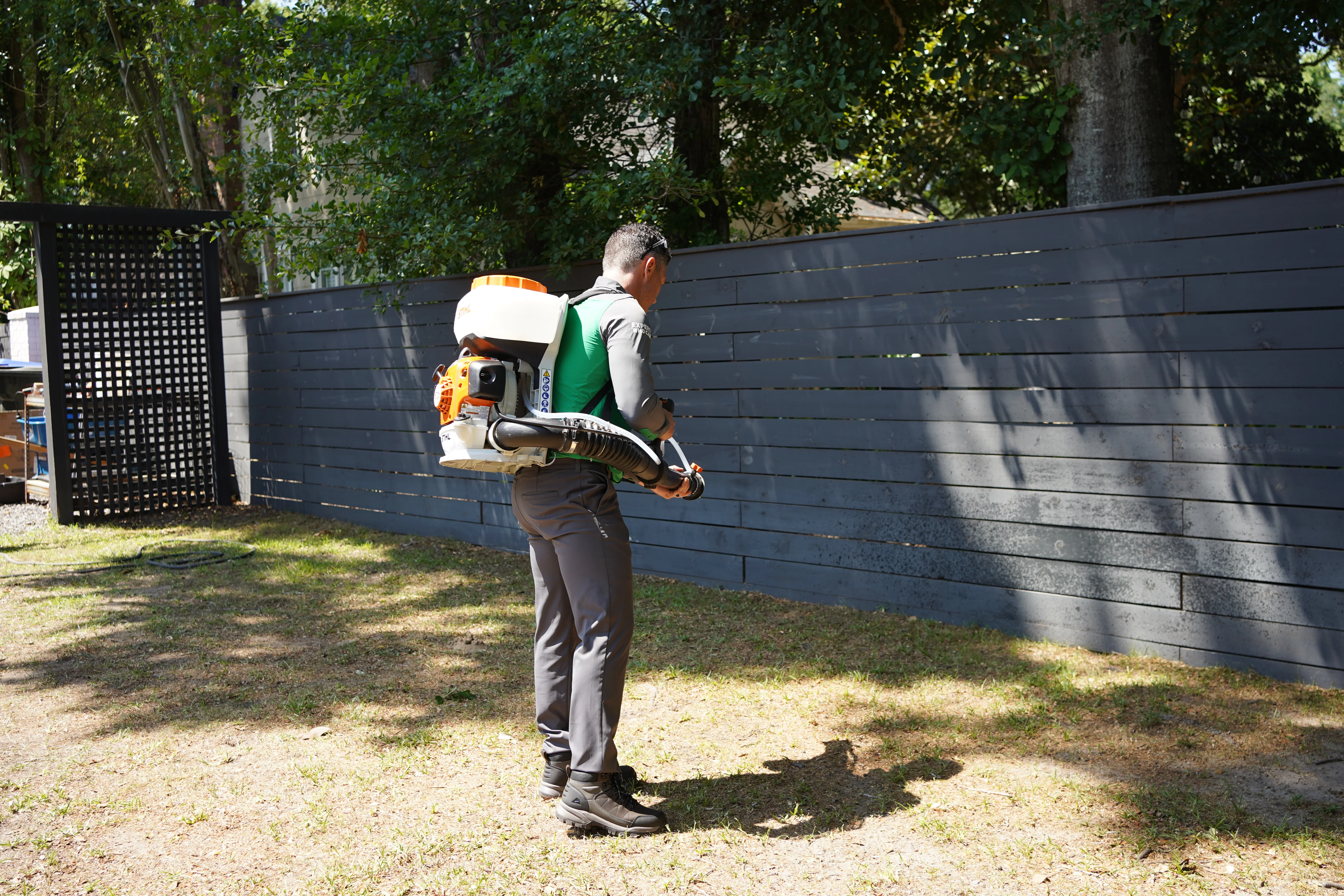
Shrub-Line & Perimeter Barrier Treatment
Treatment targets the shaded, wooded, and grassy transition zones where ticks wait for a host to pass, rather than the open lawn where they rarely are.
Yard-Wide Flea Treatment
Since most of a flea population lives off the pet, treatment addresses eggs, larvae, and pupae throughout the yard and shaded resting areas, not just where the pet spends time.
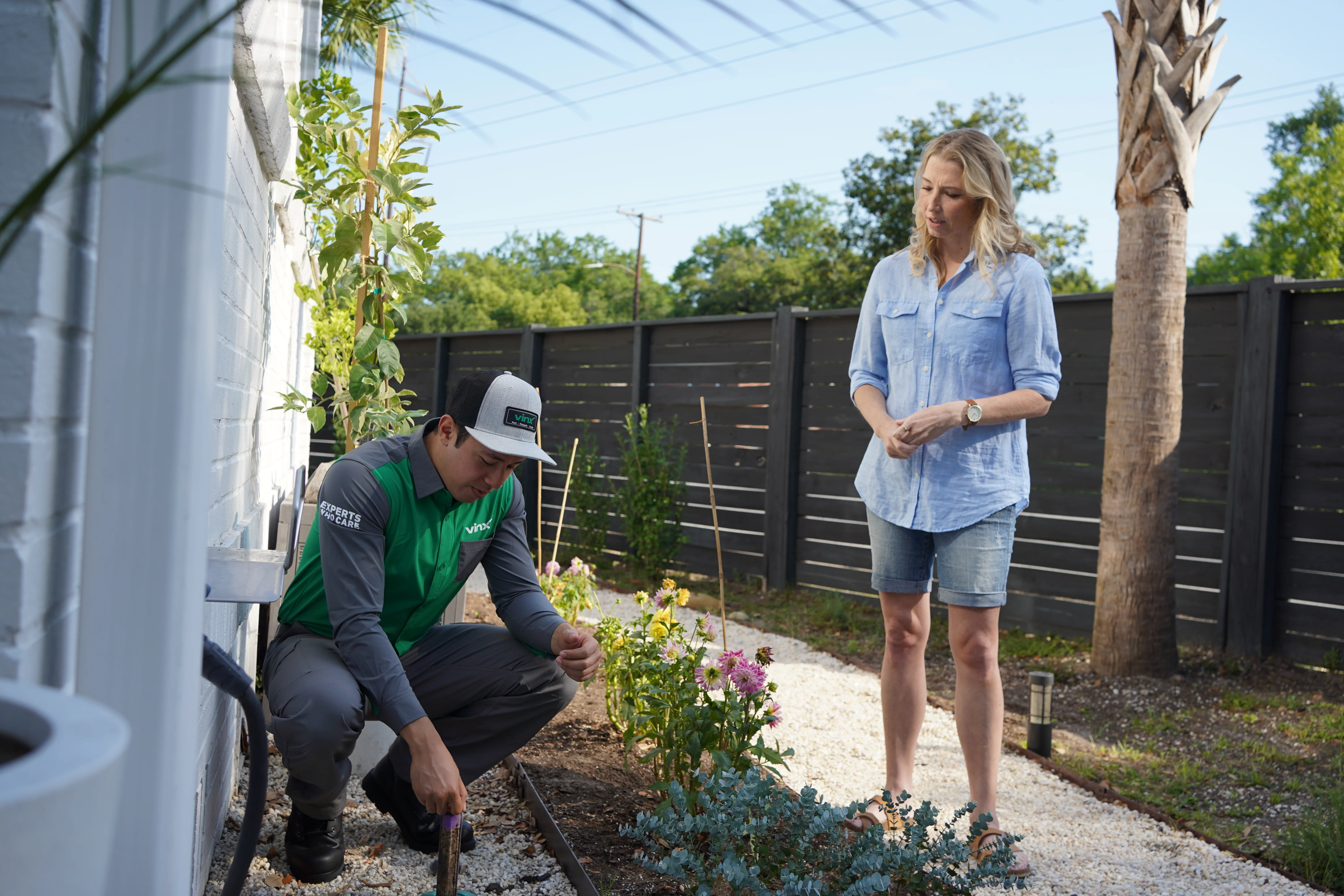
Ongoing Seasonal Treatment
Given Poquoson’s long, humid tick and flea season running from spring into late fall, ongoing treatment through the season is the standard recommendation, especially near wooded and refuge-adjacent lots.
What Customers Say
Real Reviews from Poquoson Customers
Vinx is a great company. After our first treatment for ticks and fleas on the property, it rained buckets. I brought this to their attention and without hesitation they redid the application. Micah, their tech, did an excellent job. Highly recommend this company
I was a little hesitant to use this company at first. I had never heard of them before. A few of our neighbors have started using them, so we gave them a try. So far so good, and all of the staff are very nice and respectful of our pets.
Brandon was awesome. Very polite and respectful as well as completed the job just as requested. It was a pleasure to work with someone so truly joyful.
Vaughn was polite and informative about what he did.
Protecting Your Family and Pets? Call Vinx Today.
Free inspection. Next-day service available. Backed by unlimited free re-service. Call (855) 800-8469.
Call (855) 800-8469Poquoson Tick & Flea Pressure
Why Tick & Flea Control in Poquoson Isn’t One-Size-Fits-All
Most tick and flea content for the Hampton Roads region, especially from national franchises, reads identically regardless of city, with no mention of Plum Tree Island, the Wythe Creek Road corridor’s wooded edges, or the multi-pet households common in Poquoson’s older neighborhoods. That undersells a city where the risk genuinely varies by part of town.
The marsh edge bordering Plum Tree Island National Wildlife Refuge — roughly 3,300 acres of salt marsh, scrub-shrub, and forest habitat — gives blacklegged ticks and the deer that carry them extensive cover, concentrating Lyme disease risk along that boundary. The Wythe Creek Road corridor’s newer subdivisions back up to woods and open fields, prime habitat for the lone star tick, Virginia’s most common human-biting tick and the species tied to alpha-gal syndrome and ehrlichiosis.
Tick & Flea Species Relevant to Poquoson, VA
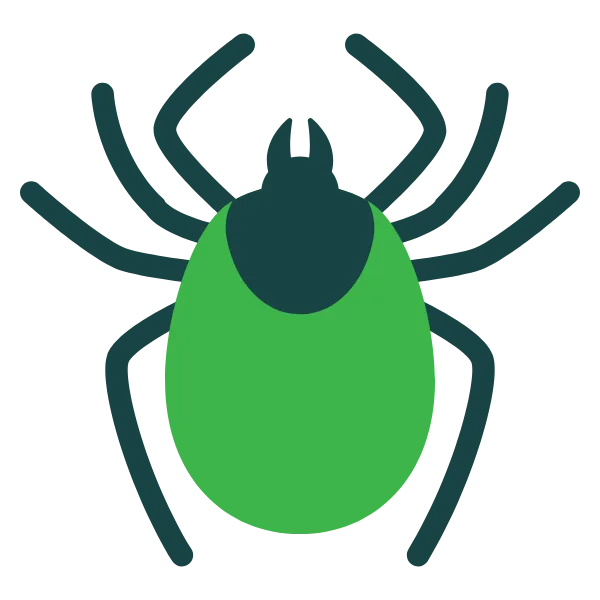
Lone Star Tick (Amblyomma americanum)
Virginia’s most common human-biting tick according to the Virginia Department of Health, active spring through fall, and the species linked to alpha-gal syndrome — a red-meat allergy — and ehrlichiosis. Common along the Wythe Creek Road corridor’s wooded lot lines.
Blacklegged (Deer) Tick (Ixodes scapularis)
The species responsible for Lyme disease in Virginia, with adults most active fall through early spring. Favors shrub-scrub and wooded cover where deer travel. Common along the marsh edge bordering Plum Tree Island National Wildlife Refuge.
American Dog Tick (Dermacentor variabilis)
May carry Rocky Mountain spotted fever and is active spring and summer in grassy, sunny edges rather than deep woods. Common in Messick Point’s waterfront yards.
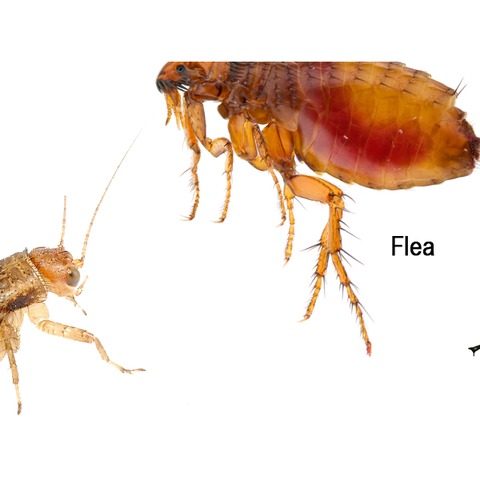
Cat Flea (Ctenocephalides felis)
Rides in on pets and wildlife and can run several generations through Poquoson’s long warm season. Roughly 95% of a flea population lives in the yard and carpet, not on the pet. Common in older watermen’s neighborhoods’ multi-pet households.
Messick Point’s working waterfront sees American dog ticks in its grassy edges and yards, a different species with a different disease risk: Rocky Mountain spotted fever. Poquoson’s older watermen’s neighborhoods round out the picture with the steadiest flea pressure, driven by established landscaping and a higher concentration of multi-pet households restocking the yard’s flea population season after season. Treating every part of Poquoson the same way misses which pest and which risk is actually concentrated where you live.
The scale of the boundary is the thing most homeowners underestimate here. Virginia Cooperative Extension puts 168 miles of shoreline around a city of roughly twelve thousand people, with 51% of the landmass in wetland. That is an enormous amount of edge — the transition from mown lawn to shrub, scrub and marsh — per household, and edge is precisely where ticks wait and where the deer and small mammals that carry them move. It is also why the treatment worth paying for here is aimed at that margin and the shaded harborage behind the house, rather than broadcast over open lawn where ticks are not questing anyway.
What to Look For
Signs of Tick & Flea Activity in Your Poquoson Home
A Tick Found After Yard Work Near Woods or Shrub Lines
Common along the Wythe Creek Road corridor and the Plum Tree Island refuge boundary.
A Pet Scratching Excessively Despite Being on Preventive
A sign the yard itself, not just the pet, needs treatment.
Small Dark Specks (Flea Dirt) in Pet Bedding or Carpet
A direct sign of an established flea population.
A Bullseye-Shaped Rash Following a Tick Bite
Warrants prompt medical attention as a possible sign of Lyme disease.
Increased Tick Sightings After Deer Are Spotted in the Yard
Common near Plum Tree Island’s refuge boundary, where deer carry ticks into adjacent yards.
Found an embedded tick, or developed a rash, fever or flu-like symptoms after a bite? Contact a healthcare provider and try to keep the tick for identification.
Flea & Tick Risk by Neighborhood
Tick & Flea Pressure Across Poquoson
Messick Point & the Working Waterfront — American Dog Tick Risk
Grassy, sunny waterfront edges and yards give American dog ticks the open habitat they favor.
Plum Tree Island & the Refuge Marsh Edge — Blacklegged Tick Risk
Shrub-scrub and wooded refuge cover support the deer and blacklegged ticks that carry Lyme disease along the boundary.
Wythe Creek Road Corridor & Inland Subdivisions — Lone Star Tick Risk
Newer homes backing up to woods and fields see steady lone star tick pressure, Virginia’s most common human-biting species.
Older Watermen’s Neighborhoods — Flea Risk
Established landscaping and a higher concentration of multi-pet households keep flea populations cycling through the yard.
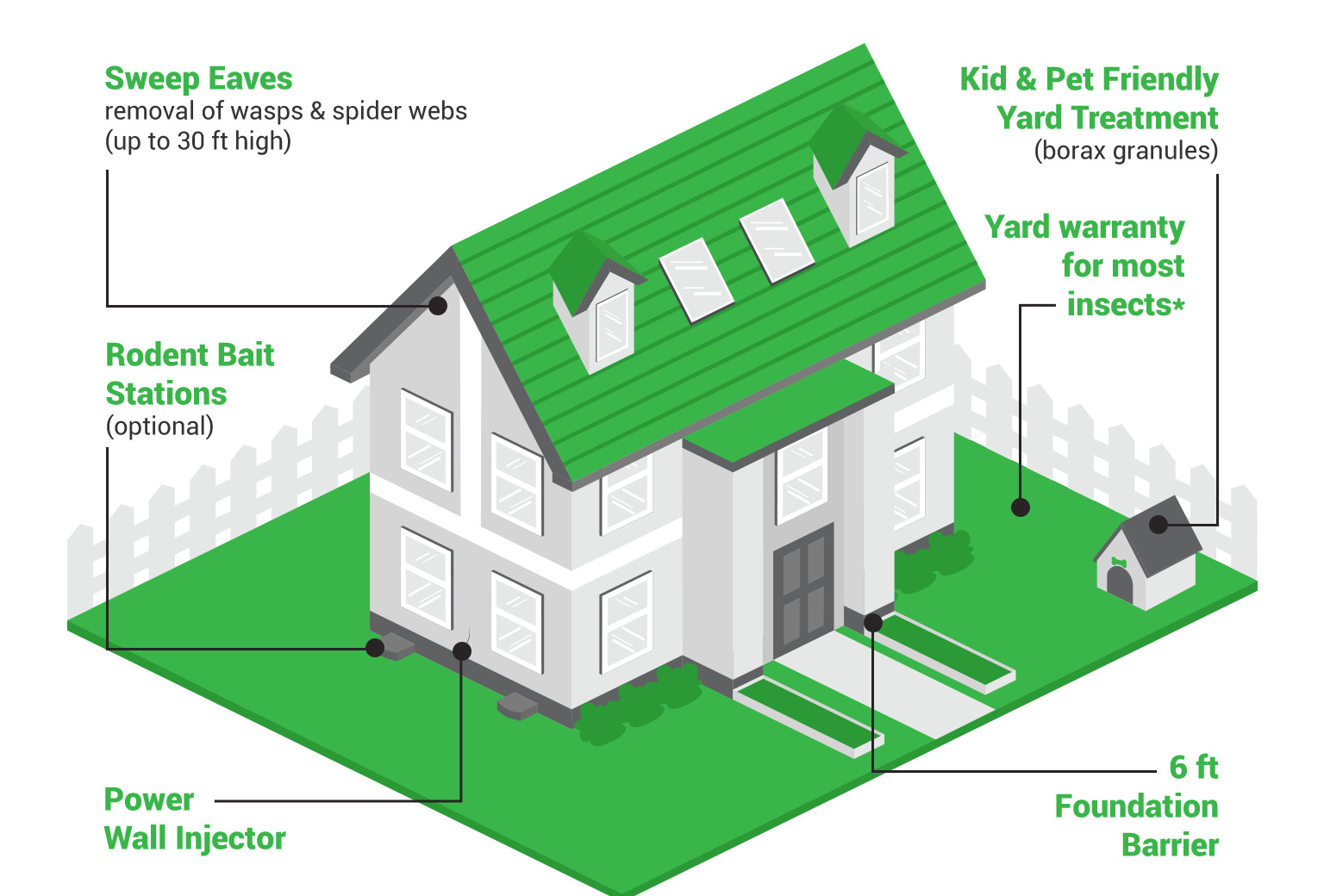
Vinx HomeGuard Plan
What Happens at Every Visit
Our technicians don’t just spray and leave. Every quarterly service covers your full exterior and interior, done right, backed by a written guarantee.
- Yard & Margin Treatment: Ground cover, mulch beds, and vegetation borders treated every visit
- Power Wall Injector: Treats wall voids where pests hide
- 6 ft Foundation Barrier: Full perimeter treatment every visit
- Yard Warranty: Free retreatment for most insects
- Kid & Pet Safe Yard Treatment: Borax granules, safe after dry
Homeowner Tips
6 Ways to Reduce Ticks & Fleas in Your Poquoson Yard
Kid & Pet Safe
Our Treatments Are Safe for Your Whole Family: Including the Furry Members
Every product we use is EPA-registered and applied strictly at labeled rates by licensed technicians. We take the guesswork out of safety so you can feel confident letting kids and pets back into treated areas quickly.
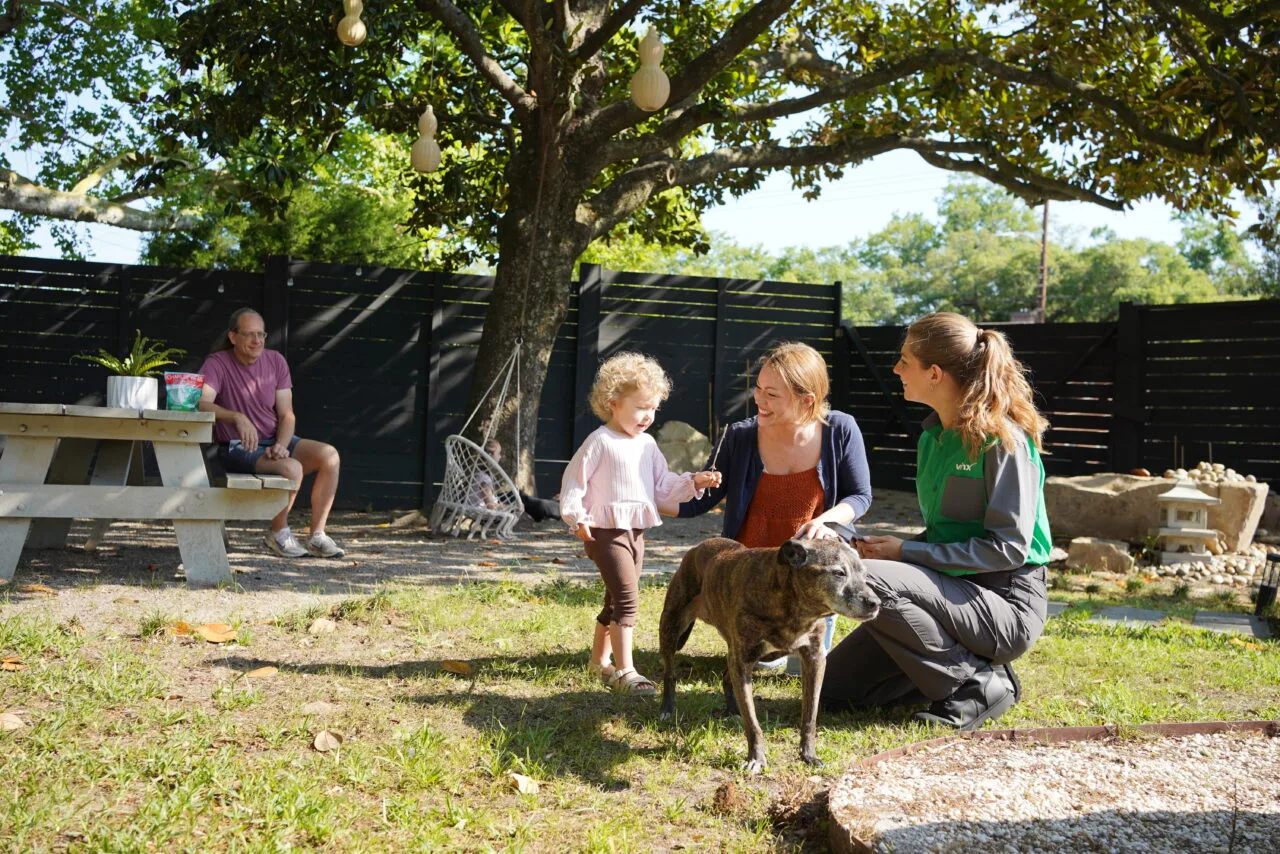
EPA-Registered Products Only
Applied strictly at labeled rates by technicians registered with the Virginia Department of Agriculture and Consumer Services (VDACS).
Family & Pet-Safe Treatments
Treated areas are safe for children and pets once dry.
Documented Health Risk
The lone star tick’s link to alpha-gal syndrome and ehrlichiosis, and the blacklegged tick’s link to Lyme disease, make yard-wide tick control a genuine health priority in Poquoson, not just a comfort issue.
Questions About What We Use?
Have a concern about products used near pets or a play area? Call (855) 800-8469 and we’ll walk you through exactly what we use.
Explore More
More Pest Control Services in Poquoson

Pest Control Poquoson
Year-round protection plan
Termite Control Poquoson
Bait systems & liquid treatment
Ant Control Poquoson
Fire ants & all ant species
Mosquito Control Poquoson
Monthly barrier treatments
Spider Control Poquoson
All spider species covered

Rodent Control Poquoson
All rodents covered
Cockroach Control Poquoson
American & German roaches
Bed Bug Control Poquoson
Heat & liquid treatments
Exterminator Poquoson
Same-day local exterminators
Frequently Asked Questions
Tick & Flea Control FAQ for Poquoson Homeowners
Yes, along its wooded and shrubby edges. The higher ground around Plum Tree Island’s shrub-scrub, the wooded lots along the Wythe Creek Road corridor, and yards backing cover carry the deer and rodents that keep lone star and other ticks going.
Alpha-gal syndrome is a red-meat allergy triggered by a lone star tick bite, and the Virginia Department of Health names the lone star tick as the state’s most common human-biting species, so around Poquoson’s wooded edges it’s a genuine risk.
It turns on which disease, and the two figures differ enough to change what you should do. Rocky Mountain spotted fever needs four to six hours of attachment before transmission on Virginia Cooperative Extension's figures, while Lyme disease is rarely transmitted in the first 24 hours — which is exactly why frequent checking and prompt removal matter so much. The Virginia Department of Health advises checking children and pets every four hours while you are out, rather than only at the end of the day. How you remove it matters as well, and most of the folklore gets it wrong. Take tweezers, or wrap the tick in tissue, grip it as close to the skin as possible and pull slowly with even pressure. No twisting or jerking — that leaves the mouthparts in. Never use nail polish, petroleum jelly, alcohol or a hot match on a tick that is attached. Clean the bite with antiseptic afterwards. The step people skip and later regret: kill the tick in rubbing alcohol and keep it in a small vial for a few months, so that if symptoms appear it can be identified rather than guessed at.
Because roughly 95% of a flea population lives in the yard and carpet as eggs, larvae, and pupae, so treating only the pet leaves that reservoir intact to reinfest it.
A yard tick and flea program is quoted by lot size and how much wooded or shrub cover it carries, and it can be added to a recurring plan starting at $49/mo. Call 855-800-8469 for a free quote.
The mild, humid weather stretches the season from spring into late fall, with the heaviest pressure through the hot part of summer.
The lone star tick is Virginia’s most common human-biter and is linked to alpha-gal syndrome and ehrlichiosis, the blacklegged tick carries Lyme disease and favors wooded refuge edges, and the American dog tick may carry Rocky Mountain spotted fever and prefers grassy, sunny areas.
Yes. We apply EPA-registered products at labeled rates using technicians registered with the Virginia Department of Agriculture and Consumer Services (VDACS), and treated areas become safe once dry.
Yes. Vinx services all of Poquoson, including Messick Point, the Wythe Creek Road corridor, the older watermen’s neighborhoods, and the areas bordering Plum Tree Island National Wildlife Refuge.
Statistically it is the lone star tick, and geography is the reason. Virginia Cooperative Extension places the lone star as very common in the Piedmont and Coastal Plain regions, and Poquoson sits in the Coastal Plain. A single white spot marks the adult female's back; males show several white markings; the immature ’seed ticks’ carry none at all, which is why people do not recognize them. Lone star ticks carry ehrlichiosis, can pass Rocky Mountain spotted fever, and are the species tied to alpha-gal syndrome, since they hold the alpha-gal sugar in their saliva. The American dog tick carries more reputation here than its local presence warrants: Extension places it mostly in the western regions of Virginia and west of the Blue Ridge Mountains. The deer tick, or blacklegged tick, is the Lyme carrier — smaller at two to three millimeters, with long mouthparts and dark legs — and one detail is worth holding onto: the bulls-eye rash appears in only about 70% of Lyme patients, so its absence does not rule the disease out. Then there is the Asian longhorned tick, recorded in Virginia from 2018 and able to reproduce asexually, so numbers climb fast in one place, but so far it is largely confined to western and northern Virginia rather than here.
Service Coverage
Tick & Flea Control Across Poquoson & the Greater Hampton Roads Area
Serving every neighborhood in and around Poquoson.
Serving the Greater Hampton Roads Area