Pest Control on Sullivan's Island, SC
Sullivan’s Island is 2.5 square miles with a beach and dune ridge on the ocean side and tidal marsh along the back, and parts of the ocean side are still growing: the State Supreme Court record puts accretion at roughly seventeen feet a year, and the Town’s plan says parts of the stretch between Station 20 and Station 28 have grown more than 1,500 feet seaward since 1941. Much of that new ground, about 190 acres the Town protects, is now dunes, shrubland and young maritime forest between the homes and the beach. Pest control here covers ants, spiders, cockroaches, mosquitoes, termites and rodents, with free re-services for covered pests between visits.
Get Started in 60 Seconds
Choose what’s easiest for you
Request a Quote
We usually respond in 2 minutes
Call 855-800-8469
Get a Live Person (no AI agents here!)
Sign Up Online
Get pricing and schedule now





Welcome to Vinx Pest Control
A Company That Actually Backs What It Says
At Vinx, we combine professional-grade treatments with a level of service most pest control companies don't offer. Local technicians, fast response times, and free re-services for covered pests between visits.
Get a Free Quote"I'm not passionate about killing bugs. I'm passionate about customer service. At Vinx, you get experts who show up, do the job right, and stand behind every visit. No runaround."
PROTECTION PLANS
Protection Plans for Sullivan's Island Homeowners
Unlimited free re-services on every plan.

Standard Residential Protection
- 4 Seasonal Treatments Per Year
- 40+ Covered Pests
- Interior, Exterior & Yard Treatment
- Unlimited Free Re-Services
- Guaranteed Coverage for Common Household Pests
- Fire Ant Warranty
- Flea & Tick Coverage
- Mosquito Treatments
$49/mo starting rate, billed monthly, plus a $329 initial service. 24-month agreement that renews automatically month to month until you cancel. How to cancel: call (855) 800-8469 or send written notice (30 days after the first 24 months). Cancel free before midnight of the 3rd business day after signing; an early termination fee equal to your initial-service discount applies before 24 months. Full terms
Or request a custom quote
Upgraded Yard Protection
- 6 Home & Yard Treatments Per Year
- 40+ Covered Pests
- Interior, Exterior & Yard Treatment
- Unlimited Free Re-Services
- Guaranteed Coverage for Common Household Pests
- Fire Ant Warranty
- Exterior Flea & Tick Warranty
- Mosquito Treatments
$75/mo starting rate, billed monthly, plus a $329 initial service. 24-month agreement that renews automatically month to month until you cancel. How to cancel: call (855) 800-8469 or send written notice (30 days after the first 24 months). Cancel free before midnight of the 3rd business day after signing; an early termination fee equal to your initial-service discount applies before 24 months. Full terms
Or request a custom quote
Most Comprehensive Protection
- 9 Treatments Per Year
- 40+ Covered Pests
- Interior, Exterior & Yard Treatment
- Unlimited Free Re-Services
- Guaranteed Coverage for Common Household Pests
- Fire Ant Warranty
- Interior Flea & Tick Warranty
- 8 Mosquito Treatments (Apr–Nov)
- Free Bed Bug Treatment After 12 Months on Platinum
$109/mo starting rate, billed monthly, plus a $329 initial service. 24-month agreement that renews automatically month to month until you cancel. How to cancel: call (855) 800-8469 or send written notice (30 days after the first 24 months). Cancel free before midnight of the 3rd business day after signing; an early termination fee equal to your initial-service discount applies before 24 months. Full terms
Or request a custom quote*Starting rates vary by home size and area. All plans billed monthly.
Request Your Free Pest Control Quote
Fill out the form below and a Vinx team member will reach out within 2 minutes during business hours.
Prefer to talk? Call 855-800-8469 for a live person, no AI agents.
Our Process
How Vinx Treats Your Sullivan's Island Home: Step by Step

Inspection & Reporting
Every visit, our technicians are inspecting as much as treating. We look for what an ordinary day hides: early termite activity, conditions drawing pests toward the house, moisture problems, entry points insects are using, and wasp nests forming where the ground gives you no view. On Sullivan’s Island, termite mud tubes and damp wood at the foundation are the first things we look for, because a Clemson survey of 50 Formosan-infested buildings in Charleston found 94% were invaded from colonies in the ground. A trained eye on the house every 90 days means problems are found while they are small. If we find something, you hear it plainly, with no pressure and no scare tactics.
Exterior Foundation Treatment
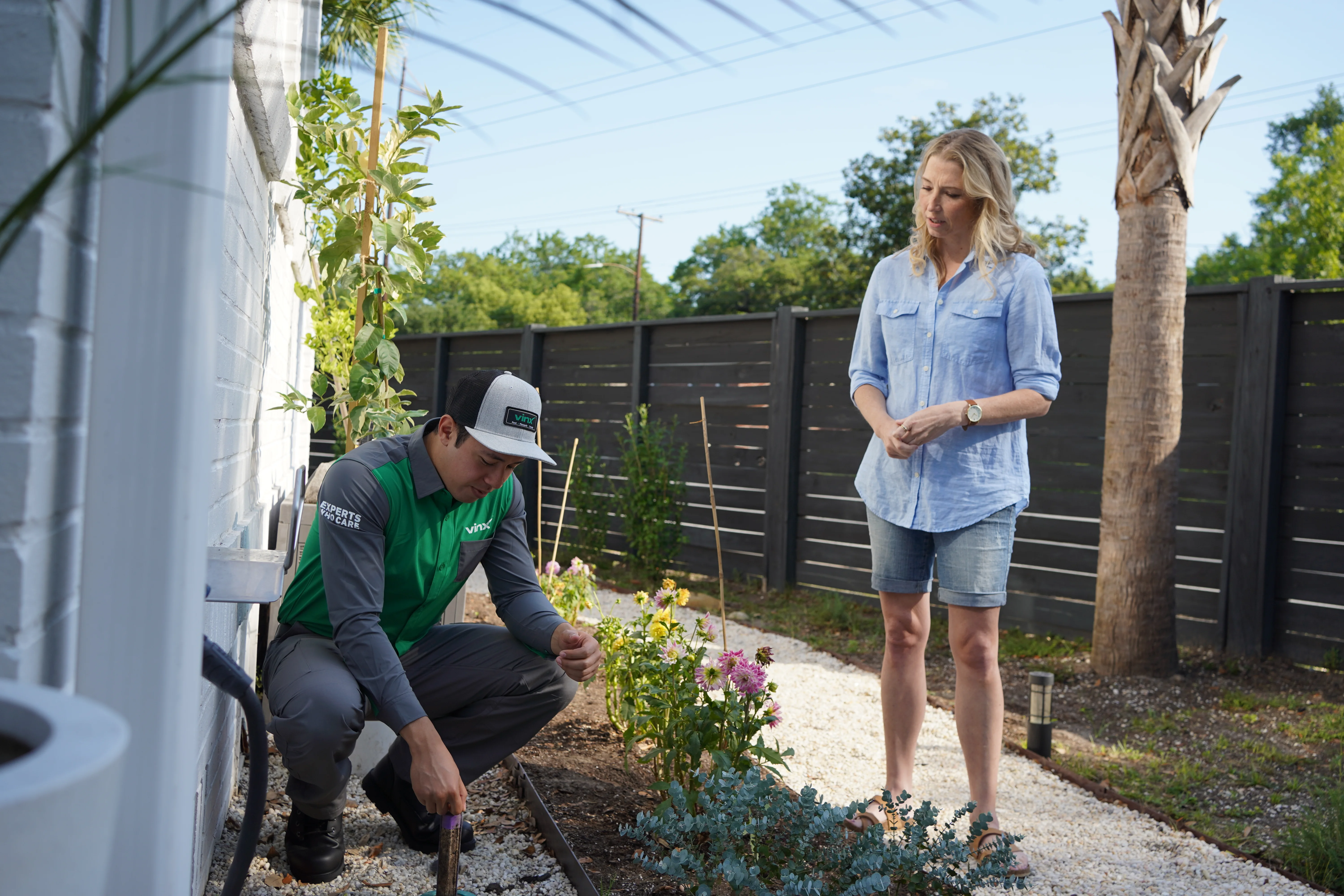
The foundation takes a micro-encapsulated product, a time-release barrier that clings to pests and travels back to the nest with them. Three feet up the wall and three feet out from it, which is a genuine buffer zone. On the island’s eastern end the Town maps Dawhoo soils, which are very poorly drained and hold a high water table for part of the year, so the foundation barrier carries most of the weight there. Because the work is almost entirely outside, your children and pets stay indoors while we work. Products are EPA-registered and applied at label rates; keep kids and pets off treated areas until they dry, usually 30 to 60 minutes.
Yard Treatment
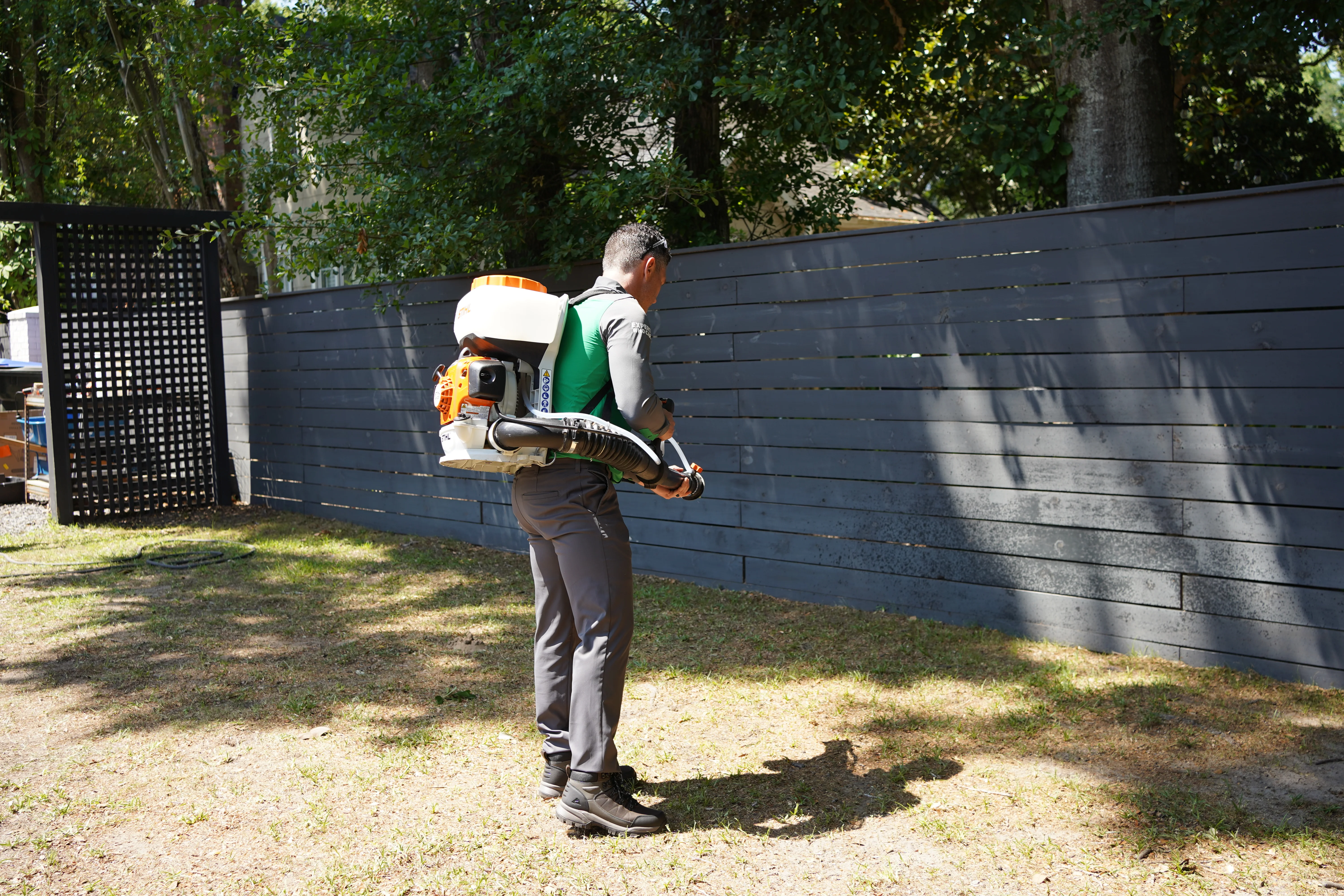
The whole yard is treated, out to 30 feet from the house, cutting pest pressure before anything reaches the foundation. On the island the pressure comes from the Town’s protected accreted land, about 190 acres of beach, dunes, interdunal wetlands, shrubland and maritime forest behind the oceanfront lots, so the band of your yard nearest that land matters most. The yard treatment and the foundation barrier give you two lines of defense: deal with pests outside and they never become an indoor problem.
Sweep & Treat Eaves
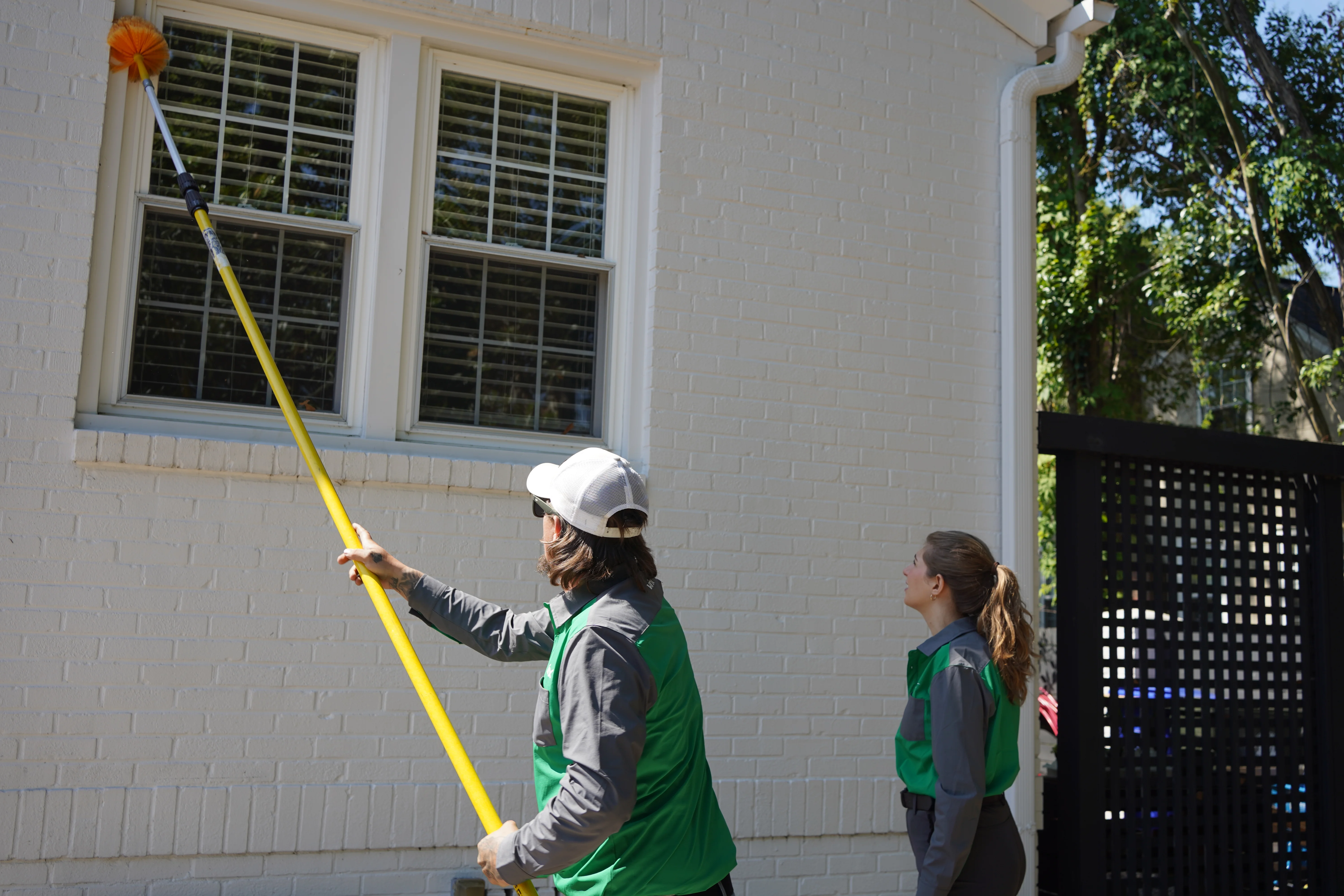
First and second-story eaves are swept every visit, and cobwebs, wasp nests and spider webs all come down. Those areas then get a residual spot treatment. We knock everything down and treat the spot so new nests are slower to start. Pheromones bring wasps back to old nest sites, and our product is waiting when they arrive. It denies pests the roofline as a staging ground, and the difference shows every visit.
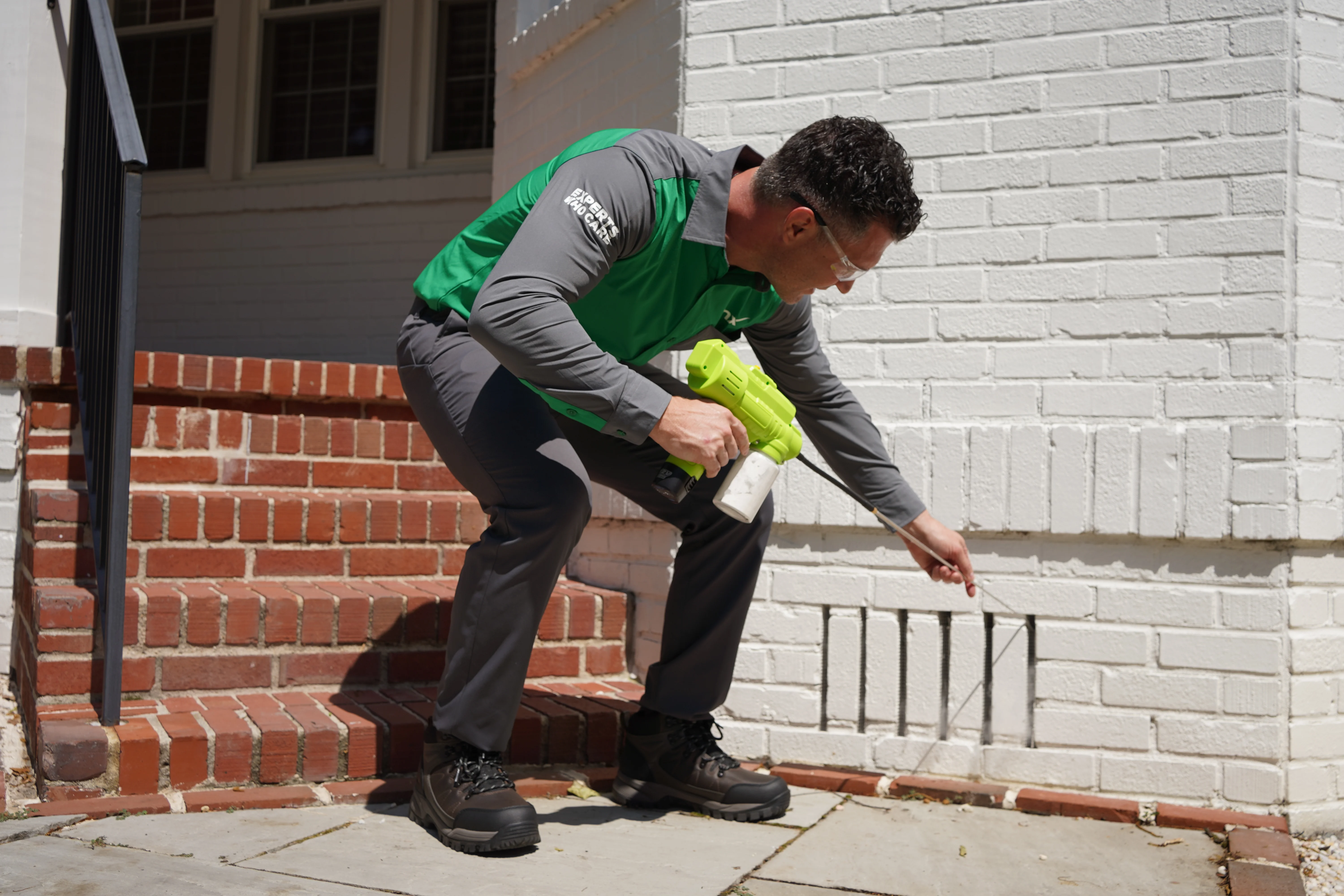
Power Dust Injection
A handheld compressor with a specialized tip drives dust deep into the exterior cracks and crevices: gaps around pipes, weep holes, expansion joints, anywhere insects try to squeeze through. The island’s older cottages, including the Moultrieville homes the Town dates to roughly 1830 through 1930, carry decades of repairs and the joints and weep holes cockroaches and other pests exploit to get into wall voids. Driven deep into those areas, the dust flushes out anything present and, sheltered from rain and heat, stays active far longer than a surface spray.
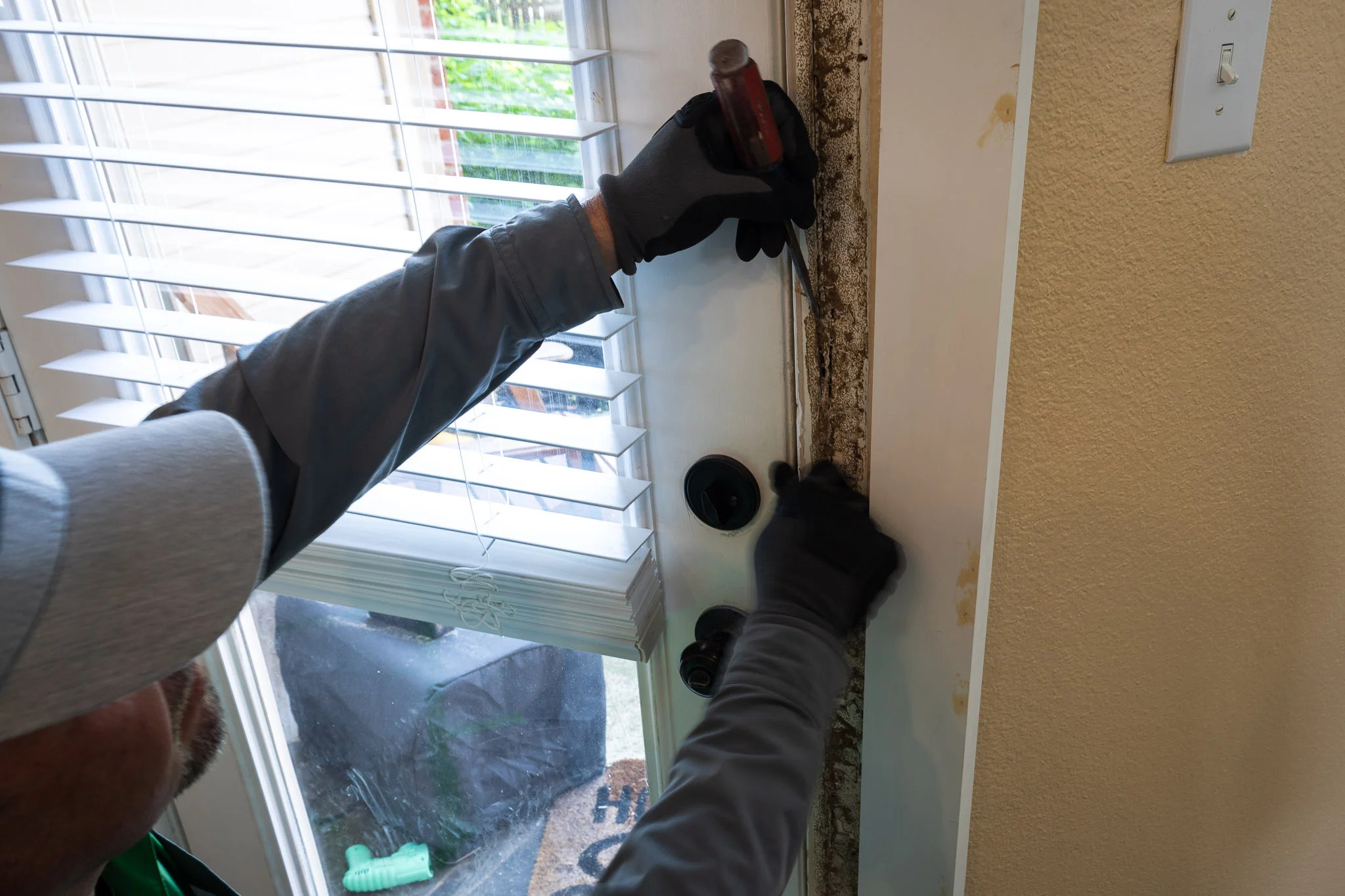
Interior Treatment (If Needed)
The honest truth is that we rarely need to treat indoors, and that is deliberate. Because we do far more outside than most companies, the problem stops before it gets in. Interior re-services for covered pests are included at no extra charge. If palmetto bugs, roaches or other covered pests get inside your Sullivan's Island home, we come in and deal with it using the same EPA-approved products. Baseboards, entry points, the garage, a detached shed, whatever you have, we treat it. Same EPA-approved products. Keep children and pets off treated areas until they dry. No extra cost, no hassle.
Customer Reviews
Real Reviews from Sullivan's Island Homeowners
Jack did a great job today! He was friendly and very professional. He made sure to ask if there were any concerns. He took care to spray for spiders on my back porch, which I appreciate. Thanks!
Jack was amazing, he explained everything he was going to do and what is covered with the service. I will definitely recommend Vinx Pest Control for your pest control needs interior and exterior.
Austin came and he assessed the bee situation. I thought they were hornets but they turned out to be yellow jackets. After putting on the bee suit Austin got to work. He sprayed the hive and then destroyed it with a pole. The worker bees kept flying around but since the queen did not survive the dissipated. Austin cleaned up the mess and I do not have a hive anymore.
Leon was excellent. Friendly, personable, and extremely thorough throughout the inspection process. Having dealt with termite damage in the past(Not a vinx home), I especially appreciated the care and attention he put into examining everything. His detailed approach gave me confidence that nothing was overlooked. I highly recommend Leon and Vinx for anyone looking for a knowledgeable and diligent inspector.
Jack was very professional. Called me at work to ask if there were any concerns that I had or areas that needed to be addressed. He then followed up with a report and video explaining everything That he had addressed that day. Great company and great service.
Year-Round Pest Pressure
Why Sullivan's Island Has Unique Pest Pressure
Winters here are mild. The Town’s Comprehensive Plan gives average temperatures from 89°F in July to 48°F in January and 49.79 inches of rain a year, with the heaviest rain in the hottest months. Clemson notes that once smokybrown cockroaches are inside a building, they can be found anywhere from the attic to the crawl space.
Quarterly service is the minimum we recommend for a house on a barrier island. Clemson notes a fire ant queen lays 100,000 to 300,000 eggs a year, so a mound left beside the HVAC pad in spring is a much bigger job by fall.
6 Pest Pressures on Sullivan's Island
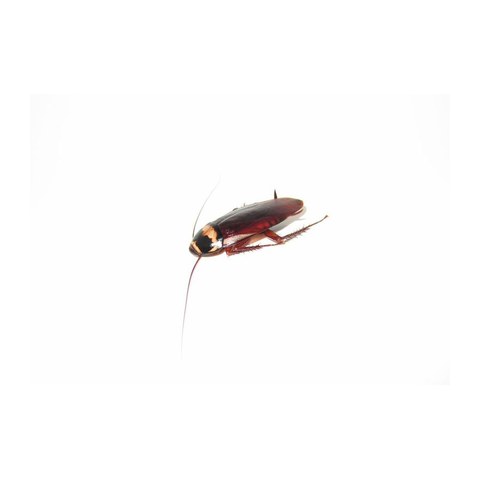
Cockroaches
Clemson says both American and smokybrown cockroaches live in trees along the coast, the smokybrown especially in palmettos, and the American also around sewers, storage rooms and garbage areas. Both come in by drain line, crawl space vent and the gaps around plumbing. On Sullivan’s Island the pressure is heaviest in the older cottages, where original drain and utility runs pass through a crawl space that never fully dries out.
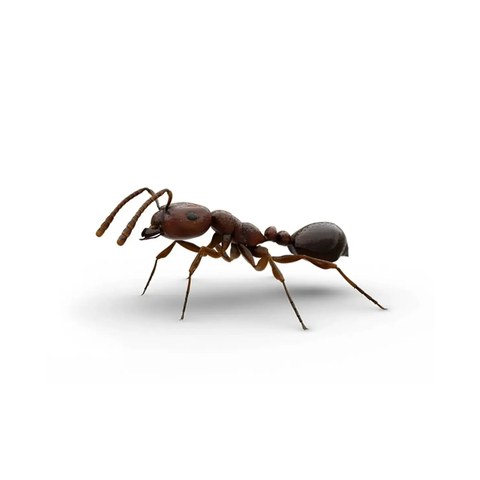
Fire & Argentine Ants
Clemson notes fire ants forage when the soil surface is between 70°F and 95°F, which in summer means mostly at night, and travel up to 100 yards from the mound for food. A 2025 study in Frontiers in Allergy put fire ant venom anaphylaxis at 0.085 percent of the population in the states where the ants are established: rare, but a real concern for anyone with a known sting allergy. Argentine ants are a different problem: in the Southeast, neighboring colonies fight one another, and they call for an entirely different treatment approach.
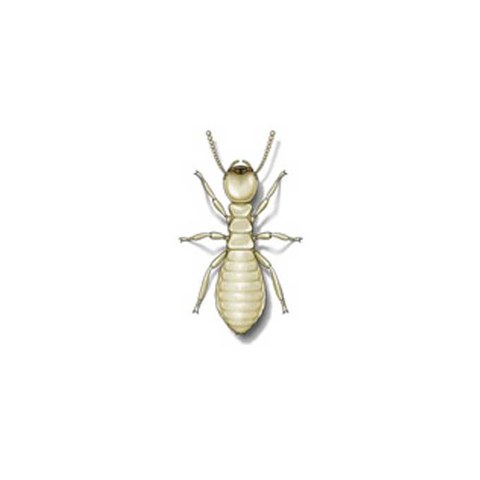
Termites
Clemson says Formosan subterranean termites were introduced in Charleston in the mid-1950s and are now in many areas of Charleston County. Drywood termites matter here too: Clemson notes they need no soil contact and that older structures are more likely to have multiple infestations than newer ones, on an island where 27.3% of homes were built before 1940.
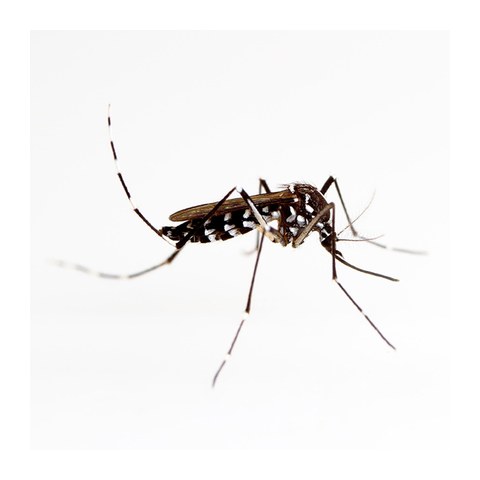
Mosquitoes
Rutgers describes salt marsh mosquito larvae developing in pools produced by exceptional high tides or heavy rainfall, and inside the accreted land the Town lists interdunal wetlands, where a 1991 deed lets the Town trim vegetation for mosquito control. CDC says West Nile virus cycles between birds and mosquitoes, especially Culex species. Monthly barrier spray, April through November, comes with Vinx Platinum.
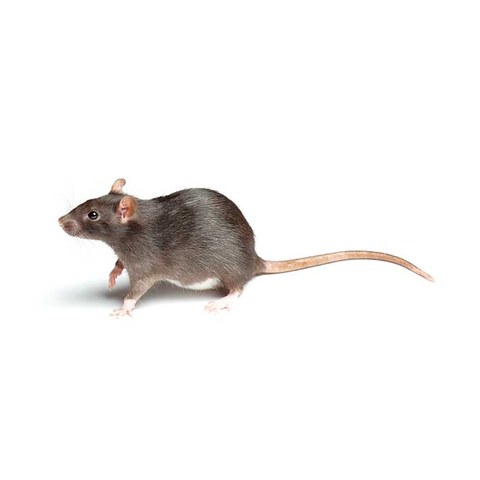
Rodents
Norway rats, roof rats and house mice never meet a winter here cold enough to cut their numbers. On the island the pressure comes off the accreted land rather than off a port: ground the courts describe as thickly wooded now, and a habitat for coyotes and other varmints. Roof rats access homes through the deteriorating soffits and fascia of the older cottages. A gap the size of a dime is enough for a house mouse.
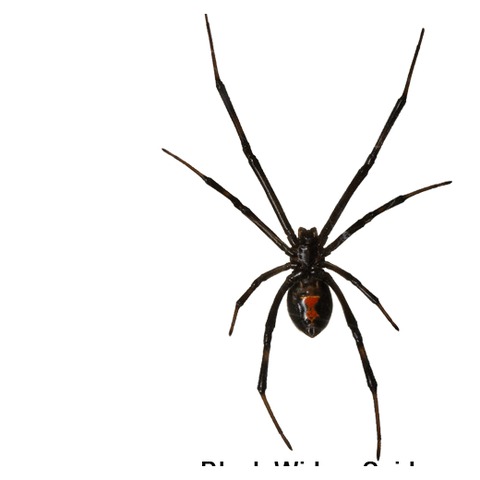
Spiders
Clemson notes all three South Carolina widow spiders are found year-round, in woodpiles, crawl spaces, sheds and other dark sheltered spots close to the ground. The brown recluse is rare in South Carolina: a 2007 review found only 44 verified specimens statewide since 1953, all collected from man-made structures, and concluded the populations are localized introductions. Pressure peaks in late summer and fall, though populations persist in protected spots through winter. Exterior perimeter treatment and web removal come with every quarterly visit.
The island’s geography makes the problem worse than most coastal towns. Tidal marsh along the back of the island keeps moisture constant against property lines, and there is nowhere on 2.5 square miles that sits far from it. Then there is the ground that did not used to be here at all: the Supreme Court described lots once considered oceanfront as now perhaps 500 feet or more from the shoreline. What the court called vegetation no taller than three feet, mostly sea oats and wild flowers, in 1991 is thickly wooded today, and that band of young maritime forest is harborage pressed against the back of the lots. Add the older cottages of Moultrieville and Atlanticville, with 27.3% of the island’s housing built before 1940 (the Town ties much of that early growth to the military presence around Fort Moultrie), and the two halves of the job are set.
Standing water here is also a question of who is responsible for it, and the answer is unusually split. Under a 2007 agreement the Town does not run its own stormwater utility at all: Charleston County’s Stormwater Management Division maintains the inlets, conduits, manholes, channels, ditches, waterways and infiltration facilities, while the conveyance and drainage systems themselves are owned by SCDOT. After the 2015 Hurricane Joaquin flooding the Town added the piece that lands on you — Section 21-17 of the Zoning Ordinance now requires an onsite stormwater management system for any residential or nonresidential development, with the plan drawn by a professional engineer or landscape architect. Three different bodies, and the one holding water on your lot is you. A pest plan that has not been told where that system sits will walk past it.
Pest Pressure by Neighborhood
Know Your Neighborhood’s Risk
Middle Street Corridor: Ant & Roach Risk
- The Town’s commercial district runs along Middle Street from Station 22½ to just beyond Station 20½, lined with restaurants and offices
- Keep household garbage carts lidded and rinsed; Clemson places American cockroaches around garbage areas
- Station 18 is one of the worst flooding areas the Town names, so check the crawl space after heavy rain
Beach-Side Stations: Spider & Silverfish Pressure
- Lots here back onto the accreted land, where the Town’s plan calls for managed vegetation in 100-foot transition zones between homes and the densest growth
- The Town describes the shrub zone beside them as holding a high number of bird, mammal, reptile and amphibian species
- Keep firewood and stored items off the ground and away from the house, since Clemson lists woodpiles among the places widow spiders favor
Breach Inlet Area: Seasonal Surge Zone
- Inlet Creek, Swinton Creek and Conch Creek drain to the ocean through Breach Inlet, so this end of the island sits between marsh and inlet water
- After a storm tide or flood, look for fire ant mounds in new spots; Alabama Extension notes colonies float and resettle on dry ground
- The quarterly schedule continues through winter, when the Town’s January average is still 48°F
Complete Coverage
What Vinx Treats in Your Sullivan's Island Home
Over 40 pests on the quarterly plan; rodent and termite work is quoted separately, and some pests are covered only on Plus or Platinum

Ants
Argentine ants, odorous house ants and pavement ants (carpenter ants are inspected and quoted separately). Perimeter bait, crack and crevice application; fire ant mound treatment on Plus and Platinum.
All Plans
Cockroaches & Palmetto Bugs
American, Asian, and smokybrown cockroaches; German roaches via the German Roach Warranty add-on. Gel bait in harborage areas, exterior perimeter spray, drain treatment.
All Plans
Spiders
Web removal from eaves, exterior perimeter targeting harborage. Black widow identification and targeted treatment.
All Plans
Wasps & Hornets
Nest removal from eaves, soffits, structural voids. Preventative treatment of common nesting sites on each quarterly visit.
All Plans
Fleas & Ticks
Yard treatment targeting grassy and shaded areas. Interior treatment of active infestation areas.
Plus & Platinum
Bed Bugs
Inspection, heat treatment assessment, and targeted chemical treatment. Vacation rentals are a prohibited use under the Town’s zoning; only rentals already operating in the 12 months before November 21, 2000 may continue, about 50 in the Town’s 2018 count. Inspect luggage after trips and check used furniture before it comes inside.
Platinum (12mo)
Rodents
Trapping, exterior bait stations and exclusion as a separate service, quoted after a free inspection.
Separate Service
Mosquitoes
Monthly barrier spray and larvicide April through November, plus one winter treatment.
Platinum Only
Occasional Invaders
Silverfish, earwigs, centipedes, stink bugs, ladybugs, pillbugs. Crack and crevice treatment, perimeter spray, entry point ID.
All PlansKids & Pets
Treating Around Your Whole Family: Including the Furry Members
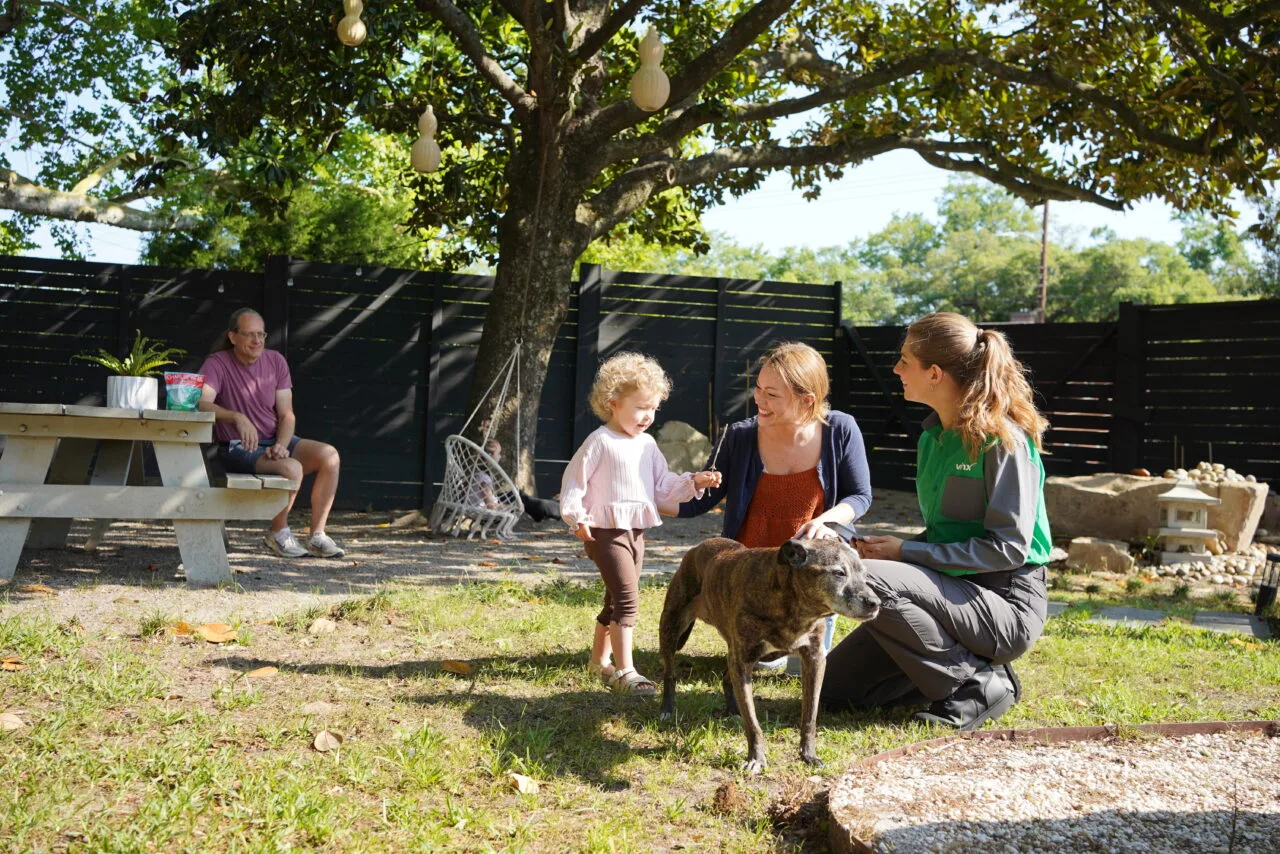
Every product we use is EPA-registered and applied strictly at labeled rates by licensed technicians. Your technician tells you exactly when kids and pets can go back into treated areas.
EPA-Registered Products Only
All products we apply are EPA-registered and used strictly per label requirements. Our licensed technicians are trained to apply the right product in the right place at the right rate, every time.
Dry Time Before Re-Entry
Exterior spray treatments dry in 30–60 minutes. Keep children and pets off treated surfaces until they are dry. Your technician will confirm the all-clear before leaving your property.
Interior Treatment On Request
We treat only what’s needed, where it’s needed. Gel baits in cabinets and crack-and-crevice applications keep products away from areas pets and children frequent most.
Botanical Options Available
Have specific sensitivities? Ask your technician about our plant-derived treatment options. We offer botanical alternatives for households that prefer a more natural approach.
Have a concern about products used near your pets or children? Call 855-800-8469 and we’ll walk you through exactly what we use and when treated areas can be used again.
Explore More
More Pest Control Services on Sullivan’s Island
Ant Control Sullivan’s Island
Household ants & others
Bed Bug Control Sullivan’s Island
Heat & liquid treatments
Cockroach Control Sullivan’s Island
Palmetto bug & roach removal
Mosquito Control Sullivan’s Island
Monthly barrier treatments
Rodent Control Sullivan’s Island
Rats, mice & exclusion
Spider Control Sullivan’s Island
All spider species covered

Termite Control Sullivan’s Island
Bait systems & liquid treatment
Wasp Control Mount Pleasant
Nest removal & prevention

Tick & Flea Control Sullivan’s Island
Yard & pet protection
Exterminator Sullivan's Island
Same-day local exterminators
Frequently Asked Questions
Pest Control FAQ for Sullivan's Island Homeowners
HomeGuard starts at $49 a month for four seasonal treatments a year, with free re-services for covered pests between them. Monthly mosquito service, April through November, is part of Platinum. Call 855-800-8469 for a quote on your property.
Coastal ant colonies live in soil near foundations. Over-the-counter sprays disperse foragers but don't reach the colony. Clemson notes fire ant workers forage up to 100 yards from the mound and that bait strategies rely on that foraging, which lets baits work away from the mound and from sensitive areas.
Yes. Winters on the island are mild, and Clemson finds oriental cockroaches in crawl spaces, water meter boxes and leaf litter and American cockroaches in dark, moist areas around sewers, so both have shelter through the cool months. Seasonal-only plans leave populations to rebuild each spring.
Vinx uses only EPA-registered products, applied per the label. The accreted land behind the oceanfront lots is Town property protected by deed restrictions since 1991, and Clemson Extension recommends a 10 to 30 foot no-fertilizer, no-pesticide buffer along salt marsh shorelines, so ask before any product goes on the dunes or near the marsh edge. Keep children and pets off treated areas until dry, usually 30 to 60 minutes.
Quarterly is the minimum, and Platinum adds monthly mosquito visits from April through November. Because the island’s heaviest rain falls in its hottest months, keep gutters and drains clear through summer and run service all year.
Clemson lists crawl spaces among the places widow spiders and smokybrown cockroaches shelter, so mention yours when you book and ask what your plan includes for it.
Service Coverage
Pest Control Across Sullivan's Island & Mount Pleasant
Serving every neighborhood on Sullivan's Island and across the Mount Pleasant area